How Do You Calculate the Length and Weight of an Aluminium Foil Roll?
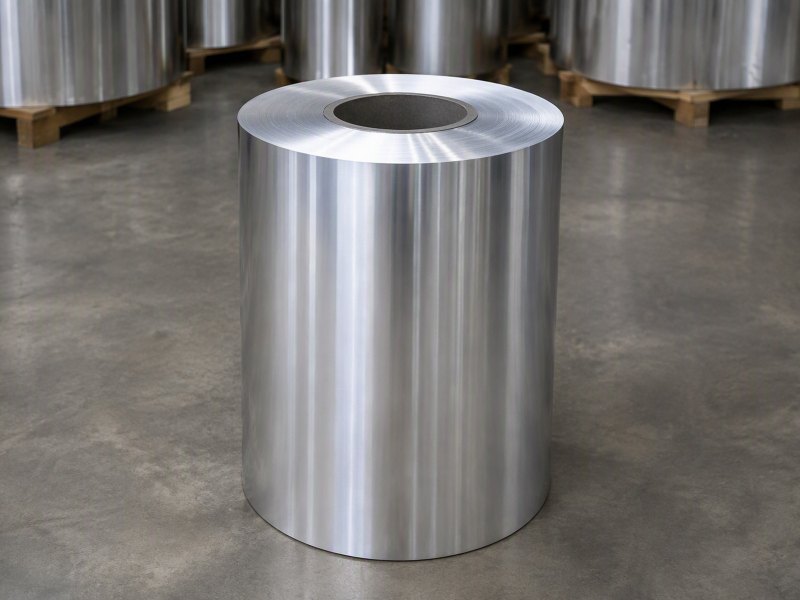
A roll is sold by weight and used by the metre. This guide shows how length, width, thickness and weight are tied together, why every calculated figure is an estimate, and what to record so the next delivery can be checked against the last.
A price per roll says nothing until you know how many metres are wound inside it, and the pallet label rarely says.
Length follows from weight, width and thickness: net metal mass in kilograms is about 2.7 × length in metres × width in metres × thickness in mm. Rearranged, it returns weight from a target length.
The arithmetic is simple; the inputs are not. The sections below keep the calculation honest, show where it drifts, and set out what to record.
Why can't two foil rolls be compared on price per roll?
A roll is a package, not a quantity. The same pallet footprint can carry a long light roll or a short heavy one.
Because the metres inside differ with thickness and width, a per-roll figure compares packaging rather than metal. Convert both offers to a common basis before comparing anything.
Dive deeper
Two rolls on the same pallet can differ by hundreds of metres and still look identical to a warehouse team. The pallet is the same size, the core is the same diameter, the wrap is the same. What differs is the length wound onto it, and length is the one quantity nobody can read from outside.
A price per roll therefore compares a package, not a quantity of metal. Buyers who compare two offers at face value are usually comparing a heavier roll with a lighter one, or a wider roll with a narrower one, and the difference in usable metres is invisible in the number they are reading. Quoting one offer per roll and another per kilogram hides the same gap.
The reference description of aluminium foil is useful here for one reason only: it shows how thin the material is, and how little separates one gauge from the next. At those thicknesses a small change in nominal gauge moves the length inside a roll a long way, while the outside changes not at all.
The safe basis for comparison is a stated net metal mass plus a stated nominal length, with the two reconciled before the order is placed. Until both are known, a price per roll is a packaging figure and nothing more.
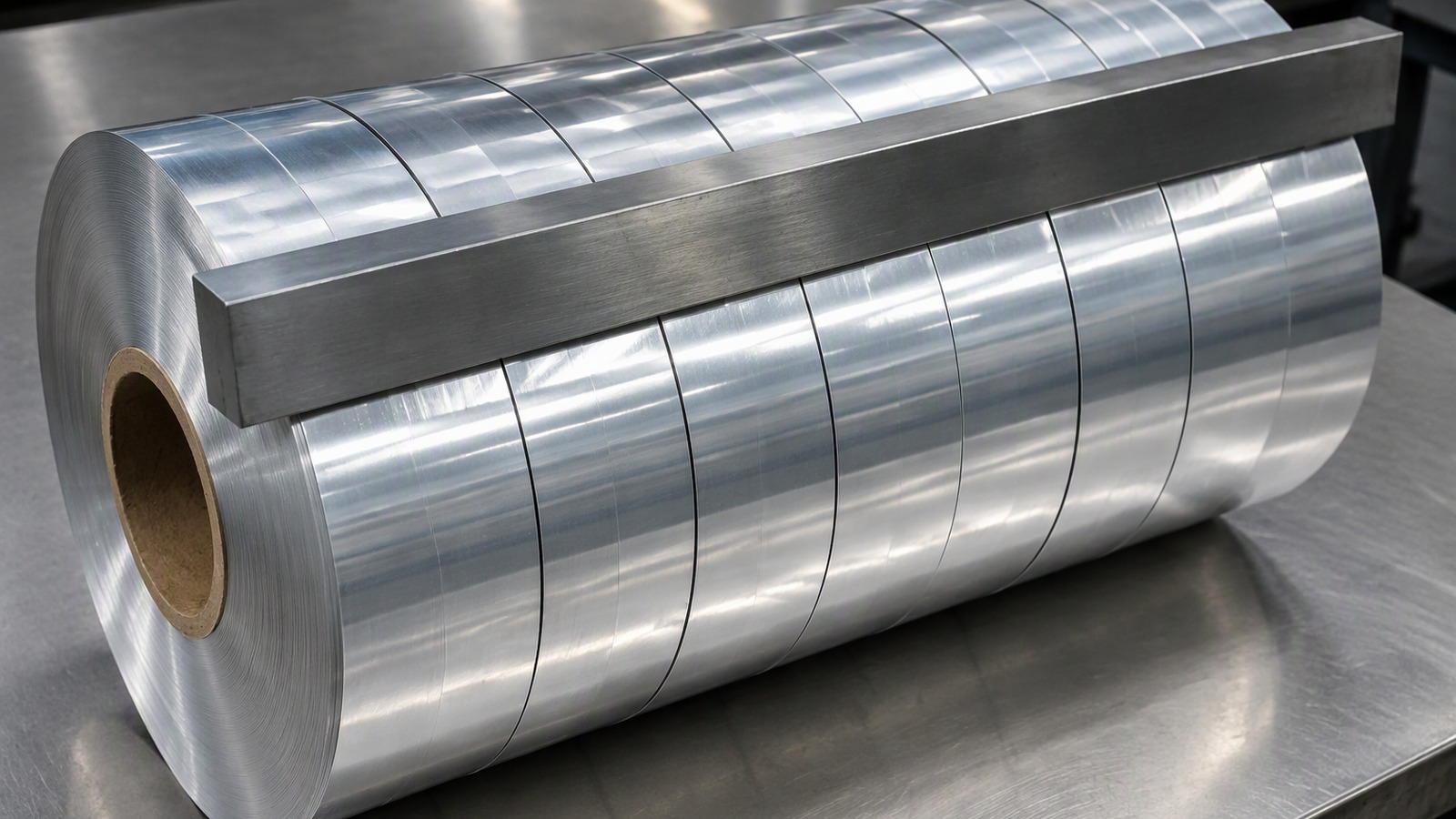
How do length, width, thickness and weight fit together?
Four quantities, one volume. Change any one of them and the others must move, which is why a single missing number makes a roll impossible to verify.
Multiply length, width and thickness to get volume, then apply density. Mass in kilograms is about 2.7 × length in metres × width in metres × thickness in mm.
Dive deeper
Start with volume. A roll is a very long, very thin rectangular solid, and its volume is length multiplied by width multiplied by thickness. Once volume is known, mass follows from the density of the metal. Aluminium's density is about 2.7 g/cm³, and that single constant links the geometry of a roll to the weight on a delivery note.
The units collapse conveniently when the geometry is kept in metres and millimetres. Multiplying length and width in metres by thickness in mm and applying the density gives a working relationship directly: mass in kilograms is about 2.7 × length in metres × width in metres × thickness in mm. The constant carries the whole of the unit conversion, which is why the expression looks simpler than the geometry behind it.
Two practical notes. The density figure belongs to the metal, not to the roll: core, wrap and pallet sit outside it, so the formula returns net metal mass and nothing else. Alloying also shifts density a little, so 1050, 3003 and 8079 are not perfectly interchangeable in a backwards calculation.
For a description of the material this arithmetic applies to, see the aluminium foil roll range. The arithmetic itself does not change with width, core diameter or temper.
How do you rearrange the same relationship to solve for the other quantity?
The formula runs in both directions. Divide instead of multiply and it returns length from a known mass, which is the direction planners usually need.
Length in metres is about mass in kilograms divided by 2.7 × width in metres × thickness in mm. The same algebra answers both questions without a second method.
Dive deeper
The rearrangement is the same equation with one term isolated. Divide both sides by width and thickness and the density constant moves into the denominator: length in metres is about mass in kilograms divided by 2.7 × width in metres × thickness in mm. Nothing else changes, and no new assumption enters.
Read from a delivery note, that version answers the question buyers actually ask. A roll arrives with a gross mass on the ticket, a width on the label and a nominal gauge in the specification. Net metal mass is gross minus core and packaging, and the division that follows turns that mass into metres.
The same move works for width. Hold mass, length and thickness and the expression returns the width a given mass can cover, which is how a planner tests whether a narrower roll will finish a run. Applied to a named material, the arithmetic is the same on the 1235 aluminium foil at 0.015 mm page, where width and gauge are the two variables fixed first.
Keep the units consistent and the algebra stays honest: metres with metres, kilograms with kilograms. Most errors here are not conceptual; they come from feeding a width in millimetres into an expression that expects metres, and the mistake survives review because the answer still looks plausible.
Why is every calculated figure an estimate rather than a specification?
Four inputs drift: the thickness actually rolled, the mass of core and packaging, the edge trim, and the density assumed.
Each input carries its own uncertainty, and they combine rather than cancel. Treat the result as a planning figure and let the order documents fix the real number.
Dive deeper
The gauge printed on a specification is a nominal value. What the mill actually rolled sits inside a tolerance band around it, and the metal in the roll is the rolled thickness, not the printed one. Because length and thickness are inversely related, a tolerance band rather than a point translates into a band of metres.
The mass on the ticket is gross. Core, wrap, edge protection and pallet add weight that is not metal, and their share is proportionally larger on a light roll than a heavy one. Subtract an estimate and the error carries into the length. Industry reference material, such as that published by European Aluminium, treats the density of foil alloys as a narrow range rather than one number.
Edge trim is the quiet one. A roll is wound from a wider strip that has been slit, and the trimmed edges appear neither as usable width nor as usable length. A buyer who reconstructs length from the ordered width rather than the delivered width is drifting before any weighing happens.
Density is the fourth input and the one most often taken as exact. Alloy composition moves it, and the convention used in the calculation moves it again. The tolerance side of this question is treated at length in how thickness tolerance moves yield.
Why does a lighter gauge add length so much faster than buyers expect?
Length and thickness are inversely proportional. Halve the thickness at the same mass and width and the roll holds roughly twice the length.
Thickness sits in the denominator, so a small reduction in gauge produces a large gain in metres while the roll keeps the same weight.
Dive deeper
Inverse relationships feel wrong until they are drawn. Double the thickness and the same mass of metal covers half the length; halve it and the same mass covers twice as much. The roll weighs the same either way, so the warehouse sees no change while production works with a different material.
Buyers habitually reason in weight, because weight is what the invoice and the weighbridge show. That habit hides the effect. A change that looks like a modest step down in gauge is a large step up in metres, and larger again when width falls at the same time.
The consequence is felt in planning rather than in purchasing. A run costed on metres will finish early or late when the gauge moves, even though the mass delivered matched the order. Stock cover expressed in rolls inherits the same distortion, which is why stock is safer kept in kilograms and converted than counted in rolls.
This is arithmetic, not a recommendation. Which gauge suits a job depends on the barrier, the forming and the process, and that argument belongs to a different question. What matters here is that a buyer expecting a small gauge change to produce a small length change will be wrong by a wide margin. The foil roll and sheet range shows the two dimensions together.
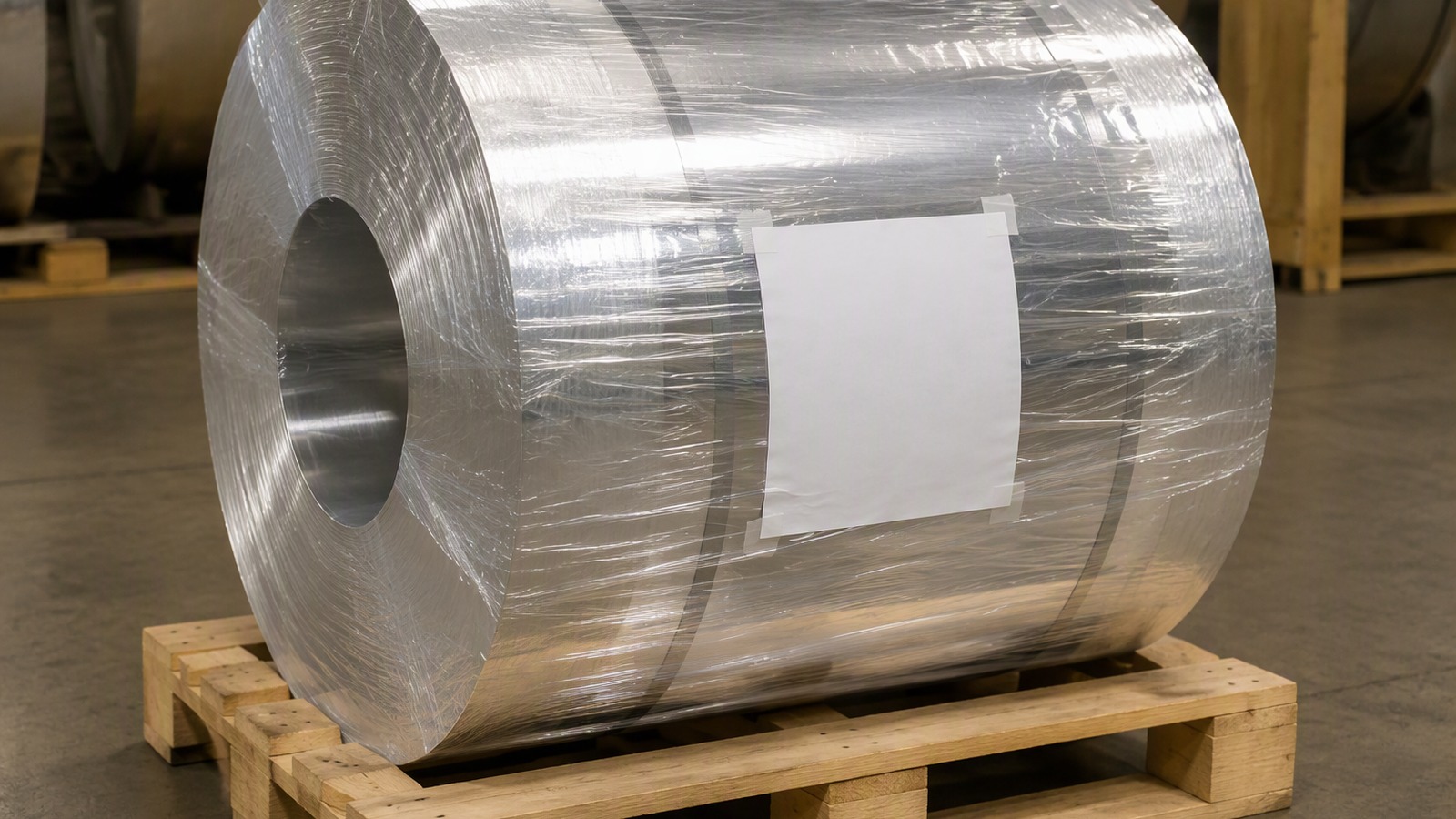
How do you work backwards from a target length to a weight for an enquiry?
Planners usually start from metres required, not from kilograms available. The enquiry has to translate one into the other before a supplier can respond to it.
Multiply the target length by width, thickness and the density figure to get net metal mass, then add a separate allowance for core and packaging.
Dive deeper
An enquiry usually begins with metres. Production knows how many metres a run consumes, or how many it wants held in stock, and the supplier needs a mass before anything can be scheduled. The conversion is the same equation rearranged once more, run from length towards mass.
Arithmetic illustration only: a planner wants about 9,000 m of foil at 1,000 mm wide and 0.020 mm nominal thickness. Using the density figure above, net metal mass is roughly 2.7 × 9,000 × 1.0 × 0.020, which is about 486 kg. That is metal only; core, wrap and pallet sit outside that sum, as a separate allowance agreed with the supplier.
The example is deliberately round and still not a promise. Run the numbers forwards and the length that comes back is close to the target but not identical, because the thickness used was nominal. Written into an enquiry, the figure belongs with the words approximately and subject to confirmation; the confirmed value comes from the order documents and the supplier's own roll data.
Two habits help. State the target length and the width separately rather than folding them into one mass, so the supplier can see which dimension is fixed. Then ask for nominal length per roll and nominal net mass per roll together, and note that aluminium trade figures are usually reported in mass rather than in length.
Why is a supplier's quoted metres per roll usually nominal?
A nominal length is a description, not a measurement. It is normally derived from a nominal gauge and a nominal mass, so it inherits both.
Because it is calculated rather than measured, it is a reference value. Reconcile it against a weighbridge figure before planning a run against it.
Dive deeper
Roll data is produced at the end of a line, from the gauge the line was set to and the mass of metal wound onto the core. Both are nominal when printed. Two rolls from one batch, weighed on the same scale, can return slightly different lengths when the calculation is run backwards, and neither figure is wrong.
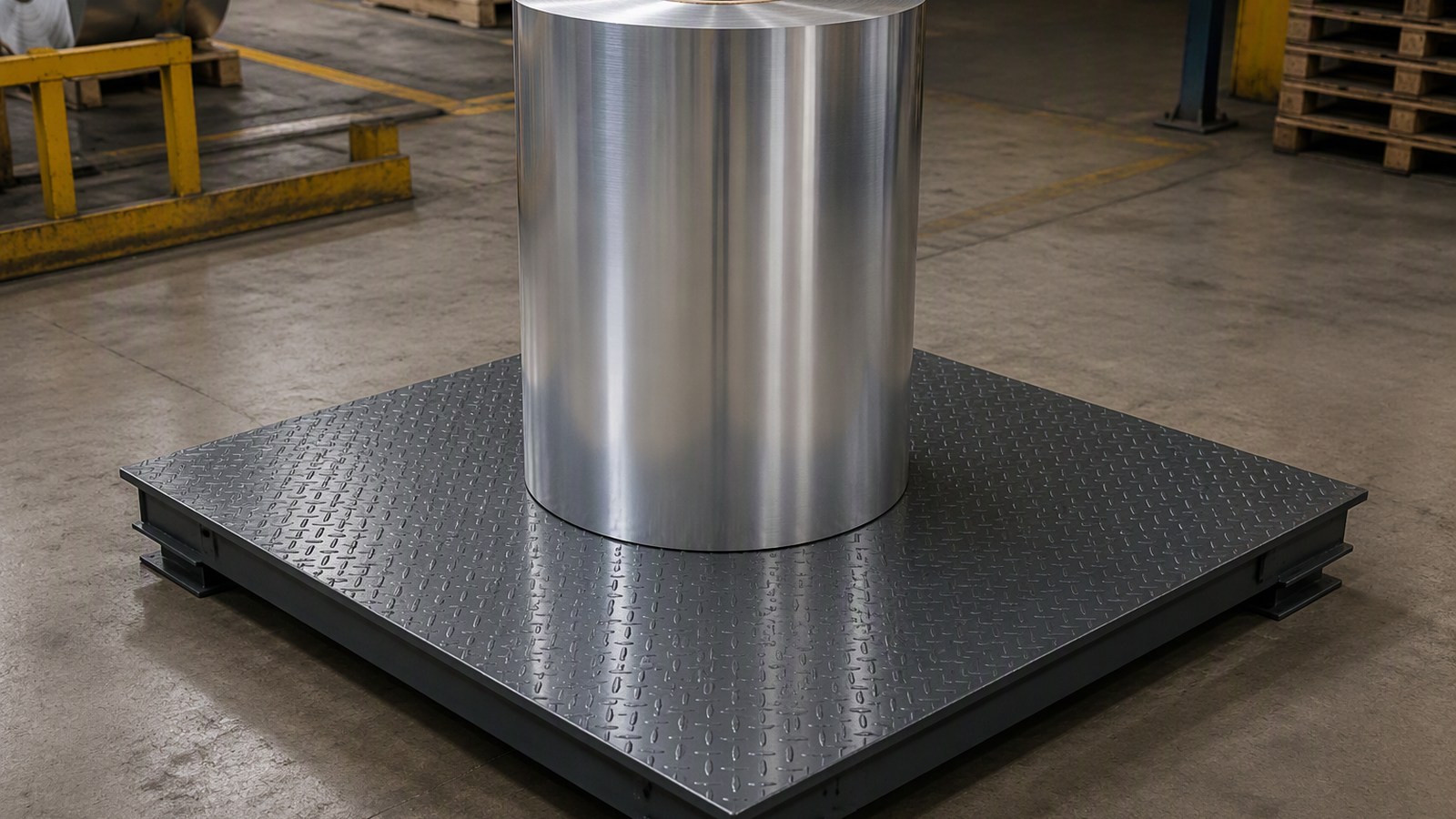
Reconciliation starts on the weighbridge. Gross mass is measured, tare is deducted for core and packaging, and the remainder is the metal. That figure is the only one in the chain measured rather than assumed, so it should anchor the comparison, and the quoted length should be tested against it.
If the two disagree, the disagreement is information. A consistent offset across several rolls points to packaging mass, or to a nominal gauge being read as exact. A scattered result points to weighing practice, to a mixed consignment, or to rolls from more than one slit pattern. Neither pattern should be argued roll by roll; both are conversations about method.
Record the outcome, because it is the only way the next consignment can be checked quickly. Where arithmetic and weighbridge agree within the noise of the scale, the nominal figure can carry planning. Where they do not, the method needs adjusting before the next order rather than after it.
What should you record so the next delivery can be checked against the last?
A short record per delivery turns arithmetic into a trend. Five fields do most of the work and take minutes to capture.
Record gross mass, net mass, measured width, nominal thickness and the length actually consumed, then compare each delivery against the one before it.
Dive deeper
The record need not be elaborate. Gross mass, tare or net mass, measured width, nominal thickness and the length actually consumed are enough to reconstruct the calculation later. Add the supplier's stated nominal length and the two can be compared without reopening old correspondence.
Keep the record per delivery, not per order. A consignment split across several rolls shows variation that a single averaged figure hides, and the variation tells a planner how much margin to hold. The same record answers the question a year later, when nobody remembers which roll came from which slit.
The comparison is simple. Convert each delivery to metres using its own measured inputs, then look at the spread, not the average. A steady small offset is a calibration matter; a jump between deliveries is a change of material, supplier or method, and deserves a query before the stock is committed.
This is also where arithmetic hands over to commercial work. Once two deliveries sit on the same basis, the numbers behind an offer can be compared honestly, which is the subject of comparing foil quotations like for like. For weighing, guidance such as that published by NIST explains why a scale reading carries an uncertainty.
Arithmetic narrows the range; documents close it. Record the four inputs, treat calculated lengths as estimates, and let the order documents and the supplier's roll data fix the final figure.