How to Compare Aluminium Foil Quotations From Different Suppliers?
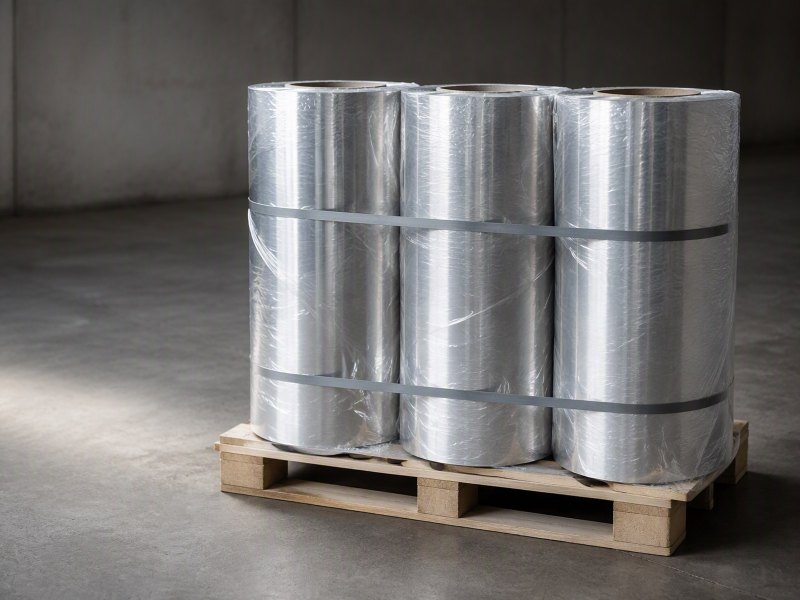
Three suppliers can quote the same price per tonne for very different foil. This guide shows buyers how to normalise alloy, temper, gauge and tolerance, slit width, core and roll diameter, packing, minimum quantity per size and port.
How to Compare Aluminium Foil Quotations From Different Suppliers?
Three suppliers return three numbers that all say "price per tonne", and none of them describes the same foil. The lowest figure is usually the least comparable one.
Normalise the specification first: alloy, temper, thickness and its tolerance, slit width, core and roll diameter, packing, minimum quantity per size and loading port. Only when every offer describes identical material do the remaining commercial terms become comparable.
Comparison is a sequence, not a spreadsheet. Fix the specification, ask each supplier to quote against it, then examine what still differs and why.
Why is a lower price per tonne not automatically cheaper?
A lower figure per tonne can hide a thinner gauge, a narrower roll or lighter packing. What matters is the cost of usable foil.
A tonne is not a product. Two offers can both say "foil" and still differ in alloy, temper, thickness, width and protection. Until those match, the lower number describes a different purchase, not a better deal.
Dive deeper
Quotations arrive in one familiar unit, price per tonne, which is precisely why they look comparable when they are not. A tonne of 0.006 mm foil and a tonne of 0.030 mm foil are different purchases, because the thinner material covers far more area for the same mass. Any figure per tonne therefore has to be read together with the nominal gauge and its tolerance, since the square metres delivered per tonne depend on both. What a price per tonne really covers is the first calculation that turns a headline into a usable cost for a buyer who consumes area rather than mass.
A low figure can also be earned in quieter ways: a leaner alloy that behaves differently in the customer's own process, a temper chosen for a cheaper route, a narrower slit width that leaves the buyer more edge trim, or lighter packing that protects less. The fair way to read any offer is to convert it into the unit the buyer actually consumes, whether square metres of usable foil or rolls that reach the machine undamaged.
None of this argues for ignoring price. It argues for reading it last, once the specification is fixed and every supplier is answering the same question.

Which technical variables must be normalised before offers can be compared?
Alloy, temper, thickness, tolerance and width define the material itself. Offers that differ on any one of them are not the same line item.
Lock alloy, temper, nominal thickness with its tolerance band, slit width, core and roll diameter, packing and minimum quantity per size before ranking the numbers.
Dive deeper
Alloy and temper come first. Foil is quoted across several families, including 1050, 1060, 1100, 1235, 3003, 3004, 8011, 8021 and 8079, and the choice is not cosmetic: it decides strength, formability and how the material behaves downstream. Temper is quoted in codes such as O, H14, H16, H18, H22 and H24, and two suppliers offering the same alloy in different tempers are effectively offering different products. 1235 aluminium foil at 0,006 mm shows how tightly one line item can be defined. Useful background on the material is available in the Wikipedia entry on aluminium foil.
Thickness is the second anchor. Offers may sit anywhere in a working range of roughly 0.005 mm to 0.20 mm, and each nominal gauge carries its own permitted tolerance. Two buyers can order the same nominal figure and receive material at opposite ends of the permitted band, which shifts the delivered area per tonne and the number of rolls a job needs. Width normally runs from 100 mm to 1500 mm, and the slit width must be stated with its own limit, because a nominal width without a limit is only half a specification. Thickness tolerance and yield explains why a tolerance range belongs in the comparison itself.
How do slit width, core diameter and roll diameter change the comparison?
These three dimensions decide whether the coil fits the buyer's line. Offers can share a specification and still not run on the same machine.
Compare the exact slit each line needs, the mandrel the equipment accepts and a comparable outside roll diameter. Coils wound to someone else's core are not equivalent goods.
Dive deeper
Slit width is where a quotation quietly changes shape. A supplier may be able to offer a range from 100 mm up to 1500 mm, but the exact slit the buyer's line needs is what has to be compared, because slitting creates edge trim and somebody has to own it. Two offers at the same nominal width can still differ in how evenly the coil is wound and how flat it lies on the machine. The wider family of foil roll and sheet shows how many permutations a single request line can hide.
Core diameter is a hard constraint rather than a preference. Mandrels are commonly 76 mm or 152 mm, and a coil wound on the wrong core will not mount without rewinding, an avoidable cost that never appears on the quotation itself. Roll diameter belongs in the same conversation, because it sets how long one coil runs before a changeover and how many coils fit on a pallet for handling and storage. A buyer comparing two offers should insist on the same core and a comparable outside diameter, then check that the resulting roll weight suits the lifting and unwinding equipment on site and the storage space reserved for the coils before any ranking begins.

How do packing and moisture protection change the real cost of an offer?
Foil is sensitive to humidity, edge damage and stacking pressure. Packing is part of the product, not an afterthought.
Specify eye to sky or eye to wall on a wooden pallet with a moisture barrier wrap, and demand the same description from every supplier before comparing anything else.
Dive deeper
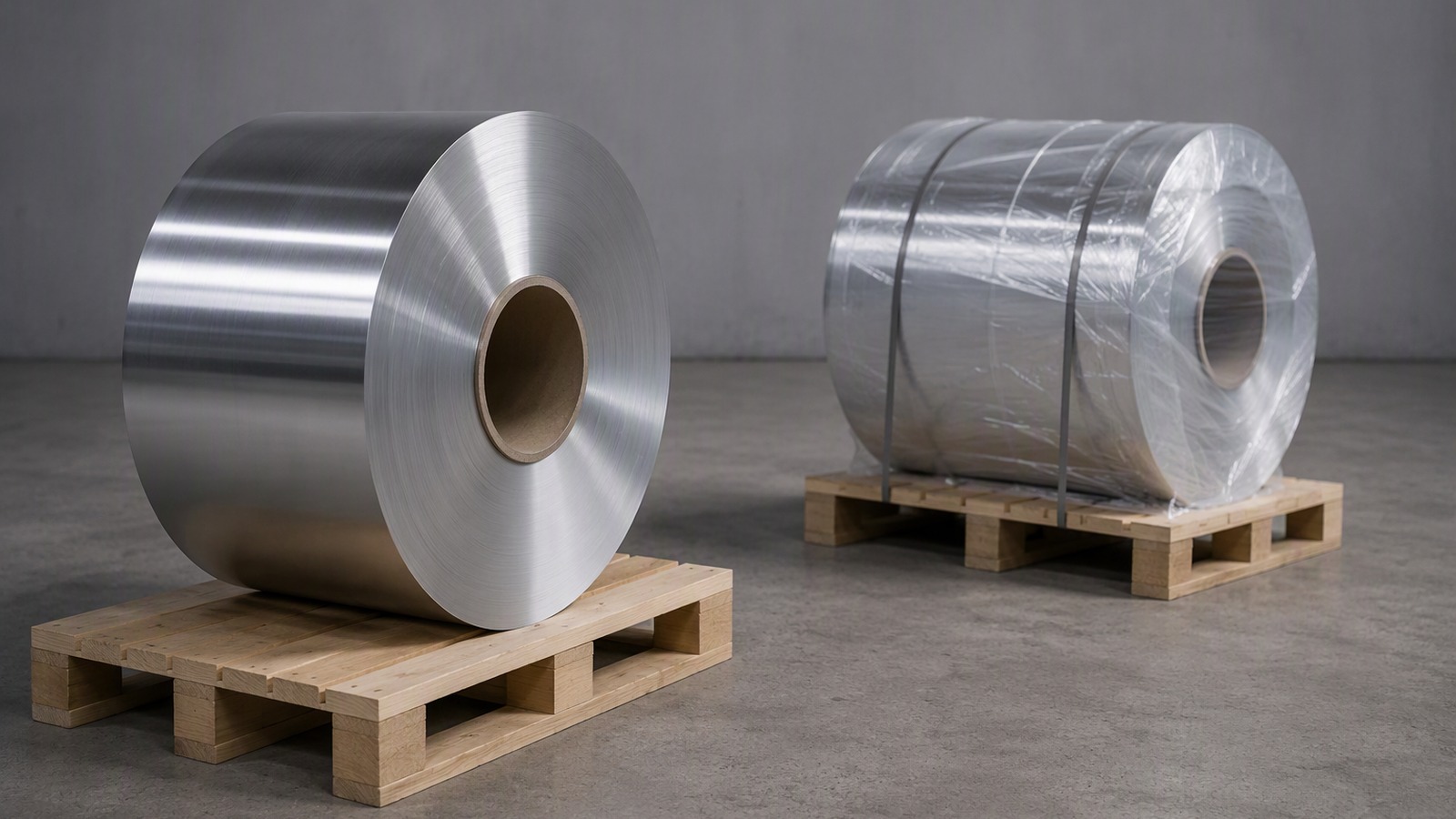
Packing is the part of a quotation most often left implicit. Because foil reacts to moisture and to pressure, the description should say exactly how the coil is presented: eye to sky or eye to wall on a wooden pallet, with a moisture barrier wrap. Those two orientations behave differently in storage, in a container and at the machine, and a supplier who assumes one of them may deliver a load the buyer has to re-orient before use. Lightweight packing can look efficient until the first damaged edge is discovered. The page for aluminium foil roll is a reminder that the coil, not the tonne, is the object actually being handled.
Ask every supplier to describe the pallet, the wrap and the stacking rule inside the offer, and to state whether repacking at the destination is included or excluded. Industry bodies such as the Aluminum Association discuss how the material is handled and shipped, which helps a procurement team frame the right questions instead of assuming the answers. A packing clause that is written down can be compared or disputed; one that is merely implied can be neither. Two suppliers can both say "wrapped" and still mean very different levels of protection.
How does MOQ per size shape a comparable quotation?
Minimum quantity is usually expressed per size rather than per order. A reply built on one size is not comparable with one built on the buyer's mix.
List every size separately with its expected quantity, and ask each supplier to confirm the minimum that applies per line before the figures are ranked.
Dive deeper
Minimum order quantity is a commercial variable that changes the meaning of everything else in an offer. A supplier may work from a minimum of 3 MT per size, which means a buyer who needs five widths is not buying 3 MT but five quantities that each have to clear that threshold. A quotation that silently assumes a single size is not comparable with one that respects the real mix of sizes in the buyer's plan. That single hidden assumption can distort the whole comparison.
The request should therefore list every size separately, with the quantity expected for each, and ask each supplier to confirm the minimum that applies per line rather than per order. Where a buyer cannot reach the minimum on some size, a fair comparison asks what the supplier proposes instead: a neighbouring width, a consolidated run, or an explicit statement that the size is not offered. Quantities below a minimum tend to return either a refusal or a heavier handling element, and both outcomes should be visible before the comparison is filled in. The same discipline applies to the total quantity, so state whether one shipment is expected or several, because the answer changes how the offer is built.
Why does the loading port belong in a like-for-like comparison?
Where the goods are loaded decides what the buyer is really buying. Offers named on different ports describe different routes as well as different terms.
Ask each supplier to name the loading port, whether Qingdao, Tianjin or Shanghai, and to say who carries the cost of moving the goods to it.
Dive deeper
Where the goods are loaded changes what the buyer is actually buying. Foil may be offered out of Qingdao, Tianjin or Shanghai, and the three are not interchangeable: the inland leg to the port, the availability of suitable sailings and the handling at each terminal all differ. A quotation that names one port is describing one route, and comparing it with an offer built on another route compares the routes as much as the material.
A buyer should ask every supplier to state the loading port on the offer, to confirm whether the figure is built on that port or on a later point, and to say who carries the risk and the cost of moving the goods to it. Ask, too, whether the named port is the one the goods will actually leave from, since a port written into a quotation and a port used in practice are not always the same. Trade associations such as European Aluminium follow how the metal moves through the wider market, which helps a procurement team ask informed questions about route and origin. When port, packing and specification are all fixed, the differences that remain are genuinely commercial, and they can be judged on their merits rather than on geography alone.
What should an RFQ contain so that the replies are comparable?
An RFQ is a specification document before it is a request for a number. Every line it omits becomes a difference between the replies.
State alloy, temper, thickness with tolerance, slit width, core and roll diameter, packing, quantities per size and expected port, then ask for replies in a fixed structure.
Dive deeper
An effective request opens with the alloy and temper, then the nominal thickness with its tolerance, then the slit width with its own limit, then the core diameter and the expected roll diameter. Packing follows: the orientation on the pallet, the moisture barrier wrap and the pallet type. Then come the quantities, listed size by size rather than as a single total. Each line removes one opportunity for a supplier to answer a different question.
The document should also state the loading port the buyer expects, the packing standard, the quantity basis and the documents required. Ask suppliers to reply in a fixed structure, one line per size and one column per attribute, so that replies can be read side by side without interpretation. Invite suppliers to flag any deviation from the requested specification, and to say which items are offered as equivalents. A visible deviation can be judged; a buried one cannot.
Finally, ask for the assumption behind each figure. A supplier who explains that an offer rests on a particular core, packing or port has given the buyer something concrete to work with. A supplier who returns a single number has returned a comparison that cannot honestly be completed.
Which commercial terms should a buyer check before award?
Once the specification matches, the remaining terms decide the award. Two compliant offers can still differ on what is included in the figure.
Check what the figure includes, how long the offer stands, the currency it is expressed in and the quantity basis, then document what each supplier has promised.
Dive deeper
When the technical match is settled, the remaining terms decide the award. Check what each figure includes: loading at the named port, packing on a stated basis, and the quantity tolerance that applies. Ask what happens if delivered thickness or width lands at a different point in the permitted band, and whether the offer still stands if quantities are split across more or fewer sizes than assumed.
Ask how long the offer remains open and what would cause it to be revisited, because a comparison that has gone stale is not a comparison. Confirm the currency in which the amount is expressed and the basis it refers to, so that offers written in different currencies can be brought to a single reference before they are ranked. For buyers who follow market context, ALFED and similar bodies publish sector commentary that helps frame a negotiation.
Document what every supplier promises in writing, covering specification, packing, port and quantity basis, and hold each offer to that record. The offer that is easiest to compare is usually the one that is easiest to enforce.
An offer is only comparable when it describes the same foil. Normalise the specification, then the terms, and the genuinely better quotation becomes visible.