What Is Aluminium Foil Embossing and When Is It Needed?
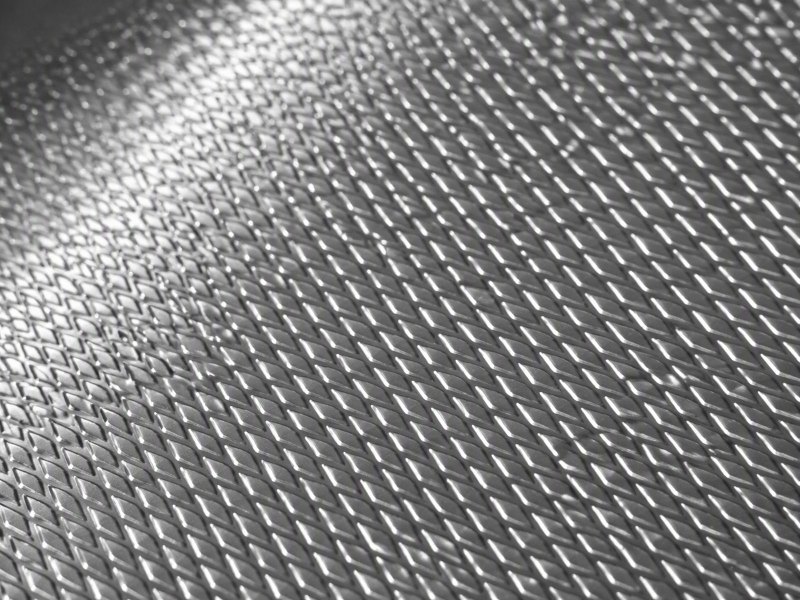
Aluminium foil embossing presses a raised or recessed pattern into thin foil between engraved rollers. This guide explains why household foil is embossed, how the pattern affects winding and dispensing, and what buyers must specify.
Two rolls of household foil can look identical yet behave differently in the hand. The difference is often embossing — and buyers who ignore it meet complaints later.
Embossing is a mechanical process that presses a raised or recessed pattern into aluminium foil between engraved rollers. It adds texture, hides handling marks and stiffens thin gauges. Household and catering foil is usually embossed so it separates cleanly, resists tearing and looks more substantial.
Embossing is not a decorative afterthought. It shapes how a roll unwinds, how the sheet clings to a tray, how a converter's line runs and what a private-label buyer must put on the order. The questions below follow that chain, from definition to specification.
What exactly happens during aluminium foil embossing?
Embossing sounds simple, yet the equipment, the pattern and the pressure all change the finished roll. Understanding the mechanics helps buyers ask sharper questions.
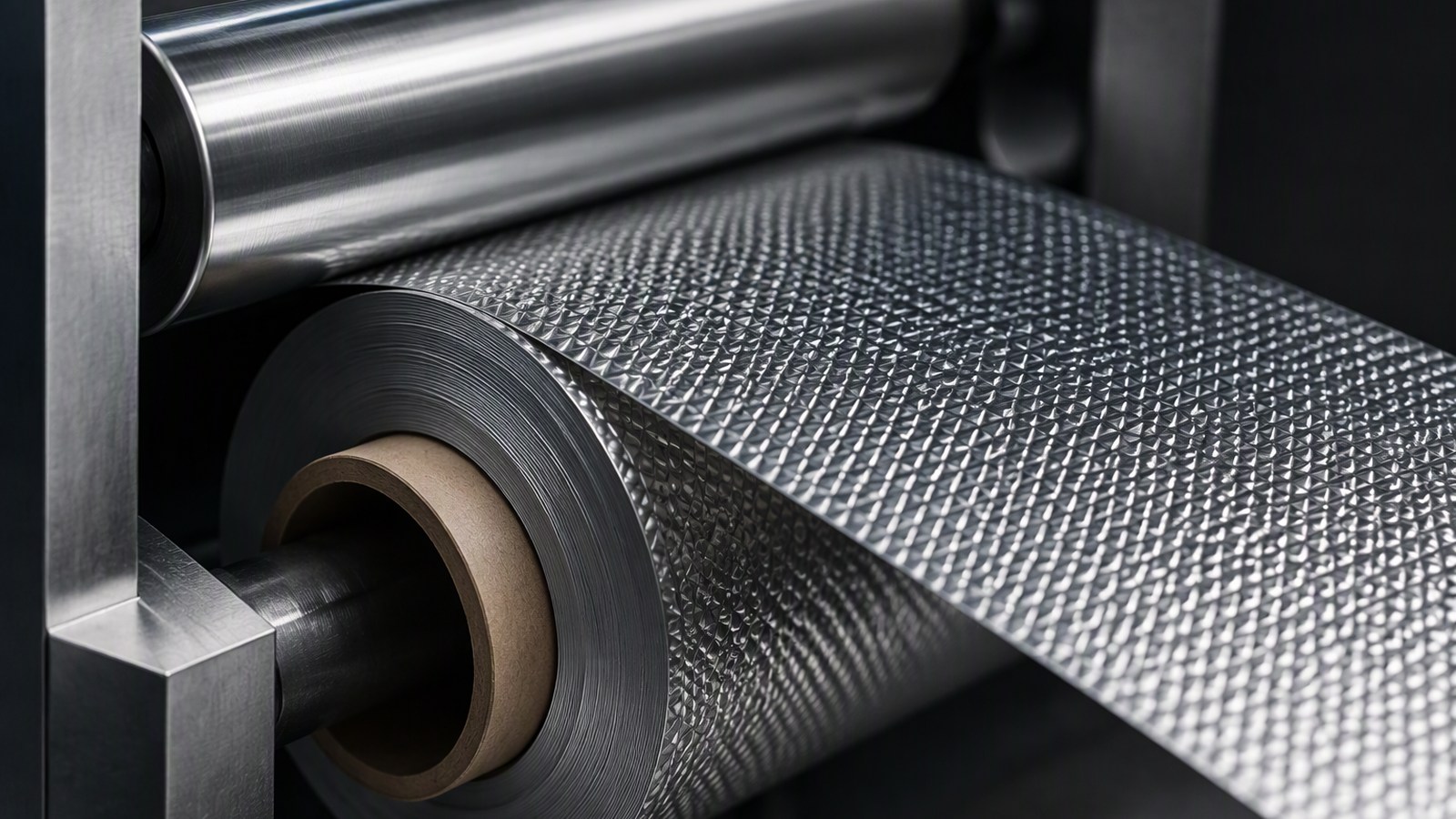
Aluminium foil embossing runs a web of foil between two rollers, at least one engraved, which permanently deform the metal. A matched steel-to-steel or steel-to-paper set presses a raised, recessed or combined pattern into the sheet without punching through it.
Dive deeper
Engraved rollers and pattern transfer
The heart of the process is a pair of rollers. One or both carry an engraved pattern — a grid of small studs, a leather-like grain, a honeycomb or a fine line design. As the foil passes through the nip, the engraving transfers its shape into the metal. Aluminium is soft and highly malleable at the gauges used for household foil, so the pattern is set permanently rather than springing back, and the sheet keeps a slight three-dimensional memory after it leaves the rollers.
Pressure, tension and web control
Pressure is the main lever. Light pressure gives a shallow, subtle texture; heavier pressure gives a deeper pattern that adds body to a thin sheet. Tension control matters just as much, because a loose web wrinkles in the nip while an over-tight web can thin or crack at the pattern edges. Roll diameter, roller temperature and line speed are set together, which is why embossing is specified as a whole process rather than one switch on a machine. Consistent nip pressure across the web is what separates a pattern that merely looks embossed from one a buyer can repeat, metre after metre.
Steel-to-steel, steel-to-paper and matched sets
Two configurations dominate. In steel-to-steel embossing, a hardened engraved roller works against a smooth or complementary steel roller and gives a crisp, durable pattern. In steel-to-paper or steel-to-rubber arrangements, the engraved roller presses the foil into a softer backing roll, producing a gentler texture that can be kinder to very thin gauges. Either way, the aim is a pattern that stays uniform across the full width — available in widths from 100 mm to 1500 mm — and consistent from the first metre of the roll to the last. For a closer look at the base material, see embossed household aluminium foil.
Why is household and catering foil embossed?
Household and catering foil is judged in the hand and in use. Embossing answers both, but the reasons are more practical than cosmetic.
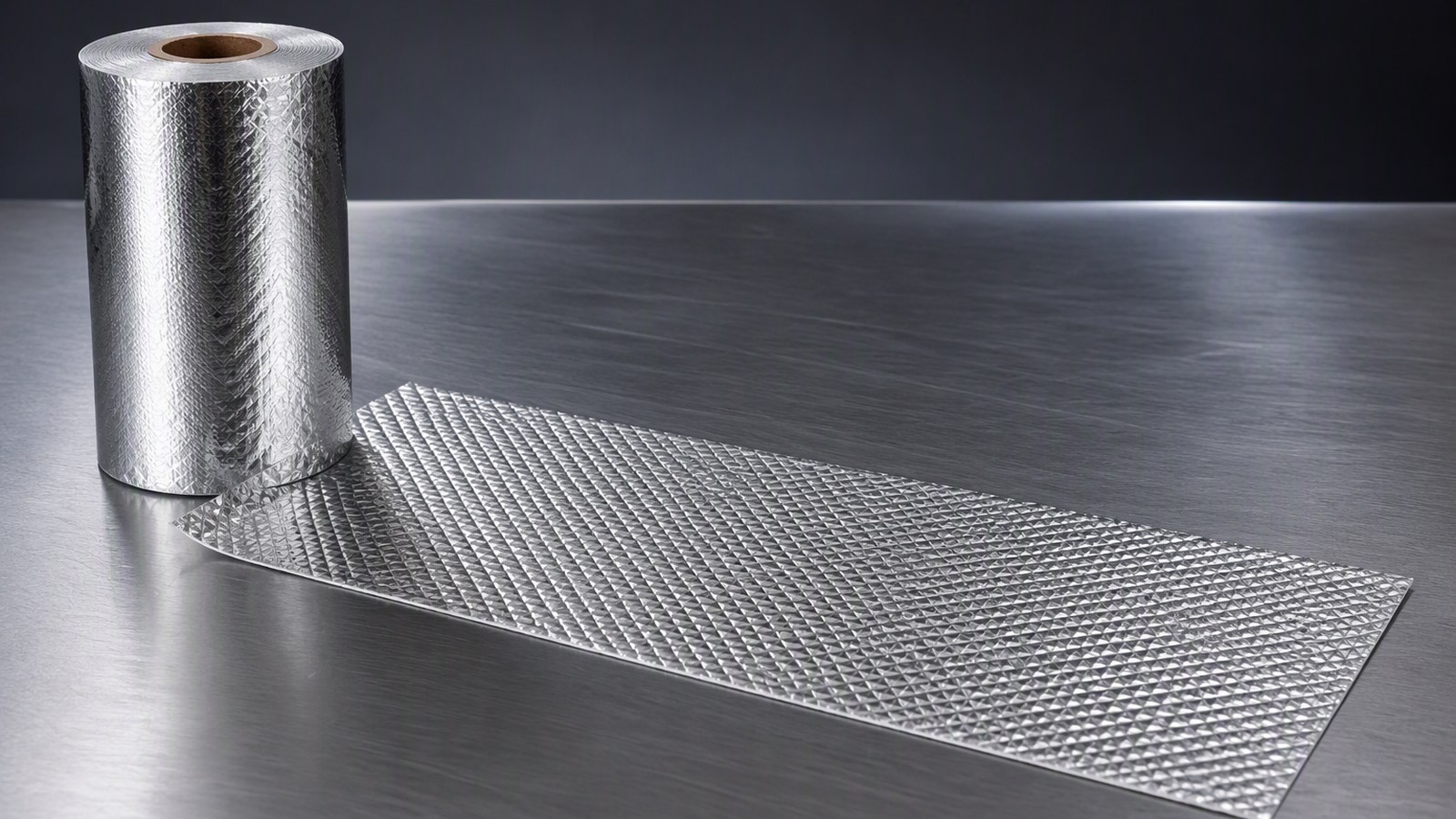
Household and catering foil is embossed mainly for function: the pattern stiffens very thin gauges, hides fingerprints and small creases, helps the sheet release from the roll without clinging, and gives a premium look that supports private-label positioning.
Dive deeper
Stiffness in a very thin gauge
Household foil is often supplied in very light thicknesses — available from 0.005 mm to 0.20 mm depending on the application — and a very thin sheet handles poorly if it is perfectly flat. Embossing adds a shallow three-dimensional structure that raises the apparent stiffness, so a light gauge feels more like a heavier one. That means a brand can offer foil that feels substantial without moving to a thicker, more expensive specification.
Release, cling and handling
A smooth foil can cling to itself and to the roll, which makes tearing a single sheet awkward and frustrates users. The raised pattern reduces the flat contact area between layers, so the sheet releases more predictably. It also disguises the small creases and fingerprints that appear as soon as anyone touches a mirror-smooth surface, which keeps a used roll looking tidy for longer.
Appearance, branding and perception
Embossing is also a visual and tactile signal. A defined pattern reads as quality on a supermarket shelf, and different patterns — studs, grains, honeycombs, fine lines — let a private-label owner build a recognisable look without changing the metal underneath. Because the pattern can be chosen while the alloy, temper and thickness stay the same, embossing is one of the most cost-effective ways to differentiate a household roll. Retail buyers often judge a roll by feel before they read the label, and a defined emboss is one of the few cues that costs almost nothing to keep. To see how it fits the wider range, look at the food and household foil range.
How does an embossed pattern interact with roll winding and dispensing?
A pattern that looks good on a flat sample can cause trouble once it is wound. Winding and dispensing are where embossing earns or loses its value.
The embossed texture controls friction and air between layers. A well-matched pattern lets the roll wind tightly but still unwind smoothly, while a pattern that is too deep traps air, makes the roll bulky and can block clean dispensing.
Dive deeper
Layer-to-layer friction and tightness
When embossed foil is wound into a roll, the raised areas of one layer press against the next, creating many small contact points. This controlled friction helps the layers grip so the roll stays tight during winding and handling. Too little texture and the layers slide, so the roll loosens and telescopes; too much and the layers bind, so the user has to tug to start a sheet.
Air entrapment and roll diameter
A deeper pattern traps more air between layers, which increases the finished roll diameter for the same length of foil. That affects carton size, pallet counts and shipping volume, so pattern depth is a packaging decision as well as a tactile one. A shallow, regular emboss is usually the compromise that keeps the roll compact while still delivering the handling benefits described above.
Core, cut and dispensing behaviour
Dispensing also depends on the core and the cut. Rolls are commonly supplied on 76 mm or 152 mm cores, and the core must match the holder or dispenser the end user has at home or on a kitchen line. A smooth, even edge plus a consistent emboss lets the sheet tear along the intended line instead of running off at an angle. Dispensing quality is also felt at the moment of tearing, since a well-set emboss guides the tear while a poor one lets the sheet stretch instead of tearing cleanly. For a fuller discussion, read the guide to choosing aluminium foil thickness.
When is a plain, smooth surface the better choice?
Embossing is not automatically better. Several applications need a flat, mirror-smooth surface where texture would get in the way.
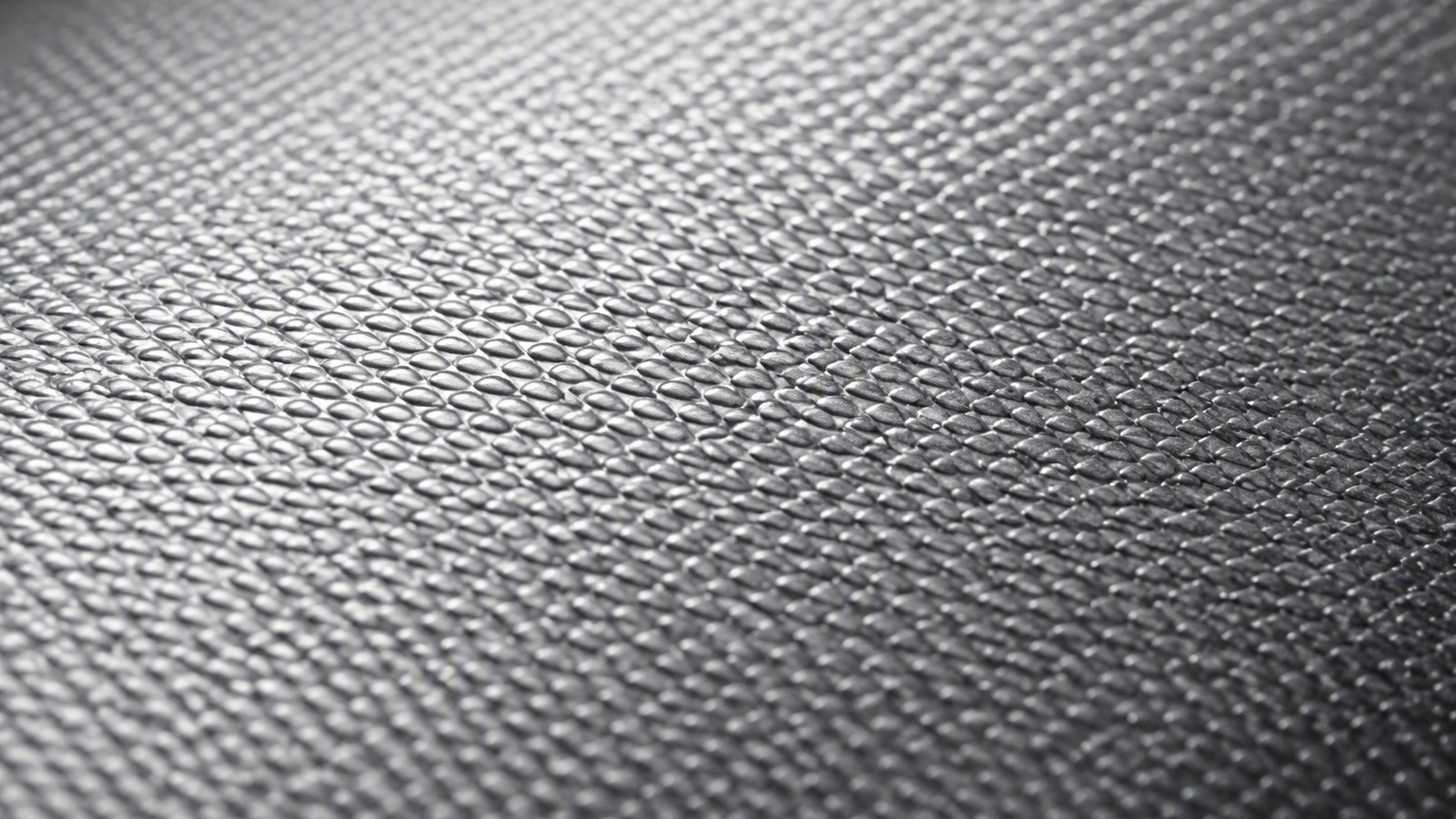
A plain surface is better when the foil must sit flat, reflect clearly, seal tightly or carry a printed design. Lamination, some lidding and certain container seals all favour smooth foil over an embossed pattern.
Dive deeper
Flatness, reflection and print
A smooth surface lies flatter and reflects more evenly, so it suits decorative wrapping, gift and florist use and any application where a clean mirror finish is part of the look. It also accepts printing and coating more predictably, because ink and adhesive meet a continuous surface rather than a field of raised studs.
Sealing and lamination
Where foil is laminated to paper, board or film, or where it must form a reliable heat seal, a flat surface gives more consistent contact. An embossed pattern can create micro-channels at the seal line, which may weaken the bond. For rigid containers, trays and lidding stock, converters frequently specify smooth foil so the sealing window stays wide.
Cost, weight and process simplicity
Plain foil also removes one process step, which can simplify scheduling and reduce waste from pattern set-up and roller changes. When the alloy, temper and thickness already meet the requirement, there is little reason to emboss a product that will be laminated, printed or hidden inside a pack. The honest answer is that embossing should be specified because it solves a handling, appearance or stiffness problem — not because it is the default. That distinction is the difference between a specification and a habit, and it is why the honest specification names the problem the emboss is meant to solve.
How does embossing fit converters and private-label programmes?
For a converter or a private-label owner, embossing is a specification line that carries commercial weight. It must be defined, not assumed.
Converters treat embossing as a defined line item: pattern, depth, width and direction all matter. Private-label programmes use it to create a house look, and the process has to be reproducible run after run.
Dive deeper
Specifying a pattern that can be repeated
A pattern is only useful if it can be reproduced. Converters therefore record the pattern type, the approximate depth, the roller set and the process settings, so that a reorder matches the first delivery. Samples signed off on one run become the reference for every later run, and drift is caught by comparing texture, roll diameter and hand-feel against that reference. Without a written pattern record, two deliveries of the same roll can feel completely different in the customer's kitchen.
Private-label identity and range logic
For a private-label owner, the emboss is part of the brand's tactile signature. A supermarket or retail brand may run one pattern across an entry-level line and a finer pattern across a premium line, keeping the metal identical while the look changes. This lets a range tell a story on the shelf without a costly re-specification of alloy, temper or gauge. The private-label household foil process sets out how these choices are usually staged.
Consistency, packing and base parameters
Consistency also depends on packing and handling. Embossed rolls are commonly supplied with the specified packing — eye to sky or eye to wall on wooden pallet, moisture barrier wrap — so the pattern is not crushed in transit. Orders are usually expressed with alloy, temper, thickness in millimetres, width in millimetres, core size and a minimum of 3 MT per size, and the ports of Qingdao, Tianjin or Shanghai are commonly nominated for shipment. Nothing about embossing changes those base parameters; it sits on top of them. Consistency is therefore a shared responsibility between the mill that supplies the coil and the converter that finishes the roll.
What must a buyer state when ordering embossed foil?
The order that gets the right roll is the one that states the pattern and the base foil together. Vague instructions invite mismatched deliveries.
A buyer should state alloy, temper, thickness and width, the core size, the required emboss pattern and depth, the packing, the order quantity and the destination port — plus any private-label artwork or reference sample.
Dive deeper
The base foil parameters
Start with the metal. Alloys such as 1050, 1060, 1100, 1235, 3003, 3004, 8011, 8021 and 8079 are commonly supplied for household and catering foil, and tempers O, H14, H16, H18, H22 and H24 are available depending on the strength and softness required. Thickness can be specified from 0.005 mm to 0.20 mm and width from 100 mm to 1500 mm, with cores of 76 mm or 152 mm. A frequent household specification is a light gauge such as embossed 8011 aluminium foil 0.015 mm.
The emboss specification itself
Then describe the pattern. State whether the emboss is raised, recessed or combined, name the pattern family if one is known — studs, grain, honeycomb or fine line — and note the desired depth as shallow or pronounced. If a reference sample or a reference roll exists, send it, because a physical sample removes more ambiguity than a written description ever can. Two buyers writing the same pattern name can still receive different textures if the depth is not agreed in writing.
Commercial terms, packing and context
Finally, cover quantity, packing and shipping. A typical order notes a minimum of 3 MT per size, the packing instruction of eye to sky or eye to wall on wooden pallet with moisture barrier wrap, and the port of loading. For wider background on the material, Aluminium foil - Wikipedia gives a general introduction, while industry bodies such as the European Aluminium Foil Association, the Aluminium Federation and The Aluminum Association publish further context on foil production and use.
Embossing is a handling and appearance decision, not a default. Specify the base foil and the pattern together, and choose a plain surface when flatness, sealing or printing matters more.