What is the difference between aluminium foil and aluminium sheet?
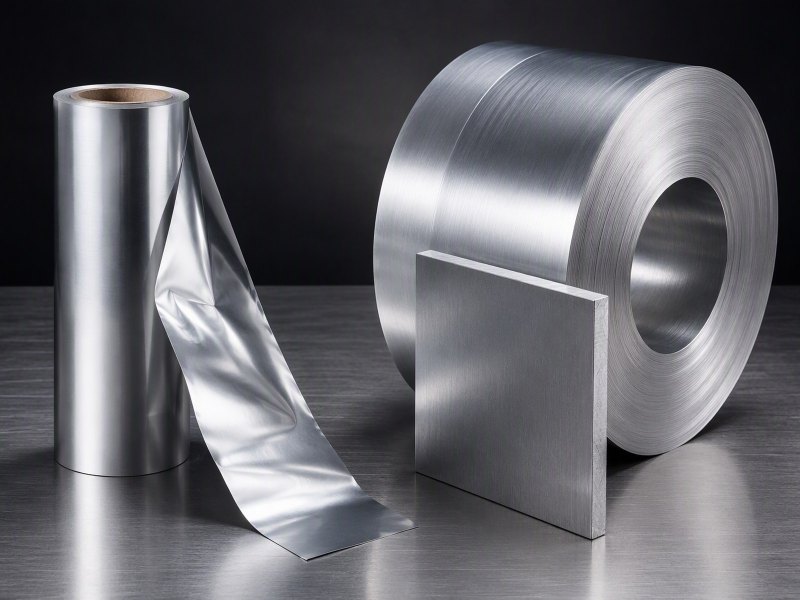
Foil and sheet are both rolled aluminium, set apart by gauge, stiffness and supply form rather than one fixed number. This guide explains where the trade boundary sits, how each product is made and handled, and how to ask for the form you want.
You ask for foil, the supplier quotes sheet, and the two quotes land far apart. The words sound interchangeable, yet they describe different products and supply forms.
Foil and sheet are both rolled aluminium, separated mainly by gauge and behaviour rather than one fixed number. Foil is the thinner, flexible web supplied on rolls; sheet is the thicker, self-supporting product supplied flat. The exact boundary is a trade convention, not a physical law.
This article explains where the working boundary sits, how each product is made and handled, and how to ask for the form you want.
Where does the industry draw the line between foil and sheet?
Everyone quotes a gauge, yet no single number separates the two products.
Trade sorts foil and sheet by how thin and flexible the rolled product is, not by one universal cut-off, so behaviour and supply form matter more than a magic number.
Dive deeper
The everyday description people reach for is that foil is the very thin product that flexes in the hand, while sheet is the thicker product that holds its own shape when you lift one edge. That description is more reliable than any single figure, because a mill does not consult one global rulebook before it labels a coil.
What changes at the thin end is not only dimension but behaviour: the material stops resisting bending and starts conforming to whatever surface it meets. Buyers gain more from thinking in three dimensions at once, namely gauge, stiffness and supply form. A thin web on a roll and a distinctly heavier flat product cut to length sit at opposite ends of the same family, with an overlap in between where the same coil could be described either way.
For a buying decision, the practical test is what you intend to do with the material. If you need a web that wraps, laminates, insulates or lines a surface, you are almost certainly describing foil. If you need something that stands up, spans an opening, carries load or keeps a flat face, you are describing sheet. The guide to choosing foil thickness walks through that reasoning, and the wider foil roll and sheet range shows how the two families sit side by side.
How are aluminium foil and aluminium sheet actually produced?
Both start as cast aluminium that is rolled thinner and thinner; the difference is how far the rolling continues.
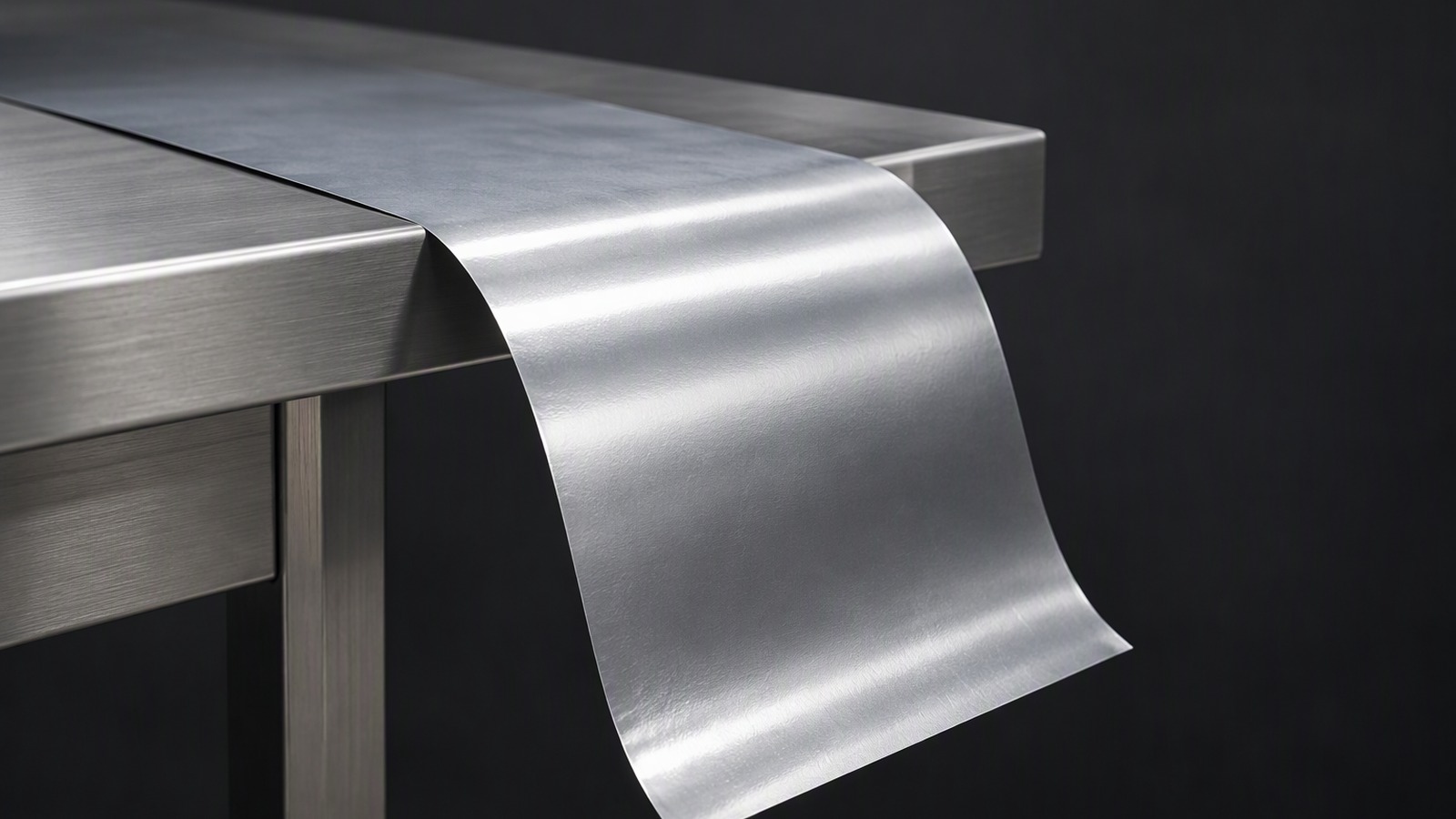
Both are rolled through progressively tighter gaps. Foil is finished on rolls in long webs, sometimes doubled for very thin gauges, while sheet stops at a heavier gauge and is flattened, levelled and cut or coiled.
Dive deeper
Production starts from a cast slab or from continuous cast stock, which is hot rolled and then cold rolled. As the web becomes thinner it also becomes longer and more prone to edge waviness, so rolling, lubrication and tension control matter more with every pass. Foil mills run long campaigns, keep the web under tension, and often pair two layers together during the final passes so that very thin material can be handled without tearing.
Sheet lines share the early stages but finish differently. The heavier gauge leaves room for flattening and tension levelling, so the finished piece can hold a flat face across its full width. It can then be sheared into cut lengths, or coiled if the customer will run it through a forming line. The European Aluminium industry association is a useful starting point for understanding the wider rolled-products picture.
Because the two products leave the mill in different forms, downstream handling differs too. Foil is wound onto cores and protected from every crease; sheet is stacked, banded and often interleaved. This is why the same alloy and the same temper can behave differently in the customer's plant: what changed was not the metal but the geometry and the way it was delivered.
How do stiffness and behaviour change as gauge gets thinner?
A piece of foil droops over your finger; a heavier sheet resists gravity and keeps its shape.
As gauge falls, stiffness drops far faster than thickness, so thin material drapes and creases while heavier gauge stays self-supporting. That changes how each form is fed, formed and stored.
Dive deeper
Stiffness is not a simple linear effect. Halve the thickness and the resistance to bending does not halve; it falls much more sharply, because bending resistance depends strongly on how far the material sits from the neutral axis. That is why a modest change in gauge can turn a product from something that stands up into something that flops.
In the plant, thinner material is fed by tension. It follows rollers, hugs a die and will crease if it is pulled unevenly. Thicker material can be pushed, stacked and handled flat. This is why the difference matters operationally: the same forming equipment may work well for one form and damage the other. The reference overview of aluminium foil describes this thin-web behaviour, and the note on thickness tolerance and yield explains why small gauge deviations matter so much.
The practical consequence for buyers is that gauge is not only a size; it is a promise about behaviour. When you specify a product you are also specifying how it will move, crease and hold shape. Two coils of the same alloy can therefore serve completely different applications once the gauge and the finishing route change. A buyer who treats gauge as a simple dimension often wonders why a part behaves differently from the sample that looked identical on paper.
Why might the same buyer need both foil and sheet?
One factory can buy both every month, with different equipment and different lead times on each.
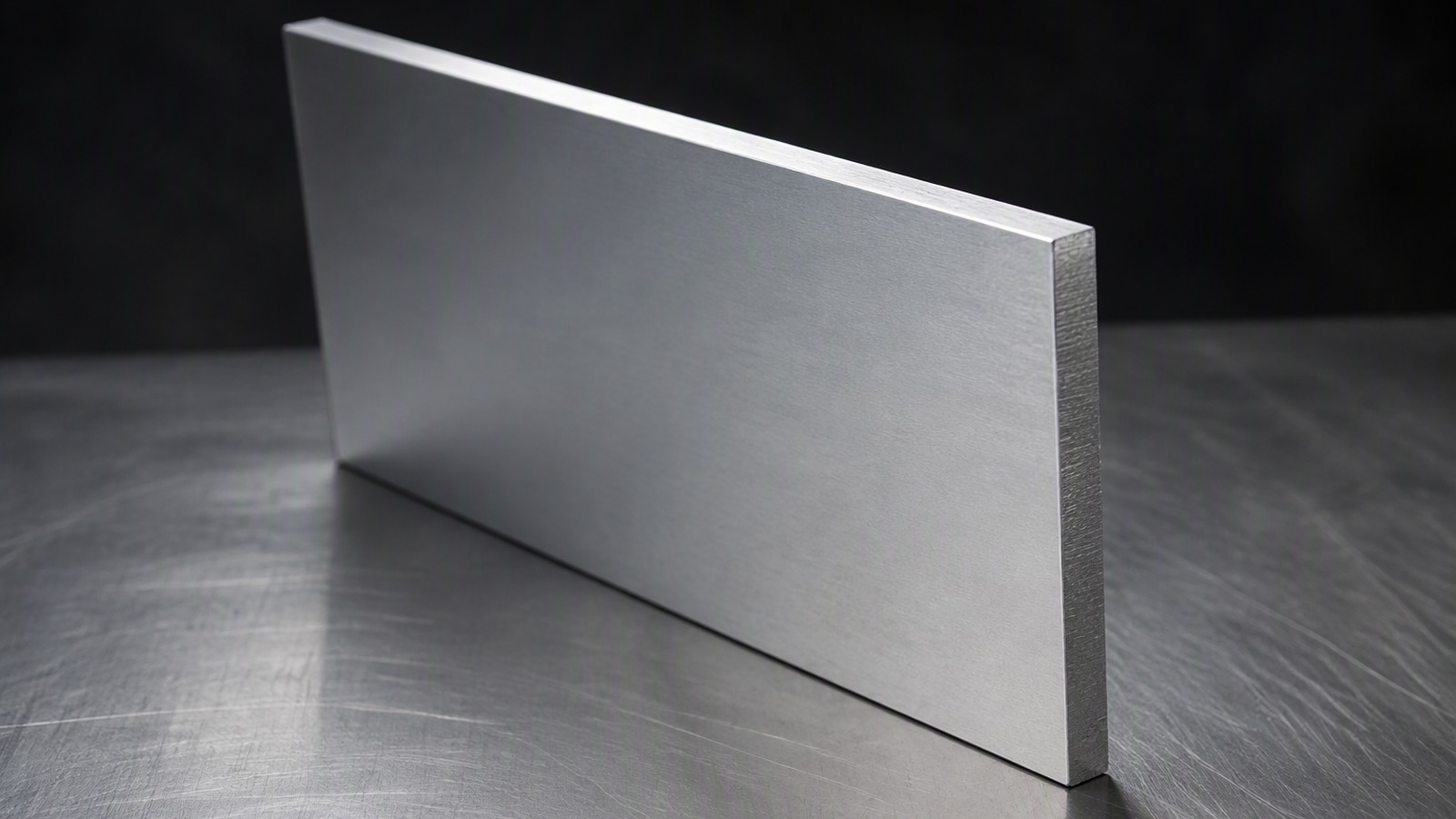
Foil wraps, insulates, laminates or lines; sheet forms panels, lids, trays or brackets. Buying both from one source simplifies logistics and consolidates grades across a product line.
Dive deeper
Picture a manufacturer of insulated panels or a producer of food containers. The thin web may be the barrier that faces the food, while the heavier product becomes the body that gives the item its shape. One purchasing team, two completely different requirements, and a strong argument for consolidating supply.
Consolidation has real advantages: one set of documents, one alloy and temper discussion, and less risk that two suppliers describe the same alloy differently. The Aluminum Association publishes resources on rolled products that can help a buyer frame that conversation. It also helps to standardise how grades and tempers are named internally, so an enquiry about 8011 is not confused with a request for a different family.
There is a commercial angle as well. Ordering both forms together can improve the way freight, packing and documentation are combined, and it can reduce the number of supplier relationships a buyer has to manage. The trade-off is that each form still behaves differently, so the specification discipline must stay separate even when the purchase order is shared. A clear internal record of which line uses which form keeps the two specifications from drifting together over time. A short note on which line consumes which form is often enough to keep both specifications stable.
What do foil and sheet look like when they arrive, on a roll or a pallet?
Delivery form is where the two products look unmistakably different: one is wound, the other stacked.
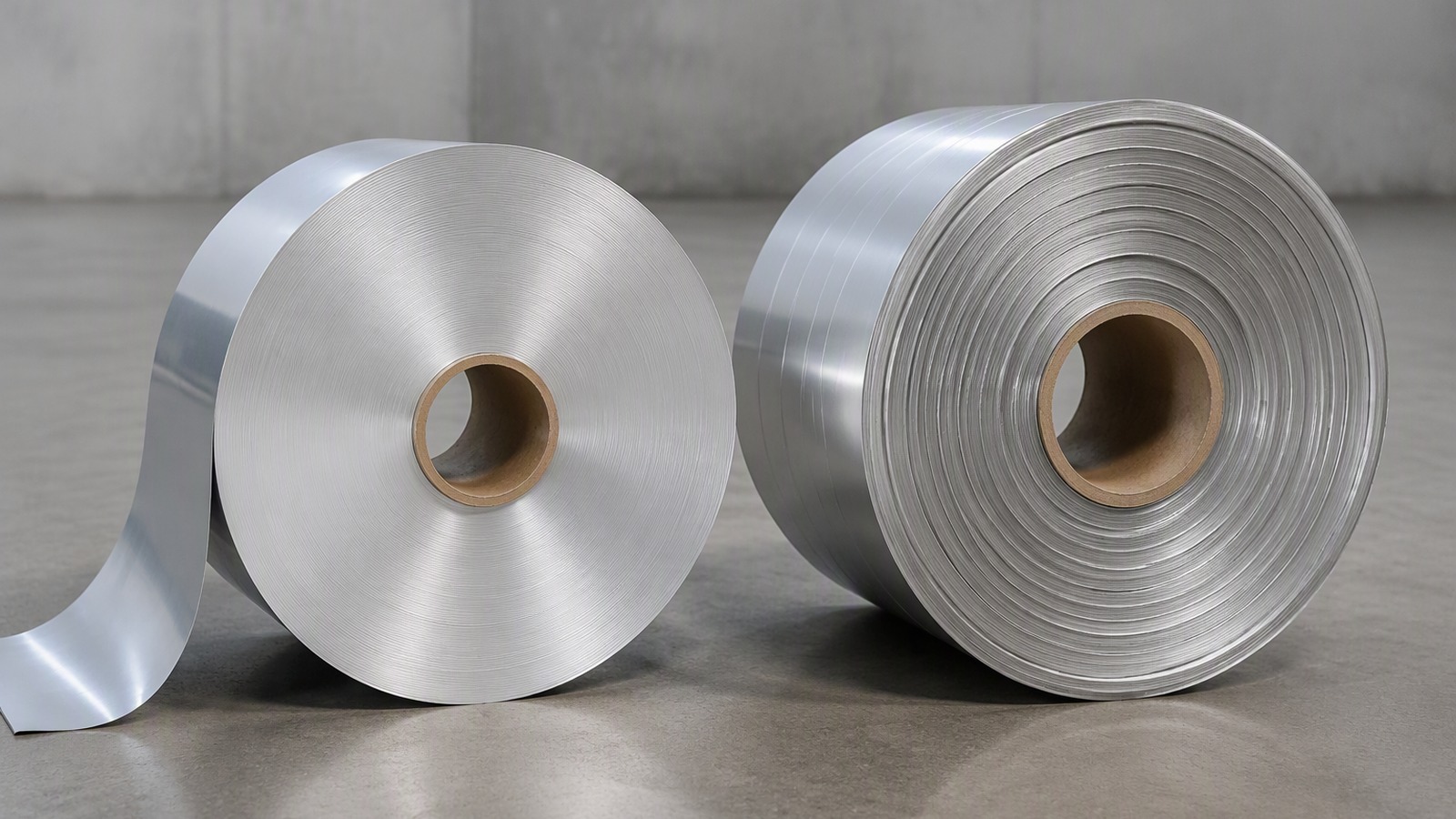
Foil arrives as a wound roll on a core, often standing eye to sky or eye to wall on a wooden pallet. Sheet arrives as flat bundles, cut lengths or coils, stacked and banded.
Dive deeper
A foil roll is compact and dense. It is supplied on a core, commonly 76 mm or 152 mm, and the web can be anything from a narrow slit to a broad width. Because the material is thin, the outer layers do the protecting: a moisture barrier wrap keeps the faces clean and the roll edges safe.
Sheet is recognised by its edges. Cut lengths are stacked into bundles and banded; a coil looks similar to a foil roll but is far heavier for its diameter and springs open if the banding is released carelessly. Both forms travel on wooden pallets, and both are usually described in packing terms such as eye to sky or eye to wall. The two pallet loads are handled differently at the dock.
When you specify the product, it helps to specify the delivery form as clearly as the metal. Ask for an aluminium foil roll if the line runs a continuous web, and a flat or coiled form if the line cuts, stacks or forms panels. Width is quoted in the range from 100 mm to 1500 mm, and the core size you need depends on your unwinding equipment, so mention both when you enquire.
How do you state in an enquiry which one you want?
Most quotation mistakes happen before price is discussed, because the enquiry named the wrong product.
Describe alloy, temper, gauge, width, core, quantity and packing, and say plainly whether you want a flexible web or a self-supporting flat product. If unsure, describe the application.
Dive deeper
A good enquiry reads like a specification, not a slogan. State the alloy from the range you need, the temper such as O, H14, H16, H18, H22 or H24, the gauge, the width, the core, the quantity and the packing. Then add the sentence that removes all doubt: whether the material must wrap and conform, or must stand flat.
If your application sits near the overlap, say so. Explain what the material will do, how it will be fed, and whether it will be formed, laminated, printed or deep drawn. A supplier can then recommend the correct product family instead of quoting the one whose name matched your email. Asking for an aluminium foil sheet when you actually need a flat panel is a classic source of delay.
Finally, name the delivery terms and the destination port, and be explicit about quantities. Foil and sheet are frequently quoted with a minimum order quantity of 3 MT per size, and that minimum applies per size rather than per order, so bundling several sizes changes the commercial picture. A short, complete enquiry usually returns a clear quotation on the first pass, and it reduces the risk of an answer to a question you did not ask.
How do handling and storage differ between the two supply forms?
Protecting a thin web and protecting a flat panel are different jobs, starting when the truck arrives.
Foil needs tension-controlled handling and protection from creases, moisture and edge damage. Sheet needs flat, well-supported storage and careful lifting. Both prefer dry, stable conditions.
Dive deeper
Foil is unforgiving about creases. A dent in a roll can leave a permanent mark across metres of web, so the roll is unwound under controlled tension and never dragged across a rough surface. Moisture is the other enemy, which is why the wrap matters as much as the metal inside it.
Sheet is more tolerant of a knock but less tolerant of a bend. Stored flat and lifted evenly, it stays true; stored on edge, unsupported or stacked too high, it can take a set that shows up later in a formed part. The light metals and alloys committee at ASTM International publishes background material that helps engineers think about these handling questions.
In practice, the difference shows up in labour and equipment. A foil roll needs a mandrel, a controlled unwind and clean gloves; a sheet bundle needs flat racking and a spreader or clamp that will not mark the surface. Planning for both means planning two handling routines, even when both products come from the same supplier on the same pallet type. Training the receiving team on both routines prevents a habit that suits one product from quietly damaging the other. A written handling note stored with the stock keeps that discipline in place between shifts.
What should buyers weigh commercially when choosing between foil and sheet?
Beyond technical fit, the two products carry different commercial weight in freight, storage and waste.
Foil is compact and transport-efficient but damage-sensitive; sheet is heavier per unit of area and needs more space. Compare them on the true cost of the finished part.
Dive deeper
The cheapest quotation is rarely the cheapest outcome. A thin web that arrives creased, or a flat product that arrived bent, costs far more than the difference between two price lines. Buyers who compare only the headline figure often discover later that handling, rework or scrap erased the apparent saving.
Volume and form interact. A dense foil roll packs a great deal of area into a small footprint, which can favour it on freight; a sheet bundle occupies more room per unit of area but tolerates rougher storage. When a project uses both, freight and packing can sometimes be combined, which is one more reason to keep both products on a single enquiry.
Then there is the question of repeatability. Specify alloy, temper, gauge, width, core, quantity and packing the same way every time, and a supplier can deliver the same experience every time. Describe the application as well as the product, and you remove the guesswork that turns a simple order into a negotiation. Reliability, in the end, is a commercial feature, not only a technical one.
Foil and sheet are one family separated by behaviour and supply form, not by a single number. Describe the application, and the right product follows.