What Does a Cosmetic Fill Demand From an Aluminium Foil Sachet?
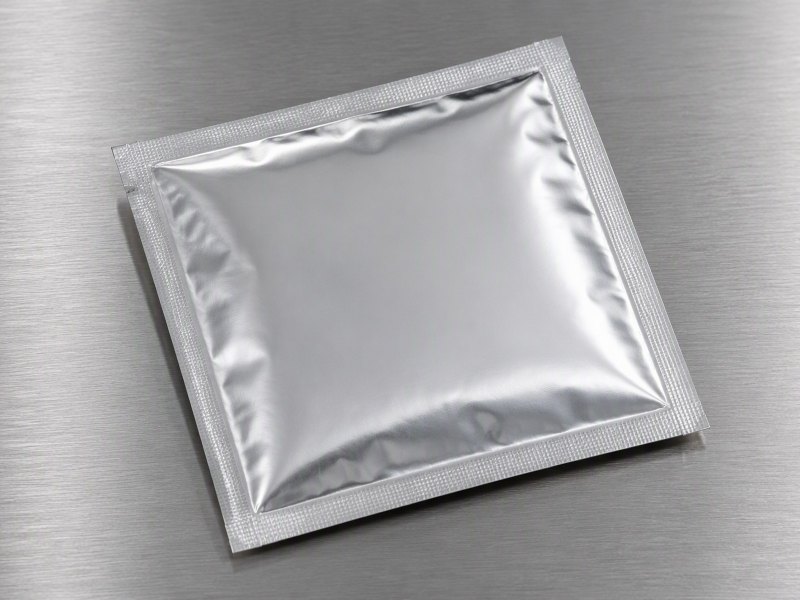
A cream, a lotion or a shampoo sachet is not a powder sachet with another fill. What the fill attacks, what the foil does, and what to state in an enquiry.
A sachet that leaks at a crease, or smells of its own fragrance in the carton, is rarely a foil fault. It is usually a structure chosen for powder.
A cosmetic fill wets, migrates and attacks the innermost layer it touches. The aluminium carries barrier and stiffness; the sealant meets the product, so the sealant decides whether the sachet holds.
The sections below follow a sample sachet from fill to closing seam, and end with what an enquiry must state.
Why does a cream sachet fail where a powder sachet does not?
Powder stays where it was dropped. A cream spreads, wets the whole inner face and keeps working on it.
A liquid fill covers the entire product-contact surface, swells some materials and moves with every handling. A powder touches points only, so a structure that passed a powder trial can fail a cream.
Dive deeper
A powder rests on the film, held by gravity and its own friction, and the gaps between particles stay empty. A cream wets the surface it meets, follows every crease in the sealant and stays in contact for as long as the sachet exists. Chemistry needs an interface, and a liquid supplies one everywhere at once.
An emulsion also carries more than water. Surfactants lower surface tension so the fill spreads into corners a rinse would never get into, and preservatives, salts, acids or bases and fragrance all sit in the same continuous phase. Where a powder is largely inert towards a polyethylene sealant, a lotion can swell it, pull additives out of it or leave a haze on it.
Movement matters too. A sachet is squeezed in a carton, dropped into an envelope and carried in a pocket, and each event pushes fill against a seam and pulls it back. A liquid transmits that pressure; a powder absorbs it. The same laminate therefore has a different service history.
This is why a sachet is specified from the fill outwards. Grades of aluminium foil for packaging behave much the same in a dry application and very differently once an aggressive cream is in contact, because the metal is protected and the polymer is not.
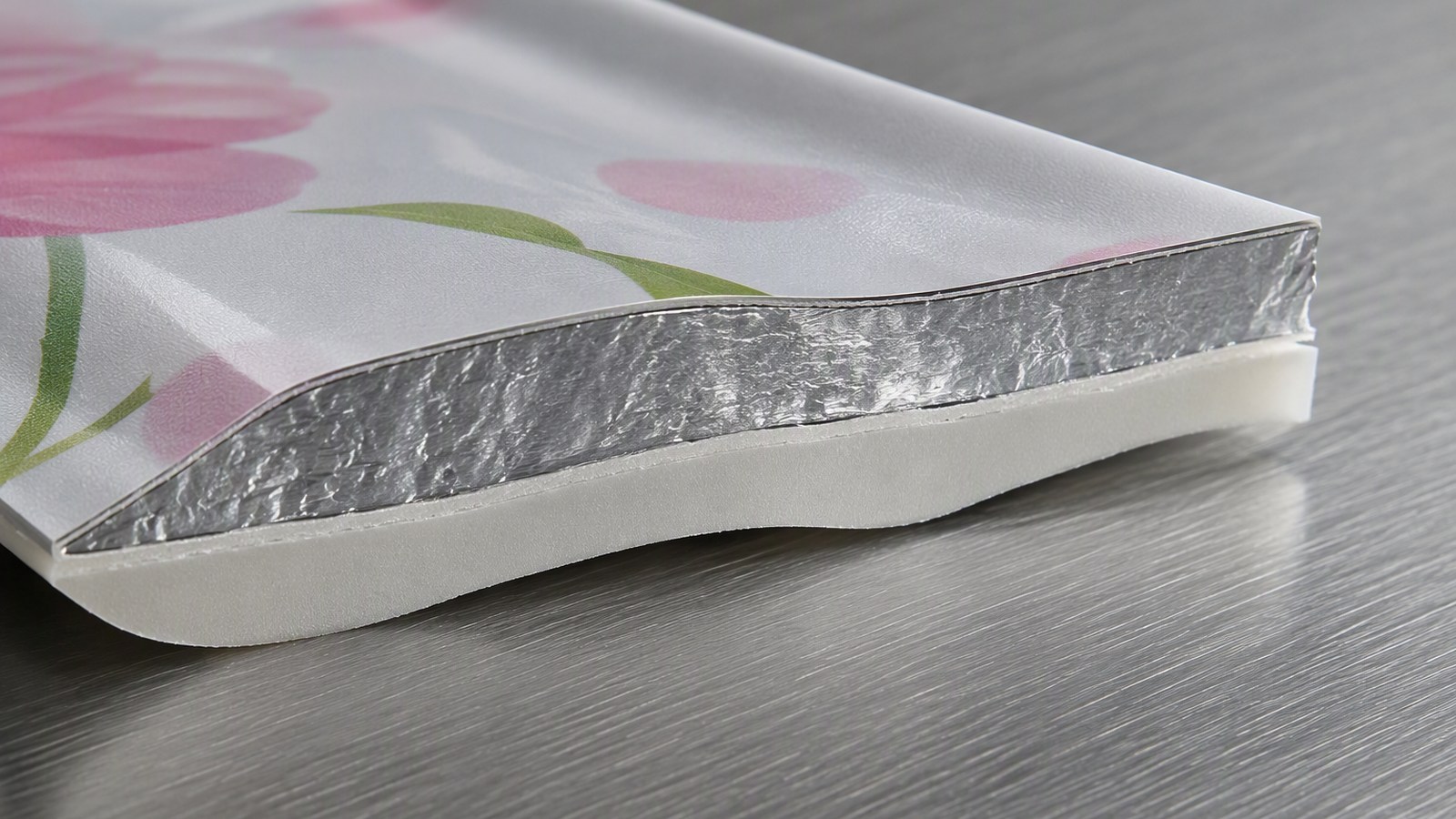
What does the aluminium layer do inside the sachet laminate, and what does it not do?
The foil lets a sachet be thin and hold its shape. It is also the layer that never meets the product.
Foil from 0.005 mm to 0.20 mm carries the barrier against vapour and light, gives dead-fold and stiffness, and steadies the web. It does not seal and will not tolerate bare contact with an aggressive fill.
Dive deeper
The metal is a barrier, not a bottle. Rolled foil is thin enough to fold and stay folded, and that dead-fold keeps a sachet in the shape the machine gave it instead of springing open. The same property explains its weakness: a thin sheet has a grain, and a fold across the grain concentrates strain in a narrow band. Pinholes begin there.
What the foil does not do is seal. A sachet closes because two polymer faces are pressed together while warm, and metal cannot do that. Nor does bare aluminium enjoy contact with an acidic cream, a salty gel or a reactive fragrance; the surface can stain, darken or pit. Every face that could be exposed is therefore covered by a lacquer or a sealant.
Alloy and temper follow the same logic. Soft tempers such as O and H22 fold without cracking, harder ones resist handling damage, and alloys from 1050 through 1235, 8011, 8021 and 8079 differ in how they behave at a given gauge. None of that rescues a structure whose sealant is wrong for the fill.
Background on the metal is available from aluminium foil and from European Aluminium. Neither replaces a trial: the 8079 aluminium foil at 0.012 mm that suits a thin cosmetic sachet is only as good as the layer beneath it.
Why is the sealant layer, rather than the foil, the surface the fill actually touches?
Nothing in a finished sachet puts the fill in contact with metal. The innermost film stands between them, chosen for exactly that job.
The sealant is the product-contact layer, the layer that heat-seals to itself and the layer that must survive the fill. Foil protects the barrier; the sealant protects product, seam and smell.
Dive deeper
A typical cosmetic sachet reads from outside in as a printed film, an adhesive, the aluminium, a second adhesive and the sealant. Only the last of those is wetted by the cream. Everything the fill can dissolve, swell, discolour or absorb has to be resisted by that one layer, so the sealant is not a detail at the end of a specification but the start of it.
Sealant families behave differently against the same fill. Polyethylene grades, including the metallocene types, seal at modest heat and give a soft, forgiving seam; polypropylene gives a firmer seam and better tolerance of some fills; a coextruded structure can put a tougher skin towards the product and a sealing layer towards the seam.
There is a second duty buyers rarely ask about. The sealant must also seal through contamination. A drop of cream or a film of oil in the seal area is normal on a fast line, and a sealant that flows around it closes where a stiffer one channels and leaks. That is a property of the layer, not of the machine setting alone.
The general options are set out in the article on foil for flexible pouch and sachet structures; what matters here is that the innermost layer is chosen against a named fill, not against a category.
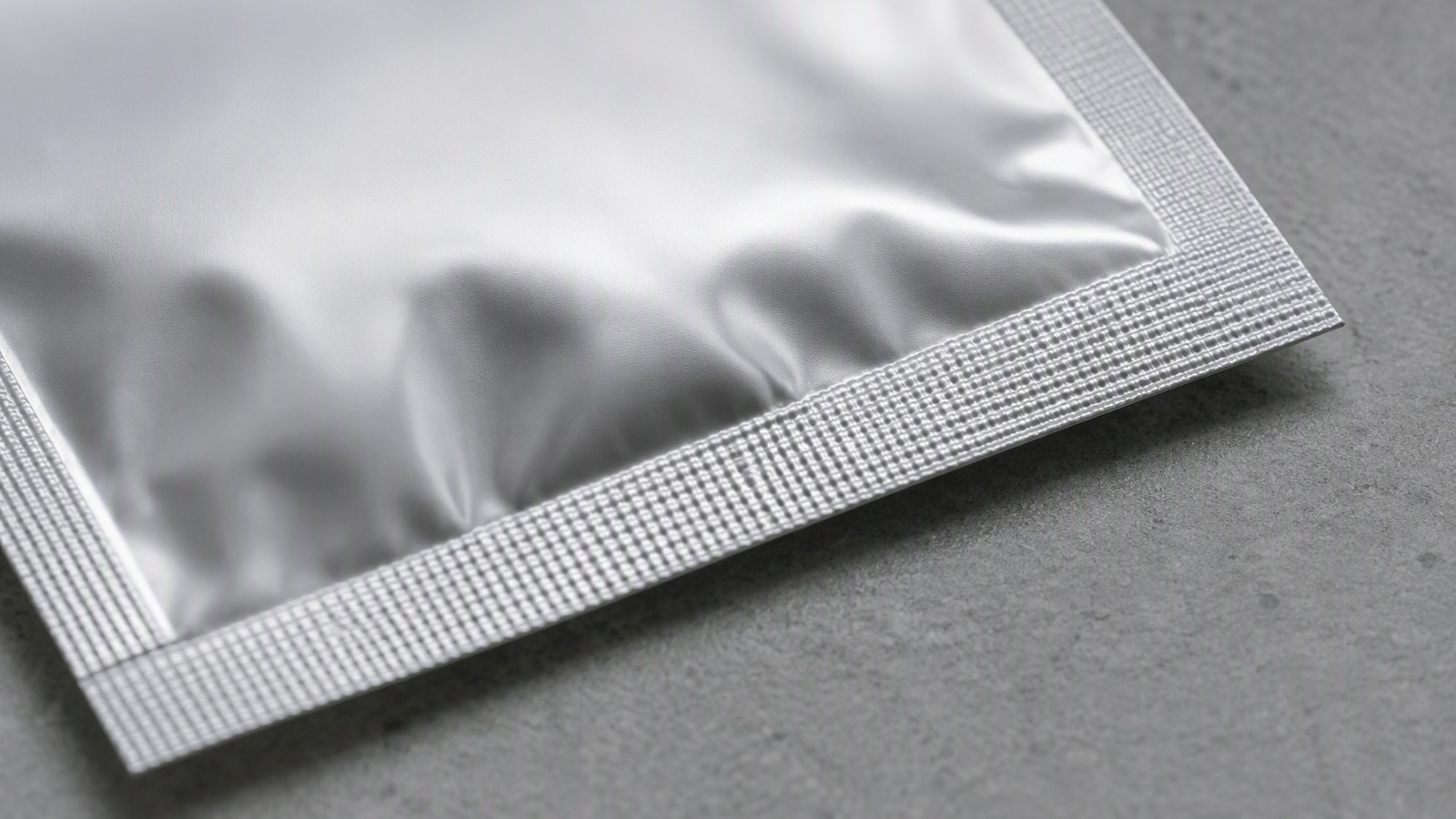
How do fragrance components and oils interact with the layers of a sachet?
A fragrance is a mixture of molecules with different sizes, polarities and appetites for polymer.
Small, mobile fragrance molecules can dissolve into the sealant, swell it and travel along it; oils wet and soften films. Scent is lost, the seam weakens and the film can blush.
Dive deeper
Sorption comes first. A fragrance molecule that finds a compatible polymer partitions into it and stays there, driven by the concentration difference between fill and film. Because a sachet holds a small volume and presents a comparatively large inner surface, the laminate can absorb a noticeable share of the fragrance before the pack reaches a shelf. The headspace is saturated too, so the inner face meets vapour even where liquid does not.
Swelling comes second. When the sealant takes up fragrance or oil it gains volume, softens and loses some of the strength it had at the moment of sealing, so a seam that was tight on the line can creep afterwards. Additives such as slip agents can migrate the other way, into the fill, and change how the sachet feels when it is opened.
Adhesives sit between the layers and are often forgotten. A fragrance that passes through the sealant can accumulate at an adhesive interface and soften it, which appears later as a bubble or a delamination rather than as a leak.
The interaction runs both ways: the structure can also give odour to the fill, from adhesives, inks or residual solvents. Only a trial with your own fragrance, in your own sachet, shows which direction matters more.
Why can a sachet that looks sound still fail at a fold, a crease or a gusset?
A sachet is folded flat, stacked, boxed and carried. Each of those actions bends the laminate along a line the design never considered.
At a fold the layers bend at different radii and the foil is strained. A crease that survives a visual check can still open a path through the metal or lift sealant from adhesive.
Dive deeper
Dead-fold cuts both ways. The property that keeps a sachet crisp on a shelf is the same one that makes it crease permanently wherever it is pressed. A crease is not neutral for a laminate: the outer film compresses, the foil folds, and the sealant inside is asked to stretch around a radius tighter than anything in the flat web.
Two failure modes follow. In the first, the foil fractures along the crease and the barrier is interrupted while the sachet stays sealed and looks fine, so the loss appears in the fill rather than on the floor. In the second, the sealant thins there and a slow leak starts at a corner nobody inspects.
Geometry concentrates this. Corners have small radii, gussets fold the laminate back on itself, and a filled sachet pressed flat by the carton above it loads exactly those features. A sample sachet in a magazine or a hotel tray lives under compression, a harder test than a pouch on a shelf. Flexing and abrasion are described by bodies such as the Aluminum Association.
The practical answer is not a single foil number. It is a structure and a fill volume agreed together, then checked by folding, dropping and compressing filled sachets from the actual run.
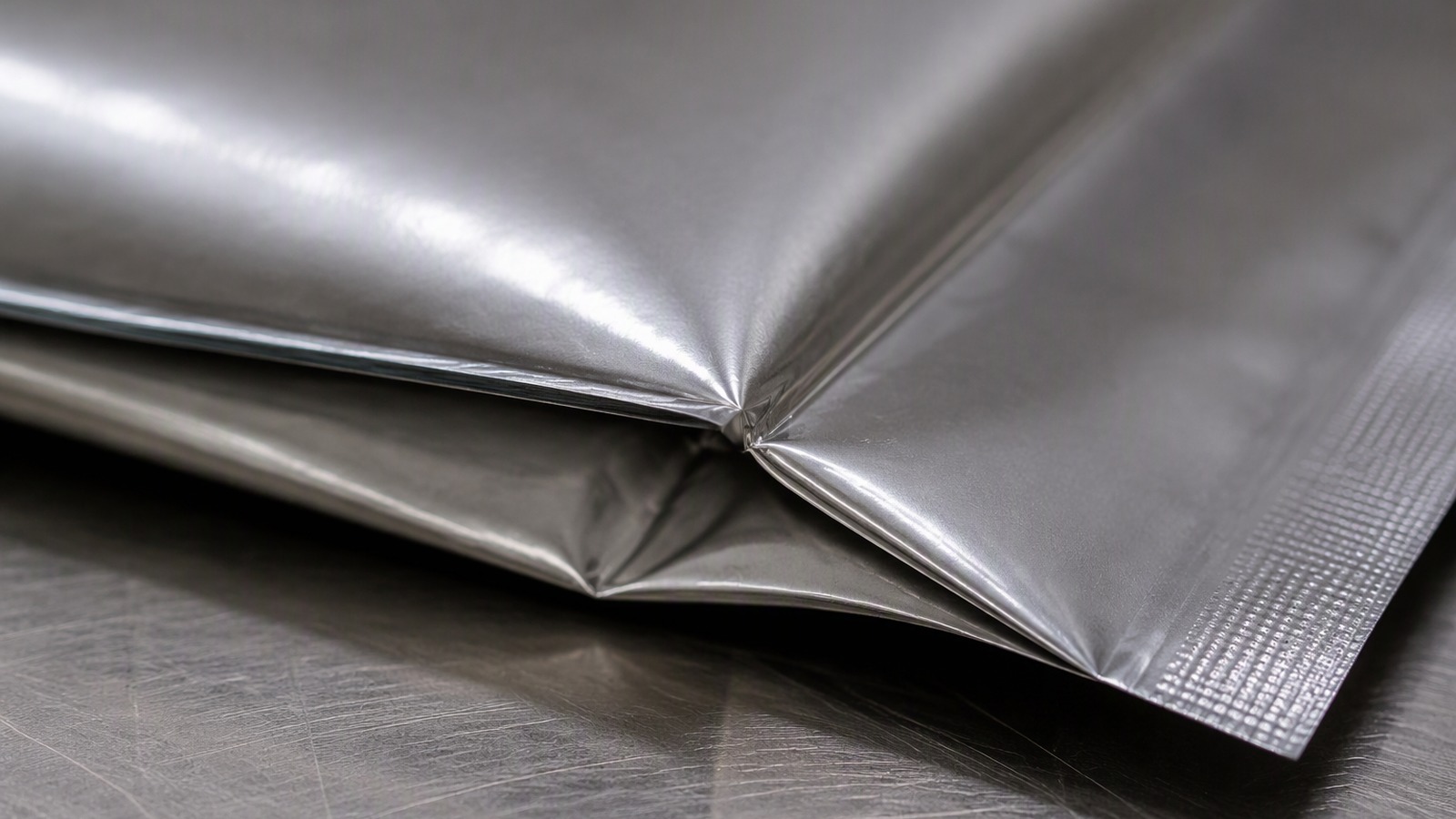
What does the filling machine do to the web before the fill even arrives?
The web is pulled, tracked, tensioned and heated before any fill lands in it. That history stays in the material.
Forming shoulders, dancer rollers, registration eyes and heated jaws all load the laminate. Tension that suits a stiff web distorts a thin one; heat near the fill station pre-softens the sealant.
Dive deeper
A sachet machine is a series of controlled insults. The web leaves the roll under tension, passes over rollers that can scratch a soft face, runs through a registration system that pulls it sharply to hold print position, and is formed into a tube or folded into a pillow before the jaws close. On a vertical form-fill-seal machine the tube former does most of the damage.
Sealing adds variables. Jaw pressure, dwell, the temperature of the sealing face and the state of the jaw surface all change how much sealant flows into the seam. A jaw slightly out of parallel gives an uneven seam that still looks continuous; a chilled jaw can pull sealant away before it wets the opposing face.
Then comes the fill station. A viscous cream can string across the seal area, a shampoo foams and leaves residue, a mask with particles can bridge the seam. Machines differ in how they present the open sachet and how they handle a product that drips, and a laminate that runs cleanly on one can wrinkle on another with a different web width.
This is why the machine belongs in the enquiry. A converter can only choose sealant, foil gauge and coating against the way the pack will actually be made.
How do sachet size, headspace and fill volume change the demands on the structure?
Small does not make the job easier. A sample sachet concentrates every effect the fill can have.
In a small sachet the fill touches a large share of the inner face, headspace saturates quickly and the seal takes more of the area. Agree volume with the structure, not after it.
Dive deeper
Headspace is the part of the sachet the fill does not occupy, and it does real work. It gives the fill room to move when the pack is compressed, it holds vapour that equilibrates with the product, and it decides whether the sachet lies flat or bulges into a shape the carton cannot take. Too little and fill is forced into the seal; too much and the fill sloshes and fatigues the creases.
Volume against seal area is the second pressure. A sample sachet holding a few millilitres still needs a seam wide enough to survive handling, so the seal takes a larger share of the pack than on a big pouch. Any weakness in the sealant is then exposed over a shorter distance.
Format follows. A pillow sachet, a shaped sachet and a three-side-seal sachet each fold the laminate differently, and the tear feature has to sit where the fill is not. Thickness and temper interact with all of it, which is why converters quote 0.005 mm to 0.20 mm as a range and fix width and core, 76 mm or 152 mm, only once the machine is known.
Guidance on how foil behaves in converting is published by the European Aluminium Foil Association, but your own sachet is the only relevant reference.
What must a buyer state in an enquiry about a cosmetic sachet?
An enquiry that says cosmetic sachet and a size will get a generic answer. The fill is the specification.
State the fill and how aggressive it is, the format and volume, the sealant that worked before, the machine, the print and lacquer, and the test the pack must pass.
Dive deeper
Describe the fill before describing the pack. Name the product type, whether emulsion, gel, shampoo or paste, and say what could attack a polymer: fragrance, essential oils, alcohol, surfactants, salts, acids or bases, preservatives, abrasive particles. Say whether it is filled warm, whether it foams and whether it separates on standing. A converter cannot choose a sealant from the word cream alone.
Then describe the pack and the process: format, dimensions, fill volume and headspace, seal configuration, tear feature, and the machine with its web width. Add the print and whether an outside lacquer is wanted, a subject covered in the note on aluminium foil lacquering. Propose an alloy and temper only if you know they work, or let the converter propose from the packaging and container foil range.
Finally, state the commercial frame and the test. Order quantity against a minimum of 3 MT per size, delivery through Qingdao, Tianjin or Shanghai, and the protocol the sachets must survive: fill with your own product, store, fold, drop, compress, then open and judge. The structure is agreed against that protocol, not against a data sheet.
A cosmetic sachet is decided by the fill and the sealant, not the foil. State both; the structure follows.