What Is Aluminium Foil Lacquering and When Do You Need It?
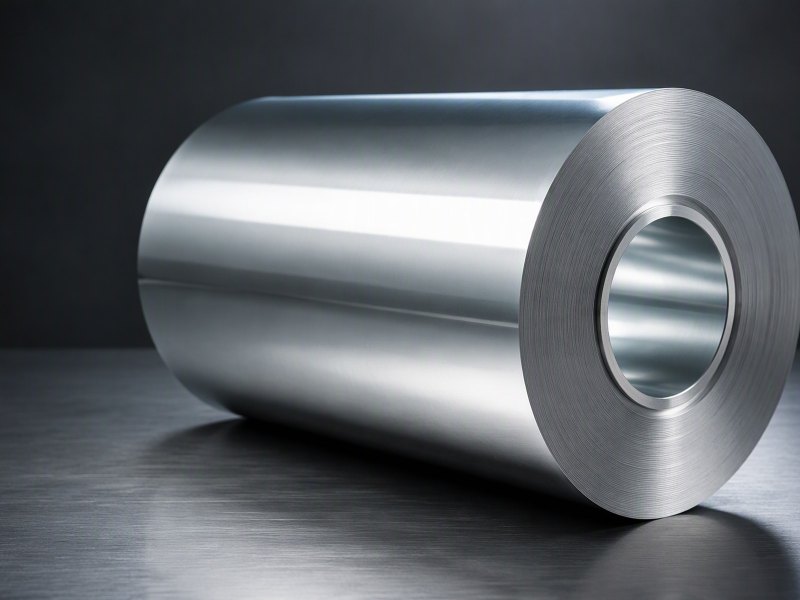
A plain-language guide for packaging engineers, converters and buyers to protective and heat-seal lacquers on aluminium foil: when each is needed, how lacquer weight and the sealing window are agreed, and what to state on an order.
An uncoated foil roll can seal, print and laminate differently on every line, so a specification that worked once may fail the next run. Lacquering is often the fix.
Lacquering means applying a thin, continuous organic coating to one or both sides of aluminium foil. A protective lacquer resists chemicals and corrosion; a heat-seal lacquer (HSL) lets the foil bond to itself or to another substrate under heat and pressure.
Because both coatings look identical on a finished roll, the difference only shows up on the line. The eight sections below follow the questions buyers, converters and packers ask most often.
What Does Lacquering an Aluminium Foil Actually Mean?
Lacquering is a coating step, not an alloy change; a roller lays a liquid resin on the foil surface, which is then dried and cured.
Lacquering means coating aluminium foil with a thin organic layer that stays flexible after curing, so the roll can still be slit, printed, laminated and later heat-sealed.
Dive deeper
Think of the foil as a substrate and the lacquer as a functional skin. The base metal keeps its barrier and forming properties, while the coating adds what the application needs: adhesion, chemical resistance, slip, or the ability to seal. Coating happens after rolling and annealing, so the alloy and temper underneath are chosen first, and the lacquer must suit that choice rather than replace it.
Lacquer is normally applied in line with slitting, printing or laminating, or on a dedicated pass. The wet film is metered by a roller and then passes through an oven where solvents are driven off and the resin cures. What matters on the line is that the dry film stays continuous, flexible and free of pinholes after folding, forming and any thermal treatment the pack will see. Even coverage across the full width matters as much as the nominal weight, because a thin patch becomes a leak or a weak seal.
Because foil is rolled from 0.005-0.20 mm in widths of 100-1500 mm, one coating line can serve many products. Background on how foil is produced is available at aluminium foil on Wikipedia. Whether you are buying pharmaceutical aluminium foil or a food web, the same question applies: does the coating do the job the base metal cannot?
What Is the Difference Between a Protective Lacquer and a Heat-Seal Lacquer?
Both are organic coatings, but they solve different problems: one defends the surface, the other makes it bond.
A protective lacquer shields the metal from moisture, acids, sulphur and abrasion. A heat-seal lacquer (HSL) is formulated to soften and weld under heat and pressure, joining foil to foil or foil to film.
Dive deeper
Protective lacquers are usually thermoset systems. Once cured they do not soften again; they exist to keep the metal away from the product. They are used where moisture, acids, sulphur-containing foods, salty fillings or cleaning agents would otherwise attack or stain the foil, and where a printed or unprinted surface must resist abrasion and scuffing.
Heat-seal lacquers are thermoplastic by design. They stay solid at room temperature and soften when heat and pressure are applied, then bond to a facing material as they cool. That is why an HSL web can seal to itself, to a film or to a coated board, forming the peel or weld seam of a lidding, pouch or blister.
The practical difference is what the coating is asked to survive. A protective lacquer must not flow or weld; a heat-seal lacquer must flow and weld at a controlled temperature and then hold. Some web constructions carry a protective coat on the product side and a heat-seal coat on the outside, so one roll performs two jobs and the order must say which side carries which. Choosing the wrong family shows up as sticking rolls, blocked stacks or seals that peel too easily, as discussed in aluminium foil versus PP film for lidding.
When Does a Converter or Packer Actually Need Lacquered Foil?
Lacquered foil is needed when a plain web cannot meet one of four demands: chemical resistance, a reliable seal, controlled release or print durability.
In practice that covers several familiar products, from blister lids to dairy caps, welded pouches and coated trays, where the coating does work the bare metal cannot.
Dive deeper
In pharmaceutical packaging, a heat-seal lacquer lets a blister lid bond to the forming film with a clean printable face on the outside, while a protective coat can keep the medicine side inert. Buyers often start from a specification guide such as how to specify pharmaceutical blister foil.
In food and household packaging, lacquers support lidding for cups and trays, welded pouches, dairy lids and containers that must resist acids, oils and fats. A protective coat also helps container stock and semi-rigid trays hold their appearance through filling and stacking, which is why packaging and container foil is frequently specified with a coating.
A converter needs lacquer when downstream equipment depends on it: a form-fill-seal line that must run at speed, a printer that needs a receptive surface, or a laminator that needs a reliable bond. If none of those pressures exist and the product is benign, a plain foil in a suitable temper may be enough, and adding a coating would only add cost and a new variable. In practice, the deciding factor is usually the pack format and the sealing machine rather than the foil alone, so the enquiry should start from the product and the line, and then work back to the coating.
How Are Lacquer Weight and the Sealing Window Agreed?
Two things are agreed when a lacquered foil is specified: how much coating sits on the sheet, and the conditions under which it will seal.
Both are tied to the customer's own line, so neither is universal; the working figures are set by trial on the target machine, not by a fixed catalogue value.
Dive deeper
Coating weight is normally expressed as grams per square metre of dry film, and can be specified differently for the two sides of the web. The right value depends on the substrate being sealed, the seal strength required, the speed of the machine and the abuse the pack must survive: autoclaving, pasteurising, freezing, retorting or simple shelf storage. It is supplied within a range agreed with the buyer rather than as a single fixed figure.
The sealing window is the band of temperature, pressure and dwell time in which the line makes a consistent seal. It is established on the customer's sealer, using their jaws, their facing film and their line speed, because the same lacquer can seal well on one machine and poorly on another. Narrow windows are harder to hold at high speed; wide windows give operators more room.
Industry bodies such as the aluminium foil industry association publish general background, but the working numbers always come from a trial on the target line. Where a product or a facing film changes, the window is re-checked rather than assumed, because a new filling can shift the usable band. A change of supplier therefore always means a fresh trial rather than a copy of an old setting.
What Does Lacquering Change for Printing and Laminating?
Lacquering changes the surface a printer or laminator meets, and that changes the whole process window.
For printing the coating controls how ink wets out and anchors; for laminating it decides how well an adhesive bonds, so it belongs in the specification from the start.
Dive deeper
For printing, the coating controls how ink wets out and how well it anchors. A receptive lacquer can improve adhesion and rub resistance; a release or slip coating can do the opposite if it sits on the wrong face. That is why the print order and the coated side must be defined together. Where a design needs both a graphic face and a sealing face, the printer and the converter have to agree which coating sits where before any cylinder is engraved.
For laminating, the issue is the bond. A lacquered surface may need a different adhesive system from bare foil, and the curing schedule may change because the coating can affect solvent release. Some constructions are laminated foil to film, others foil to paper or board; each asks for a compatible coating and adhesive pair. Background on aluminium as a material is available at the aluminium association.
In short, lacquering is not a cosmetic add-on. It decides how a web behaves in the press and in the laminator, so it should be agreed early rather than added as a late fix when something fails on the line. A coating that is added late can force changes to the ink, the adhesive and the seal design, all at once.
What Must a Buyer State When Ordering Lacquered Foil?
The order is a technical document, not a shopping list, and a lacquered foil carries more variables than a plain one.
A complete enquiry names the metal, the coating, the side, the intended facing material and the expected sealing conditions, all in one place.
Dive deeper
At minimum the buyer should state the alloy and temper, the thickness and width, and the core size, because these fix the forming and handling behaviour. Common choices run across 1050, 1060, 1100, 1235, 3003, 3004, 8011, 8021 and 8079 in tempers O, H14, H16, H18, H22 and H24, though the final match always follows the application. Coil or sheet, and the required core of 76 mm or 152 mm, should be confirmed too.
Then the coating itself: which family, protective or heat-seal; which side or sides; and the intended facing material. The buyer should note the sealing conditions expected on the line, the product to be packed, and any thermal or chemical exposure. If the foil will be printed, the print side and ink type matter as well. A practical summary of the buying logic appears on aluminium foil for packaging.
Finally, state quantity, packing and destination. A minimum order of 3 MT per size is usual for coated material, and any deviation should be raised early rather than at confirmation, so that the coating can be matched to the run rather than guessed afterwards. Anything left unstated tends to be resolved by assumption, and an assumption in a coating order is expensive to unwind.
How Is Lacquered Foil Supplied, Packed and Shipped?
Coated foil travels and stores differently from bare foil, so supply details deserve a section of their own.
Typical material is supplied at 0.005-0.20 mm thick and 100-1500 mm wide, on a 76 mm or 152 mm core, protected by wrapping because the coating is a sensitive face.
Dive deeper
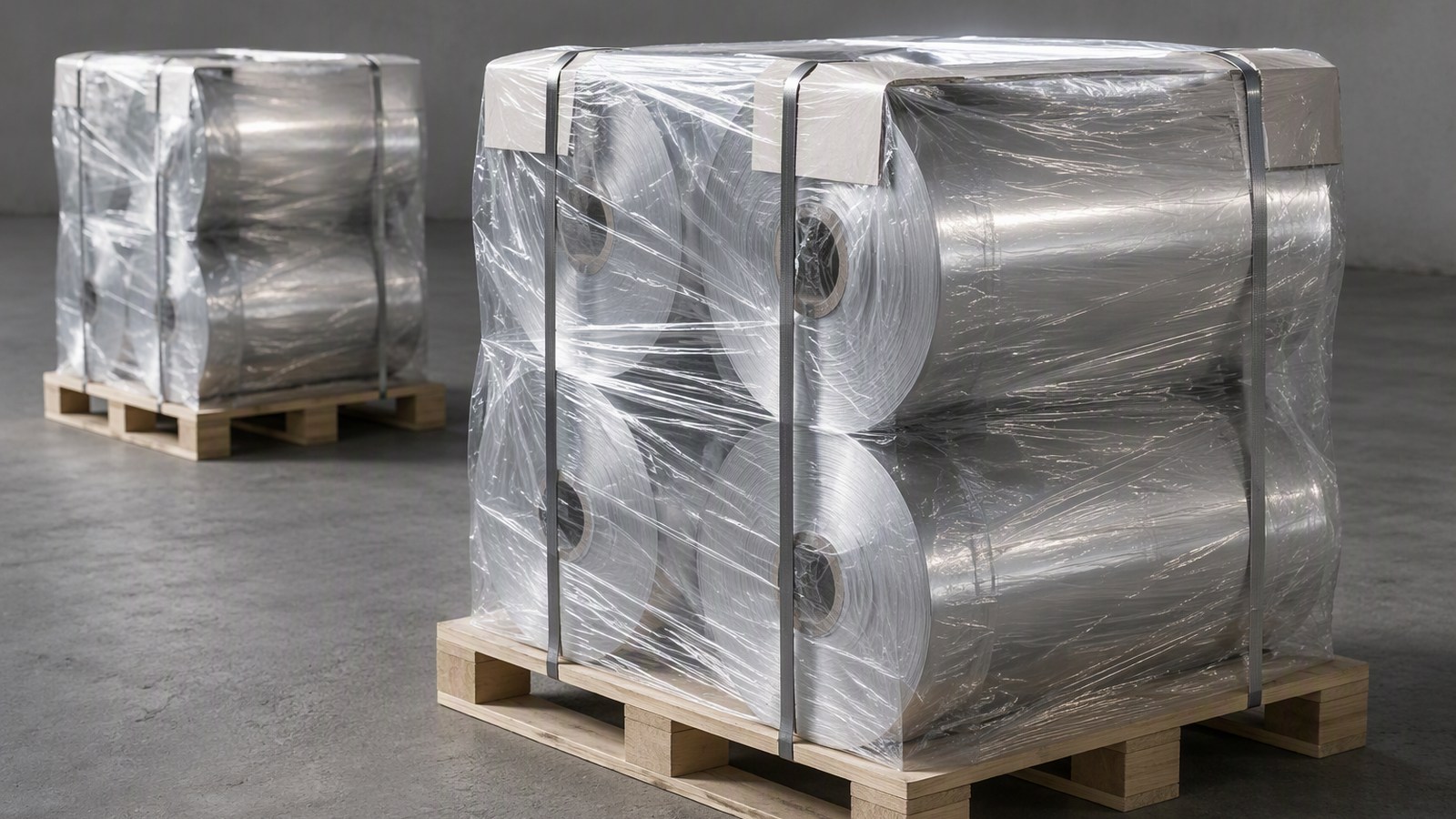
Because coating adds a sensitive surface, packing matters more than for plain stock. Coils are normally supplied eye to sky or eye to wall on a wooden pallet, moisture barrier wrap, so that the face is protected from rubbing, dust and humidity in transit and in the warehouse.
The buyer should confirm whether the material is wanted as coil or as cut sheets, how the pallet is to be handled, and how long it may sit before use. Lacquered surfaces are more sensitive than bare metal to prolonged damp storage, so a moisture barrier and sensible stacking are not optional.
Shipment is usually arranged from ports such as Qingdao, Tianjin or Shanghai, with the choice depending on the destination and the schedule. Clear labelling of coated side, alloy, temper and size helps the receiving store put the right roll on the right machine.
None of these points is unusual on its own, but together they explain why a lacquered enquiry takes a little longer to confirm than a plain one, and why a clear packing note saves time at the far end. A short packing note that names the coated side, the alloy and the size prevents any mixing of rolls at the store.
How Do You Qualify Lacquered Foil on Your Own Line?
Qualifying a lacquered foil means proving it on your own equipment, not on a datasheet.
The usual route is a small sample trial followed by a full line trial, with acceptance criteria agreed before the run rather than after it.
Dive deeper
The buyer runs the candidate web through the actual sealer, printer or laminator, then tests seal strength, peel behaviour, pinholes and appearance after the pack has been filled and treated. Form-fill-seal tools, jaw profiles and line speed all change the result, so what seals on one machine may not seal on another and the trial must mirror production.
It also helps to define acceptance in advance: what seal strength, what leak rate, what print adhesion, what appearance after storage. Broad industry material from the European aluminium industry association can frame the discussion, but the pass or fail criteria must be your own.
Finally, plan for consistency. Coating lots can vary slightly, so a qualification should ask how the supplier controls weight and continuity, and how a change would be communicated. Running one roll successfully is a good sign; running it across several deliveries is proof. With those answers in place, the specification becomes a document both sides can work from. Keep the trial coupon and the seal data on file, so a later delivery can be compared against a known good reference.
Lacquering is a small word for a coating decision that shapes sealing, printing and shelf life, so it belongs in the specification from the first enquiry.