How is aluminium foil used in a flexible pouch or sachet structure?
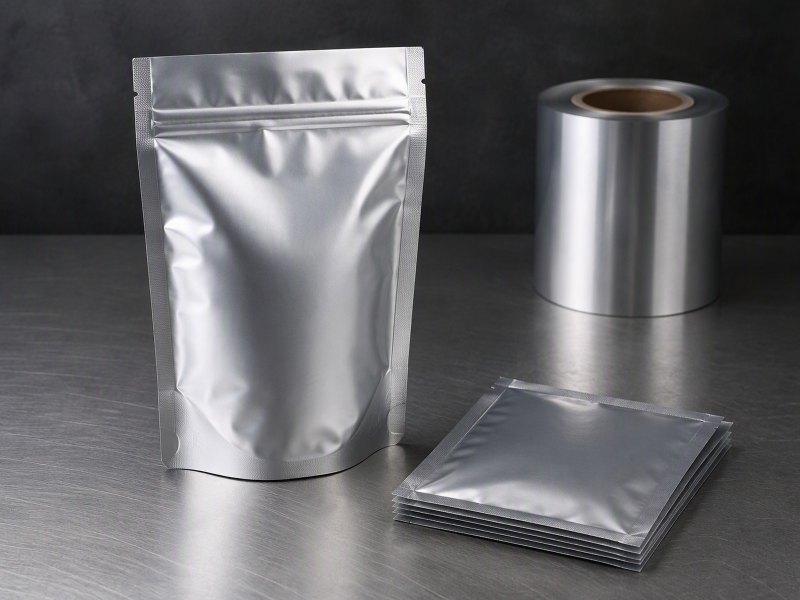
Aluminium foil is never bare in a pouch or sachet; it works inside a laminate between the outer print film and the inner sealant. This guide covers its barrier role, typical gauges, converting steps and what buyers must state.
How is aluminium foil used in a flexible pouch or sachet structure?
Pouches fail when the foil layer is specified as an afterthought. Buyers who cannot describe the full laminate end up with packs that crease, leak or block the wrong thing.
It is always part of a laminate. The stack is normally an outer print film, a thin aluminium foil core and an inner sealant layer, bonded with adhesive. The foil blocks light, moisture and gases; the sealant welds the pack shut.
Engineers, converters and buyers read the same structure differently, so the sections below follow the foil layer from the roll to the finished sachet.
Why is aluminium foil always laminated rather than used bare in a pouch?
Bare foil tears at the first crease and offers no seal of its own. A pouch needs strength, a printable surface and a weld, so one web cannot do everything.
Because no single web can print, protect and seal at once. Foil is brittle on its own and has no heat-seal surface, so it is bonded into a laminate where each layer contributes one job.
Dive deeper
The reason a pouch is built as a multi-layer laminate rather than a single sheet comes down to physics. Aluminium foil at the gauges used in flexible packaging is a very thin metal membrane. Once the metal is rolled down to a few thousandths of a millimetre it folds and creases easily, and small defects can open where it is handled roughly. A bare foil web would also have no printable surface and no heat-seal layer, so it could not be branded or welded into a closed bag.
Converters solve this by bonding the foil into a sandwich. The outer film carries the printed design and protects the foil from abrasion; the foil core works as the functional barrier; the inner sealant layer provides the weld that closes the pack. Adhesive lamination holds the layers together and keeps the structure flat through the filling line. Buyers who want a reliable starting point can review the aluminium foil for packaging range supplied in several gauges and tempers.
There is also a handling argument. A laminate runs through a form-fill-seal machine at speed, and a single-layer foil web would not survive the tension, the forming collar or the sealing jaws. The laminate spreads that mechanical load across layers so the pack stays intact from the unwind reel to the finished sachet. For background on how the material behaves as a thin metal sheet, the reference page on aluminium foil is a useful starting point.
What does the foil layer do that the outer print film and the inner sealant cannot?
Each layer answers a different threat: light, moisture, grease, gases and mechanical abuse. The foil is the one that stops what polymers let through over time.
The foil blocks light, moisture and gases and adds dead-fold. The outer film only prints and protects; the sealant only welds. Neither polymer layer offers the same barrier per unit of thickness.
Dive deeper
Think of the laminate as a division of labour. The outer print film is chosen for print quality, gloss and scuff resistance; it is the face the consumer sees. The inner sealant layer is chosen for its sealing behaviour and for compatibility with the product; it is the surface that touches the food, powder or liquid. The foil layer sits between them and does the functional work that neither polymer can do alone.
First, the foil is a light barrier. Many products degrade when light reaches them, and an opaque metal layer removes that exposure. Second, it is a strong barrier to moisture and gases, which is why foil appears in packs that must protect sensitive contents. Third, the metal gives the laminate dead-fold: it holds a crease instead of springing back, which is what makes a folded sachet stay closed. A roll such as 8079 aluminium foil at 0.009 mm can be supplied in tempers O, H14 or H18 for exactly this kind of thin conversion work.
None of this means the foil should be as thick as possible. A heavier gauge adds cost and stiffness without automatically improving the barrier, because the polymer layers, the adhesive weight and the total laminate build all contribute. That is why industry guidance from the aluminium foil industry association stresses that foil performance is always evaluated inside a finished structure rather than as a stand-alone sheet.
Which aluminium foil gauge suits a given pouch or sachet size?
Small sachets and large stand-up pouches pull on the foil in very different ways. Gauge has to match the pack, the fill weight and the abuse the pack will meet.
Small sachets often use the thinnest converter gauges, while larger pouches can specify heavier foil. The exact gauge is agreed with the converter, guided by pack size, barrier needs and handling.
Dive deeper
Gauge is a practical compromise between barrier, stiffness, cost and machine behaviour. For a small single-serve sachet, a very thin foil is often enough because the pack is short and rarely handled roughly. For a larger stand-up pouch or a pack that will travel through distribution, a heavier foil can be specified so the laminate holds its shape and resists flex cracking.
In general terms, converter foil is supplied across a thickness window from 0.005 mm up to 0.20 mm, with the thinnest gauges used for light sachets and the heavier gauges for structured pouches. Width can be specified from 100 mm to 1500 mm, and rolls are normally wound on a 76 mm or 152 mm core. Because the correct choice depends on the whole laminate, the pack format and the filling line, the final gauge is agreed with the converter rather than fixed by a single number.
It also helps to think about the layers around the foil. A thicker sealant or a stiffer outer film can carry much of the mechanical duty, letting a thinner foil do the barrier work. Buyers who want to compare formats can browse the packaging and container foil range and then narrow it down with their converter. Industry overviews such as the material shared by European Aluminium describe how foil grades are grouped for packaging use.
How does the foil layer interact with the printing stage?
Printing usually happens on the outer film, not on the foil. The foil still shapes how the artwork reads because it changes opacity, gloss and the surface the design sits on.
In most structures the artwork is printed on the outer film, and the foil is bonded behind it. Where foil is printed directly, it needs a primer so ink keys to the metal.
Dive deeper
Most flexible pouches are surface printed or reverse printed on the outer polymer film. The foil layer is bonded underneath and never sees the ink. From the buyer point of view this means the print specification and the foil specification are separate documents, and the converter decides how they marry up.
When foil is printed directly, which happens on some wrappers and labels, the metal surface has to be prepared first. A primer or a lacquer is applied so the ink keys to the aluminium and stays put through converting and use. Without that preparation, ink adhesion becomes unpredictable. The article on what lacquering does on foil explains when this extra step is worth specifying.
The foil also changes the look of the pack even when it is not printed. A thin foil behind a translucent film gives a metallic sheen; a matte outer film over foil produces a soft, premium surface. Print registration, gloss and the choice of white backing all interact with the foil, so the artwork is usually approved on a laminate sample rather than on a plain film. Converters checking how a metal layer compares with a polymer alternative often start from a comparison such as foil versus PP film for lidding.
For general context on how the metal is used across industries, the resources published by the US aluminium association are worth a look.
How does the foil web behave during the lamination nip?
The laminating nip is where the laminate is born. Tension, adhesive weight and roller pressure decide whether the foil stays flat or creases and traps air.
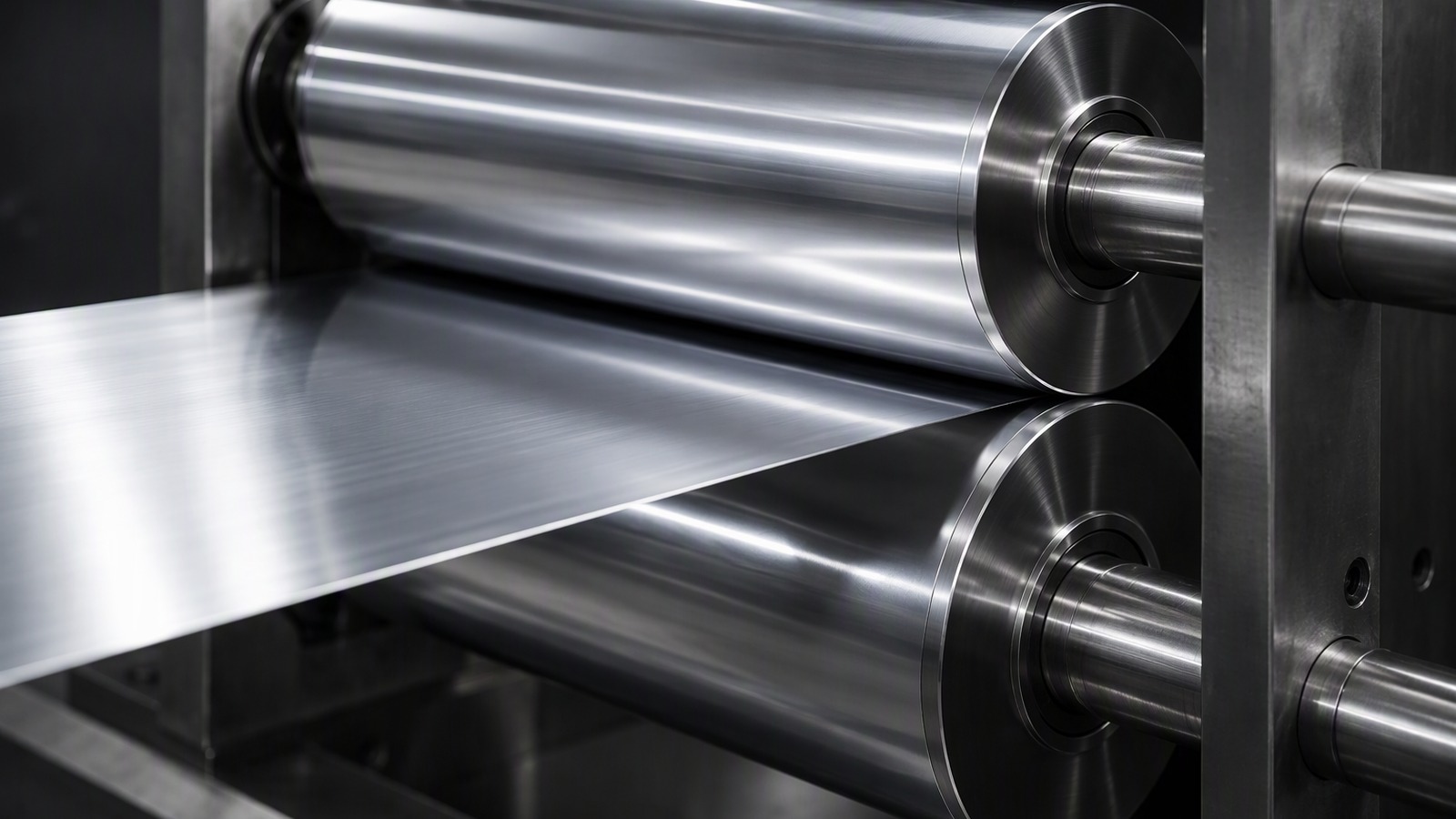
The foil runs through the nip under controlled tension while adhesive bonds it to the neighbouring layers. Even tension and clean rollers keep the web flat and free of wrinkles.
Dive deeper
Lamination is the step that turns separate webs into one structure. The foil is unwound, fed through an adhesive application or a hot nip depending on the process, and pressed against the film it will bond to. The goal is a flat, uniform bond line with no trapped air and no wrinkles, because a crease in the foil is a weak point that can open into a defect later.
Tension and crease control
Web tension is the single biggest lever. If the foil is pulled tighter than the film beside it, the finished laminate curls; if it runs slack, it folds at the nip. Converters monitor tension on every unwind and adjust as the roll diameter changes. Roller condition matters too, since a scored or dirty roller prints its defects into the bond line.
Adhesive and the bond line
The adhesive weight and its curing behaviour influence how the laminate feels and how it survives flexing. Too little adhesive leaves areas unbonded; too much can stiffen the pack and slow the cure. The precise combination depends on the full laminate and is agreed with the converter, because foil, film, adhesive and print all interact.
Why creases become defects
When a laminate is flexed, stress concentrates at creases and folds. The thin foil, being the least ductile layer, is where small defects appear first. Good tension control and a sensible layer build keep that risk low, which is why lamination quality is checked on the finished reel rather than judged from the foil roll alone.

How does the foil layer influence the sealing step?
The seal is made by the inner layer, not the foil, yet the foil decides how much heat reaches that layer and how the seal cools.
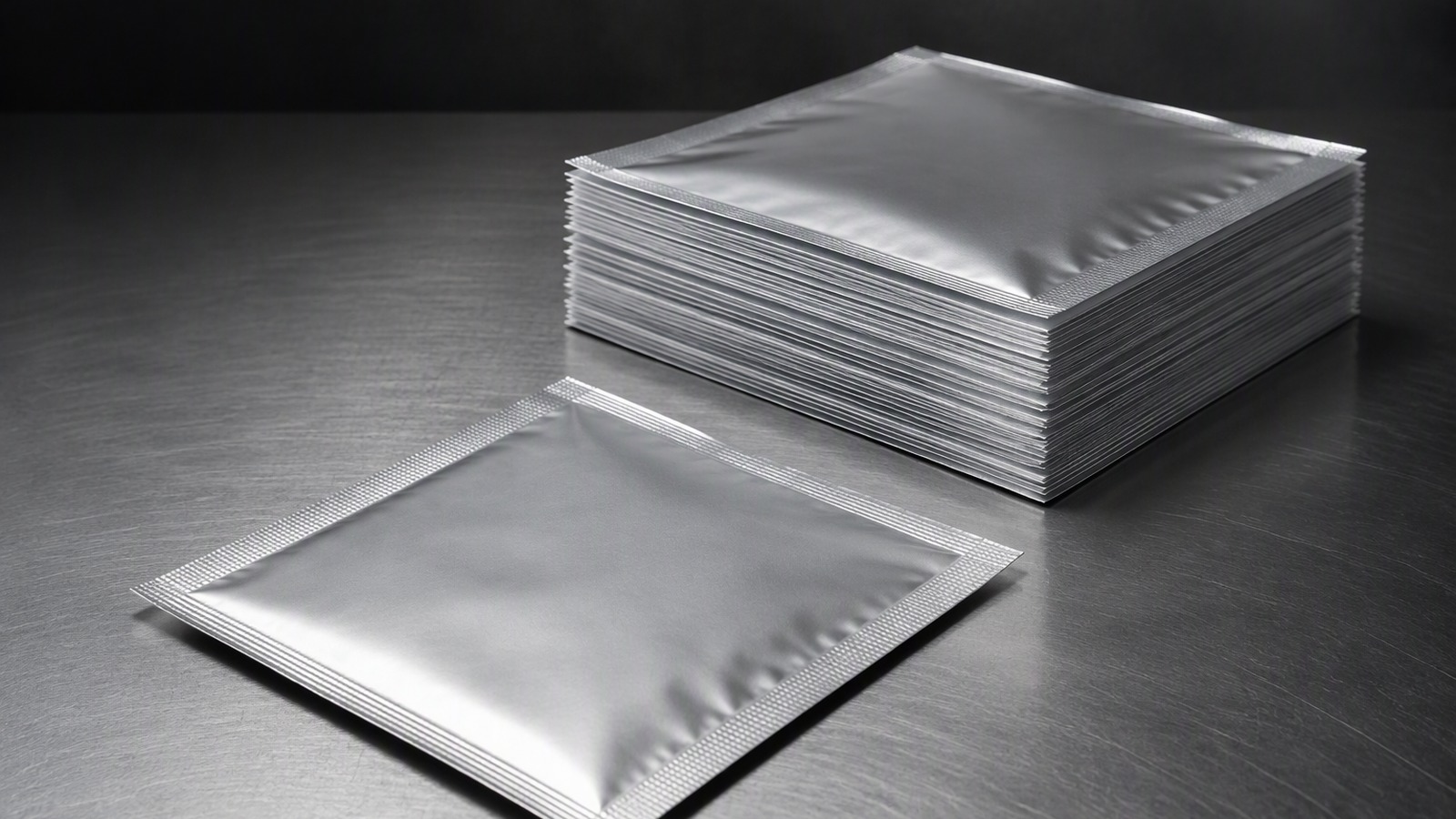
Heat sealing melts the inner sealant; the foil conducts heat quickly and spreads it across the seal area. That is why seal settings are tuned to the laminate, not to the foil alone.
Dive deeper
Sealing is a thermal process. The jaws press the two faces of the pouch together and heat them until the inner sealant melts and fuses. The foil sits just behind that sealant, and because metal conducts heat far better than polymer it spreads the jaw temperature sideways, helping the weld form evenly across the seal width.
That conductivity cuts both ways. It can speed up sealing, but it can also carry heat deeper into the pack, which matters when the contents are heat sensitive. Seal pressure, dwell time and jaw temperature are therefore set for the whole laminate and confirmed on the filling line, with the exact parameters depending on the structure and agreed with the converter.
The foil also affects peel behaviour. In a peelable seal, the failure is designed to happen in a controlled way at the seal interface; the stiffness and dead-fold of the metal layer change how the pack opens. In a permanent seal, the foil simply supports the weld. Either way, the sealing window is measured on finished pouches, not predicted from a single layer.
Handling after sealing matters as well. A still-warm seal is soft, and mechanical stress at that moment can distort it. Letting the pack cool before it is stacked or loaded keeps the weld intact and avoids the foil pulling at a soft seam.
What should a buyer state when ordering foil for pouch conversion?
An order that names only a thickness invites a mismatch. Converters need alloy, temper, gauge, width, core and packing before they can quote confidently.
State alloy, temper, thickness, width, core size and packing, plus the intended laminate. Confirm MOQ and port, and let the converter confirm the final structure.
Dive deeper
A clear enquiry lets the supplier match the roll to the job. The minimum set covers the metal grade, the mechanical state, the dimensions and the way the roll is wound and packed. Anything left out becomes an assumption, and assumptions are where costly mistakes start.
The specification list
Alloy should be named from the packaging grades such as 1050, 1060, 1100, 1235, 3003, 3004, 8011, 8021 or 8079. Temper should be stated from O, H14, H16, H18, H22 or H24. Thickness is given in millimetres within the 0.005 to 0.20 mm window, and width within 100 mm to 1500 mm. Core size is normally 76 mm or 152 mm. Packing is specified as eye to sky or eye to wall on a wooden pallet with a moisture barrier wrap.
Commercial details
Minimum order quantity is commonly 3 MT per size, which means a change of gauge or width is treated as a separate line. Port of shipment can be Qingdao, Tianjin or Shanghai. Buyers should also describe the intended laminate and the filling method, because these guide the converter toward a sensible foil grade.
What to leave to the converter
The final structure, adhesive system and sealing window are agreed with the converter. Figures such as barrier performance and seal strength depend on the complete laminate, so they are confirmed on samples rather than promised from the foil data alone.
How do alloy and temper choices shape pouch performance?
Soft foil folds; harder foil springs back. The alloy sets the strength and the temper sets the stiffness, and together they decide how a thin web behaves.
Alloy sets strength and formability; temper sets stiffness and dead-fold. Packaging grades supplied in soft to quarter-hard tempers let the converter tune the laminate.
Dive deeper
Alloy and temper are the two dials a buyer can turn on the metal side of the laminate. The alloy family sets the base strength and how the metal rolls and forms. The temper describes how much the metal has been work-hardened, from soft annealed grades through to harder tempers.
In packaging work the common grades include the pure-aluminium family such as 1050 and 1060, the widely used 1100, the foil-specific 1235, and the manganese and iron bearing grades such as 3003, 3004, 8011, 8021 and 8079. Each is supplied in tempers drawn from O, H14, H16, H18, H22 and H24. A softer temper folds and creases easily, which suits sachets that need dead-fold; a harder temper resists deformation, which suits structures that must stay flat.
The choice is never made in isolation. The foil has to work with the outer film, the sealant, the adhesive and the converting line, so the alloy and temper that suit one pouch may not suit another of the same size. Buyers should describe the pack, the fill weight and the handling it will see, then let the converter confirm the combination.
Why thin gauges need the right temper
At the thinnest end of the range, temper matters more because there is less metal to carry the load. A well-chosen temper keeps the web flat through printing, lamination and sealing, while a poor match shows up as wrinkles or handling damage. The exact combination is agreed with the converter against the finished structure.
The foil is the quiet middle layer that makes a pouch protect what it holds. Specify it inside the full laminate and let the converter confirm the build.