Does Aluminium Foil Have a Shelf Life, and What Actually Ages?
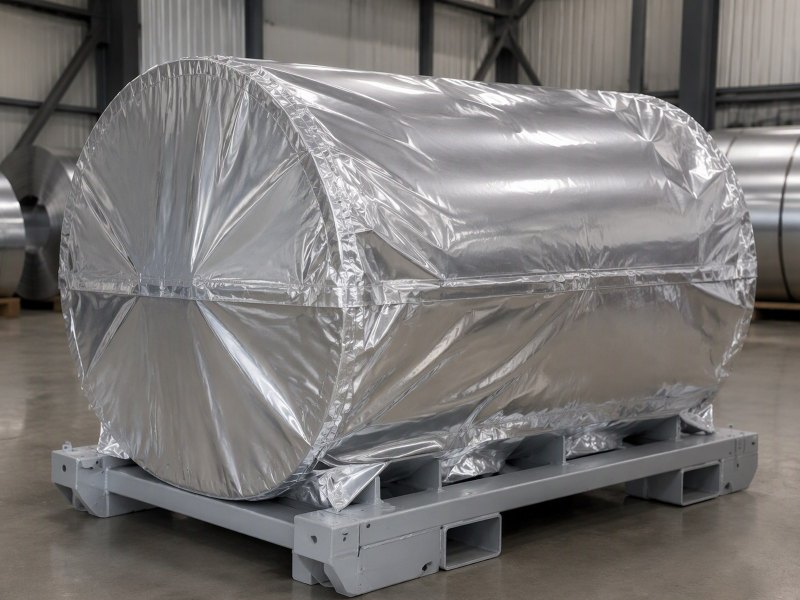
The metal does not expire. The oil film, the oxide, a coating and the pack do.
A coil has sat on the rack far longer than anyone planned. Scrapping it is expensive, shipping it is a risk, and the label says nothing about age.
The metal has no shelf life. Aluminium does not decay or drift out of specification while it waits. What changes is the surface and the pack: the oil film, the oxide, any coating, the wrap.
That sounds academic until a specific coil is in front of you. Then it becomes practical: everything that can go wrong sits outside the metal, where it can be inspected.
Does aluminium foil have a shelf life at all?
Before the coil is condemned or shipped, separate the metal from everything put on it and around it.
As a metal, no. There is no clock inside the aluminium. What ages is the surface treatment and the packaging, and both can be assessed in an afternoon.
Dive deeper
The metal is not the part that ages
Aluminium is reactive, which is why the question feels fair. In air it forms an oxide film within moments, and that film is what makes the metal stable: thin, tightly bonded and self limiting. Nothing in a warehouse reverses it. The bulk of the coil, meaning the alloy, the temper and the grain structure beneath the surface, was fixed at the mill, and at ordinary store temperatures it does not drift.
A coil of 1050 or 8011 foil that has stood on a rack for a long time is, metallurgically, the same coil. Its thickness in mm and its width are unchanged, and a tensile test would not separate it from last week's coil. There is no clock inside the metal, only a surface with a history.
Where the idea comes from
Most buyers meet the phrase in food packaging, where a date belongs to a filled pack, not to the metal. A bare coil has no contents and no seal to fail. What it has is a surface prepared in a particular way, and that surface is the only part that can get older. The encyclopaedia entry on aluminium foil is a reminder of how thin the material is: at packaging gauges there is very little metal and a great deal of surface. That is also why a coil can be inspected long after it was wound and judged on evidence rather than on a label.
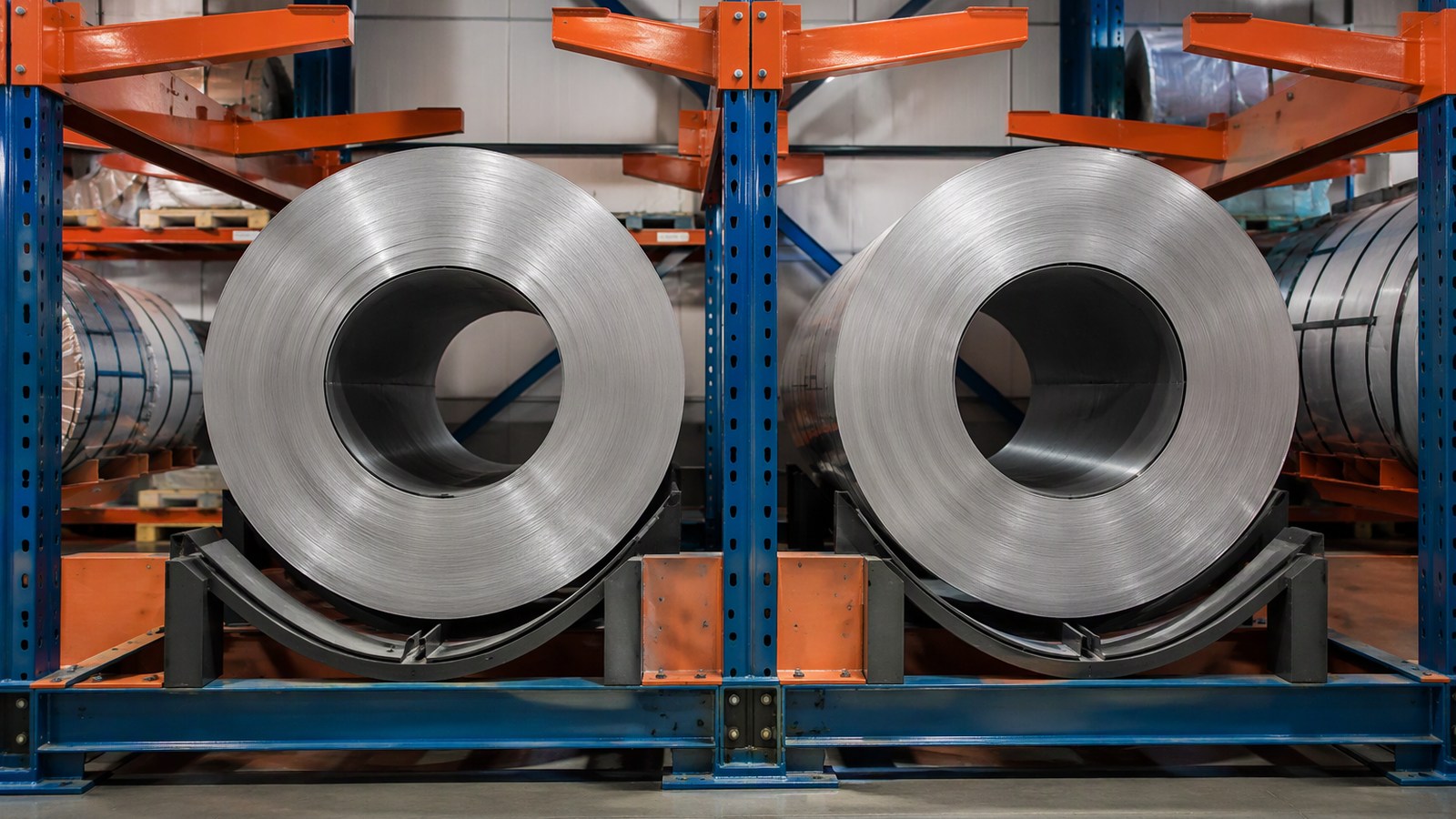
What actually changes inside a coil that has been sitting?
Four things can move while a coil waits, and only one is the metal. The rest sit on the surface or around it.
The rolling oil film can dry, oxidise or gather dust. The oxide can thicken unevenly where moisture rests. A coating can keep curing or take up moisture. The wrap can fail.
Dive deeper
The oil film left by rolling
The film remaining after rolling is deliberate and extremely thin. It separates the layers, limits friction and keeps the fresh surface from meeting air too abruptly. While it stays where it was applied, it does its job. Over a long wait it can lose lighter fractions and become tacky, so layers cling; it can oxidise and turn cloudy; and being a film, it collects dust along the winding lines.
The oxide layer
The natural oxide is self limiting, but not uniform in a coil that has seen moisture. Where water sits between layers, the film thickens locally, and that reads as a dull patch, changes how a lacquer wets the surface and can interfere with a printed or laminated bond. The change stays at the surface, yet surface is exactly what a converter sells.
The pack as a component
Wrap, desiccant, core and edge protection hold the local atmosphere around the coil steady. While they are intact, humidity at the foil stays low and the changes above barely start. Once the wrap is torn, the coil is no longer protected, only covered. A coil stored without its wrap has an open boundary, and that is where later problems start. Water staining on aluminium foil is the visible end point of that sequence. The desiccant belongs to the same argument: once it is saturated, the wrap is only a sheet of film.
Why does the surface matter more than the alloy?
Two coils of the same alloy, temper and gauge can behave differently after a wait. The difference is what was done to them.
Because the alloy is uniform and the surface is not. A coil rolled, slit and packed cleanly has little left to change. One that kept oil or moisture still has something moving.
Dive deeper
What the alloy fixes, and what it leaves open
The alloy decides strength, ductility, behaviour in a fold and general corrosion resistance. It does not decide what the surface carries. Two coils can both be 8011 in temper O at the same thickness, one clean and evenly oiled, one with heavier residue and a slack wrap, and the alloy says nothing about which will still run cleanly after a long wait. 8011 aluminium foil at 0.1 mm is a grade where surface condition, not chemistry, decides how a coil behaves on a customer's line.
Why two identical coils diverge
They diverge because they had different histories. One crossed an ocean in a container that cycled warm by day and cool by night; the other went into a dry store. One was stacked under a heavy pallet that pressed its layers together; the other stood alone. One was opened for a sample and taped shut again; the other never was. Alloy, temper and gauge were identical, which is why buyers who compare only those three numbers are surprised.
A decision made on alloy alone is a decision about the metal, not the coil. If the surface was never specified, nothing in the paperwork describes it, and the first real inspection happens at the customer's unwind stand, which is the most expensive place to find a dull band. One grade can therefore be praised by one buyer and blamed by another.
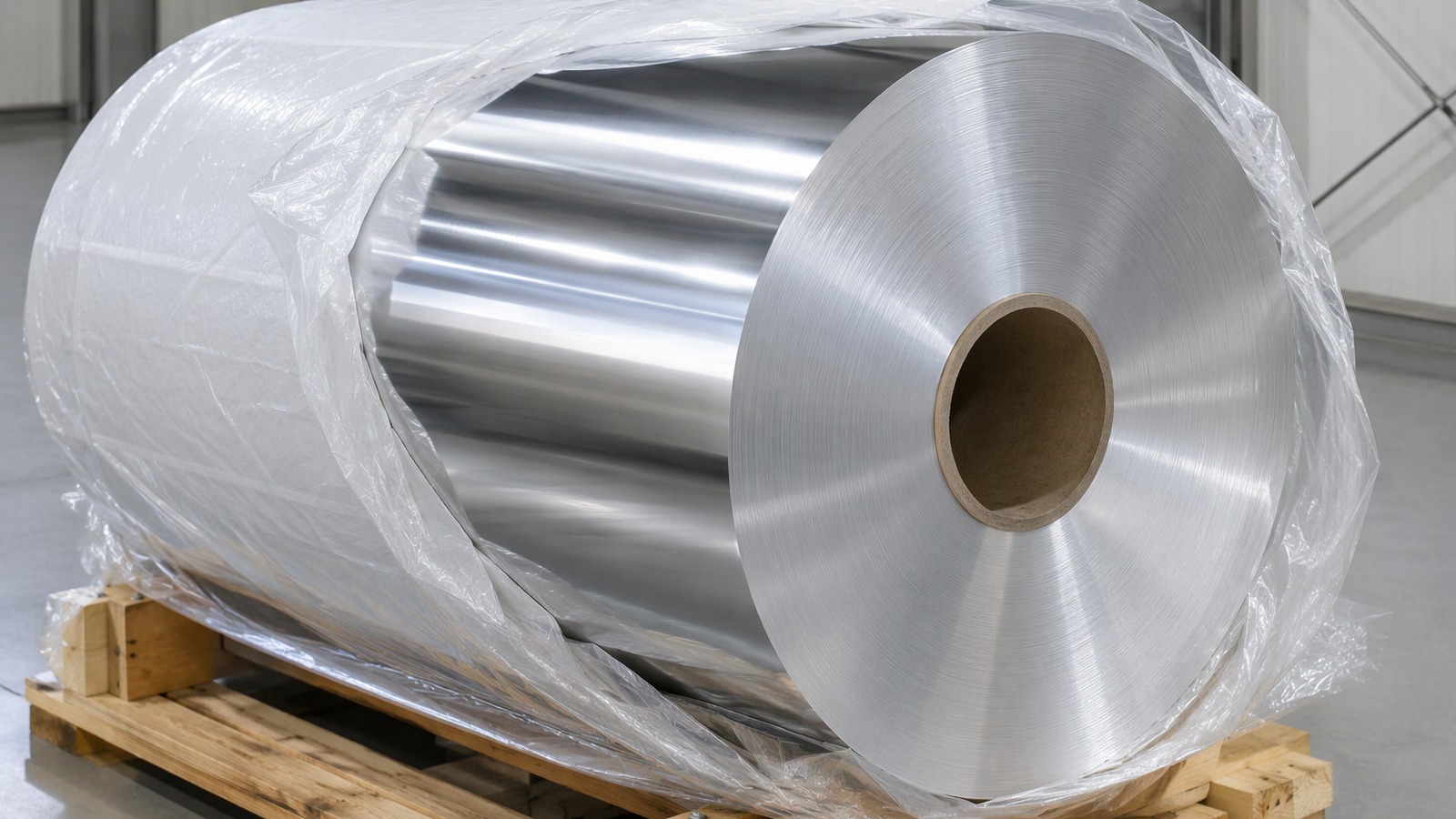
How do moisture and temperature cycling act on a stored coil?
A store is not a constant. Doors open, sun crosses a roof, air cools at night. A wrapped coil lives through all of it.
Cycling moves moisture into and out of the pack and condenses it on cool metal. The surface meets that moisture; the core never does. Where layers touch, it stays longest.
Dive deeper
Condensation on a cold coil
Warm air carries water, and when it meets a cooler surface the water settles on the metal. A coil cold overnight and then exposed to warm, damp morning air is the classic case; it needs no leak, only a torn wrap and an open door. Once water is on the foil, the gap between two layers holds it by capillary action, so a film that would dry in minutes on a flat sheet stays in place inside a wound coil. Cold metal draws water out of air that would leave a warm sheet untouched, and the coil gives it nowhere to go.
The wrap breathes more than it looks
Barrier wrap slows the exchange of moisture; it does not abolish it. Every handling, every strap pulled over a corner, every reopening for inspection reduces what the wrap can do. That is why two coils from one batch, kept in the same aisle, can end up with different surfaces.
Storage that keeps the question from arising
The aim is to hold the coil's local atmosphere steady and keep it off the floor. Coils stored eye to sky on a dry pallet, clear of walls and door, wrap intact, nothing stacked on the curved face, see far less cycling than coils pushed against a cold wall. Handling is set out in how coils are stored and handled; the point here is that time only becomes a problem once the wrap has stopped working.
What happens to a lacquer or a coating while a coil waits?
A coated coil is not the same product as a bare one. The coating is a second material with its own clock, thinner than the foil.
A coating can keep curing, becoming harder and less flexible, or take up moisture and soften. Each change is small in one layer and accumulates at the surface.
Dive deeper
Curing does not stop at the oven exit
A coating leaves the oven with most of its solvent gone and most of its chemistry done, not all of it. The reaction continues slowly afterwards, and in a wound coil the web is held under tension in contact with itself, a peculiar place for a film to finish setting. The result is a coat harder and less compliant than when the coil was packed. On a flat sheet that is invisible; on a forming operation it shows as fine cracking along a fold.
Moisture in a coating
Most coatings take up a little water from the air, and how much depends on the chemistry and on how the coil has been kept. A coat that has absorbed moisture softens and resists abrasion less well. It can also block, sticking to the reverse face under the pressure of the wind.
Why the converter sees it first
Whoever unwinds the coil sees the accumulated result: a different gloss, a faint pattern transferred from the reverse face, a seal that needs more heat to close. None is dramatic alone, and all are surface events. The association for foil rollers and converters is a reasonable place to read around coatings, and converters rather than mills are usually first to notice a coat that has moved. None of this shows from the outside of a closed coil, which is why the first real run is the inspection that counts most.
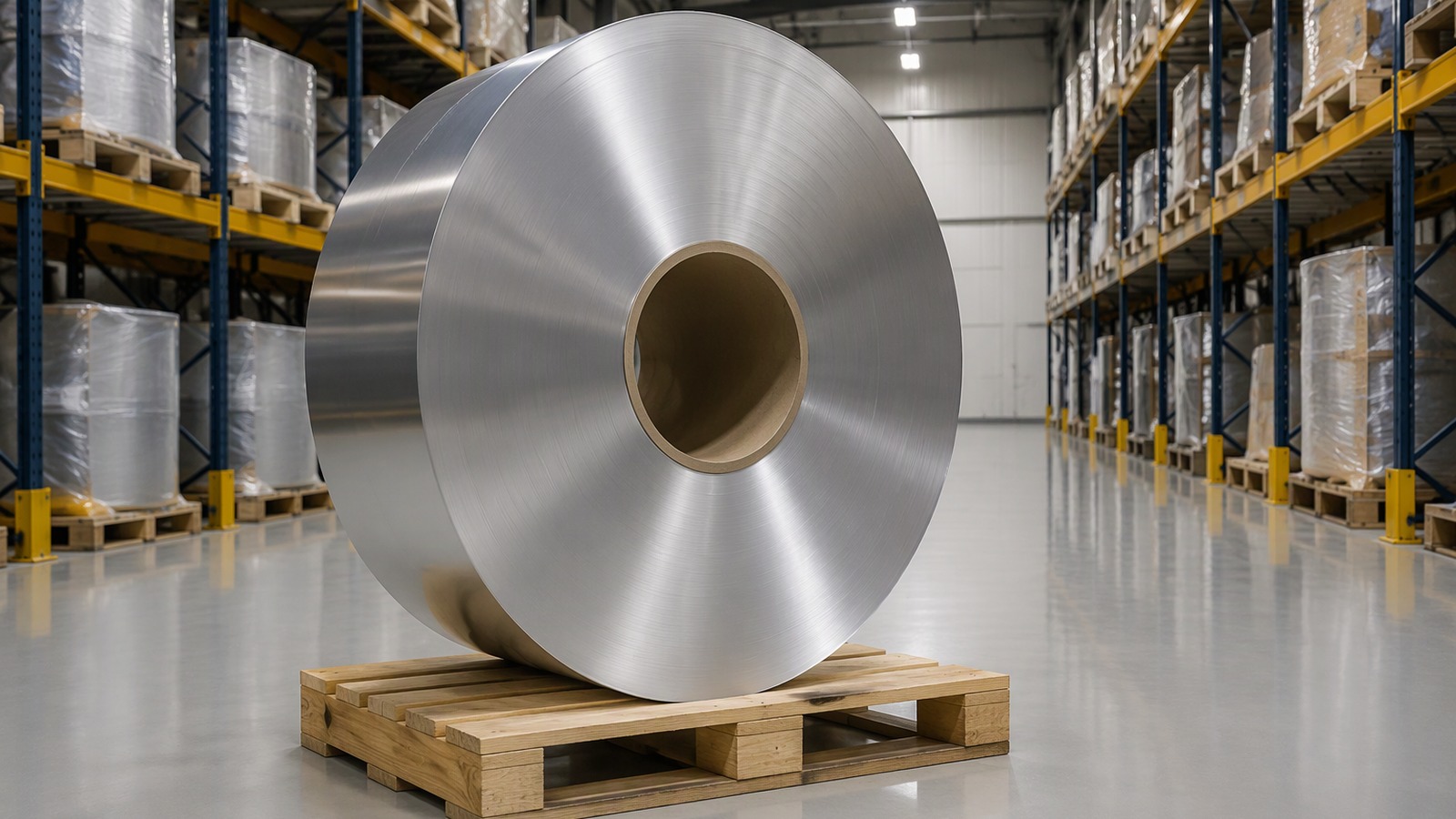
How do you tell a usable coil from one that needs a trial?
The honest test is not a date on a label. It is a short, structured trial that reproduces what the coil will be asked to do next.
Unwind a length, look at the surface in raking light, check the edge, then run the real operation on a small quantity. If it forms, prints or seals, it is usable.
Dive deeper
Start with the outside few wraps
The outer wraps have met the air and the handling, so they are the worst of the coil, not a fair sample. Cut them back and inspect what lies beneath. If the surface improves quickly, the pack did its job and the body of the coil is likely sound. If the dullness continues inward, moisture got further than the wrap could resist, and it deserves a trial, not a visual pass.
Test the operation, not the material
A coil is usable or not with respect to a job. The same coil may be good for a container formed and filled the same day and unsuitable for a lamination that must hold a barrier. So copy the real operation at the real speed on a small quantity, then judge the result as the customer will: seal strength, print adhesion, the appearance of a fold. A heavier gauge is easier to judge, which is why 1060 aluminium foil at 0.2 mm often appears in trial work.
What a trial cannot settle
A trial tells you what happens now. It cannot tell you how the rest of the coil will behave after a further long wait in the rack, and it cannot certify a barrier that depends on a full lamination. Where the end use is demanding, consume the older coil first. A trial on a short length costs little and settles what no label can settle.
What do the surface and the edge tell you before you unwind?
Most of the answer is visible before the coil is opened, if you know where to look and how to light it.
Look for dull patches, dark bands following the winding lines, a milky cast, rings near the edge and dust clinging in lines. A clean edge with even sheen suggests little has moved.
Dive deeper
Surface signs in raking light
Hold a torch almost parallel to the surface rather than straight on. Direct light flatters foil; raking light shows texture and small differences in reflectivity that a straight-on view hides. What you want is unevenness: a patch that scatters light differently from its neighbours, a band following the direction of winding, a haze on one side of the face and not the other. A uniform sheen is the reassuring result.
Edge signs
The edge is where every layer is exposed at once, so it is the first place moisture and handling damage appear. Look for a dark line running down the edge, a fringe that has begun to lift, and corrosion product like a white or grey powder between the layers. A clean, bright edge says the coil has not taken water at the rim, though it does not prove the middle is sound.
Signs that mean nothing
Not every difference is a problem. A slight change of tone between two coils of the same grade is ordinary, and so is a faint difference in gloss between the two faces, because they were rolled against different surfaces. A coil can also look perfect and still fail a demanding operation, which is why the visual check belongs before a trial, never instead of one. Compare the coil with itself, not with a picture of a new one. Background is collected by the Aluminum Association.
Why is there no date code on the metal, and what belongs in a purchase specification?
Buyers ask for a date because it would make the decision easy. The metal carries none, for a reason.
A date would be arbitrary. The metal does not expire and the surface depends on handling, not on elapsed time. What can be fixed is the surface, the pack and the state at delivery.
Dive deeper
A batch is identified, not dated
A mill identifies a coil so it can be traced: alloy, temper, thickness in mm, width, core diameter and the cast. Those records answer the question where did this come from, not how long will it last. Two coils from the same cast, packed the same day, can be sound and unsound after the same wait, depending on which was opened.
What to write if a window is needed
A buyer who needs a boundary can describe the state, not the age. The useful clauses concern surface and pack: foil supplied with an intact moisture barrier wrap and desiccant, surface free from visible oil marks, water marks and mechanical damage, the coil wound on a core of the agreed diameter, and the material consumed within the window the converter has validated for the process. That puts the boundary on the process, not on a date. The packaging and container foil range shows the combinations such a clause must cover.
The alternative to a date
Most warehouses run on arrival order, which caps the age of the oldest coil. Where the material is coated, or the end use is a barrier, the discipline matters more. European Aluminium publishes overview material on how foil is made and used. The paperwork describes what was agreed, not what happens later.
Foil does not expire; surfaces do. Judge the coil by its wrap, its surface and a short trial, and store it so moisture never gets the chance.