How Do You Choose an Adhesive for Aluminium Foil Lamination?
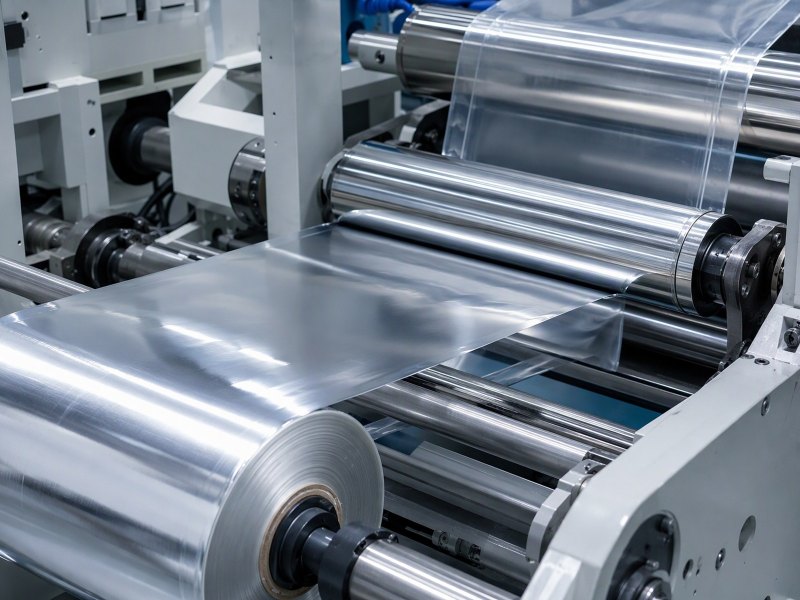
Why the second surface, not the foil, decides the adhesive chemistry in a foil lamination.
A laminate that delaminates after filling is rarely a foil problem. The foil did its job; the adhesive and the surface it was asked to hold did not.
Choose the adhesive for the second surface, not for the foil. Match its chemistry to that substrate, confirm the line can dry or cure it, then judge the laminate after cure and after filling.
Below, the sequence runs from what the adhesive must do, to which surface sets the chemistry, to what to send a supplier. For background, the Wikipedia entry covers the web itself.
What does an adhesive actually have to do in a foil lamination?
Three jobs, in order: wet the foil, wet the second surface, then hold both together for the life of the pack.
It must flow onto the foil, flow onto the other surface and build cohesion to grip both. Failure at any of the three shows up later, usually after filling.
Dive deeper
An adhesive is usually described as the layer between two materials. In a running lamination it is anything but passive. It arrives as a liquid, a melt or a film and has one pass to become part of a structure that will be flexed, folded, filled and heated. Wetting comes first and is physical: the adhesive must spread over the foil without beading, because a gap that never closed at the nip cannot be closed later by pressure.
The second wetting is harder to see and easier to get wrong. Foil presents a clean, uniform, oxide-bearing surface that most adhesives wet readily. The other surface may be paper, board, a polymer film, a lacquer or an ink, and each presents a different face to the same adhesive. A product that spread beautifully on foil can sit in droplets on a coated film, and droplets do not become a bond however hard the nip presses.
Holding comes third and must last longest. Wetting is settled within seconds; cohesion has to survive weeks of load, heat, moisture and product contact. That is why the three jobs belong in this order rather than in a list of properties. A laminate that fails at the third usually failed at one of the first two while nothing on the line showed it.
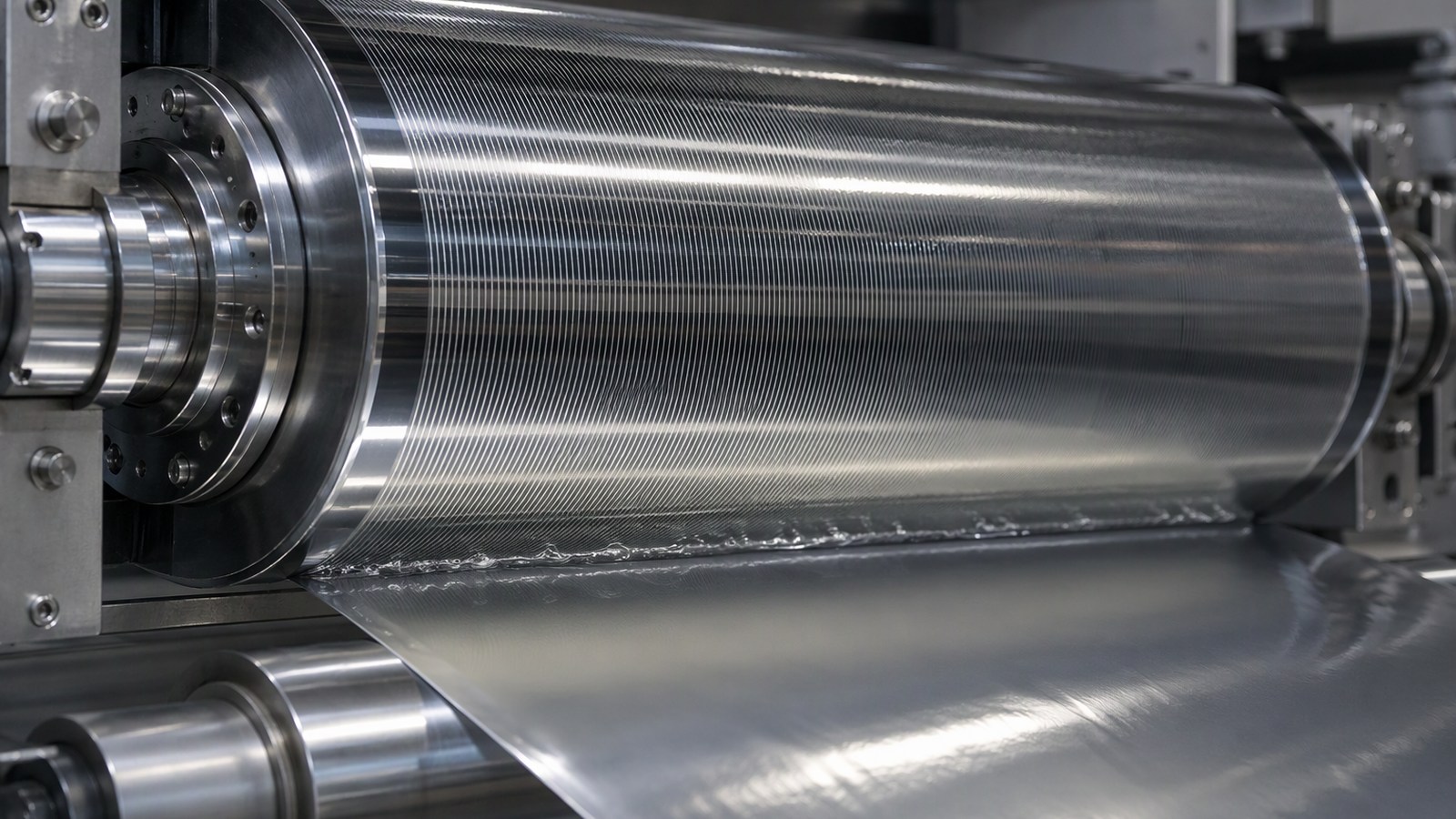
Why is the foil side the easy side, and why does the second surface decide the chemistry?
The foil offers a uniform, clean, oxide-bearing surface, and almost every common adhesive wets it. Almost none of them are chosen because of it.
The foil is the constant. The second surface varies, and its absorbency, texture and coating decide which chemistry can wet it, hold it and keep holding it.
Dive deeper
Foil behaves well because it is made by rolling. The surface is smooth in a controlled way, it carries a thin oxide layer that most polar adhesives like, and it absorbs nothing. An adhesive applied to foil stays where it was put, which makes the foil side pleasant to run and easy to reason about. Rolled stock such as 8079 aluminium foil in 0.07 mm is typical of what a converter unwinds into a laminator: consistent, dry, chemically uncomplicated.
The other surface is where the variables live. Paper and board drink adhesive, so a coat that looks generous on foil can leave too little at the interface once the fibres have taken their share. Polymer films absorb nothing, so anything volatile must leave through the film or wait at the edge. Lacquers and inks add a smooth, low-energy face that many adhesives wet only partly, which is a surface problem rather than a foil problem.
This is why two structures that look identical on paper can behave differently in the same plant. The foil line of the specification is the same and the second surface is not, and the adhesive chosen for that surface is what the whole laminate is judged by. Reading a specification from the substrate backwards prevents most of these arguments, and it is faster than testing.
Which adhesive family does your line actually support?
Solvent-borne, water-borne, solvent-free and hot melt all bond foil. The line, rather than the foil, decides which of them is practical.
Solvent-borne asks for drying capability and solvent handling. Water-borne asks for drying. Solvent-free asks for a precise nip. Hot melt asks for heat. Choose what the line can control.
Dive deeper
Solvent-borne systems carry a dissolved polymer and leave it behind as the solvent departs. They tolerate a wide range of second surfaces, including printed and lacquered ones, because the solvent helps the adhesive spread and the drying tunnel can remove it. What they ask in return is extraction, safe handling and enough oven length to clear the solvent from a structure that will later be slit.
Water-borne systems replace most of that solvent with water and a surfactant package. They are easier to handle, but water leaves more slowly and wets low-energy surfaces less readily. A board that drinks water-borne adhesive behaves differently under a solvent-borne coat, and drying capability becomes the limiting factor.
Solvent-free systems are applied as two reactive components that build cohesion after they meet, and the line is the least forgiving of a worn nip. Nothing has to dry, so the line can be compact, but the nip must be accurate because the adhesive has to bridge the texture of the second surface. Hot melts are solid, applied molten and set on cooling; they need no drying, which suits porous substrates, but the pack must not later meet temperatures that soften the bond. The full range of rolled stock is therefore only half of the specification, and the European Aluminium association covers how the material is produced.
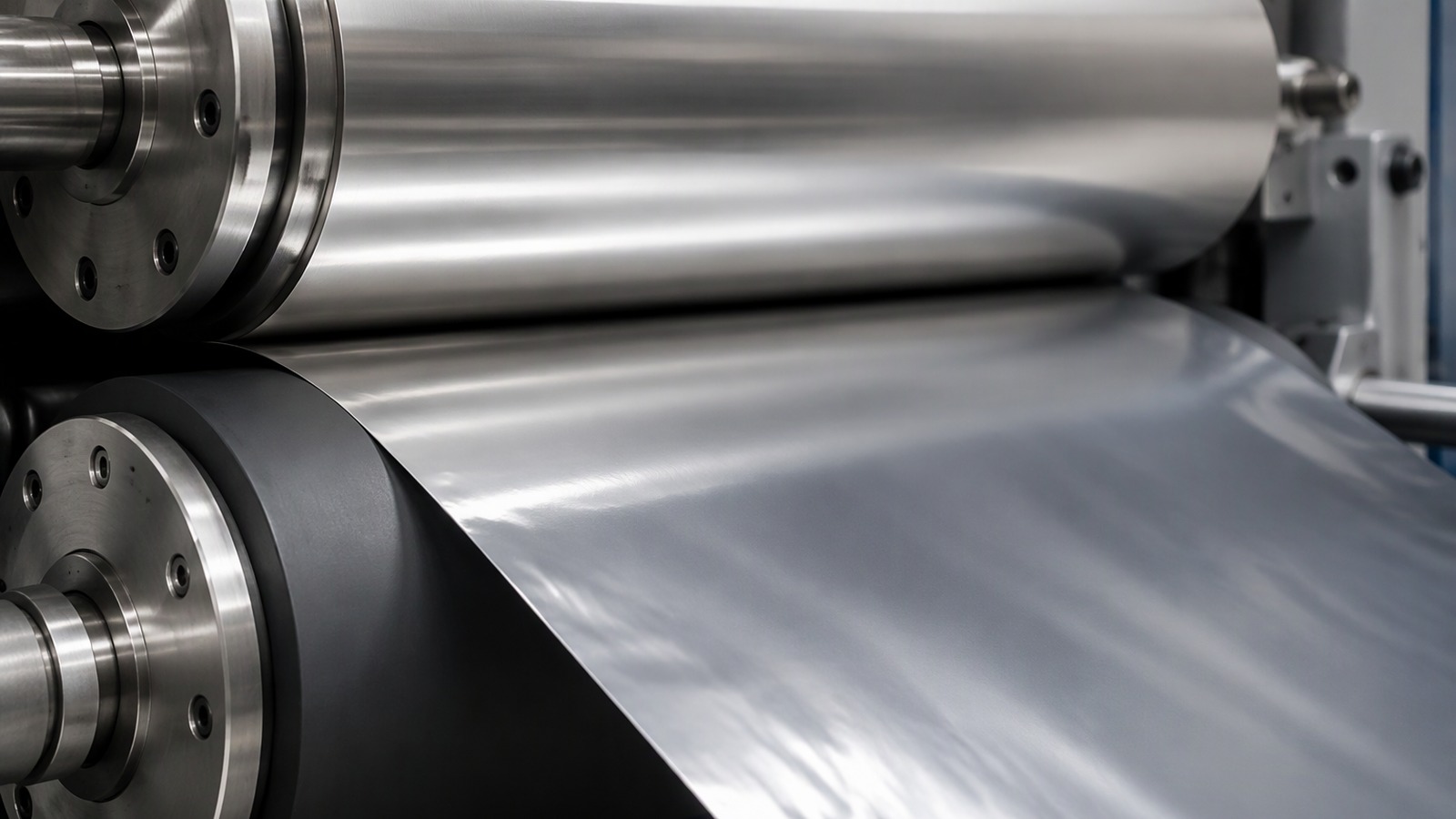
Why can an adhesive that bonds to foil let go of a printed or coated surface?
A bond tested on bare foil proves the adhesive wets metal. It says nothing about the ink on the other side.
Ink and lacquer layers are thin, smooth and chemically unlike metal. The adhesive may wet the print perfectly while the print itself is poorly anchored to its own substrate.
Dive deeper
When a laminate separates, the place where it separated is the most informative thing about it. If adhesive is on both faces, the adhesive failed. If adhesive is on one face and print on the other, the print let go of its substrate, and no reformulation of the adhesive fixes that alone. If adhesive sits on the print and the print on the board, the laminate did not fail and the problem lies elsewhere, often in the seal.
Print and lacquer change the surface the adhesive has to wet. An ink film is a dried binder with pigments and additives, and some additives exist to control slip, flow or foam. Slip additives migrate to the surface over time, which is one reason a laminate can test well on the day it is made and separate in a pack weeks later. A lacquer does the same more deliberately.
Treatments applied to a film or board to make it printable also fade, so by the time a printed reel is laminated the adhesive may meet a surface that is neither the original material nor a good print. The European Aluminium Foil Association at alufoil.org introduces how converters organise this work. Print build-up is covered in how aluminium foil is printed before lamination. The rule is simple: never approve an adhesive on a foil-to-foil trial when production contains an ink or a coating.
Why does cure matter more than the bond you can feel at the nip?
A laminate that feels tight as it leaves the nip has only been pressed together. Cure is what turns contact into a structure.
At the nip the adhesive has wetted both surfaces and formed a weak grip. Real strength develops afterwards, as liquid leaves and chains entangle or a reactive system reacts.
Dive deeper
The bond a hand can feel at the winder is mostly green strength: enough to keep the layers together while the reel is handled, slit and shipped, and not much more. In a solvent-borne or water-borne system it depends on how much liquid was left when the layers met. In a reactive system it depends on how far the reaction has run, which follows the temperature of the reel and the time the components have been in contact.
Cure continues after winding, and winding makes that cure harder. A reel is a large mass with limited access to air, and liquid still inside has to travel to an edge before it can leave, so the middle of a wide reel cures more slowly than the outside. That gradient explains why a laminate tested straight off the winder can look worse than the same laminate tested later. The guide to drying and curing a coating sets out how oven conditions shape that process, and the logic carries over.
Practical decisions follow from this. Slitting, rewinding and packing are gentler on a laminate that has been allowed to finish curing. A complaint about a laminate that separates at the slitter is often a complaint about testing too early, and the cure is to change when the material is tested.
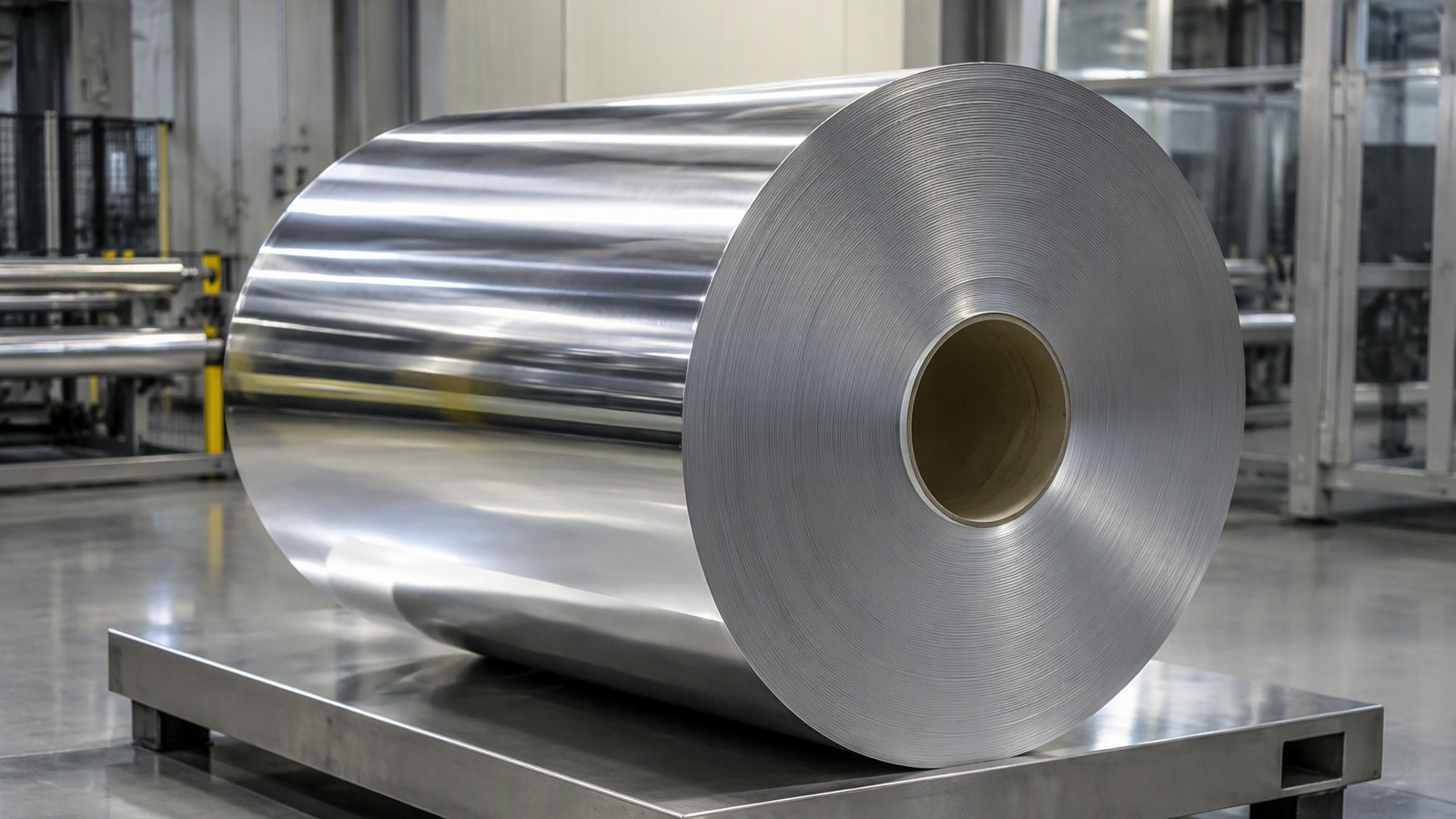
Why does the same adhesive behave differently at different coat weights and line speeds?
Two lines, one adhesive, two results. Nothing in the adhesive's name explains the difference; the amount applied and the time available do.
A heavier coat leaves more adhesive to spread but also more liquid to remove. Faster running shortens drying. Neither a heavier coat nor more speed guarantees a better bond.
Dive deeper
Every adhesive has a narrow working range of coat weights on a given line. Below it there is not enough material to fill the texture of the second surface, so the bond is starved at the high points. Above it there is more liquid than the drying section can remove, and the surplus stays in the structure to soften the bond, feed blocking or migrate into the product.
Line speed acts on the same window from the other side. Running faster shortens the time in the drying section and the time between nip and winder, which changes how much liquid is left when the layers are pressed together. A speed that works with one coat weight can fail with another, and no setting is portable between jobs, because the failure is rarely obvious: the laminate looks right, feels right and separates a week later.
The substrate adds variation. Foil gauge and temper affect how evenly the web sits against the coating roll, and a different gauge in the supply can shift the result with no setting touched. Using 1050 aluminium foil in 0.12 mm instead of a lighter gauge changes how the web behaves at the nip, though the adhesive is unchanged. Coat weight and speed must be settled on the line that will run the job.
Why is blocking on the reel a curing problem rather than a bonding problem?
A reel that will not unwind has bonded to itself, not failed to bond. The adhesive was still mobile at winding.
Blocking means adhesive has transferred to the back of the next wrap and held there. That is incomplete cure, residual liquid or too much wind pressure, not a weak bond.
Dive deeper
Inside a wound reel the conditions differ from anything the laminate meets later. Pressure builds from the tension of winding, the outer wraps compress the inner ones, and any heat left in the web has nowhere to go. A reactive adhesive that is still reacting keeps building cohesion, but the same pressure that holds the wraps together also presses the coated face against the back of the foil above it. If the adhesive can still flow, it can transfer.
The two faults are often confused. A delaminating laminate separates within its own structure and leaves adhesive on both faces or on neither. A blocked reel separates between two wraps and leaves a mark on the back of the foil, sometimes a pattern that matches the wind. The first points to the adhesive or the surface; the second to how much liquid was left and how hard the reel was wound.
The responses differ accordingly. Blocking is addressed by removing more liquid before winding, cooling the web, reducing winding tension, winding more gently and controlling storage temperature, because a reel that blocks in a warm store may not block in a cool one. None of that changes the chemistry of the adhesive, which is why an adhesive that blocks is not necessarily wrong for the substrate.
What changes for a filled pack, and what should you send a supplier?
Filling adds heat, load and chemistry. A laminate that behaved on the reel can still fail inside the pack.
Heat softens the adhesive, the product migrates into it and the seal area is stressed. Send the supplier the whole structure, the fill and the process, not one surface.
Dive deeper
Heat and product contact
A filled pack is a different environment. Heat from a hot fill, a pasteurising step or a warm distribution chain softens the adhesive and lets it creep under load. Fats, oils and acidic fills migrate into the adhesive and plasticise it from inside, so a laminate that held on a dry reel can lose its grip once it has absorbed the pack.
The seal is the other weak point. Product caught in the seal area, or a coating that softens against the jaw, produces a leak that looks like a lamination failure. Separating the two means cutting the pack open to see where the layers parted.
The brief that makes a recommendation possible
A supplier asked to name an adhesive from the foil alone can only guess. The useful brief is the whole structure: alloy, temper and gauge, the second surface with its coating or print, the layer order, the pack format, the fill and its process temperatures.
Then add the failure: where the layers parted, what the surfaces looked like, how long after filling and whether the pack was warm. The Aluminum Association is a reasonable reference for the material side. A converter who sends all of it gets a testable recommendation; one who sends a single line gets a guess in writing.
The foil is rarely the variable. Name the second surface, the line and the pack, and the field narrows to two candidates.