How to reduce aluminium foil scrap and waste on a converting line?
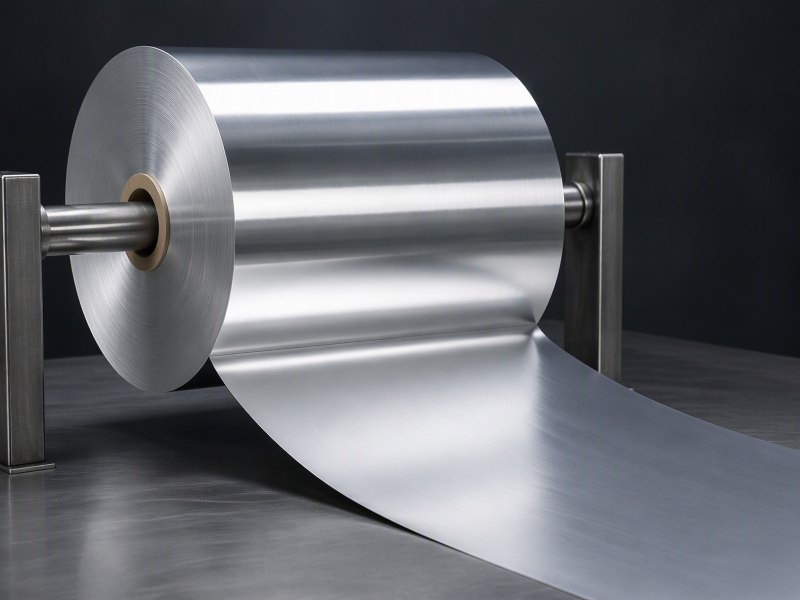
Aluminium foil scrap on a converting line comes from setup, trim, tension, winding and changeover losses. See how converters and buyers can read the loss map and choose specifications that protect yield.
Aluminium foil converting lines lose yield to setup, trim, tension and roll change, and every lost kilogram is margin gone before the order ships.
Reduce foil scrap by controlling four variables together: stable web tension, correct slitting and core setup, disciplined roll changeover, and a specification matched to the end use. Small, repeatable process control beats any single fix, because losses compound across setup, trim and winding.
Yield is a system output, not one number. The questions below are the ones converters, buyers and production engineers raise most often when foil scrap climbs and tonnage targets slip.
What are the main sources of aluminium foil scrap on a converting line?
Scrap on a converting line rarely has a single cause. It accumulates from setup, trim, tension faults, winding defects and changeover, each adding a small, repeatable loss.
The main sources are setup and changeover waste, edge trim, tension-driven breaks and wrinkles, winding faults, and specification mismatch. Together they usually decide line yield more than machine speed does, so they deserve measurement first.
Dive deeper
Every converting line has a scrap map, whether or not anyone has drawn it. That map begins where the coil is loaded and ends where the finished roll is packed. Along the route, five losses dominate. Setup loss accrues while the web is threaded and speed is ramped. Trim loss is the edge material removed to obtain a saleable width. Tension loss shows up as breaks, necking and loose wraps. Winding loss appears as telescoping, starring and blocked rolls. Specification loss is quieter: a width, thickness or alloy that fights the process instead of fitting it. Background on the material itself is gathered in Aluminium foil - Wikipedia, and machine-level guidance on edge and core settings sits in our slitting width and core diameter guidance.
Where the kilograms actually leave the line
Walk the line from unwind to rewind and log every point where foil leaves the process without becoming saleable product. Unwind remains, threading tails, slitter side trim, edge crush from poor core alignment, rewind cut-offs and rejected finished rolls are all real losses, and most are invisible in a monthly total. Separating them turns a single alarming number into a ranked list of causes. Operators usually know the ranking already; what they lack is a routine that captures it every day.
Two habits help. First, tag every stop and every reject with a short reason code, then review the codes weekly rather than monthly. Second, keep a physical sample of each defect at the machine, because a named defect is discussed while an unnamed one is tolerated. Once sources are separated, improvement can be aimed instead of hoped for, and the effect on the other losses can be judged fairly.

How does setup and changeover loss affect foil yield?
Setup and changeover loss is the tonnage consumed while the line is not yet making saleable foil, and it repeats every time a run begins.
Setup and changeover loss reduces yield because every restart consumes foil before output stabilises. Standardising threading, tension ramp and speed profiles, and grouping similar jobs, cuts the tonnage lost per start without touching machine speed.
Dive deeper
Changeover loss is easy to underestimate because it hides inside production time. The line is running, meters are counting, yet the first metres after a start may be too unstable to sell. Each start therefore carries a fixed cost in foil, and a plant running many short jobs pays that cost far more often than one running long campaigns. The lever is not only speed; it is the number of starts. Grouping jobs by alloy, temper and width, and sequencing from narrow to wide where the machine allows, reduces how often the line must be rebuilt. Having the right raw material staged also matters: coils supplied in aluminium foil roll formats matched to the run length avoid both surplus and shortage at the unwind.
Standardising the start sequence
The most reliable way to shrink setup loss is to make every start look the same. A written start sequence fixes the order of operations: core loading, web threading, tension ramp, speed ramp and the point at which quality checks begin. When the sequence is fixed, variation between shifts shrinks and the unstable window narrows. Training then reinforces one method rather than many personal methods, and new operators attain a stable line faster.
Measuring setup loss honestly
Measure setup loss in kilograms per start, not only in minutes, because minutes hide the value of the material consumed. Compare the figure across shifts and machines, and set a target the team helps define. Track the number of starts per week alongside the loss per start, because driving starts down is often easier than driving loss per start to zero. Record which alloy, temper and width combinations are the worst offenders, since those combinations usually point to tooling or handling rather than to an operator.
Why does tension control decide trimming and winding quality?
Tension is the force that keeps the web flat and aligned, so when it drifts, trimming and winding faults follow almost immediately.
Tension control decides quality because unstable tension causes wrinkles, breaks and loose wraps that ruin trimming and winding. Keeping tension steady from unwind to rewind, with correct taper, prevents most of these faults before they arrive at the finished roll.
Dive deeper
Tension links the whole line. Change it at the unwind and the effect arrives at the rewind seconds later, sometimes as a defect and sometimes as a break. Foil is thin, so tension errors that a heavier web would absorb become wrinkles and stars here. The reason is simple: thin webs have little bending stiffness, so flatness depends almost entirely on even tension across the width. Industry bodies such as the European Aluminium Foil Association describe how gauge and temper interact with handling, and that context explains why one setting rarely suits every coil.
Reading the web before the defect forms
Wrinkles and slack edges usually announce themselves before a roll is rejected. Operators who watch the web between the slitter and the rewind can correct tension early, while a defect that arrives at the rewind is already expensive. Simple habits help: check edge flatness under controlled lighting, listen for changes in the sound of the web, and log every correction with its cause.
Tension, taper and core alignment
Tension should fall as the roll builds, a practice known as taper tension, so the outer wraps do not crush the inner ones. Core alignment matters just as much: a core that is not square to the shaft produces wobble that looks like a tension problem but is really a handling problem. Rolls available in core sizes of 76 mm and 152 mm perform best when the core is seated squarely and the chuck pressure is even. Checking these fundamentals before adjusting tension saves time and prevents chasing a fault that lives in the tooling.
When to stop adjusting and start measuring
If tension corrections do not hold, the cause is usually upstream: a worn roll, a damaged edge, or a coil with gauge variation. Measuring gauge and width before the line starts is faster than correcting defects after it stops.
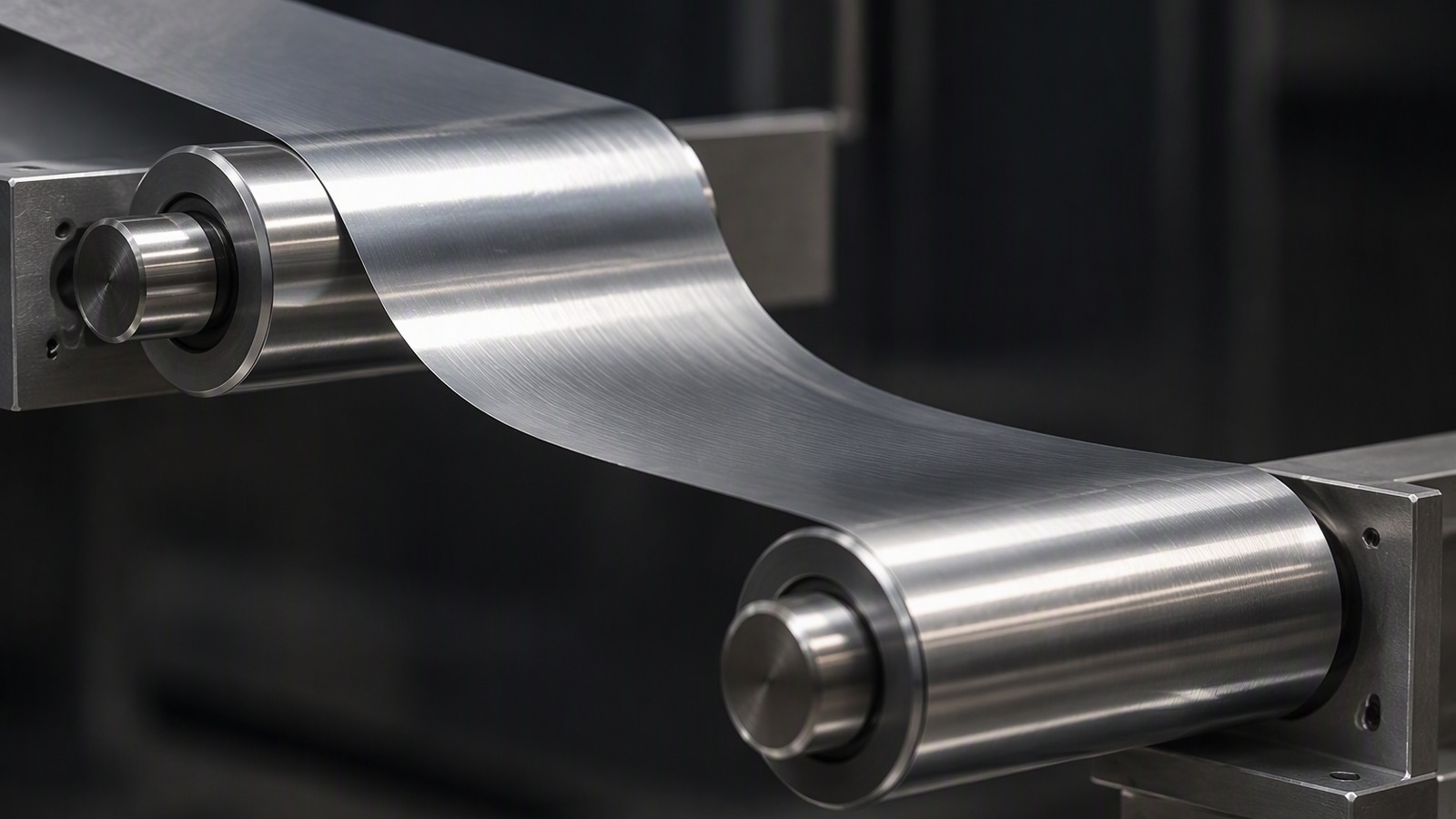
How can slitting and trim loss be reduced without slowing the line?
Trim loss is foil removed to obtain a saleable width. It can be reduced by planning widths, tolerances and core choice before the coil arrives at the slitter.
Reduce trim loss by matching order widths to coil widths, allowing sensible slitting tolerances, and choosing core diameters that suit the customer's line. Planning width combinations before the run avoids the narrow leftover strips that generate the most waste per tonne.
Dive deeper
Trim loss is a planning problem more than a machine problem. A slitter can only cut the combinations the order book and the coil allow, so the cheapest place to reduce trim is at quotation and scheduling. When widths divide cleanly into the coil width, the leftover edge is small; when they do not, a narrow strip becomes scrap. Organisations such as European Aluminium publish material and recycling context that reminds converters what recovered foil is worth, which is a useful argument when planning is squeezed by urgency.
Width planning that respects the slitter
Start from the coil width and work backwards to order widths, rather than the reverse. List the combinations that divide with the least remainder, and reserve the awkward combinations for long runs where the trim is spread over more tonnes. Where the machine allows, slitting tolerances should be set to what the next process actually needs, because over-tight tolerances force extra trim. Thickness tolerance and yield follow the same logic: a coil that is slightly heavy at the edges may need more edge trim to attain a flat, uniform finished roll.
Core choice and downstream handling
Core diameter influences trim indirectly. A core that is too small for the roll weight can deform and cause edge damage, which is then removed as trim. Matching core size to roll weight and to the customer's unwinding equipment prevents that loss. Supplied in core sizes of 76 mm and 152 mm, rolls can be specified to suit both converting lines and end-user machinery, and that single choice often saves more material than any slitter adjustment.
How do specification choices change foil yield and scrap?
Specification choices set the limits the process must work within, so a mismatch between order and material often shows up later as scrap.
Specification choices change yield because alloy, temper, thickness and width decide how forgiving the process is. Matching these to the end use, and allowing realistic tolerances, reduces avoidable scrap far more than pushing the line harder.
Dive deeper
Every specification carries a yield consequence. A harder temper can resist damage but may wrinkle differently; a thinner gauge saves material but narrows the operating window. The skill is to choose the combination that suits the end use rather than the one that looks strongest on paper. Alloys such as 1050, 1060, 1100, 1235, 3003, 3004, 8011, 8021 and 8079 behave differently in converting, and tempers O, H14, H16, H18, H22 and H24 each suit different forming and wrapping duties. Sources such as The Aluminum Association explain how alloy families are designed, which helps buyers frame a sensible request.
Matching gauge and width to the job
Gauge and width are the two specifications that most directly affect yield. Foil available in thicknesses from 0.005 mm to 0.20 mm and widths from 100 mm to 1500 mm can be specified, and choosing the nearest sensible size reduces both trim and handling waste. Where 8079 aluminium foil is chosen for demanding barrier duties, its behaviour in converting can justify a slightly different setting elsewhere on the line. Specification and process should be decided together, not in sequence.
Tolerance and its hidden cost
Tolerances look free at quotation and expensive on the line. An over-tight thickness tolerance can exclude otherwise usable coils, while an over-loose one pushes variation downstream. Setting tolerances to what the end use really requires, and recording why each was chosen, keeps the request honest and the yield predictable.

How should converters measure and reduce foil scrap over time?
Reducing scrap over time needs a simple, repeatable measurement routine that the line team owns and reviews weekly, not a one-off audit.
Measure scrap by cause rather than only by total, and review the ranking weekly with the operators who run the line. Small, sustained improvements in setup, trim and winding compound, while one-off campaigns usually fade without a routine to hold them.
Dive deeper
Scrap reduction is a habit before it is a project. A plant that records causes daily and reviews them weekly will outperform one that runs an intensive campaign twice a year, because the routine survives staff changes and busy periods. The measurement does not need to be complex: kilograms by cause, per machine, per shift, is enough to start. What matters is that the numbers are trusted and that the team can see the effect of its own changes.
Choosing a few measures that matter
Pick three or four measures and resist adding more. Useful choices include setup loss per start, trim loss as a share of input, winding rejects, and the number of unplanned stops. Together they cover most of the loss map without overwhelming the team. Reviewing them weekly, and asking what changed rather than who is responsible, keeps the discussion productive. A foil roll and sheet range supplied in consistent formats also helps, because predictable input makes the measures comparable from week to week.
Turning measures into action
A measure only earns its place if it changes a decision. If trim loss rises, revisit width planning; if setup loss rises, revisit scheduling and the start sequence; if winding rejects rise, revisit tension and core handling. Keep a short written record of each change and its effect, so hard-won knowledge is not lost when shifts rotate.
Holding the gain
Once a change works, write it into the standard and train it. Gains that live only in one operator's memory disappear with that operator's shift change. Standard work is the simplest way to make a good week become a good quarter.
Foil scrap is a system result. Control setup, trim, tension, winding and specification together, measure by cause, and yield improves steadily rather than in bursts.