How to Specify Pharmaceutical Blister Foil (PTP): Thickness, Lacquer and Testing
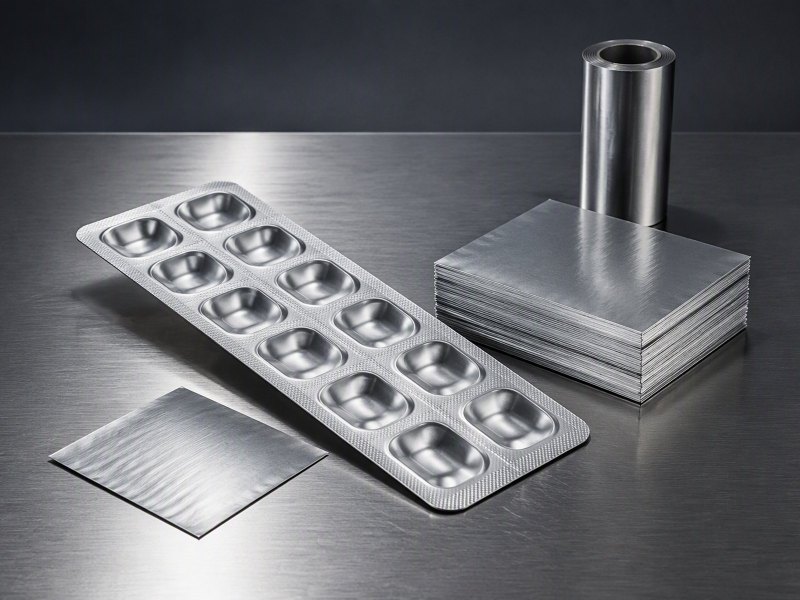
A practical specification checklist for PTP blister foil, covering the parameters that decide whether your blister line runs without rejects.
A practical specification checklist for PTP blister foil, covering the parameters that decide whether your blister line runs without rejects.
Pharmaceutical blister foil is unforgiving: a thickness drift of two microns or a lacquer weight variance can stop a packaging line or, worse, pass qualification and then fail in the field. This is the specification checklist we work through with every blister foil enquiry.
Which alloy and temper should you specify?
Most PTP foil is 8011 or 8021 in hard temper, so the first decision is which of those two alloys fits your forming and barrier needs.
PTP foil is almost always 8011 or 8021 in hard temper. 8021 is used where higher strength or better barrier after forming is needed. Soft temper is not suitable: the foil must stay flat and push through cleanly.
Dive deeper
Alloy and temper follow the foil through every later step. Both 8011 and 8021 are supplied in rolled tempers, and the temper you buy fixes how the lidding behaves on your line. H16 and H18 are the usual hard tempers for lidding, while H22 and H24 appear in softer products such as forming foil and some laminates. If a converter asks for hard without a designation, ask for the actual temper before quoting, because H16 and H18 do not behave identically in a forming tool.
Why does 8021 appear at all when 8011 is already standard? 8021 carries a slightly different iron and silicon balance, which tends to give a better combination of strength and barrier after the foil has been formed or flexed. Where the pocket is deep, where the line runs fast, or where the pack is handled heavily, that difference can matter more than a small price gap. On a shallow, slow-running pack, 8011 usually does everything required.
Two checks help. First, confirm the temper designation in writing rather than accepting hard or soft. Second, confirm how your tooling reacts to the rolling direction. Background is on the aluminium foil reference, and the European Aluminium sector view helps when comparing suppliers.
What thickness should you specify?
Thickness is the parameter most often quoted loosely, yet it drives both the barrier and the way the pack opens.
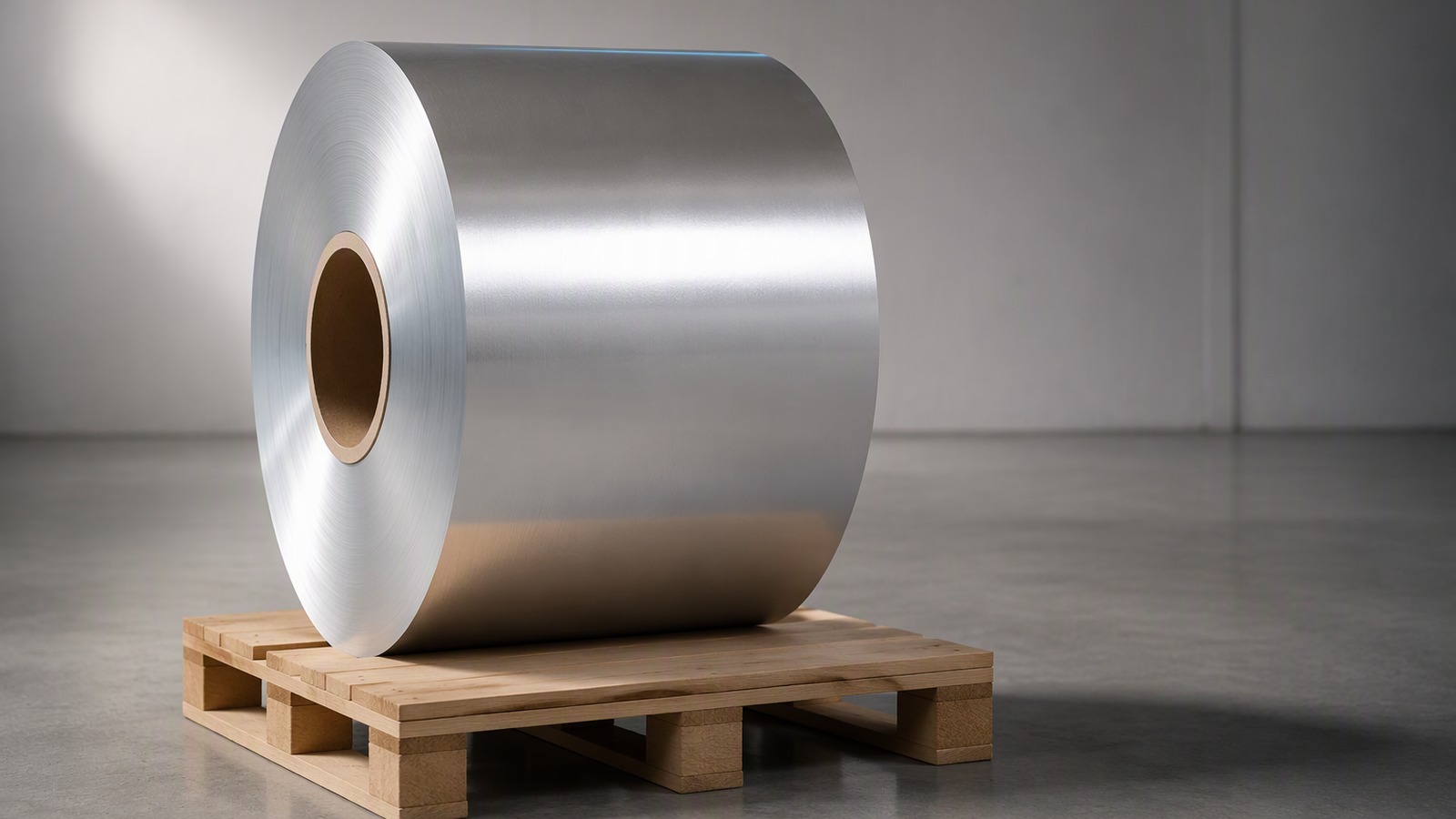
Typical range is 0.02 to 0.025 mm, with tolerances tighter than general purpose foil. Thickness is not only a barrier question; it determines whether the lidding pushes through consistently on the blister line and whether the pocket keeps its shape.
Dive deeper
Think of thickness as three numbers rather than one: nominal, tolerance and the band you will actually accept. A nominal 0.02 mm foil with a wide tolerance can drift enough to change push-through behaviour, so the tolerance matters as much as the nominal figure. Ask for the tolerance band in the same unit as the nominal value. Foil intended for general packaging is often supplied to a looser tolerance than foil meant for a blister line.
Thickness also interacts with width and core. A specification that quotes 0.020 mm but not the tolerance, width or core diameter is not yet orderable. Width for blister foil normally sits in the 100 to 1500 mm range, and the core is usually 76 mm or 152 mm. Those two figures decide whether a roll fits your machine without an adapter. Measurement practice is described in metrology references such as NIST measurement science resources.
Finally, thickness is not a substitute for a barrier claim. Barrier depends on alloy, thickness and surface condition together, so a thicker foil does not automatically solve a moisture problem if the lacquer or the forming is wrong. Compare options on the aluminium foil roll page before you fix the gauge.
Which heat seal lacquer system should you specify?
The lacquer is the layer that bonds the lidding to the film, so it has to be specified together with the film.
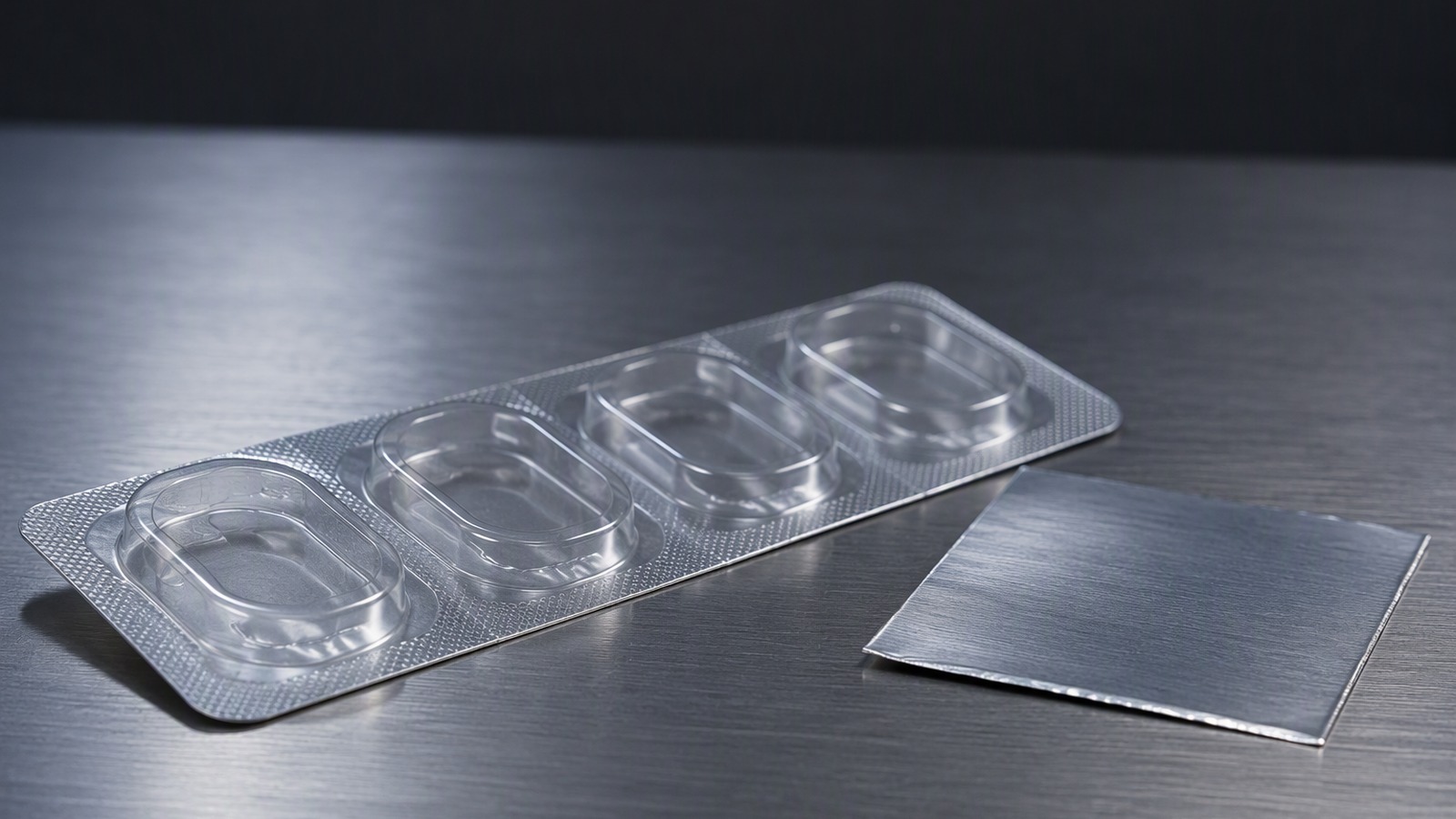
If the foil is to be sealed to a blister film, you must specify the lacquer system. It has to match the film: PVC, PVDC, PP or COC. Lacquer weight is specified in grams per square metre and must be matched to your sealing temperature, pressure and dwell time.
Dive deeper
Match the lacquer to the film and to the pack, not to the label on the drum. PVC film is the most common partner for PTP lidding, PVDC is chosen where moisture protection matters most, and PP or COC appear where the pack must tolerate higher temperatures or aggressive contents. The lacquer coats one face; the other stays bare so it can be printed or left clean. State which face is coated, because a roll wound the wrong way round wastes a set-up.
Lacquer weight, in grams per square metre, is the number that ties the coating to your sealing window. Too little coating and the seal may not hold at the low end of the temperature range; too much and you may see blocking on the roll or transfer to the tooling. Weight is set on the coating line, so it has a tolerance that belongs in the specification beside the nominal figure. If a converter cannot state the tolerance, treat the weight as indicative.
Ask for a coated sample sealed to the film you actually use and run it at both ends of your intended window. A coated sample sealed to your own film is the only proof that matters. Plain and coated finishes are shown in the pharmaceutical foil range.
What testing and documentation should you ask for?
Testing is what turns a specification into evidence, so agree the report content before the order is placed.
Ask for batch test reports covering thickness, pinholes, surface cleanliness, tensile strength, elongation and lacquer weight. For regulated markets, the document pack that applies to that market should be confirmed before the order is placed.
Dive deeper
A batch report is only useful if it is tied to the roll you receive. Ask for the report to carry the batch or heat number, the alloy, the temper, the nominal thickness, the width, the core and the coating weight. If your market expects a document pack, agree the exact contents in writing before production, because some documents take longer to prepare than the foil itself.
Never accept a test value without the condition under which it was obtained. Tensile and elongation results depend on the direction of the test relative to the rolling direction, and pinhole inspection depends on the light source and the procedure used. Where a customer wants one figure, the value is hedged by the method. Methods for light metals are described by ASTM Committee B07 on Light Metals and Alloys.
Documentation is also about traceability of the coating and the packing. Ask how long reports are retained, and whether packed rolls carry the same batch reference. Buyers who handle their own audits will want that consistency, and it is easier to agree at enquiry stage than after delivery. Background on what such paperwork usually covers is on the food-grade aluminium foil compliance documents page.
How should packing be specified?
Packing belongs in the specification because the lacquer begins reacting with moisture the moment it is exposed.
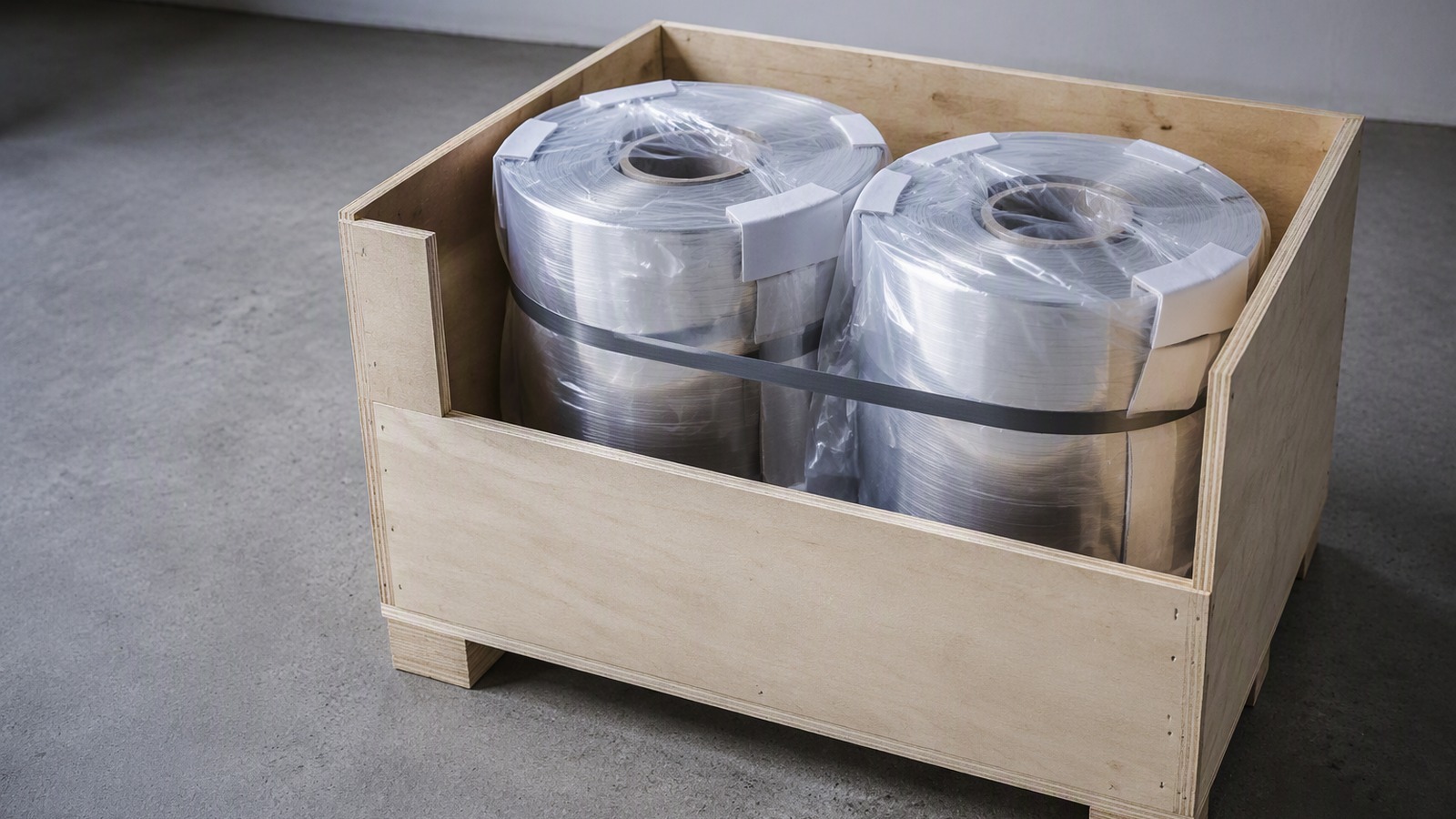
Lacquer is moisture sensitive. Rolls should ship sealed in barrier bags inside wooden cases and be used within the shelf life stated by the supplier. Foil that has absorbed moisture will seal inconsistently.
Dive deeper
Moisture uptake is slow and invisible, which is why it is often discovered only when seals start failing after a humid weekend. Barrier bags, desiccant where agreed, and sealed wooden cases slow the process; a part-used roll left on an open stand accelerates it. Ask what the supplier states as shelf life and under which storage conditions, then check that your own warehouse can meet those conditions. If a roll will be stored for months, say so at enquiry stage rather than after the order. Moisture damage is slow and invisible, and cheapest to prevent at packing stage.
Roll handling matters too. Rolls should be lifted with a proper mandrel or a sling that does not crush the outer wraps, and stored on a stand that keeps them off the floor. Damage to the outer wraps creates an edge that can catch on the unwinder and tear. If a roll is used across several shifts, agree how the remaining roll will be resealed. These details are worth one sentence in the purchase order.
We produce PTP foil in 8011 and 8021 with plain or lacquered finish, from 1 MT per size. Full details are on the pharmaceutical aluminium foil page, or see the wider packaging and container foil range.
What does the sealing window mean for the lidding foil?
The sealing window is the range of temperature, pressure and dwell time in which your pack seals reliably.
Ask for the window in writing, then verify both ends on your own line. A wide window tolerates normal production variation; a narrow one fails as soon as a heater zone drifts or the line speed changes.
Dive deeper
A sealing window is not a single recommended setting. It is the area bounded by the lowest temperature that still produces a seal strong enough to hold through distribution, and the highest that still lets the pack be opened by hand without tearing the film. Pressure and dwell time move those boundaries, so the window is a three-dimensional region rather than a temperature range. When a converter quotes one temperature, ask for the boundaries and how they were found.
Several things shift the window after the trial. Film thickness and formulation, lacquer weight, tooling wear, ambient humidity in the packing hall and line speed all influence the result. A window measured in one plant does not transfer unchanged to another. Where the pack is sealed with a heated tool, the surface condition of the tool matters as much as the set point, because a worn or contaminated tool transfers heat unevenly across the web.
Define the window, then run at its middle so normal drift stays inside it. Record the boundaries on the specification and revisit them whenever the film or the lacquer changes. A pack that seals at the edge of its window passes a start-up check and fails later.
How does forming foil differ from lidding foil in the same pack?
A blister pack has a cover and a cavity, and the two sides are specified for opposite duties.
The lidding foil is the push-through cover: thin, hard and usually lacquered. The forming foil or film makes the cavity: softer, thicker and shaped by the tooling, so it must stretch without cracking or thinning through.
Dive deeper
The lidding foil has to do three jobs at once: close the pack, hold the product and open on demand. That is why it is thin, hard tempered and lacquered on the sealing face. The forming side has the opposite set of requirements. It must flow into the cavity and keep a wall thick enough to protect the product after stretching. Soft tempers such as O, H22 and H24 are typical there, and the gauge is normally greater than that of the lidding.
Because the two sides are formed and sealed together, they cannot be specified in isolation. A cavity too deep for the available forming material will thin at the corners; a lidding foil too thin for the cavity may fail during push-through. The sealing lacquer must also suit the material it meets, which is why the forming material must be named in the enquiry. Specify the pocket and the cover as one system and most compatibility questions answer themselves.
One further difference is the direction of quality control. Forming material is inspected for thickness distribution after forming and for pinholes, while lidding is inspected for flatness, coating weight and push-through behaviour. Both sets of checks belong in the same specification, because a pack functions only when cover and cavity are in balance.
What should you send with an RFQ for a blister foil?
A complete enquiry gets a firm answer the first time; a partial one gets a list of questions instead.
Send the alloy, temper, thickness with tolerance, width, core, lacquer type and weight, finish, quantity, packaging, destination port and the film you will seal to.
Dive deeper
The mechanical parameters are quick to list. Alloy and temper, nominal thickness with the tolerance band, width and core diameter, and the quantity per size. Width for blister foil typically sits between 100 and 1500 mm, and the core is usually 76 mm or 152 mm. Quantity is quoted per size, with 1 MT per size as the usual minimum for a rolling programme. If your unwind stand is unusual, mention it.
Then the functional parameters that decide whether the foil will work. Name the film you will seal to and the lacquer type you expect, the coating weight and its tolerance, and whether one face must stay printable. Give your sealing temperature, pressure and dwell time if fixed, or say they are still open. If the pack is printed or laminated, describe that process, because a printing step can change the lacquer.
Finish with the commercial frame: packaging expectation, the destination port from Qingdao, Tianjin or Shanghai, and the documentation you want. Samples and trial rolls are normally discussed once a specification exists. With all of this in one message, feasibility and pricing can usually be confirmed in one reply.
Specify alloy, temper, thickness, lacquer and packing as one system, agree the sealing window, and the line runs predictably.