What Do "Eye to Sky" and "Eye to Wall" Mean in Foil Coil Packing?
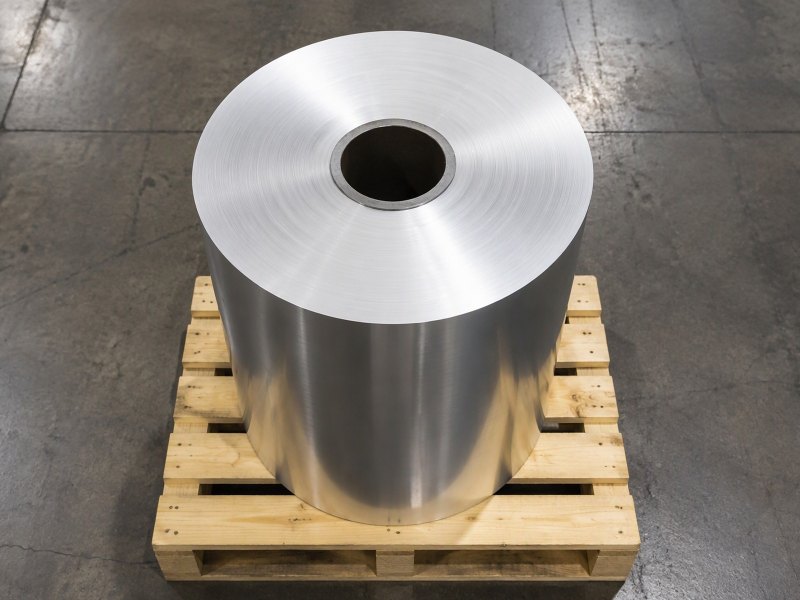
Eye to sky or eye to wall? How the coil axis in a foil pack decides handling and unpacking.
Two suppliers quote the same coil, then ship it on a different axis. The pack looks fine until the roll reaches the machine.
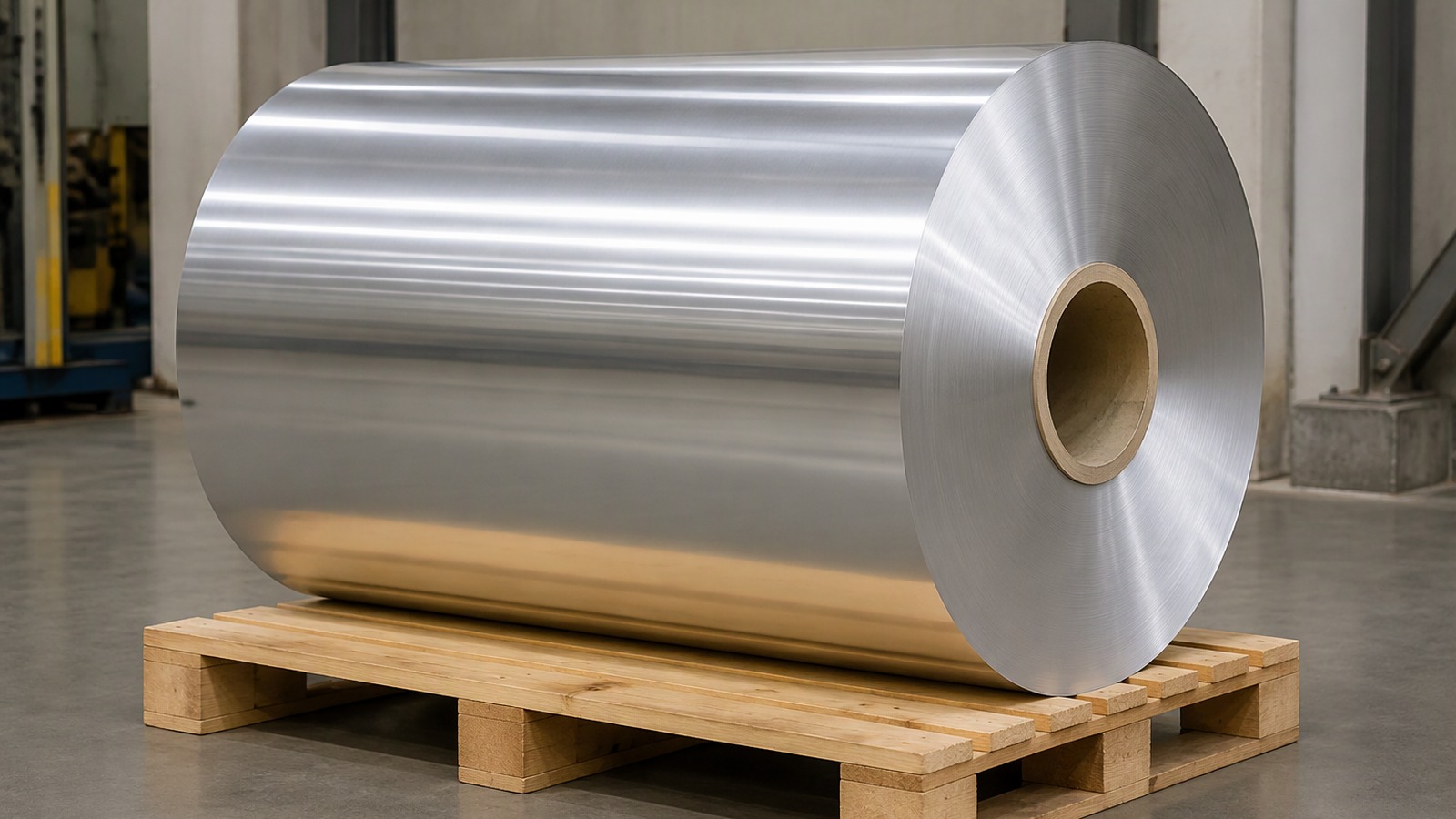
Eye to sky means the coil stands on end with its core opening facing upward. Eye to wall means it lies on its curved surface with the core opening facing sideways. The choice sets the load path, the handling equipment and the unpacking sequence.
Neither term usually appears on a drawing, so the axis gets agreed in conversation and written nowhere. That silence is where most handling surprises begin.
What Do the Two Terms Actually Describe?
Both names describe the same coil seen from a different side: which way the hollow core points.
The eye is the bore inside the core. Sky is up, wall is sideways. An eye-to-sky coil stands on one end face with its bore pointing at the ceiling. An eye-to-wall coil rests on its outer surface with the bore pointing at the side of the pack.
Dive deeper
The vocabulary comes from the coil itself. A wound coil is a cylinder of metal around a hollow tube, and that tube is the only feature that gives the object a clear axis. Once the bore is called the eye, the two attitudes name themselves: the eye looks at the sky, or the eye looks at the wall.
What the eye is, and what it is not
The eye is not a window and it is not the visible end face. It is the bore of the core, commonly a 76 mm or 152 mm tube in aluminium foil packing, and it is the one place where lifting gear or a machine shaft can pass through the coil without touching the metal.
Why the wording survives
The terms survive because they are unambiguous to anyone who has loaded a coil, and because they describe the pack rather than the product. Alloy 1050 or 1235 changes nothing about the axis, and neither does thickness or temper. What changes is how the coil is presented, and presentation is what a warehouse operator needs to know before the truck arrives. A buyer who writes only the alloy and the size leaves that open, and the gap is small on paper but wide at the loading bay. Neither phrase says how a coil is strapped; it says only where the bore points.
Why Does Coil Orientation Matter at All?
Gravity does not care about alloy. It cares which part of the coil carries the load, and the two axes load completely different parts.
Standing on end, the coil loads its end faces, where every wrap edge shares the weight. Lying on its side, it loads a narrow strip of its outer surface. Those two paths behave differently under stacking, motion and time.
Dive deeper
Think of a coil as a very long strip rolled up, not as a solid block. The wraps touch each other but they are not joined. Any load applied to the pack travels through those contacts, and the direction of the load decides how many of them share it. That is why a packing axis is a technical decision, not a matter of taste.
Load down the axis
In an eye-to-sky pack the weight runs down the bore. Every wrap edge on the lower face meets the pallet deck, or the coil beneath, so the load spreads across the whole annular face. The metal resists that direction well, because it is compressed in its own plane, but the layers are held together only by friction and by the strapping the packer applied. Set the pack down on a ridge and layers can slide slightly, and the coil loses the flat face a machine expects.
Load across the axis
In an eye-to-wall pack the weight runs across the coil. Contact with the pallet is a strip along the outer surface, roughly as wide as the coil. The outermost wraps carry the pressure there, and because the coil is a hollow cylinder it can distort slightly out of round under sustained load. Orientation therefore creates two risks: layer movement in one case, ovality in the other. In both cases the coil rests on something, and that support decides how evenly the load is shared.
Which Orientation Suits a Slit Roll?
A slit roll is narrow compared with its diameter, and that ratio, more than the alloy, usually settles the axis.
Narrow slit rolls are commonly packed eye to wall, so the coil arrives ready for a horizontal shaft and cannot tip over. Wide, shallow coils are more often packed eye to sky, where the broad face gives a stable footprint.
Dive deeper
Slitting turns one wide master coil into several narrow ones. The width falls, the diameter stays roughly the same, and the shape of the pack changes with it. A narrow roll stood on end has a footprint equal to its diameter but a height equal to its width, and the mass rests on a face only a few wraps deep.
The machine decides more than the warehouse
A converting line with a horizontal unwind shaft wants the roll delivered with its bore already horizontal, so the operator can remove the end protection and slide the coil straight on. A machine with a vertical spindle wants the opposite. Where they conflict, the delivery attitude should follow the machine, and the warehouse should be told what equipment it needs.
Where the core size fits in
A 76 mm core gives a tighter fit on a shaft, while a 152 mm core is easier to pick up and more forgiving of a worn mandrel. Either way the bore is the interface, which is why the axis belongs next to the core size rather than being left to the packer. Slit stock in 1050 aluminium foil 0.08 mm and in 1235 aluminium foil 0.05 mm is supplied in either attitude, so the order has to pick one. Often the coil is remounted before use, so the arrival axis is a starting point, not a fixture.
What Changes on a Sea Shipment?
At sea the pack stops being a static object. Motion, humidity and time act on whichever surface the axis leaves exposed.
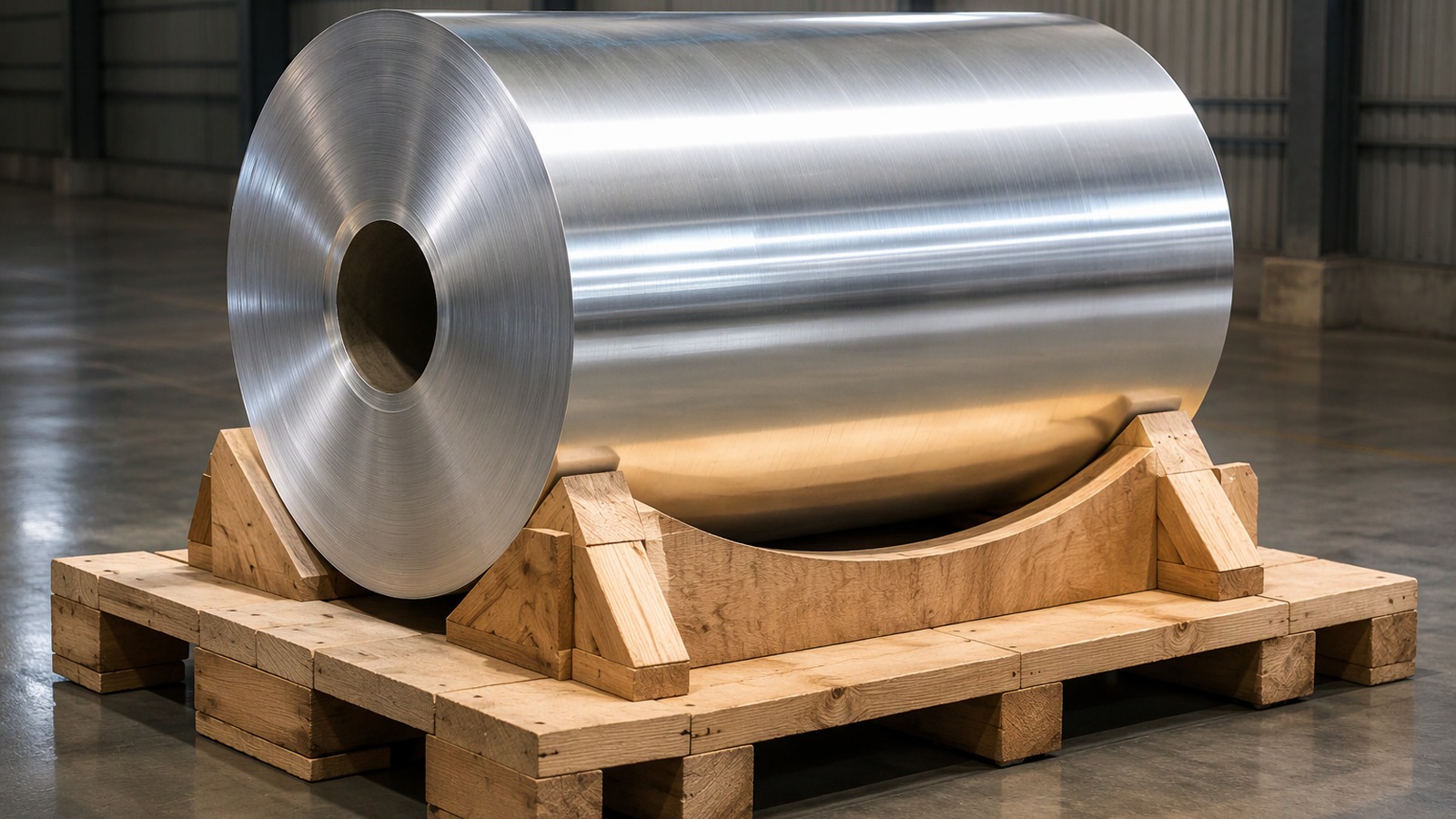
An eye-to-sky pack offers a wide horizontal face and an open bore to anything falling or condensing from above, but stacks well. An eye-to-wall pack sheds water off its curve, yet depends on chocks to stop it rolling.
Dive deeper
A container at sea is a box that is repeatedly tilted, braked and lifted. Inertia acts horizontally, and the pack resists it either through the flat faces of the coils or through their curved surfaces, depending on the axis. The container loading for foil importers question is usually asked about lashing, yet lashing only works with the attitude it was designed around.
Exposure from above and from the side
An eye-to-sky pack presents a large horizontal face to the container roof. Condensation that forms overhead and drips has somewhere to land, and the open bore is a direct path down into the pack if the end cover is disturbed. An eye-to-wall pack turns that face ninety degrees: water runs off the curve and off the end faces instead of resting on them, but the bore becomes a tunnel open at both ends.
Stacking and floor pressure
Eye-to-sky packs stack on their flat faces, so a second tier sits on the coil faces of the first, and the stack height follows the coil width. Eye-to-wall packs have no flat face to build on, so they are usually kept in one tier or settled into cradles. Floor pressure differs too: a circular footprint spreads load in every direction, while a strip footprint concentrates it along one band. Of the three, time is the one that turns a harmless contact pressure into a lasting set.
How Does Orientation Affect Unpacking?
Unpacking starts before the wrap comes off. The attitude decides what space and what equipment the job needs.
An eye-to-sky coil needs overhead clearance for a crane or a mandrel lift, and often a deliberate turn before it can be mounted. An eye-to-wall coil is already at shaft height and usually needs only an aisle and a clamp truck.
Dive deeper
Both packs are opened the same way in principle: outer wrap cut away, strapping released under control, moisture barrier opened, end protection removed. What differs is the direction of the work. In an eye-to-sky pack the natural place to start is the top, because that face is reachable. In an eye-to-wall pack it is one end face, working from the side.
Clearance and turning space
An eye-to-sky coil has to be lifted off its pallet before it can go onto a horizontal shaft, which means overhead clearance, a lifting point above the pack and room to swing the coil through ninety degrees. An eye-to-wall coil can be approached from the side at floor level, which suits a low roof and a wide aisle. Reading the axis before booking the slot avoids three people looking for a crane, which is how the aluminium industry frames the problem.
The temptation to improvise
A coil on its side looks as though it could be rolled a short distance, and a coil on end looks as though it could be tipped onto a pair of forks. Both moves are how clean stock becomes disputed stock, because the wrap and strapping were arranged for one attitude. The wider question of storing and handling foil rolls starts with keeping the pack as it was built.
Where Does Edge Damage Come From in Each Case?
Edge damage is not one failure. The axis decides which edge is at risk, and what is likely to hit it.
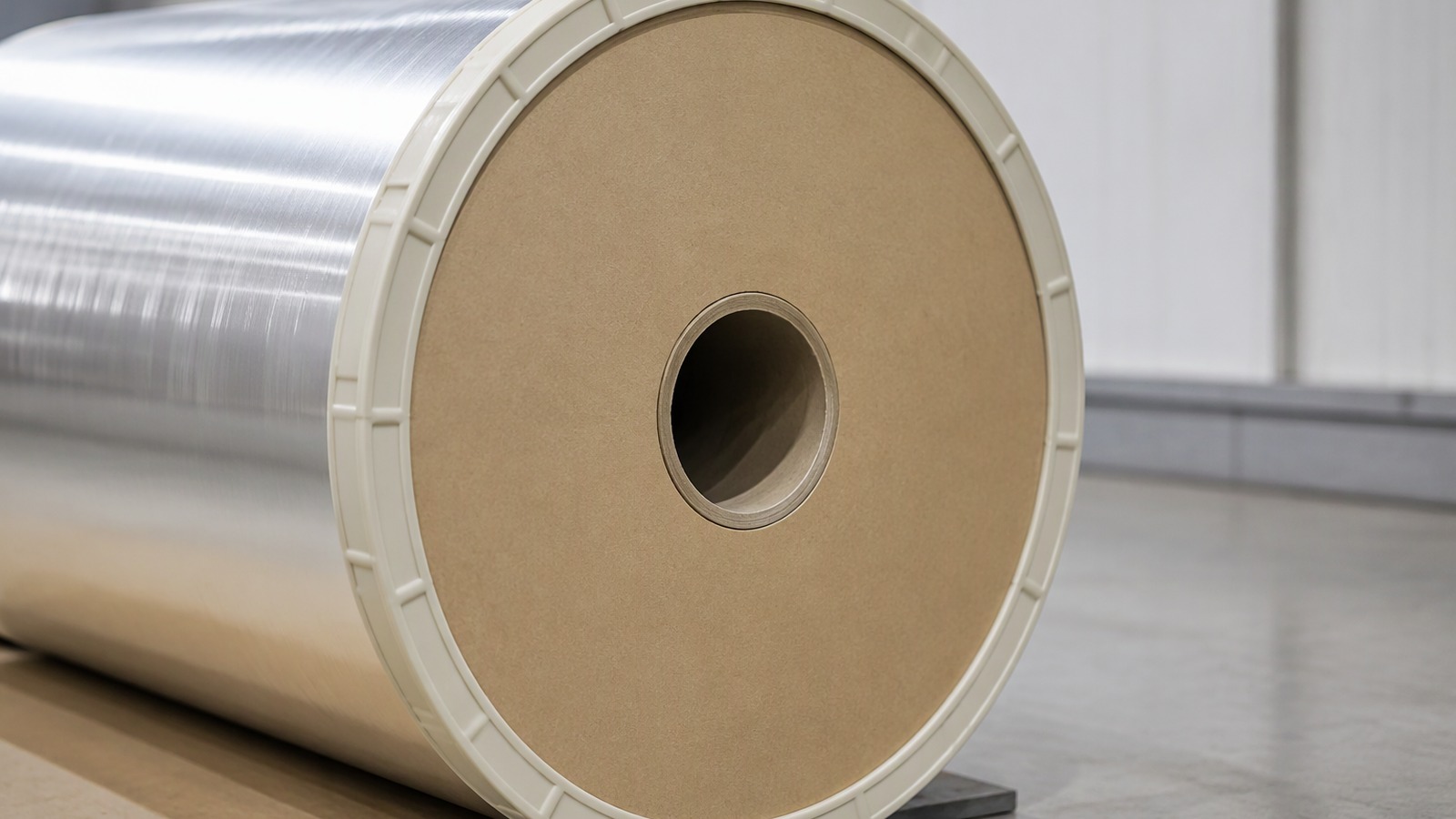
Eye to sky, the lower face edges carry the stack and can be crushed or marked by the deck and by strapping. Eye to wall, the two end faces stand vertical and take side impacts from forks, clamps and neighbouring packs.
Dive deeper
Foil is thin, and a coil edge is a stack of thin edges. Damage there is mostly mechanical: pressure, impact or abrasion, applied where the wraps are least supported. Because the two attitudes load different edges, they produce different damage patterns, and the pattern tells you where in the chain it happened.
Eye to sky: damage on the loaded face
When a coil stands on end, the bottom face does structural work. Every irregularity under it becomes a pressure point: an uneven deck board, a splinter, a strap buckle left on the pallet. The result is a band of deformed wrap edges on the lower face. Strapping over the top face adds marks of its own. The damage stays invisible from standing height until the coil is lifted.
Eye to wall: damage at the exposed ends
When a coil lies on its side, the curved surface takes the weight and the two end faces are exposed. Anything approaching from the side meets those faces first: fork tips, clamp arms, the corner of the next pallet, the side of a container doorway. A coil that rolls even slightly against an obstruction loads one point on the circumference, and the outermost wraps take it. Advice on how aluminium products are handled in bulk returns to one point: protect the edges. In both cases the outermost wraps take the mark first, which is why they are read as evidence.
Can a Roll Be Turned on Arrival?
Sometimes, but turning is a handling operation in its own right, not a correction you make with two people and a pry bar.
Yes, with the right lift and enough room, and only if the pack allows it. A coil that has taken a set in transit may shift layers when it is turned, so the decision belongs at packing.
Dive deeper
A coil can be turned from eye to wall, or from eye to wall to eye to sky, using a lift through the bore, a clamp made for coil handling or a properly built cradle. What it cannot safely be is rolled on its edge, dragged across a floor or tipped off a pallet. The metal survives those moves; the pack often does not, and the damage surfaces at the machine.
What changes when a coil is turned
Three things change. The strapping and wrap were arranged for one attitude, so after a turn they no longer bear where they were designed to bear. The layers have been sitting in one direction under load, and reversing that direction lets them settle slightly, which can open a step at the end face. And the support under the coil has to be rebuilt, because the contact area is now a different shape.
Who should do it, and when
The cheapest place to change attitude is where the coil is packed, because the equipment and the trained hands are already there. The worst is a doorway with a forklift and no time. If a turn is unavoidable at destination, it should be written into the order so the pack is built to survive it, and foil industry practice is to agree handling before dispatch. None of this makes a turn wrong; it makes it a step that deserves a plan.
What Must an Enquiry or Purchase Order State?
A purchase order that names the axis removes the one variable a supplier cannot guess.
State the axis in the words the packer uses, name the equipment at destination, say whether the pack will be stacked, and describe how the coil will be mounted. Then the pack can be built for that route.
Dive deeper
Most enquiries already carry the alloy, the temper, the thickness, the width and the core. Those fields describe the metal. They say nothing about presentation, and presentation is where arguments start when a coil arrives in an attitude nobody planned for.
The four statements worth adding
First, the axis: eye to sky or eye to wall, written as words rather than assumed. Second, the destination equipment: clamp truck, core mandrel, overhead crane, or nothing but a pallet truck. Third, whether the packs will be stacked in storage or in the container, because that decides which face may carry load. Fourth, how the coil will be mounted on the machine, including whether the bore needs to be horizontal on arrival.
What the order should leave open
Everything else can stay hedged. A workable order says the material is supplied in the named alloy and temper, that thickness and width are available within the usual ranges, and that packing is eye to sky or eye to wall on a wooden pallet with a moisture barrier wrap, as agreed. It does not need to promise a date or a price. What it must do is make the axis explicit. Buyers who want sheets can compare the whole aluminium foil rolls and sheets range.
Name the axis on the order, match it to the machine and the equipment on site, and the coil arrives as you planned.