Why do the layers of an aluminium foil coil stick together?
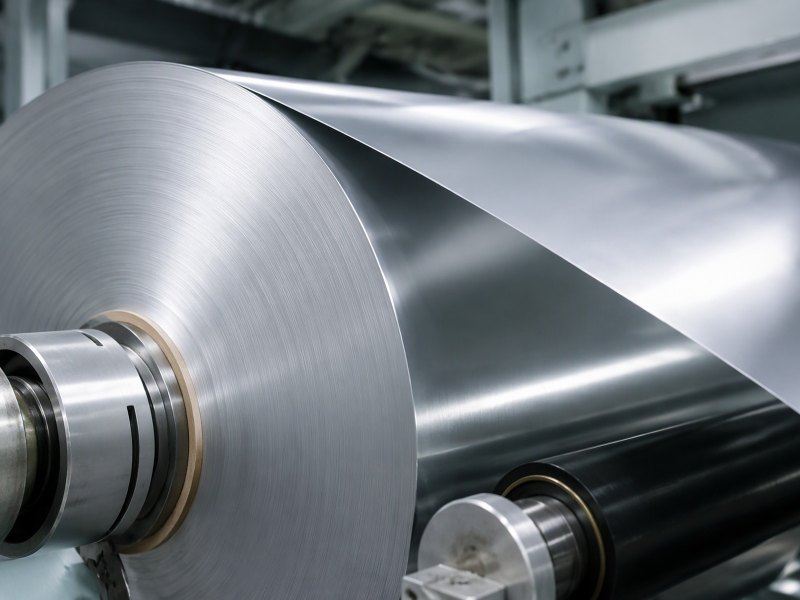
Why foil layers stick on unwind, how blocking differs from telescope or splice, and what to do.
Your coil will not unwind. A layer lifts, drags, then tears, or the whole pack comes off in a block. The line stops and the complaint starts.
The layers are held by a thin residual rolling oil film, by contact pressure stored in the wind, and by surfaces that settle onto each other during annealing. Static can aggravate it. The foil is not glued; it is pressed and wetted into contact.
This is a layer-to-layer problem inside the coil, not a handling accident and not a joint. To correct it you have to know which holding mechanism dominates in the coil in front of you.
What is actually holding the layers of a coil together?
Nothing is applied between the wraps. What holds them is the sum of three small effects acting over the whole face of the coil.
A residual oil film, contact pressure from winding, and surface settlement during annealing. Weak alone, together across a wide face they can hold a layer hard enough to tear it.
Dive deeper
A wound coil is a stack of flat surfaces pressed together over a very large area, with nothing applied between the wraps. Two conditions must coincide for a layer to hold the next: real contact rather than contact at scattered high points, and something mobile in the gaps that remain. Aluminium carries a thin stable oxide, so the metal does not weld in ordinary air, and the oxide itself does not bond to its own kind.
Three effects do the work, and each is corrected differently. A residual rolling oil film wets the faces. Contact pressure from winding closes the gaps. Settlement during annealing keeps them closed. The material is described in Wikipedia's article on aluminium foil, where a gauge of a few hundredths of a millimetre is set against a web more than a metre wide.
Static is a fourth factor, but an aggravating one. A charged layer is drawn toward its neighbour and toward machine parts, so it clings and lifts, most strongly in dry air. Static creates no adhesion by itself, yet it makes a marginal coil behave like a badly blocked one.
Thin gauge has the least stiffness to peel a stuck layer away, so 1235 aluminium foil at 0.08 mm leaves less margin than heavier foil: the web buckles before the bond releases.
Why does the residual oil film act like a weak adhesive?
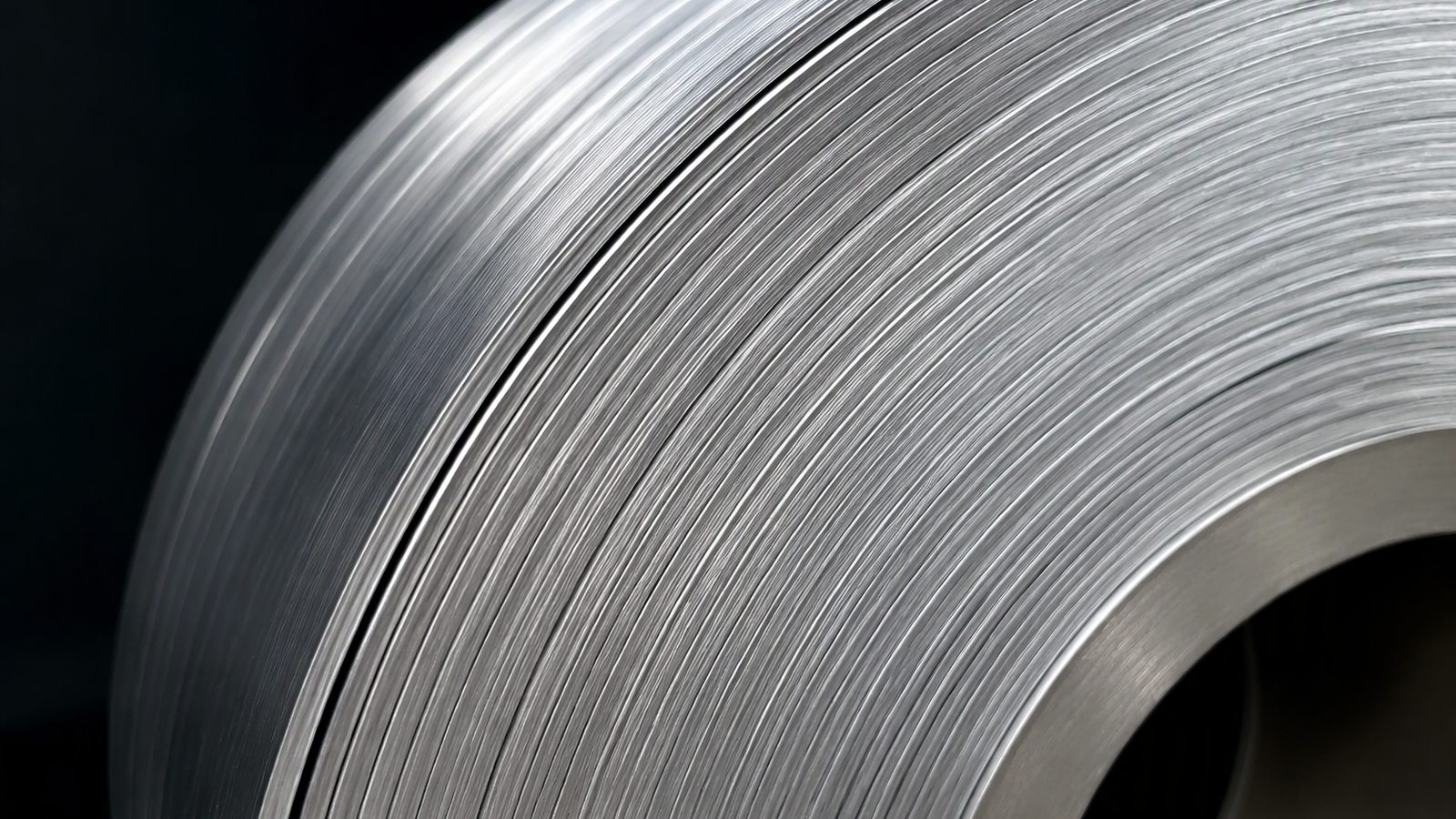
Rolling leaves a film on the surface and winding does not remove it. Where two filmed faces meet, the oil wets both and bridges the gap.
A thin film fills the space between two wraps and pulls them together by capillary action. Where it is uneven, thick patches act as suction spots that hold harder than the rest.
Dive deeper
Oil left on the surface after rolling is not a contaminant to be ignored; inside a coil it is the medium of adhesion. Two dry faces touch only at sparse summits and part easily. Two faces carrying a mobile film wet completely, and the meniscus around each contact point pulls them inward.
The film is never even. It lies heavier in some bands than others, and winding presses those bands onto the layer beneath. They behave like small suction cups across the face, and a converter sees them as drag repeating once per revolution, a clue that film distribution, not a mechanical fault, is responsible.
Temperature changes how mobile the film is. A cold coil holds a stiff film that bridges poorly; a warm coil lets it spread and wet more completely. Neither extreme helps, and a coil moved from cold transport into a warm hall may run differently later. How the film shows up visually is covered in how rolling oil affects the foil surface.
It also helps to know what the film is not. It is not a coating applied to make a coil stick, nor a residue a buyer can ask to have removed entirely. Wound dry, thin foil scuffs and charges. The complaint is about how much film survives where it should not.
How does contact pressure inside the coil change?
Winding presses each new wrap onto the one beneath it. That pressure is not uniform, and it does not stay where it was set.
Tension squeezes the pack radially, so inner wraps carry more pressure than outer ones. The pack then relaxes slowly, and that relaxation converts simple contact into adhesion.
Dive deeper
Every wrap added to a coil compresses the layers below it, so pressure forms a gradient. Wraps near the core sit under the accumulated squeeze of everything wound outside them, while outer wraps carry little beyond their own tension. A coil is not one contact condition but a range, and a complaint that names no position describes an unknown condition.
The gradient explains why one coil unwinds cleanly for part of a run and fights for the rest. As diameter falls, the operator unwinds into the most compressed region. Drag that appears only late in a coil points to pressure rather than oil, and the answer lies in winding practice, not surface cleanliness.
Pressure alone bonds nothing. It enlarges the real contact area, squeezes the film thinner and brings the two oxide surfaces close enough for capillary and van der Waals contributions to add up across the face. Time helps, which is why a coil is often worse later than on the day it was made, with no change in the metal.
At the outside, relaxation runs the other way and the pack loosens slowly. The same coil can be tight where it grips and slack where it should hold; one tension setting cannot fix both. Winding to a controlled taper spreads the gradient instead of concentrating it.
What does annealing do to the surfaces inside the coil?
Annealing softens the metal, but it also gives the surfaces a long, warm, pressed contact. That second effect is the one converters underestimate.
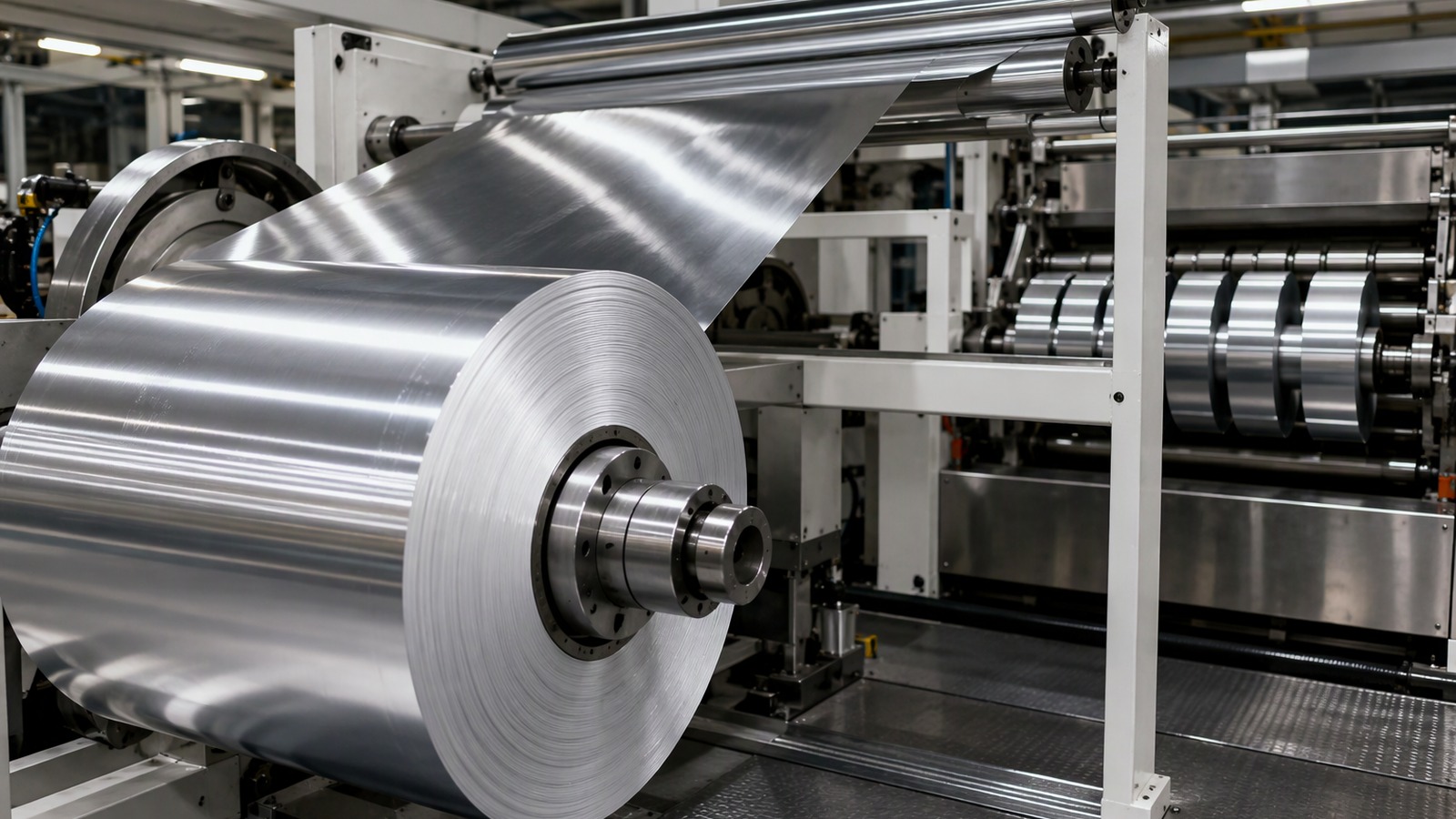
In the anneal the pack is held warm with wraps pressed together. The film redistributes, summits flatten and real contact area grows, so the coil leaves the furnace in closer contact than it went in.
Dive deeper
Annealing has one job, bringing the metal to the temper ordered, whether O, H14 or H22. It does that inside a pack still under winding stress, for hours. Warm metal is softer, the film on it is more mobile, and the load pressing wrap onto wrap never lets up. The conditions for contact growth are ideal.
Two things happen at the surface. The fine texture left by rolling flattens where the load is highest, so summits that kept the faces apart are reduced. The film migrates too, thinning in loaded bands and collecting elsewhere. Both raise the fraction of face genuinely in contact, and that fraction, not the nominal area, resists peeling.
Cooling then tightens the pack. The coil cools from the outside in, outer layers contract onto the still warm interior, and the wraps end up pressed harder than at the end of winding. A slow even cool is gentler, and a coil pulled into a draught can show a hard outer band over a normal core.
None of this is a defect in the anneal. It is the same physics that lets annealed foil form well at the customer's press. The practical point is that a soft annealed coil will hold its layers more firmly, so winding and handling must allow for it.
Why is soft O temper foil more prone to blocking?
Soft foil conforms. Harder foil resists. Blocking is a contact-area problem, and soft metal makes contact area cheap to obtain.
In O temper the metal yields at low stress, so wraps conform and true contact grows. H14, H16 and H18 keep more springback, hold less true contact and release more cleanly.
Dive deeper
The difference between tempers is mechanical before it is chemical. An O temper web has low yield strength, so very little load makes it copy the shape beneath it. Every high point presses a matching hollow into the next wrap, and the faces end up mated over most of their area. A H18 web pushes back and flattens far less.
Springback does the rest. Wound under tension, a harder temper stores elastic energy and gives some back as tension is released, so the wrap lifts off its neighbour. Soft foil does not spring back; it stays where it was pressed. That is why O temper forms so well, and why it is named in most blocking complaints.
Gauge compounds it. As foil thins, bending stiffness falls steeply and the same tension gives a higher pressure per unit area, so both effects push the same way. That is why the thinnest soft material is hardest to unwind, and why a buyer ordering 8079 aluminium foil at 0.1 mm for a soft application should agree winding conditions as carefully as gauge.
The conclusion is not to avoid soft temper, since most packaging work needs it. It is to accept that O temper carries a higher blocking risk by nature, and to spend attention on winding tension, coil size, cooling and storage.
Why does the outside of a coil behave differently?
Two ends of one coil, two different histories. The outside loses tension, cools first and meets the air; the core keeps its pressure.
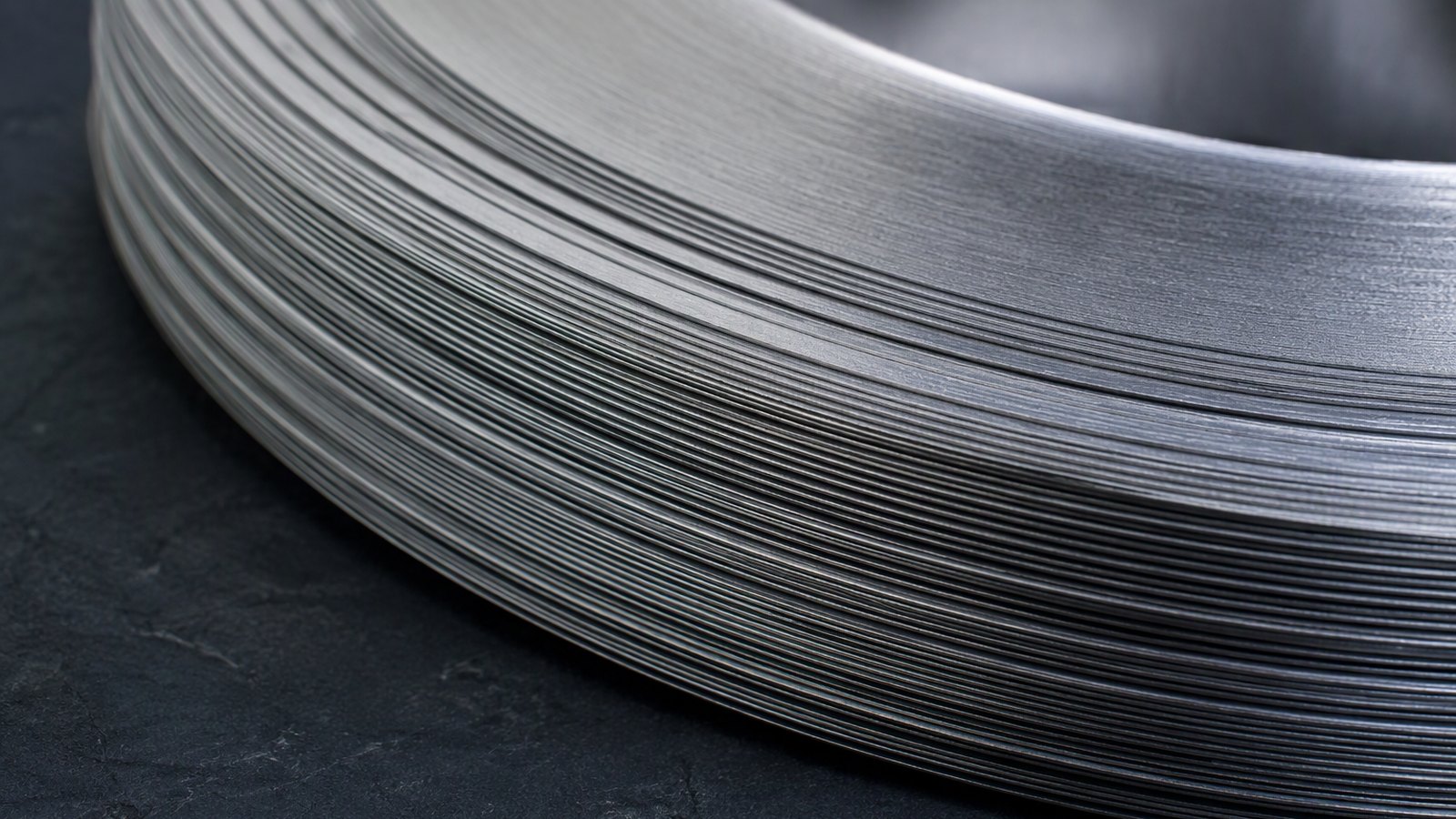
Outer wraps relax first and face air and handling, so they lift and drag. Core wraps stay pressed and settle longer, so they hold and tear at the start of a run.
Dive deeper
The outside of a coil is the part everyone can see, and the part with least pressure behind it. Wound last, those wraps never had material piled on top, so nothing consolidates them. They also cool fastest and meet humid air first when a coil leaves a cold container for a warm hall. Loose wraps plus condensation gives sticking and edge damage together.
Loose outer wraps are mechanically vulnerable. They telescope slightly, take knocks at the edge and record every handling step. A layer creased at the edge will not lie flat, and once it lifts it drags. Operators report this as blocking because the visible symptom is outside, while the harder failure waits deeper in.
The core is the opposite. Wraps there sit under the full accumulated load, stayed warm longest in any anneal, and had most time to settle. They are also least accessible, so a problem is found late, when the remaining footage matters most.
The middle usually behaves best. A coil that unwinds well at first, drags in the middle and tears near the core is showing a pressure and settlement gradient rather than a surface problem, and the end face says which end to inspect. Rolls for packaging and container foil work are commonly wound to a taper for this reason.
What does the machine see, and how is blocking told apart from a telescope coil or a splice?
The operator sees drag, tension spikes and a break. The symptom does not name the cause, so first separate three failures that look alike.
Blocking gives local drag and a stretched band that lets go with a snap. A telescope coil has slid axially as a pack. A splice is a deliberate joint that fails at a known place.
Dive deeper
A blocked coil shows in the tension controller before it breaks anything. The dancer or load cell shows a saw-tooth: tension climbs while the stuck layer resists, then collapses when it releases. The release is sudden, and the shock breaks the web or trips the drive.
A telescope is a different failure. There the whole pack slides axially, so the end face becomes a cone or a stepped stack instead of a flat wall. It comes from winding or handling rather than layer adhesion, and the web itself is usually sound. The mechanism is set out in why an aluminium foil roll telescopes. A flat end face rules it out.
A splice is a deliberate joint, made to join lengths or remove a defect, and it fails as a joint. It has a known position, it is normally flagged, and it is thicker than the web around it. A break at a splice is a joint failure even when nearby foil looks dragged. Find the flag and look for tape or weld.
The three can coexist: a telescope coil is often rewound under too much tension, which then blocks, and a splice inside a blocked region can fail before the block does. A complaint is therefore only actionable when it names the position, the end face and any joint nearby.
What can a converter do, and what should a buyer specify?
Line-side action is limited but not useless. The larger lever is what the buyer writes into the order and what travels with a complaint.
Slow the start, support the web, let a cold coil equalise, and cut back rather than pull through. Buyers should fix temper, gauge, winding and packing, and send coil identity, photos and break position.
Dive deeper
On the line, aim to lower the peel force and spread it. Start slowly, let the first metres establish stable tension, keep the unsupported span short and use a driven roll where possible. If a layer is stuck, do not pull harder: cut back to sound foil.
Storage is where converters unknowingly make it worse. A coil on a cold floor pulls moisture onto its face, as does one moved into a warm room unwrapped. Stacking soft coils flattens the pack where blocking is worst. Keep the wrap on, store on a pallet, match the line conditions.
For buyers, the order settles it. Name alloy, temper, gauge, width, core diameter, winding direction and any taper. Say what the foil must do next: a coil for a high-speed press needs different winding from one hand fed. Background is published by the Aluminum Association.
Send evidence rather than adjectives. Coil identity, gauge and temper, the position where drag began, photographs of the end face, a sample of the failed band and the storage conditions separate blocking from telescope and splice. Sector background is published by European Aluminium and the European Aluminium Foil Association.
Blocking is contact, not glue: oil film, coil pressure and annealing settlement acting across a wide face. Separate it from telescope and splice, then correct specification and storage.