Why does an aluminium foil roll telescope?
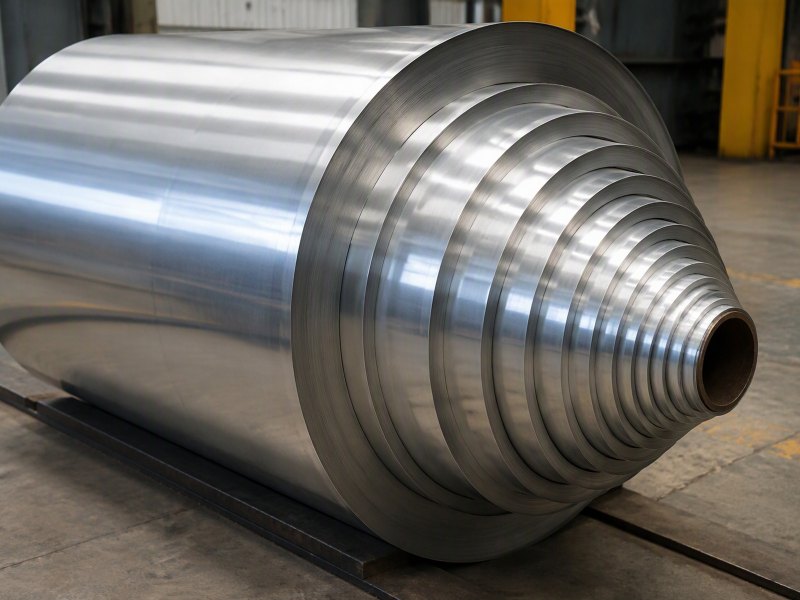
A roll that has lost its flat end face is telling you about winding, not about the metal. Here is how telescoping, starring and gauge bands are written into a wound roll, and how a converter decides whether it can still be used.
Why does an aluminium foil roll telescope?
A delivered roll arrives with its outer wraps pushed sideways, the end face stepped instead of flat, and the slitter cannot run it as it stands.
Telescoping is the layers sliding along the axis during winding, so the roll loses its square face. It is a winding event, not a rolling defect: tension, nip and core grip decide whether the layers stay stacked.
The eight questions below treat the wound roll as a mechanical body and read each defect as a record of how it was built.
What is telescoping, and why is it a winding event rather than a rolling defect?
Telescoping shows as an end face that is no longer a flat wall but a shallow cone or a step.
The layers have slid axially, each revolution adding offset until the outer wraps overhang the core. The metal is unchanged; the roll lost the friction and lateral restraint that winding should have given it.
Dive deeper
A sound roll shows a wall of edges, each layer sitting almost exactly above the one beneath it. On a telescoped roll that wall becomes a cone, or a step appears partway out, and the outer wraps hang past the core by a distance that grows with every turn. The foil is often undamaged, which is where the argument starts, and the face is the only part of the roll a buyer can read.
That skips the mechanics. A wound roll holds its shape because two things resist sideways movement: friction between layers, and the lateral stiffness of the stack. If the web reaches the core with a sideways component, if the nip does not hold the incoming turn flat, or if tension is too low to squeeze out entrained air, layers walk along the axis one turn at a time.
Slip concentrates where radial pressure is lowest: at the outer wraps, and at the core, where the first turns have least support. A roll can telescope outward while its body stays tight, or open at the core while the face looks flat. Rolling made a web; the winder made a stack, and a stack defect appears only where it was built. That is a winding record, not a metal record. For background, see aluminium foil.
Why does winding tension decide whether a roll stays square?
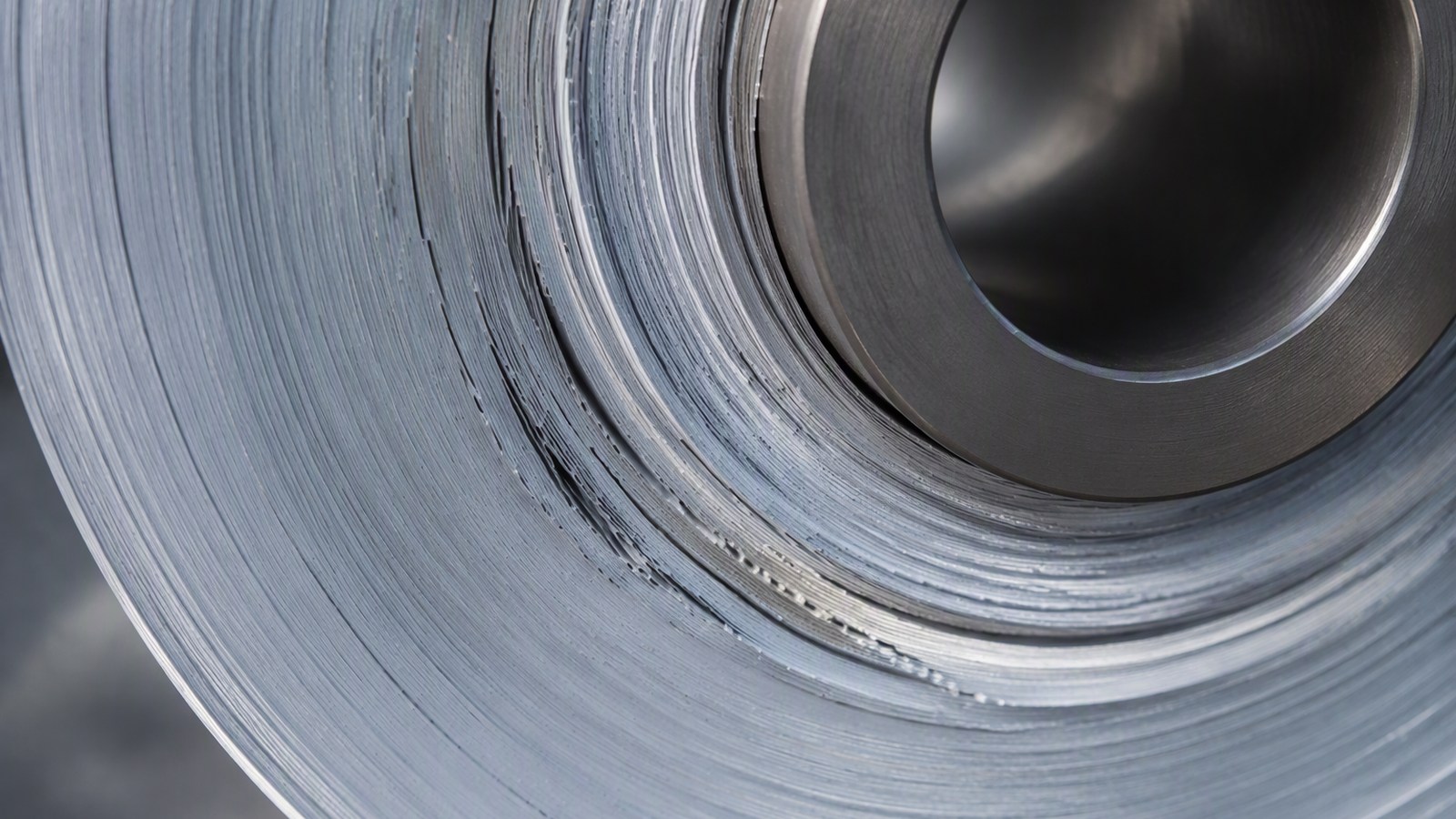
Tension presses one layer onto the next, and it sets both the friction and the air left between them.
Too little tension leaves a loose, air-rich stack that can slide. Too much stores stress that relaxes unevenly. Both routes end in a roll that will not hold its face.
Dive deeper
At low tension the incoming turn is not pressed hard enough against the roll body, so the air film carried in by the web survives. Foil is thin and holds air well; the film lubricates the interface, radial pressure never builds, and the roll stays soft. The converter then sees the consequence rather than the cause: the roll looks acceptable at the winder, settles in storage, and arrives with a stepped face.
High tension fails by another route. It compresses the layers against the core and stores elastic energy in the stack. The core is the stiffest part of the assembly, so it carries much of that load, and the first turns are wound on the smallest circumference, where bending stress in the foil is highest. The result is hard at the centre and softer outward, with a face that bulges rather than steps.
The useful idea is a profile rather than a single setting: enough at the core to lock the first turns, tapering outward so the outer wraps are not over-compressed. The nip helps by excluding air before the layer is trapped. Soft tempers such as O and H22 recover differently from H18, and 0.03 mm aluminium foil in a dead-soft temper forgives a profile that a harder one will not.
What causes starring at the core, and why is a star pattern a stress record?
Starring is the radial creasing that radiates from the core like the spokes of a wheel, visible only end-on.
Inner layers wound tight onto a rigid core are compressed by everything after them, and thin foil buckles sideways instead of stretching. The pattern maps that stress; it is not cosmetic.
Dive deeper
A star does not appear at random. The first turns sit on a core of 76 mm or 152 mm, so their circumference is small and the curvature is severe. Wound tight, the foil is pulled around a tight radius and then loaded radially by every layer after it. Thin gauge buckles before it stretches, so the excess length becomes radial folds. The spokes record how hard the centre was wound and how hard the layers after it pressed.
A star reaching far out from the core points to a centre wound tight and a stack that stayed tight. A short, faint star on a soft body points to high core tension that was not carried outward, which usually means too steep a taper. Stars on one side only suggest the load was not uniform around the circumference, which is an alignment question as much as a tension one.
The pattern predicts behaviour downstream. Creases at the core are permanent in the sense that the foil has yielded locally; those first metres carry a corrugated band that printing or laminating will show, and slitting cannot remove it because the crease runs radially and crosses every slit width. Industry bodies describe the metal's behaviour in more detail; see European aluminium industry.
How does a gauge profile across the width become a defect that appears later?
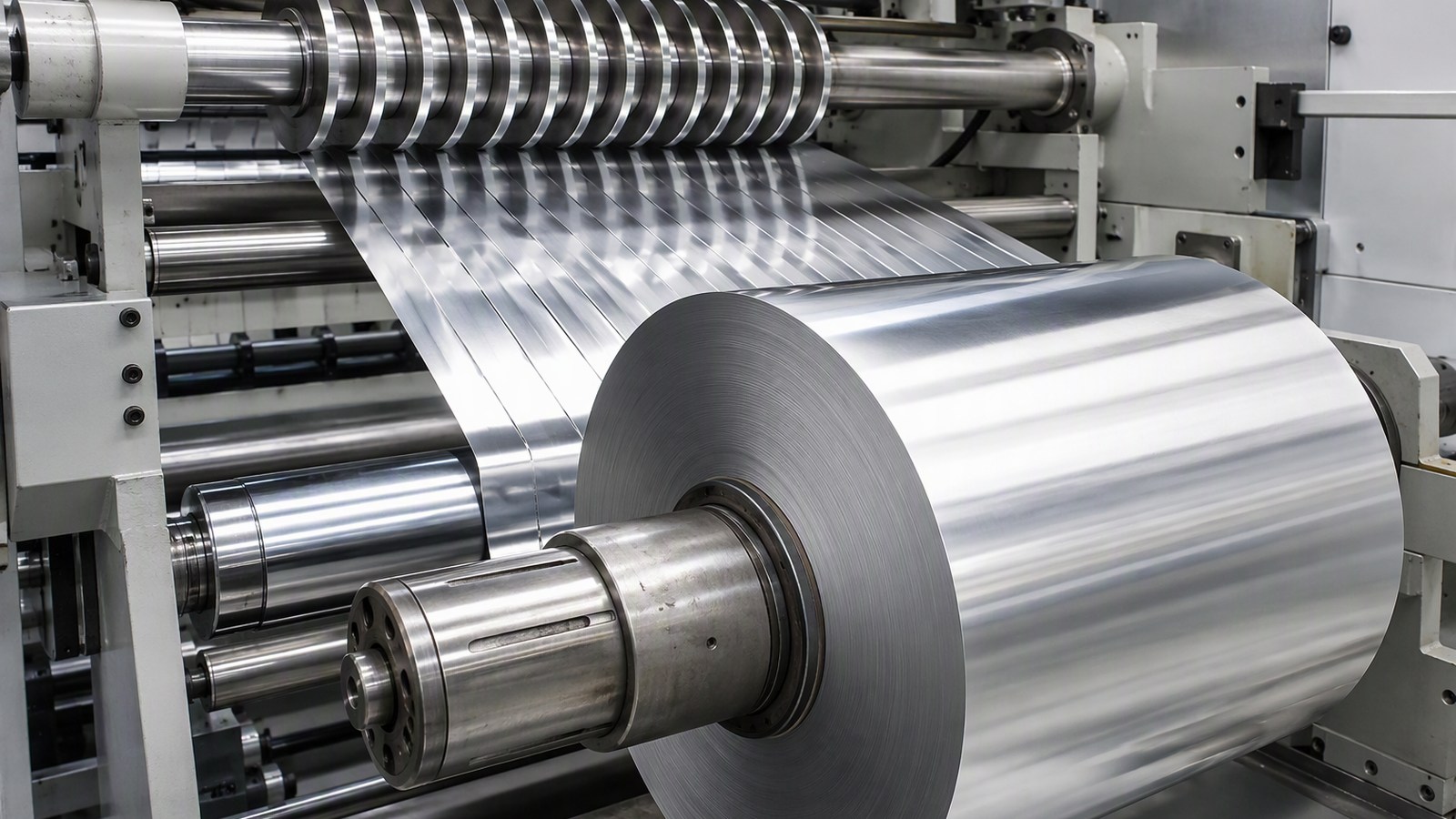
No web leaves a mill at one exact thickness across the width; there is always a profile, whether crown, wedge or bands.
Wound, a thicker lane builds diameter faster and becomes a hard band while its neighbours wind softer. The roll records the profile, and the record surfaces only after time or after slitting.
Dive deeper
The thicker lane adds more material per revolution, so its diameter grows faster. Because the full width is wound under one tension, that lane also carries more tension and presses harder on the layers beneath it. The roll becomes a set of concentric tubes of slightly different tightness, held together by friction at their boundaries. Nothing shows beyond faint ridging that most people explain away.
Time does the rest. A wound roll is not an elastic solid; layers creep under the pressure they carry. Hard bands creep slowly because they are already compacted, while softer lanes settle and lose their radial pressure. After weeks in a warehouse a nearly flat face can show steps, and a slack lane can develop along the full length. This is why a roll passes at the winder and fails at goods-in.
Slitting turns one profile into separate problems. Each slit roll is narrow enough to sit inside a single lane, so a strip from a thick band winds tight and may star, while the strip beside it winds loose and may telescope. The slitter created neither; it separated a profile the full width had averaged out. 8079 alloy foil wound from a web with a mild crown shows this in narrow widths.
Why does slitting make an existing problem worse rather than cause it?
Slitting is a second winding operation and inherits what the first decided: tension history, profile, and where the material sat in the parent.
It also removes width, and width gave the parent its lateral stability. A narrow roll resists sideways movement far less, so a small tendency becomes visible.
Dive deeper
The first effect is geometrical. A wide roll absorbs a small axial offset, because the offset is tiny against the face width and the layers still overlap. Cut the same roll into narrow strips and the identical offset is a large share of the new width, so the strip looks badly telescoped though nothing new happened to the foil. The defect was always there, expressed as a proportion rather than a distance.
The second effect is mechanical. A slit roll has fewer layers relative to its width and less contact area between them, so friction has less to work with, and it loses the support of the strips that pressed against it inside the parent. Narrow rolls are less forgiving of a loose wind, and a parent that behaved on the unwind can produce slit rolls that will not track.
The third is the release of stored stress. Slitting cuts the stack, and pressure that was balanced across the full deckle is no longer balanced at the new edges. The cut edge relaxes outward and the roll can open slightly. A tight-wound parent can release abruptly enough to disturb the outer wraps. The full sequence is covered in how a jumbo roll becomes a slit aluminium foil roll.
What do storage, stacking and transport do to a wound roll?
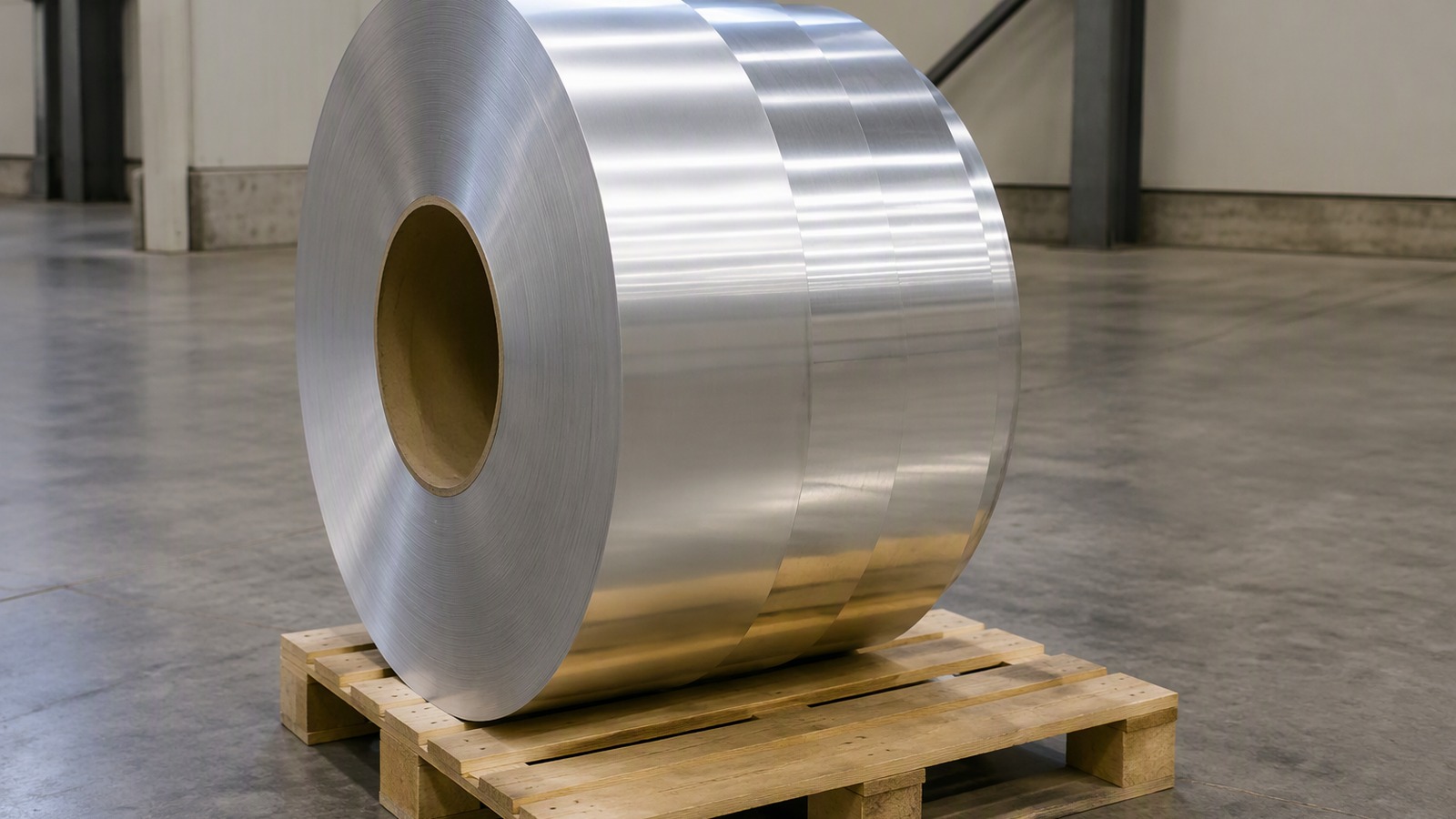
A wound roll keeps moving after it leaves the winder: layers creep, settle and slip, and every handling decision either preserves or destroys its geometry.
Standing a roll on its end face puts the whole mass on the layers. Vibration in transit does the rest, and a sound roll can arrive looking badly wound.
Dive deeper
Orientation comes first. A roll standing on its end face loads the stack where it is weakest, because layers barely resist shear along their own planes. The bottom wraps carry the weight of everything above, and if the wind was at all loose they displace. That is telescoping produced by storage, not winding, and its shape gives it away: the offset starts low and the top stays square.
A roll lying on its side is loaded differently. Its weight flattens it against the floor or the roll beneath, so it can go out of round, and a soft roll can slump into an oval that will not run true. A fork or a pallet board leaves point loads; a strap compresses the outer layers into a flat band. None are winding defects, but all are read as such at goods-in.
Transport adds vibration. A roll held only by straps moves in its cradle, and small oscillations let layers walk sideways; a roll wound with air between its layers is especially vulnerable, because the air film is a poor brake. Impact has its own signature: a dropped roll displaces a group of wraps at once and leaves a local step rather than a cone. The handling side is set out in how to store and handle aluminium foil rolls.
How should a converter record a defect so it can be traced to a cause?
A photograph of a stepped face proves nothing. What makes a record useful is that it can be matched to one winder, one slit position and one point in time.
Record geometry, position in the roll, the history since despatch and the batch identity together. Those four fields turn a complaint into a cause.
Dive deeper
Begin with geometry, before the roll is moved. Photograph the end face square-on with the whole face in frame and a measuring reference beside it, then again from a low angle so the step is visible. Describe the shape, not only the size: a gradual cone, a single step, or several steps point to different histories. Note which side the offset is on.
Then the history. Record roll identity, alloy, temper, thickness and width, core size, the winder or slitter that produced it, and the date and shift. Add what happened after despatch: stored upright or on its side, for how long, stacked with what, moved how, and whether the packaging shows strap marks or impact damage. A roll that left square and arrived stepped has a handling story, and the record should let someone check it.
Finally, keep the evidence. Do not unwind the roll to inspect it, because unwinding destroys the geometry being complained about. Retain a sample of the affected wraps if the roll is to be cut, and keep the packaging. Where a batch is involved, record the parent roll and slit position so it can be compared with other rolls from the same build. Terminology comes from the aluminium industry association; traceability has to come from your own log.
When is telescoping a reason to reject a roll, and when is it not?
The decision is not about how bad the defect looks but about whether the roll can still run and whether the affected material can be removed.
Reject when the geometry prevents mounting, tracking or safe unwinding, or when damage reaches usable material. Accept with concession when only removable wraps are involved.
Dive deeper
Work through three questions. Can the roll be mounted and driven? A roll that cannot be chucked without rubbing is unusable, and forcing it onto a shaft damages more layers. Will it track? An offset small in absolute terms but large against a narrow slit width produces edge wandering. Does the defect reach material the customer uses? If the disturbed zone is confined to outer wraps that will be trimmed, the roll is good material with a damaged skin.
Reject when layers are displaced through a substantial part of the stack, when the face is deformed by impact rather than winding, when a core star reaches well out, or when a slack lane will run the full web. Reject also when creases have formed, because no downstream process removes a crease.
Accept with a concession when the offset is limited to the outermost wraps, when both edges will be trimmed, or when blanking will avoid the affected zone. Converter stock in the aluminium foil roll and sheet range is quoted from 3 MT per size, which leaves room to cut around a damaged layer. Market background is published by the foil industry resource.
Telescoping is a message from the winder. Read the face, the core and the roll history together, and the roll tells you which decision failed.