Aluminium foil facings for buildings: what do they actually do?
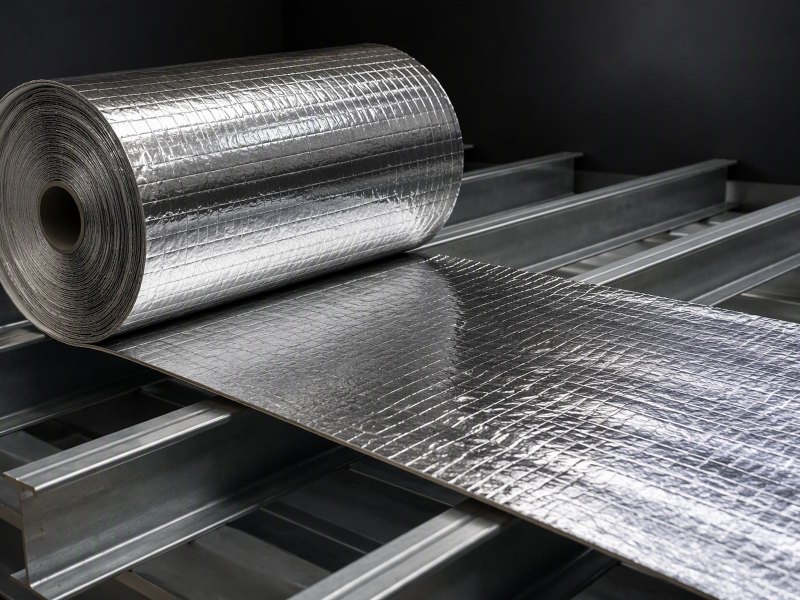
Two jobs share one sheet: reflection and vapour control. How a foil facing is laminated, installed and specified, and why the surface matters more than the gauge.
Aluminium foil facings for buildings: what do they actually do?
A build-up that performs on paper can still condensate, overheat and disappoint on site. The facing is usually the last item specified and the first one compromised.
A foil facing is a reflective surface bonded to a substrate. It returns radiant heat across an air space and, where the sheet is lapped and sealed, also restricts vapour movement. Reflection and vapour control are separate duties, and one facing rarely serves both perfectly.
The eight questions below follow a facing from the foil mill to the site.
What does a foil facing actually do in a wall, roof or floor?
A facing sits between the insulation and the warm side of the build-up. What it achieves depends on which way heat and moisture are trying to move.
Two jobs, not one. The bright surface reflects long-wave radiation across the adjacent air space, and the continuous sheet, once lapped and sealed, restricts vapour movement into the insulation. Everything else a facing does is secondary to those two.
Dive deeper
Heat crosses a build-up by three routes at once: conduction through solids, convection in the air, and radiation between facing surfaces. Insulation slows the first two and barely interrupts the third, because radiation needs no medium.
A foil facing works at that boundary. A metal surface with a low emissivity is a poor radiator and a poor absorber, returning most of the long-wave energy that reaches it and taking in little of what arrives. Turned toward an air space, it changes the energy balance of the gap itself. The same gap between two ordinary surfaces behaves differently, and the difference belongs to the surface rather than to the mass of material behind it.
Vapour control is a separate mechanism. A continuous sheet with closed laps slows diffusion from the warm, moist side toward the colder side, so less moisture reaches the insulation. That holds only if the sheet is continuous, on the correct side and sealed at every interruption; a lapped but unsealed facing is a reflector and little else.
Facings use thin foil, from 0.005 mm to 0.20 mm, in alloys such as 1100 or 1235, and the industrial aluminium foil behind them is chosen for surface condition as much as for gauge. Background on aluminium foil covers the material.
Why are reflection and vapour control two different jobs?
One duty is about radiation. The other is about moisture. They share a single sheet of material and pull in opposite directions.
Reflection needs a low-emissivity surface facing an air space, and it works whether or not the sheet is sealed. Vapour control needs continuity: every lap, penetration and edge closed. A facing can reflect well and still leak enough vapour to wet the insulation behind it.
Dive deeper
Radiation is a surface phenomenon. Long-wave energy leaving a warm wall arrives at the facing and is either absorbed or returned, and the split is settled within a very shallow layer of the metal.
Diffusion is a continuity phenomenon. Vapour moves from higher concentration to lower and takes the easiest route, which is usually a joint rather than the sheet. A lap that is overlapped but not taped is a wide, short path. A penetration cut for a cable is a hole with a cable through it. The moisture side is therefore decided by detailing, not by material data.
The two duties compete for position as well. A reflective surface needs an air space to work into, and a sealed build-up tends to close that space. Where a separate vapour control layer already sits in the wall, the facing is released from the moisture duty and can be detailed purely for reflectance inside a drained cavity. Where the facing is the only control layer, its laps become the critical detail.
Specifiers usually settle the argument by naming one primary function and treating the other as a bonus. The industrial and technical foil range is organised the same way, by surface and carrier rather than by gauge.
Why is the foil laminated to a substrate instead of used bare?
Bare foil at these gauges has almost no strength of its own. Pulled across a purlin or stapled at a corner, it tears.
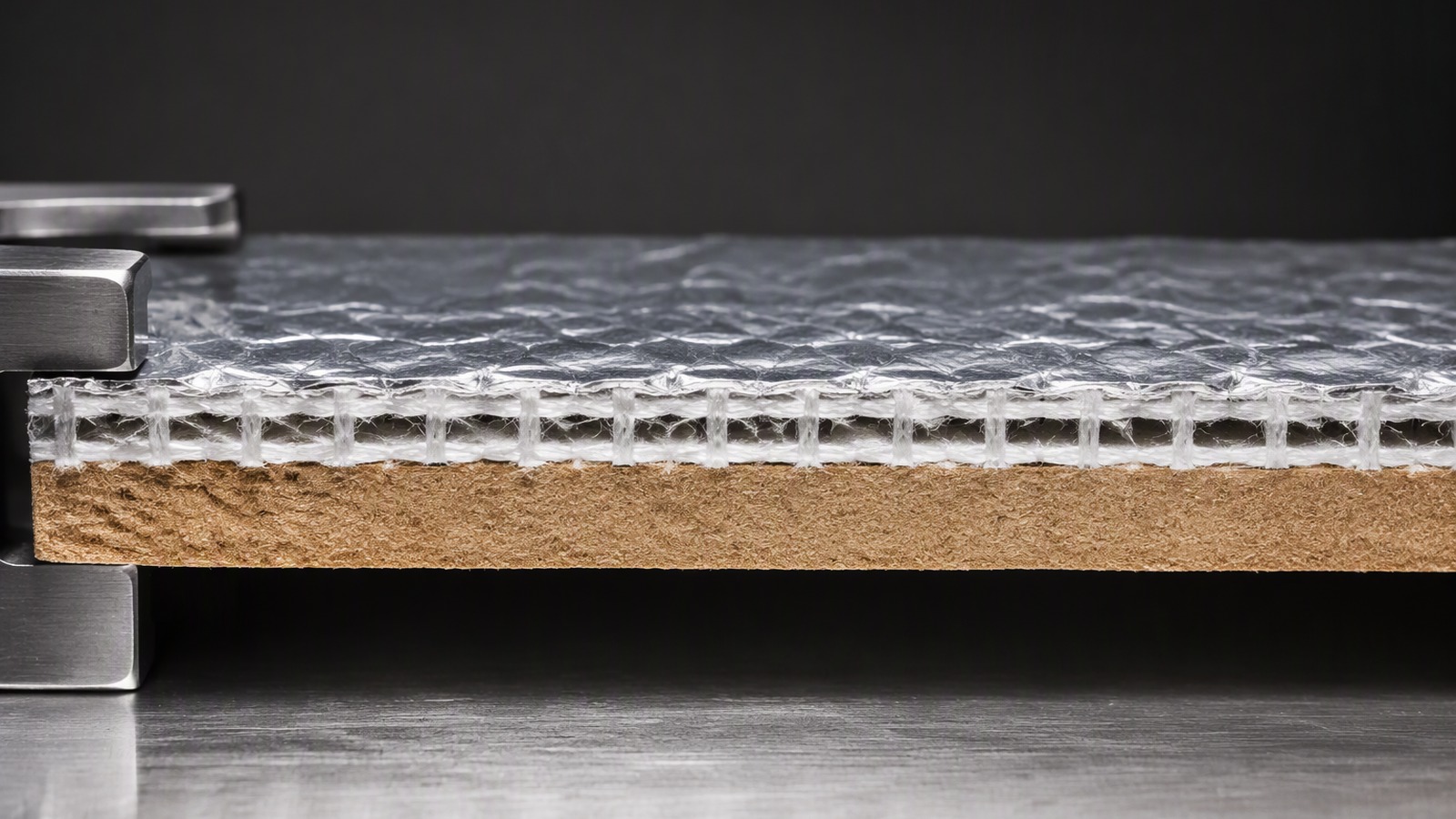
Bare foil is thin, fragile and difficult to fix. Laminating it to paper, film, scrim or a woven carrier gives tensile strength, tear resistance and a surface that holds staples, tape and laps. The substrate carries the mechanical duty; the foil only has to be a surface.
Dive deeper
Think about what happens to an unsupported sheet on a roof. It is unwound, dragged over trusses, cut to length and lifted into place, often in wind. A foil a few hundredths of a millimetre thick has no stiffness to resist any of that.
A carrier changes the failure mode. Kraft gives the laminate stiffness and a deadfold, so a sheet stays where it is put instead of springing off a fixing. A polymer film adds tear strength and some resistance to water and abrasion, which matters both on site and in service. A scrim, woven or laid as a mesh, stops a tear at a yarn instead of letting it run across the roll.
There is a corrosion argument as well. Bare aluminium in contact with fresh cement, lime or alkaline dust can stain and pit, and thin foil has little material to lose. A laminate puts the carrier or a coating between the metal and the aggressive surface. An industry association overview of the metal is useful background on how the surface behaves.
The substrate also holds the air space open. A stiff laminate spans between supports and keeps a gap above the insulation; a limp sheet sags into contact, and contact is where reflective performance quietly disappears.
How is a foil facing made, and what is each layer for?
A facing is usually built in one pass: foil unwound, adhesive applied, carrier bonded, dried, trimmed and rewound.
Foil is bonded to a carrier, then reinforced with a scrim or faced with a film. The foil reflects, the carrier carries load and stiffness, the scrim resists tearing at fixings, and the film protects the surface and takes print or adhesive.
Dive deeper
The foil is chosen narrowly. Alloys such as 1050, 1060, 1100 and 1235 are common for general facings, 8011 and 8079 for thinner gauges where a pinhole-free surface matters, and 3003 or 3004 where more strength in the metal itself is wanted. Temper matters as much as alloy: O is soft and conformable, H14, H16 and H18 are progressively harder and hold a flatter sheet, H22 and H24 form without cracking.
Bonding is where the laminate is won or lost. The adhesive must wet both metal and carrier, cure clean and survive a roof's temperature swings without creeping. A bond that is merely tacky at the edges will delaminate in a warm cavity, taking the facing's shape, air space and vapour continuity with it.
Then comes the reinforcement. A scrim raises tear strength at staples and screws, where facings actually fail. Width is set on the slitter from 100 mm to 1500 mm, and the roll is wound on a 76 mm or 152 mm core.
Foil for this work sits in the thinner half of the 0.005 mm to 0.20 mm range, with an MOQ of 3 MT per size. 3004 aluminium foil in 0.1 mm is one of the gauges buyers ask for when a facing must hold its own shape.
Why does surface emissivity matter more than foil thickness?
Buyers ask for a heavier gauge because it feels like more material. The property that governs radiant performance is not weight.
Reflectance is set by the condition of the surface, not by the mass of metal behind it. A clean, low-emissivity surface on thin foil returns more radiation than a thick, dull or dusty one. Extra thickness buys strength, not reflectivity.
Dive deeper
Long-wave radiation arriving at a metal surface interacts with the outermost layer of it, and that interaction is finished within a very small depth. Once the foil is continuous and opaque, adding metal behind the surface changes nothing the arriving wave can detect. A clean bright surface on a thin gauge returns about as much as one on a heavy gauge.
What changes the result is anything that alters the surface. Oxide growth dulls it. Rolling oil, site dust, cement bloom, overspray and condensation films all raise the emissivity and turn a reflector into an absorber. Contact with fibrous insulation is worse: it contaminates the surface and removes the air space that surface was meant to work across. Two identical rolls can perform differently after a month on site.
Thickness earns its place elsewhere. A heavier foil resists tearing at fixings, survives handling with fewer pinholes, holds a fold and leaves a corrosion allowance where the sheet meets an aggressive material. Those are reasons to buy gauge, not reasons to expect better reflectance.
Surface condition therefore belongs in the purchase description alongside gauge. An industry association overview of aluminium products is a useful reminder that much of the behaviour is surface behaviour.
How is a foil facing installed, and what breaks its performance?
The best facing on the pallet is worth little once it has been stapled flat against the insulation.
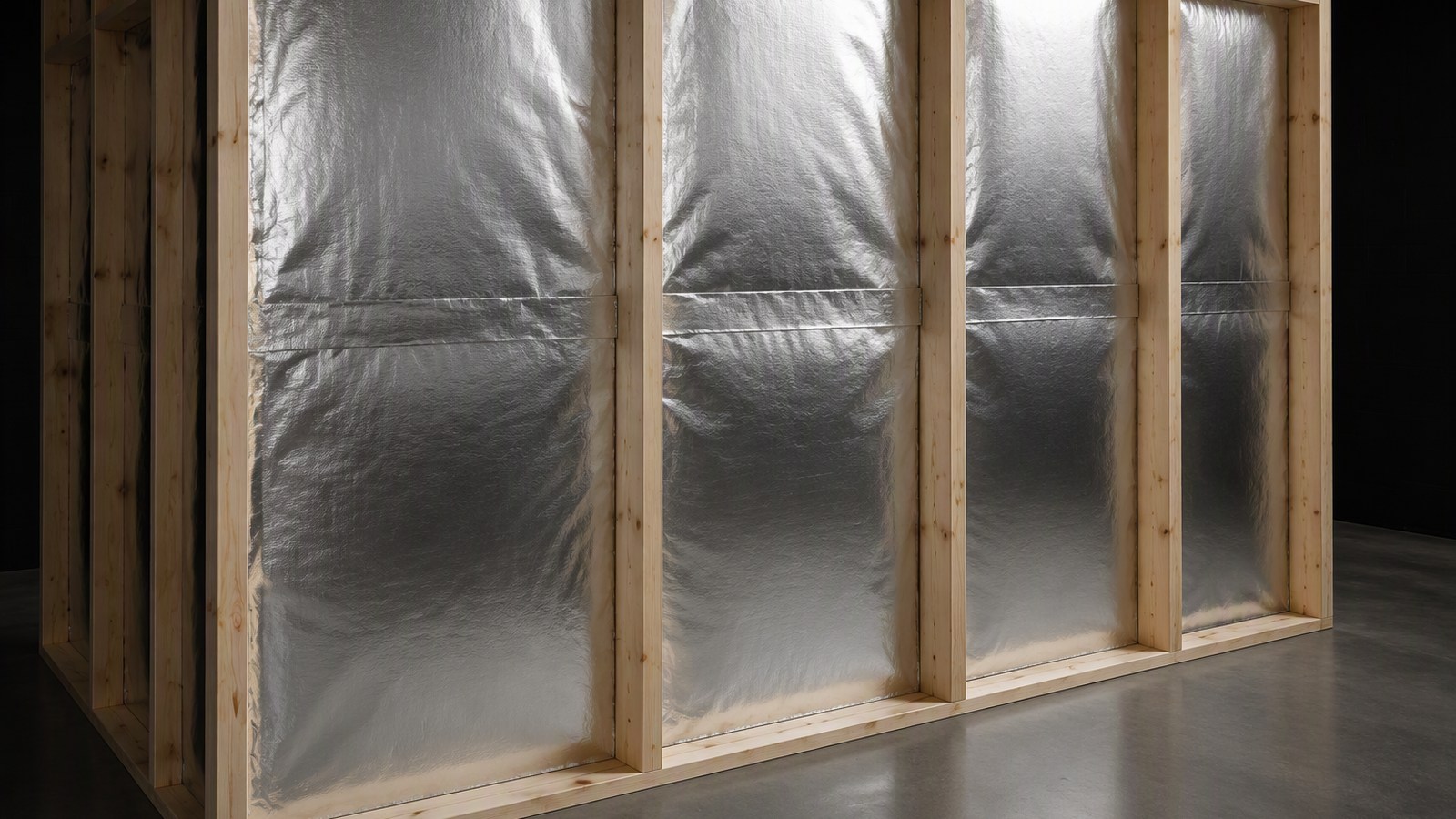
Fix it with the reflective side toward the air space, keep that space open, lap and seal the joints, and avoid compressing the sheet at fixings. Gaps, contact, crushed laps and torn sheets are the four failures that matter.
Dive deeper
A facing unrolled under tension tries to recover and pulls its fixings as it relaxes, so the sheet is offered up with a little slack and stapled from the middle outward. The reflective face goes toward the void it is meant to see, which on a horizontal member is usually the underside and in a wall is the cavity side.
The air space is created and destroyed by the fixings. Washers, battens and clips hold the sheet clear of the insulation, while a staple driven too deep crushes it into contact and turns a reflector into a conductor at that point. Taping is a separate operation from lapping: the overlap holds the sheet, and a continuous tape line closes it against vapour.
Penetrations are where continuity is really tested. Pipes, conduits, cables, corners and the junction between wall and floor all interrupt the sheet, and each needs its own closure rather than a fold and hope. Torn laps from dragging a roll over a rough edge are the commonest self-inflicted defect.
Inspection is part of installation, not an afterthought: check face orientation, air space, lap width, tape line and every penetration before the next layer goes on. A national trade body resource covers site guidance of this kind.
How does a building facing differ from duct insulation and pipe jacketing?
All three are foil. They are asked to do different work, so they are built differently.
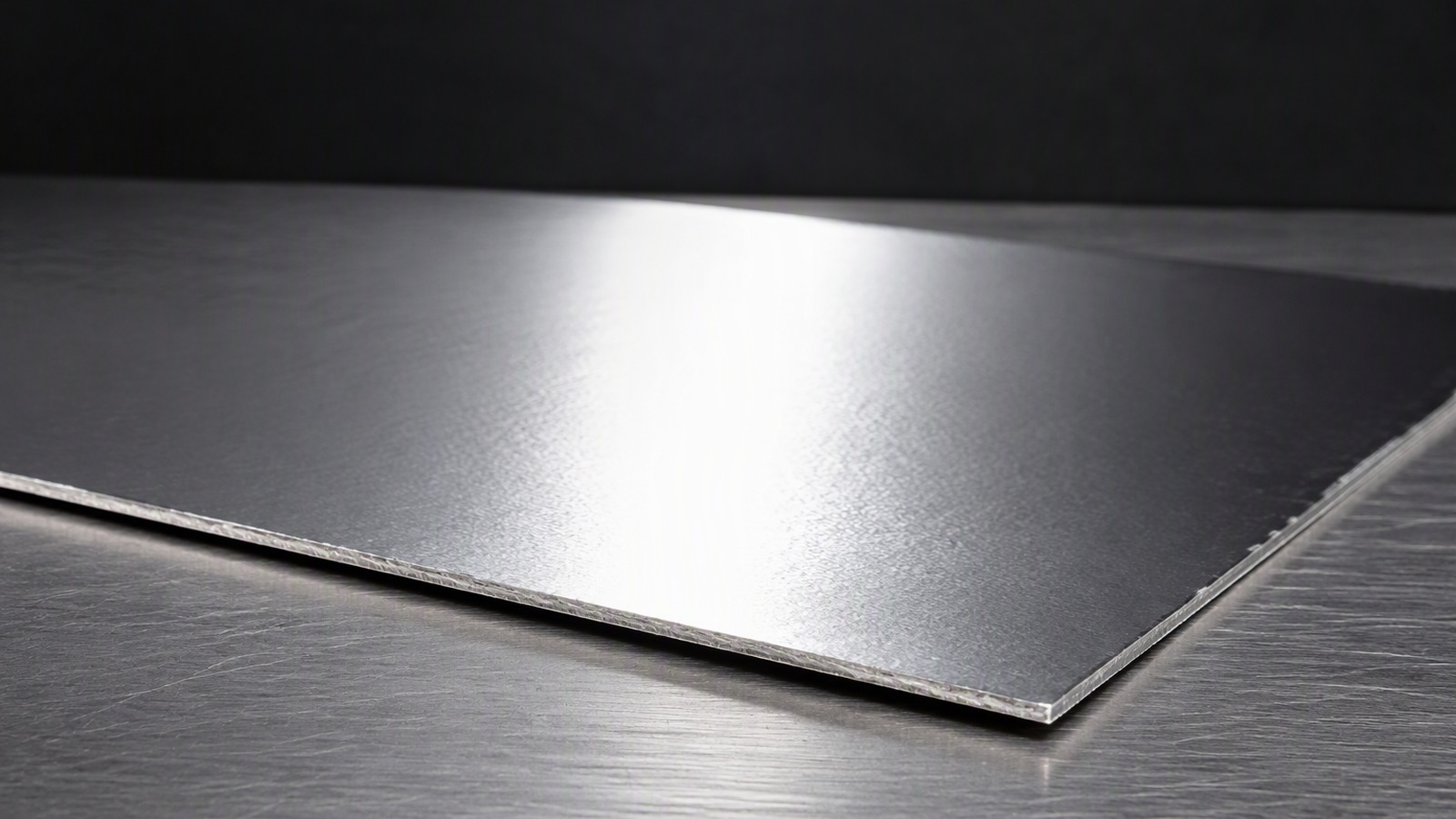
A building facing is a wide, flat membrane for walls, roofs and floors, judged on vapour continuity and reflectance across an air space. Duct foil wraps or lines sheet-metal ducts. Pipe jacketing is a formed, weather-facing sheet.
Dive deeper
The building product is optimised for area. It comes in wide rolls, it has to span between supports without sagging and stay intact while a crew works above it. Service exposure is low once the build-up is closed, so the emphasis falls on stiffness and on the continuity of laps across a large envelope.
Duct work asks for something else. Duct foil is laminated for flexibility, because it has to follow transitions, bends and hangers without lifting, and it is often supplied as a faced insulation rather than a bare membrane. The surface sees moving air and the joints see vibration, so the failure mode is air leakage at seams rather than a slow diffusion path.
Pipe jacketing is a formed product. It is rolled or pressed into a profile, so the foil needs enough strength and the right temper to be shaped without cracking, and it is exposed to weather and impact. Thickness moves toward the heavier end, overlaps are arranged to shed water, and the sheet is held by banding rather than staples.
The three share an alloy family and a laminating logic, and little else. Specifying aluminium foil for industrial insulation jacketing and foil for duct insulation set out the differences.
What must a buyer state in an enquiry for a foil facing?
An enquiry that says only reflective foil facing will be answered with a guess.
State the alloy and temper, the foil thickness in mm, the substrate and scrim, the roll width and core, the intended build-up, and whether reflection or vapour control is primary. Add quantity in MT per size and the port.
Dive deeper
Start with the build-up, because the facing is specified against it. Where does the sheet sit, which side is warm, is there an air space and how deep, and is another control layer already present. Those answers decide whether the facing is a reflector, a vapour control layer or both.
Then the construction itself. Name the alloy and temper, the foil gauge in mm, the carrier, the scrim or reinforcement, any coating, the roll width in mm and the core in mm. Say how the joints will be closed: a facing built for taping differs from one built for a mechanical lap.
Quantity and movement come next. Orders are usually placed as an MOQ of 3 MT per size, in widths from 100 mm to 1500 mm, and the port matters as much as the specification: Qingdao, Tianjin and Shanghai load differently and suit different destinations.
Finally, say what the roll will be judged against, and be specific about the local requirement that applies to your project. A supplier can only answer the question that was asked.
Specify the facing against the build-up it will sit in, not against a catalogue page. Reflection and vapour control are separate promises, and only one of them breaks quietly.