How Should Aluminium Foil Jacketing Be Specified?
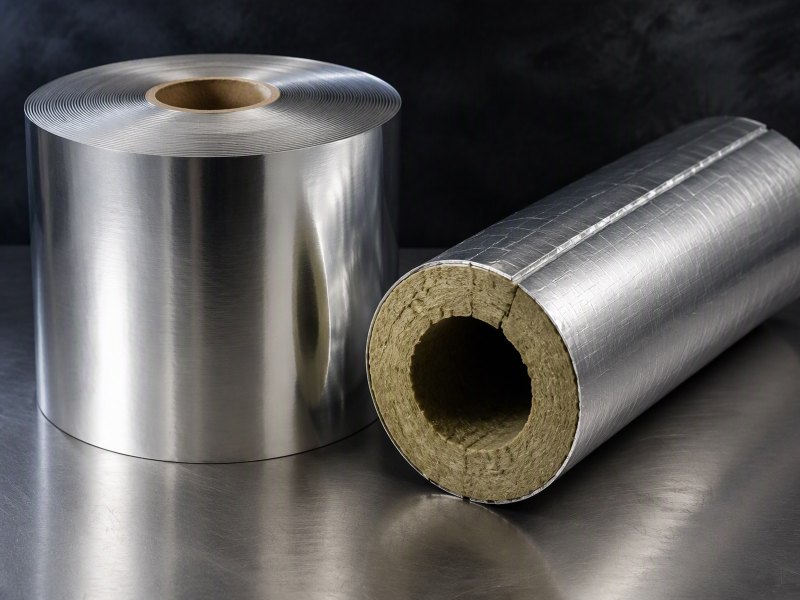
A practical guide for insulation contractors, fabricators and buyers: the four inputs that set a jacketing specification, why gauge and temper move together, what belongs in the enquiry, and how to compare quotations that look the same.
How Should Aluminium Foil Jacketing Be Specified?
A jacketing sheet that looks right on the pallet can drum, dent or lift at the seams once it is on the pipe. Most enquiries say far too little.
Jacketing foil is specified by four inputs: the diameter being covered, whether the surface is walked on or loaded, indoor or exposed siting, and how seams and fixings close. Gauge and temper are chosen together, and every value is agreed against the engineering requirement, not copied from a duct.
The difference between a quotation that works and one that fails on site is rarely the alloy. It is whether the buyer described the service, the shape and the closure.
What Is Jacketing, and How Does It Differ from Duct Foil?
Both are thin aluminium sheet wrapped around something. The resemblance stops there, because what lies underneath behaves very differently.
Jacketing clads an insulated pipe, vessel or tank as a weather skin and a mechanical guard. Duct foil belongs to an air distribution system, where airflow, pressure and internal cleanliness set the design rather than rain and foot traffic.
Dive deeper
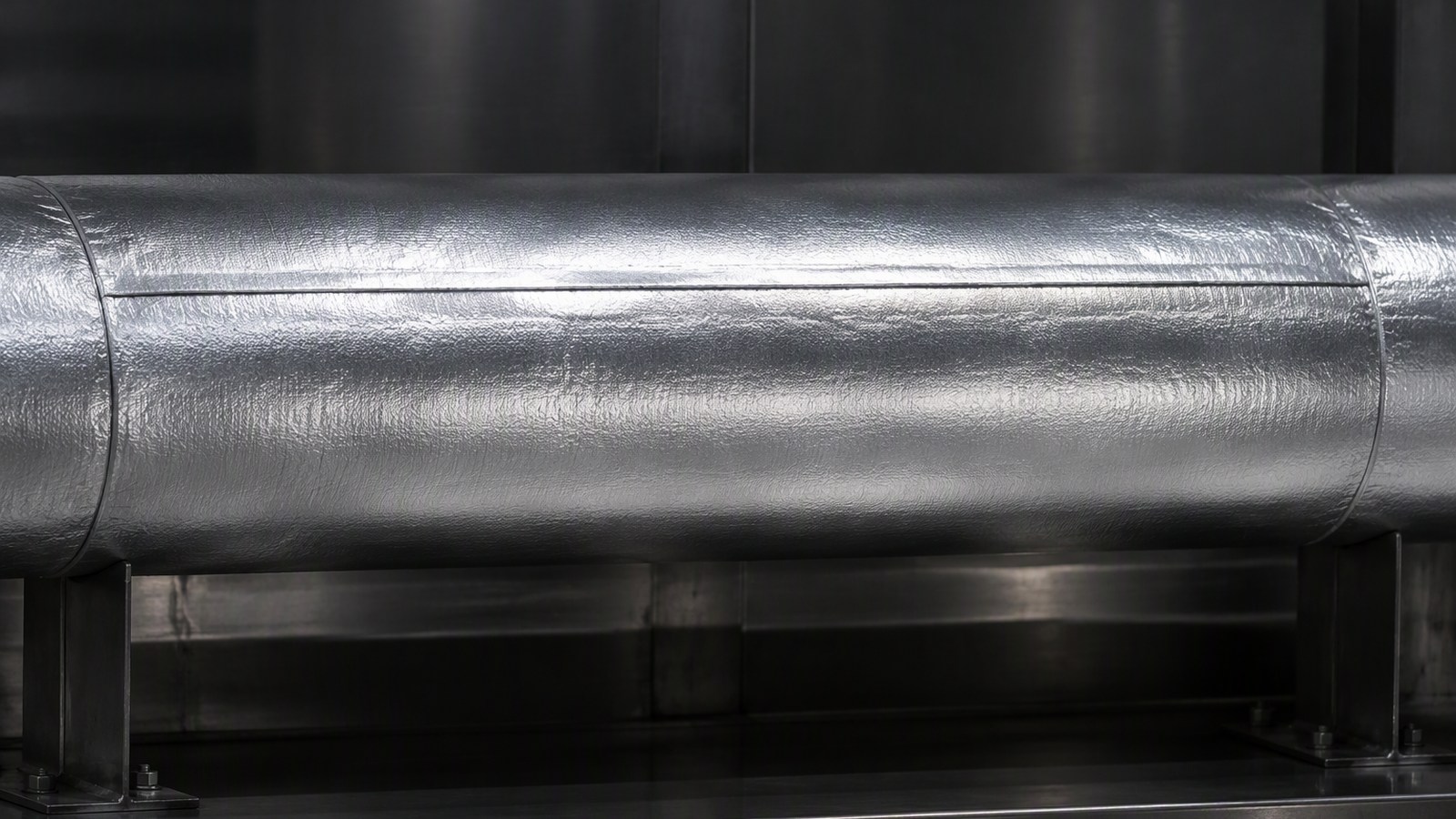
Jacketing is the outer metal skin of a finished insulation system. It sits outside the thermal material on a pipe, vessel or tank already insulated, and keeps that insulation dry, protected and tidy. It is a cladding, not part of the heat flow calculation. The sheet is formed into a cylindrical or profiled shell, drawn tight, and closed along longitudinal and circumferential seams so that water runs off rather than in.
Duct foil belongs to a different problem. In an air distribution system the sheet lines a duct carrying air, where pressures, velocities and condensation follow the air handling design. A jacketing sheet faces rain, wind, plant traffic, scaffolding and thermal movement instead. Duct work is specified around air-tightness and cleanliness; jacketing around weather resistance, stiffness and behaviour under a leaning hand. This is why how duct jacketing is specified is a useful reference but not a template.
Separate jacketing from the smooth foil used purely as a vapour barrier. Facing foil is bonded to the insulation and never carries load; jacketing spans between supports and takes impact. The alloy families overlap, but the Wikipedia entry on aluminium foil describes a product category, not a specification, and the temper and edge treatment rarely match those of a duct.
Which Four Decisions Really Set the Specification?
Buyers often start with alloy. Suppliers start with shape, load and weather, because those decide whether alloy choice matters.
Four inputs set the sheet: the diameter being covered, whether the surface is walked on or loaded, indoor or exposed installation, and how seams and fixings close. Answer those and the gauge and temper range narrows sharply.
Dive deeper
The first decision is geometry. A small pipe is a tight curve, and a sheet rolled to it is stable because the curvature itself carries stiffness. A large vessel is nearly flat, so the same sheet must span a wide, gently curved surface with little help from its shape. State the diameter range you intend to cover as a range, not an average, because a specification that suits a small line may be flimsy on a tank.
The second is load. Insulated tank roofs, walkways and access platforms are walked on. Pipe runs in a plant room are not, but they are leaned on, kicked and used to hang temporary cables. Saying plainly whether the surface will be walked on changes the structural demand far more than any preference between two alloys.
The third is exposure. An indoor installation is sheltered from rain and wind but may face washdown, humidity and condensation. An exposed one faces all of that plus wind uplift, which pulls at fixings and unsupported edges. The fourth is closure, meaning whether seams are overlapped, standing, banded, riveted or sealed, and who supplies the fixings.
These four answers, written into an enquiry, are what allow a supplier to quote a specific industrial aluminium foil rather than a general-purpose sheet.
How Does the Diameter Being Covered Change the Sheet?
A sheet that is rigid on a small pipe can feel like paper on a tank. Curvature, not thickness alone, is doing the work.
On small diameters the rolled shape is self-supporting and resists load through its curve. On large vessels the sheet approaches a flat plate, so stiffness must come from gauge, temper and closer support spacing.
Dive deeper
Forming a sheet into a cylinder gives it stiffness in the direction of the curve. A narrow pipe forces a tight radius, and the shell resists pressure from a hand or a ladder without extra thickness. As the diameter grows, the radius opens out, the sheet behaves more like a flat plate, and the same load produces visible deflection. Self-supporting means the formed shape carries its own weight and a modest load between supports without oil-canning.
A vessel jacket and a pipe jacket therefore cannot share one line item. Vessel work usually asks for the heavier end of the gauge band, a temper that holds a formed curve, and closer support spacing. Pipe work at small diameters can use a lighter sheet, because geometry supplies most of the stiffness.
Width matters too. A coil slit to suit a small circumference wastes less and needs fewer longitudinal seams; a wide sheet for a tank reduces the number of bands but is harder to handle on scaffolding. Available widths run from 100 mm to 1500 mm, and the sensible figure divides your circumference with the least offcut. Formed parts often sit in the 3003 and 3004 families, while lighter cladding may use 1050, 1060, 1100 or 8011; the Aluminum Association in the United States offers broader context.
Will the Surface Be Walked On, or Left Exposed to Weather?
Foot traffic and wind quietly destroy jacketing. Both are predictable from the drawing, and both are usually left out.
Walked-on surfaces need resistance to local indentation; exposed surfaces need stiffness at fixings and a seam layout that sheds water. State both conditions in the enquiry.
Dive deeper
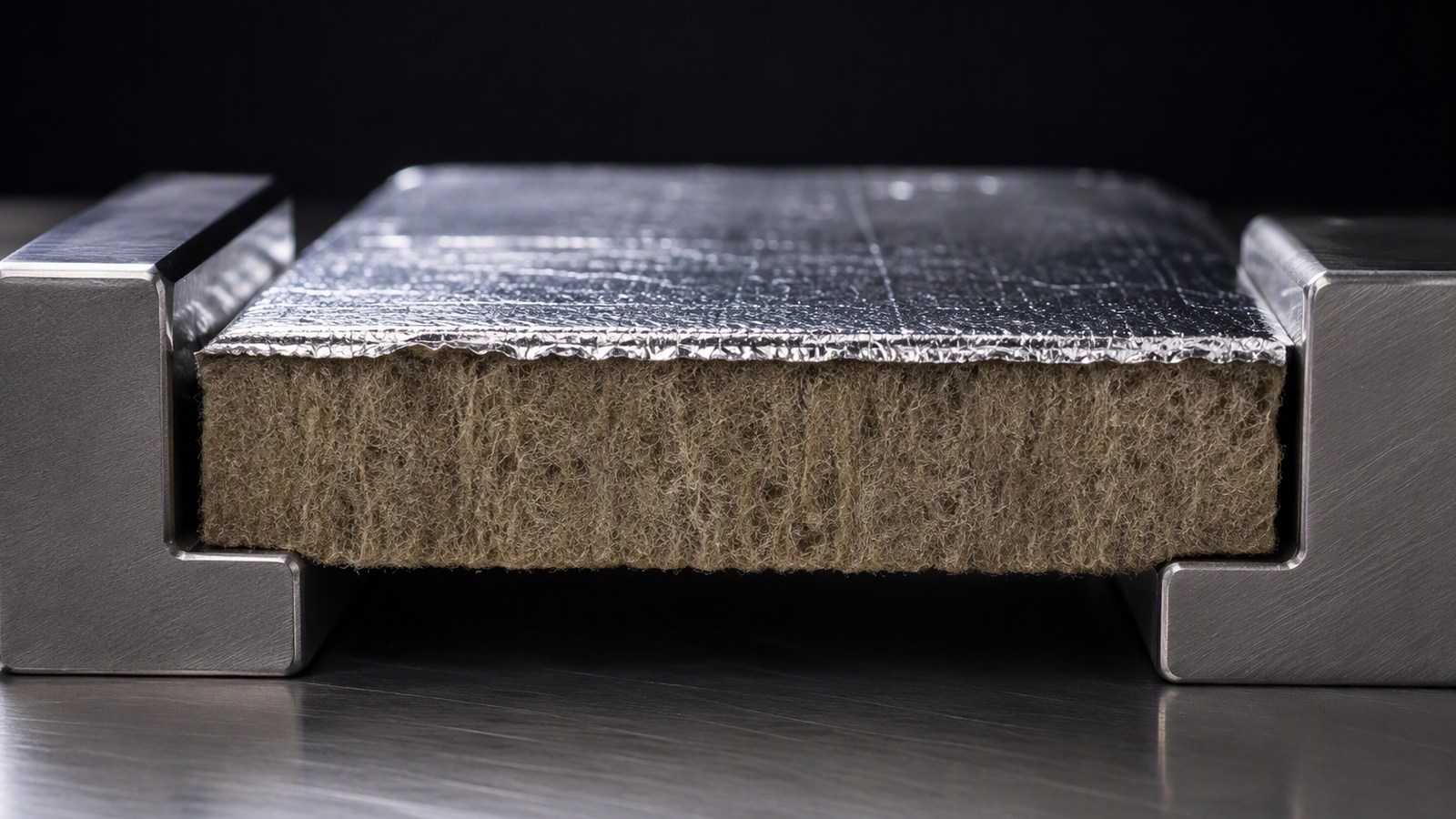
A walked-on jacket fails differently from a wind-loaded one. Under a boot the sheet dents locally, the dent collects water, and the insulation beneath becomes damp in a hidden patch. Under wind the sheet lifts at edges and fixings, the seam opens, and the panel can fret against the insulation until it tears. The first calls for more thickness or a harder temper, plus a support grid that shortens the span. The second calls for close, secure fixings, a seam that is mechanically closed, and edges that cannot flutter.
A plant room is dry but may be washed down; a roof or outdoor pipe rack takes rain, snow, sun and salt-laden dust, and the closure matters as much as the metal, because water enters at openings far more often than through the sheet.
Where a surface is both walked on and exposed, the requirements stack, and the answer is usually a heavier gauge in a temper that still forms. How much load the sheet must carry is a calculation, not a catalogue figure, and the acceptance level is agreed against the engineering requirement for that platform or roof. Write both conditions into the enquiry; a supplier told only that the job is outdoor may quote a sheet meant for a plant room.
Why Must Gauge and Temper Be Chosen Together?
Thickness and hardness both add stiffness, but they trade against formability. Choosing one without the other makes a specification unbuildable.
Gauge sets how much metal is present; temper sets how it behaves when formed, bent and walked on. A hard temper in a light gauge cracks at tight radii, while a soft temper in a heavy gauge dents.
Dive deeper
Temper describes the metal's condition after rolling and annealing, and controls the balance between strength and ductility. In the O condition the sheet is fully soft, forms easily around awkward shapes and small radii, and marks readily. The H14, H16 and H18 tempers are progressively harder, giving more stiffness and better resistance to denting, at the cost of springback and cracking risk. The H22 and H24 tempers sit in a partially softened condition, often the practical compromise for jacketing formed on site.
A heavy sheet in a soft temper can be formed by hand but will not resist a boot. A light sheet in a hard temper resists a knock but may split when a tight radius is formed around a small pipe. The pair that works matches the forming method used on site, not the one that looks strongest on paper.
Practical enquiries therefore state the alloy and temper if they are already fixed, or describe the forming operation and let the supplier propose a pair. Foil for jacketing is produced from 0.005 mm to 0.20 mm, wide enough for one alloy to behave quite differently. If unsure, ask for the reasoning behind a recommendation; how to choose aluminium foil thickness sets out the trade-offs, and the 3003 aluminium foil route suits many formed parts.
How Should Seams and Fixings Be Closed?
The seam is where most jacketing fails first. It is also the item most often left to the installer, who then improvises.
Decide the closure before quoting: overlap direction, whether seams are standing, banded, riveted or sealed, how corners are formed, and who supplies the fixings. The gauge must suit the method.
Dive deeper
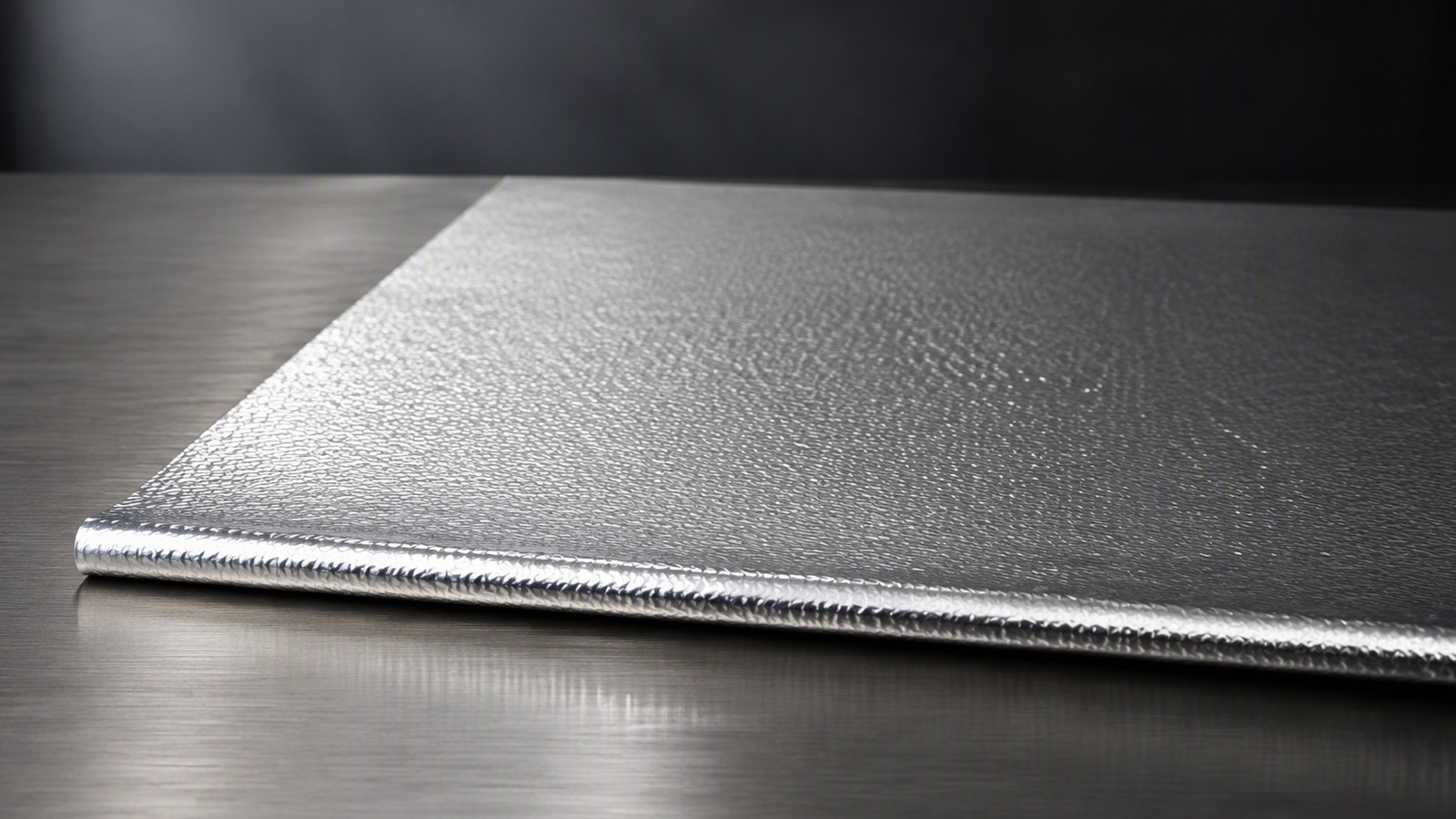
Longitudinal seams on a pipe jacket are usually overlapped so water runs over the lap rather than into it, closed with banding, screws or rivets, or formed into a standing seam that locks mechanically. Circumferential joints need room for the pipe to move, because a hot line grows and a cold line contracts, and a jacket fixed rigidly at both ends will tear or buckle. One end of each section is often left to slide while the other is fixed, so movement accumulates in a controlled place.
Screws and rivets concentrate load at small points, so the sheet around them must be stiff enough not to dish, and spacing must be tight enough to stop the sheet fluttering. Banding spreads load along a line and suits cylindrical work. Sealant helps at laps and penetrations but cannot hold a panel together.
Corners, transitions and penetrations test the detail. A corner formed from the sheet itself sheds water; one closed with tape or mastic does not, and the failure appears a season later. Ask for a typical corner and seam detail with the quotation, because the same words describe different workmanship. Fixings also interact with material: a harder temper holds a screw thread and resists dishing, while a softer sheet conforms to an uneven substrate.
What Should Be Written on the Enquiry Rather Than Left to the Supplier?
A supplier can only quote what the enquiry describes. Silence is filled with an assumption that may not match the site.
State the service and shape, the diameter range, indoor or exposed, walked-on or not, the seam method, alloy and temper if fixed, gauge band, width, core, quantity and port. Then ask the supplier to confirm each item in writing.
Dive deeper
A useful enquiry reads like a short description of the installation, not a shopping list. Start with what is covered: pipe, vessel, tank or a mix, and the diameter range in millimetres. Add whether the work is indoors or outdoors, whether any surface will be walked on, and how seams and fixings should close. If alloy and temper are fixed, say so; if not, describe the forming operation, environment and appearance, and ask for a recommendation with reasons. State the gauge band you will accept: a nominal figure without a tolerance is not a specification, since the same sheet can arrive at either edge of a permitted range. Add width, core diameter, and whether you want coil or cut sheet.
Commercial terms belong in the same document. Quantity per size matters because a minimum order of 3 MT per size is normal, and small requirements across many widths can look cheap per tonne yet be impossible to schedule. Ports such as Qingdao, Tianjin and Shanghai are common loading points, and naming one avoids later assumptions. Finally, ask what the supplier will confirm in writing: alloy, temper, gauge with tolerance, width, core, packing and any deviation. Background is available from European Aluminium, and the wider range of technical foils shows how many variants sit behind one name.
How Do You Compare Two Quotations That Look Identical?
Two quotations can carry the same alloy, the same nominal gauge and the same width, and still describe different metal.
Compare what the summary hides: gauge tolerance, temper condition, edge and surface, core, coil or sheet, quantity basis, packing, port and any stated deviation.
Dive deeper
Start with the gauge. One quotation may offer a nominal figure with a wide tolerance, another the same nominal with a tight one, and the difference is real metal. Ask both to state the tolerance they will work to. Then check the temper: an H14 and an H24 of the same alloy behave differently under a forming tool, and a quotation listing only the alloy has specified nothing.
Compare physical form next. Coil or cut sheet, core of 76 mm or 152 mm, edge condition and surface treatment all affect how the material runs through a forming machine. The cheaper tonne may prove the dearer jacket once offcut is counted.
Then compare the commercial basis. Price per tonne and price per square metre tell different stories once gauge and density are in play, and quantity per size interacts with the 3 MT minimum. Check what is included: packing, edge protection, documents and delivery to port.
Finally, ask both to mark deviations from the enquiry in writing and compare the lists; the quotation with more stated deviations is often the more honest one. Material from the US National Institute of Standards and Technology is useful background when tolerances are argued.
Describe the service, agree gauge and temper together, close the seams on paper, and compare quotations line by line.