Does the Aluminium Foil Ply Hold the Vacuum in a VIP Panel?
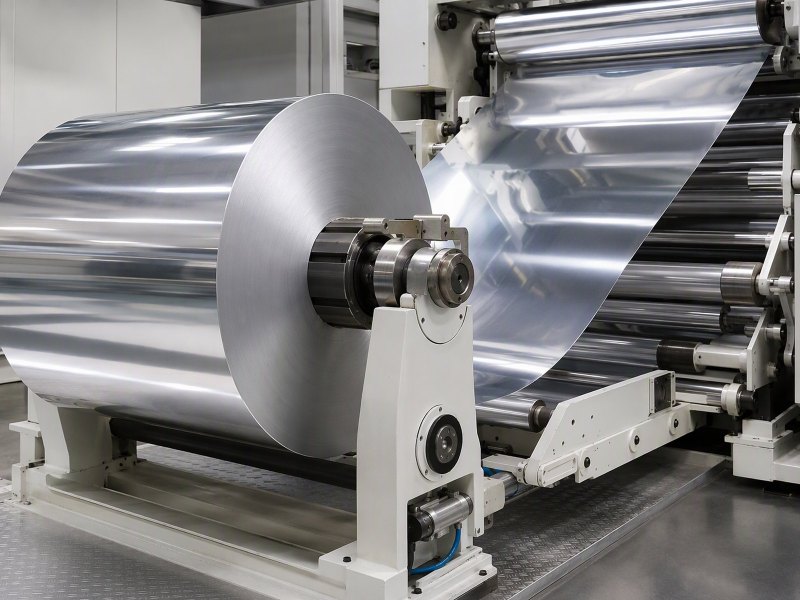
A practical guide for panel makers and envelope film converters: why the foil ply, not the core, holds a VIP vacuum, why continuity and the weld decide yield, and what a useful enquiry has to contain.
A vacuum insulation panel fails quietly. The core looks untouched, the envelope has already let air in, and everyone blames the core.
The foil ply is the barrier in the envelope film, not the insulation. It does not slow heat; it holds the vacuum the core depends on. One crease that cracks it becomes a leak path the panel cannot recover from.
That moves the argument from insulation to containment. The eight questions below follow it outward, from the ply to the film, the weld and the enquiry.
Why Is a Vacuum Insulation Panel Only as Good as Its Envelope?
The core sets what the panel could achieve. The envelope decides whether that achievement survives the trip to the wall.
A panel works because gas is removed and then kept out. Removal happens once, at the pump. Keeping it out is containment, and containment sits entirely in the outer film, where the foil ply is the only continuous barrier.
Dive deeper
Inside a panel the porous core does the insulating, and it does that job only while the space around its particles stays empty. Fill that space with air and the same board becomes an ordinary porous slab. Nothing in the core has changed; it has lost the condition it was designed for. That is why an opened panel so rarely shows a materials failure. The evidence was never in the core.
The envelope is therefore not packaging. It is the component that makes the core's performance possible, and its duty is unusual. It has to remain a barrier for the life of the appliance or the cold-chain asset without being serviced, inspected or topped up. A pump runs once in the factory and never again. Everything after that point is the film's responsibility, and the film gets no second chance.
The practical consequence is a change in how the film is bought. An envelope film is a functional part with its own acceptance criteria, not an accessory bought on price per square metre. A film that welds badly or creases in handling does not make a panel cheaper. It turns a finished panel into scrap at the end of the line, after the core, the adsorbent and the evacuation have all been paid for.
Why Must the Foil Ply Stay Continuous?
A barrier with one hole is not a slightly worse barrier. It is an open window with good film wasted around it.
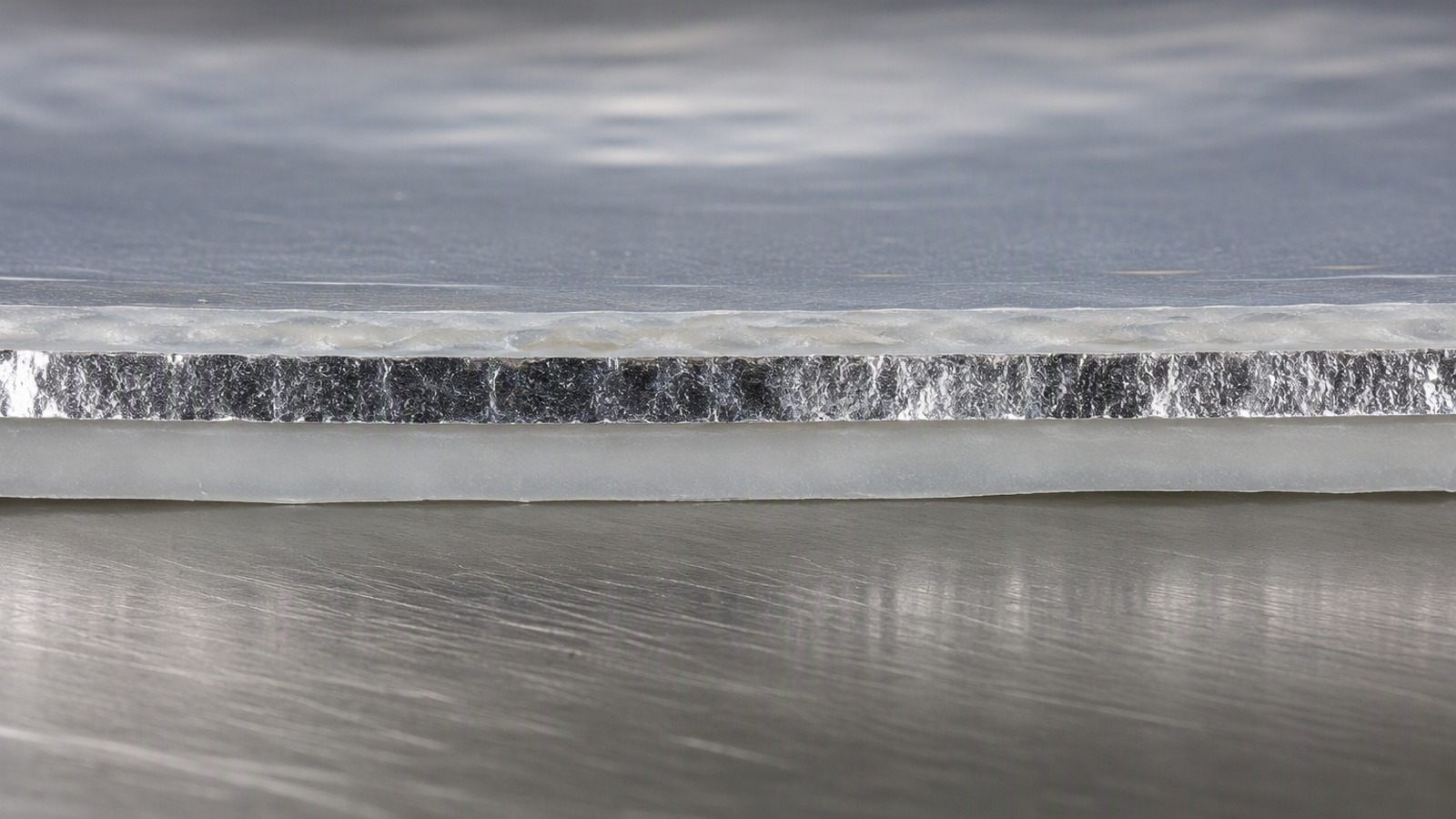
Continuity is the entire function. A crease that cracks the metal, a scratch that thins it, a fold that splits it near an edge: each is a path, and a path under vacuum becomes a leak.
Dive deeper
Aluminium in solid section does not absorb and pass air the way a polymer does. Gas crosses a foil ply at defects: a pinhole, a crease where the metal has been strained until it cracked, a scratch from a roller or a slitting edge, a fold at the film edge where the web turned back on itself. The barrier is only as good as its worst defect, and the defect does not need to be large. It needs to be open.
Mechanical damage has a second effect that is easy to underestimate. A crease does not simply thin the metal along one line. It creates a geometric feature that survives every later step, including lamination and welding, and it concentrates stress exactly where the seal has to hold. A ridge on a finished flange is a place where two surfaces fail to meet.
This is where the thickness decision belongs. A heavier ply tolerates handling and carries a scratch better, at a cost in weight, stiffness and weld behaviour. A lighter ply is easier to run and less forgiving of everything downstream. How a foil behaves when its tolerance drifts is the subject of thickness tolerance and its effect on yield, and the same logic applies here with more force, because a sealed panel cannot compensate.
Why Is the Film Structure Built Around the Foil?
Barrier films are usually described from the outside in. An envelope film for a panel is designed from the foil outward.
The foil is the ply that cannot be substituted, so the sealant, the primer, the protective outer layer and the adhesive system are chosen to let it work and to survive the weld.
Dive deeper
A metallised deposit is a coating that follows its substrate, so its continuity is only as good as that substrate. Where an envelope has to hold a vacuum for the life of an asset, the design normally relies on a foil-bearing ply, joined to a weldable sealant film and, where needed, a protective outer film. The foil is not one layer among equals. It is the reason the structure exists, and the other plies are there to serve it.
Building around the foil means accepting its constraints. Metal conducts heat along the ply, so a weld that has to fuse beside a foil edge needs more energy and a narrower window than the same weld in plain film. The primer that bonds sealant to metal has to suit both faces and survive the sealing temperature.
Total film thickness is a separate decision from ply thickness, and confusing the two is a common mistake in enquiries. Film thickness is driven by handling, puncture resistance and weld tolerance; ply thickness is driven by barrier continuity through the process. A film can be thick overall and still carry a ply too light for the way it is handled. Our 8079 aluminium foil at 0.006 mm is one of the lighter plies used in this work.
Why Does Welding Decide the Yield of a VIP Line?
Evacuation is a pump problem with a known answer. Sealing is a joint problem, and a joint either closes the barrier or leaves it open.
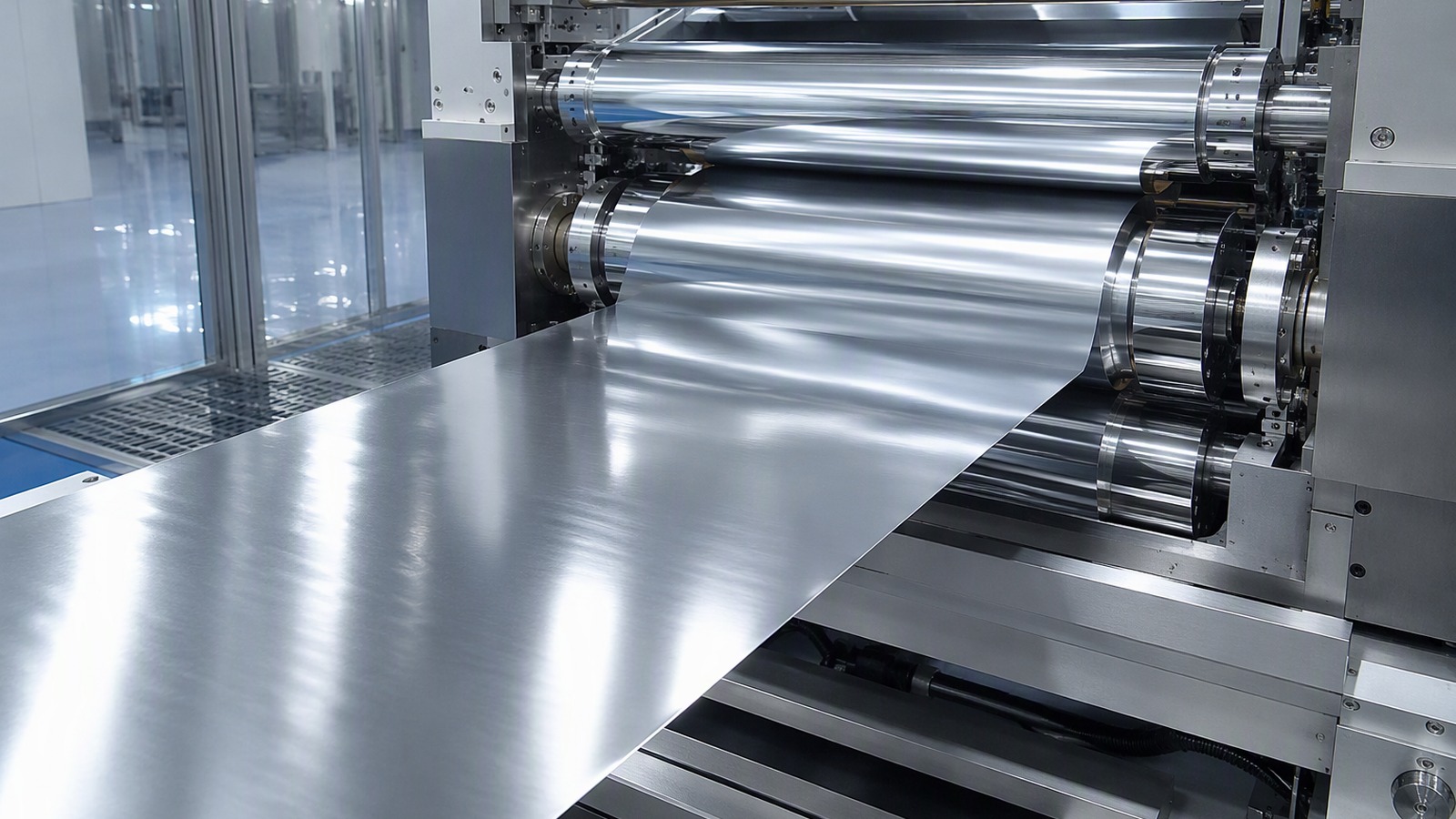
The weld must close the film onto itself around the whole perimeter, through the foil edge, at line speed, on every shift. Yield is decided at the seam, not at the pump.
Dive deeper
A heat seal through a foil-bearing film is a different operation from a heat seal in plain film. Heat is drawn away along the metal, so the sealant has to melt and flow while a conductive ply pulls energy out of the joint. The window is narrow, and it narrows further with anything on the surface: oxide, rolling residue, dust, condensation.
Two failure modes look alike in a leak test and are not alike at all. A channel is a path that never closed, usually at a corner, at a port, or at a wrinkle where the two surfaces failed to meet. A weak weld is a joint that closed and then delaminates gradually under the pressure difference, producing a panel that passes at the end of the line and loses its vacuum in a warehouse. The first is a process setting; the second is often a surface condition.
That is why the foil edge and the foil surface matter to a weld. A ragged slitting edge, a burr, a ply that has begun to separate from its carrier, an oxide that has grown unevenly in storage: each changes how heat and pressure distribute in the joint. The edge is also where the metal is exposed, and an exposed edge inside a seal is a place where a continuous path can form.
Why Are Most Defects Introduced Before Evacuation?
Leaks found at the end of the line were usually made hours earlier, at a winder, a trolley or a bench.
Creasing, dragging, folding and stacking damage the ply while the film is flat and open. Once the envelope is sealed, the damage is inside the panel and out of reach.
Dive deeper
Trace a panel back from a leak test and the fault is rarely dramatic. It is a film roll stored on its side so the outer wraps took the weight. It is unwinding tension set high enough to pull a crease into the web. It is a stack of pre-made envelopes with a fold pressed into one corner, or a grip on a flange that had to be straightened before loading.
None of these look like a barrier failure at the time, because the ply is thin and the film still looks like film. The important property of a crease is that it is not elastic. Metal that has been folded and cracked does not flatten back when the load is removed, and the crack does not close when the panel is sealed around it. The film carries a permanent geometric defect into a step that will hide it forever.
Inspection is the other half of the problem. A trained eye can find a crease on an open envelope. Almost nobody can find a pinhole under a fold, or a hairline crack along a ridge, on a moving web. The window in which the damage could be seen is the same window in which it is being made, and it closes when the seam is completed. Handling discipline is therefore cheaper than any inspection regime.
Why Can a Panel That Loses Vacuum Slowly Never Be Repaired?
A slow leak is worse than a fast one, because it arrives inside a product that has already passed inspection.
Once gas is in, the envelope cannot be re-evacuated through a sealed weld, and the core's advantage has gone. Diagnosis ends at the film, not at the core.
Dive deeper
There is no service procedure for a panel that has taken in air. The envelope has no port that can be reopened, and opening it destroys the part that has to be reused. The core, once exposed, cannot be returned to the condition it was evacuated in, and the adsorbent meant to mop up the small amount of gas that gets through has already done its work. Repair is not expensive. It is not possible.
The situation is worse because of where panels live. A panel usually sits inside an appliance cabinet, a cold-chain box or a transport container, behind a liner or bonded to a wall, where it cannot be reached without dismantling the product. By the time the drift is noticed, the asset is already in service.
This is why the failure is traced back to the film rather than the core in almost every case. The film is the only continuous barrier in the assembly and the only welded interface, so it owns both mechanisms that produce a slow loss: a path that never closed, and a joint that opened gradually. A core problem tends to declare itself at evacuation, when the panel will not hold. The trace runs from the leak test to a seam, an edge or a crease, and from there to a film lot, a slitting run or a handling step.
Why Must Converter and Panel Maker Agree the Ply Together?
The converter knows what runs without creasing. The panel maker knows what the weld and the design will tolerate. Neither answer is complete.
Ply thickness, temper, surface treatment and film structure only mean something against a specific panel design, so the specification is a joint decision validated on the customer's own panels.
Dive deeper
A heavier ply in a harder temper resists creasing, and it makes the film stiffer, which changes how it folds around a flange and how heat moves in the seal. A lighter ply in a soft temper folds kindly and follows a corner, and it has less metal to lose before a scratch becomes a hole. A surface treatment that bonds strongly can be overdone.
Alloy choice belongs to the same conversation. The 8079 and 8021 grades are usually chosen where barrier continuity is the priority, the 1235 and 1050 grades where general purpose foil is enough, and the 3003 and 3004 grades where the ply has to contribute strength as well as barrier. Tempers O, H14, H16, H18, H22 and H24 sit alongside those choices and change creasing behaviour at the same gauge. Two converters can supply the same alloy, temper and thickness and deliver films that behave differently, because the primer, the sealant and the lamination differ.
What neither party can do alone is validate. The panel design, the core thickness, the panel size and the way the envelope is closed belong to the panel maker, and so does the evidence that the finished panel holds what it should. A converter can guarantee a ply and a film to an agreed construction; only the panel maker can confirm it works in that panel, on that line.
What Has to Be Stated in an Enquiry About VIP Envelope Foil?
An enquiry that says only foil, thin and barrier quality will be answered with a guess, and the guess will be wrong.
State the application, the film construction and where the ply sits, the alloy and temper, thickness, width, core and quantity, and how the envelope is welded.
Dive deeper
Each item changes the answer. The application tells the converter whether the panel faces moisture and cleaning or a dry cabinet. The construction tells it which sealant and primer the ply has to survive.
A useful enquiry also describes the weld: the sealing method, the seal width, whether the joint passes over an exposed foil edge, and whether a port is welded in. If the converter has to ask for them after quoting, the first quote was a placeholder.
From our side, a reply states the alloy, temper, thickness and tolerance, width, core and quantity, in terms the panel maker can check. Our range runs from 0.005 mm to 0.20 mm, slit from 100 mm to 1500 mm, on 76 mm or 152 mm cores, 3 MT minimum per size, from Qingdao, Tianjin or Shanghai. The aluminium foil roll page shows the form it arrives in, and the packaging and container foil range shows the wider family. Specifying foil for duct insulation is a useful contrast, because there the foil faces air rather than holding a vacuum. Background on the metal is available from the reference entry on aluminium foil, the European aluminium association, the American aluminium association and the foil producers' association.
The ply is the only continuous barrier a panel has. Protect it in handling, weld it deliberately, and agree it with the converter before the first roll is ordered.