How Does a Mill Jumbo Foil Roll Become the Slit Roll You Import?
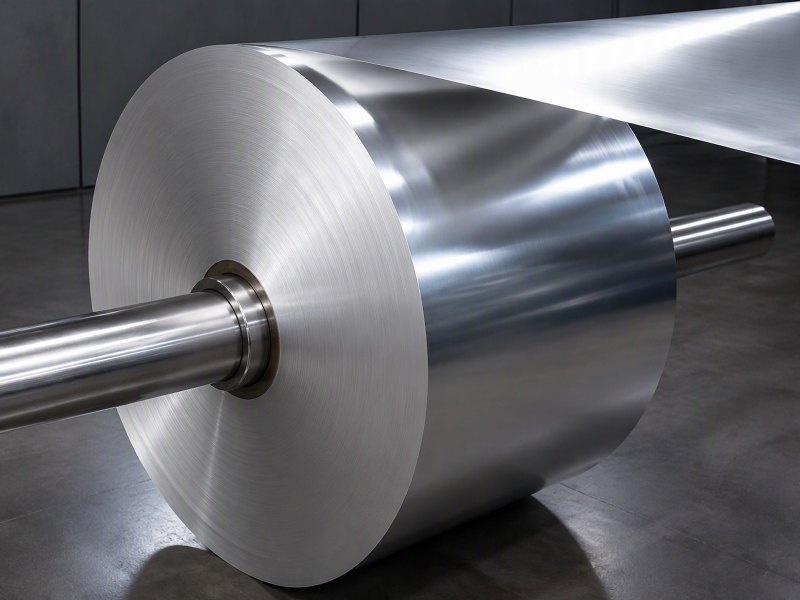
One wide jumbo roll is divided into the many narrow slit rolls an importer actually receives. This guide follows that journey and shows buyers how to specify width, core and tolerances so the rolls arrive usable.
You specify a width and a core, then wait for rolls that behave like the sample you approved. Often they do not, and the reason is decided long before shipping.
A mill rolls one wide jumbo roll; a slitter unwinds it, trims the edges and rewinds it into many narrow rolls of your chosen width and core. Slitting, tension and edge quality decide whether those slit rolls run cleanly on your line.
Once you see the jumbo roll as the shared source of every slit roll, the enquiry, the tolerances and the packing all stop feeling like guesswork.
Why does a mill produce one wide jumbo roll rather than many narrow ones?
Rolling foil economically means running the mill at one wide, steady width and dividing the material later for each buyer.
A mill rolls a single wide jumbo roll because constant width keeps the line efficient. Narrow rolls are made afterwards by slitting, so the mill does not stop to change width for one customer.
Dive deeper
The jumbo roll is where the whole journey begins, and understanding it explains almost every later decision. A mill melts and casts its chosen alloy, then rolls the strip through a series of stands until it reaches the thin gauges used in aluminium foil roll supply. That rolling line prefers one continuous, wide web. Halting it to cut a narrow width for a single order would waste energy, time and yield, so the mill keeps running at a broad working width and leaves the dividing to downstream equipment.
A single jumbo roll may be produced in alloys such as 1050, 1060, 1100, 1235, 3003, 3004, 8011, 8021 or 8079, in tempers such as O, H14, H16, H18, H22 or H24, depending on what the finished product needs. Thickness might fall anywhere between 0.005 mm and 0.20 mm, while the mill width can range from roughly 100 mm in narrow cases up to 1500 mm in the widest ones.
Because one jumbo roll is the common source, its character is inherited by every slit roll taken from it. Gauge consistency, flatness and surface condition established during rolling follow the material all the way to the customer's machine. That is why buyers ask about the parent roll first.
What happens to the jumbo roll during slitting and rewinding?
Slitting looks simple from a distance, yet it is where width, edges and winding tension are finally decided.
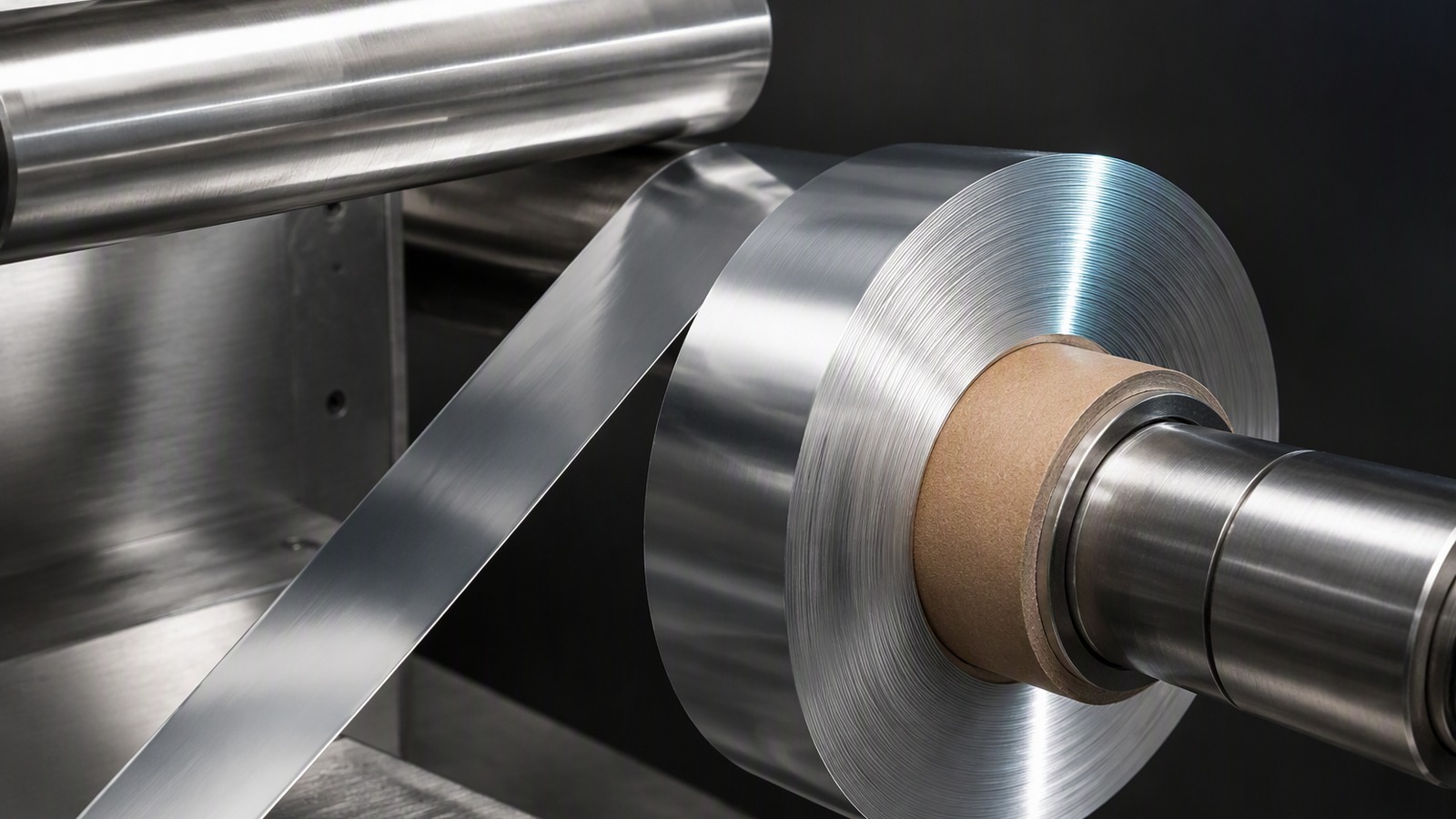
Slitting unwinds the jumbo roll, trims both edges, cuts the web into narrower strips and rewinds them onto cores. Rewinding sets the roll structure, so the customer receives tight, even rolls instead of a loose web.
Dive deeper
On a slitter, the jumbo roll is mounted on a shaft and unwound under controlled tension. Circular knives or shear blades positioned across the web cut the wide sheet into the narrower strips the order requires, while trimming knives remove the outer edges so the customer never receives the mill's raw edge. The freshly cut strips are then rewound onto cores of the agreed bore, often 76 mm or 152 mm.
Rewinding is not a passive step. It fixes how the layers sit on top of one another and how evenly the roll is built from core to surface. If the individual strips are wound at different tensions, some arrive hard and others soft, and both extremes cause trouble when the material is later unwound. Good slitting practice keeps each strip aligned, wrinkle-free and consistent, so the finished reel behaves predictably.
Slitting also decides the register of the edges. Trimming a small amount from each side removes mill edge imperfections, while the slit edges are cut cleanly rather than torn. Anyone who wants background on the material can read about aluminium foil in general, but the practical result is simple: a well-slit roll unrolls flat, tracks straight and feeds without fighting the machine.
How do your slit width and core choice map back onto the jumbo roll?
Your ordered width and core are not separate wishes; they are cut directly out of one shared parent roll.
The slitter divides the jumbo roll width into your strips, so your width must divide sensibly into the parent width. The core you choose, such as 76 mm or 152 mm, sets which rewinding shaft and handling equipment suit the roll.
Dive deeper
Think of the jumbo roll as a single sheet that will be sliced into many parallel ribbons. If the customer asks for a slit width that fits neatly into the parent width, the slitter can use the whole roll with little trim waste. If the requested width leaves an awkward remainder, that leftover becomes trim and reduces the usable output. This is why the arithmetic between ordered and jumbo width matters, and why buyers and suppliers often discuss slitting width tolerance and core diameter early.
Core choice works in the same direction. A 76 mm core suits lighter rolls and many converting machines, while a 152 mm core suits heavier rolls and equipment built for it. The core bore also has to match the customer's unwinding shaft, because a roll that will not mount is worthless regardless of how good the foil is. Core material, straightness and the way the first layers are laid down all affect how the roll runs.
Width and core are therefore two halves of one decision. Stating them together, with the intended machine in mind, lets the supplier plan the cut pattern and the rewinding setup so that the slit rolls arrive ready to load rather than needing adjustment.
Why does edge quality matter downstream on your line?
An edge that looks acceptable on a sample can still cause tears, dust and stoppages once the roll runs at speed.
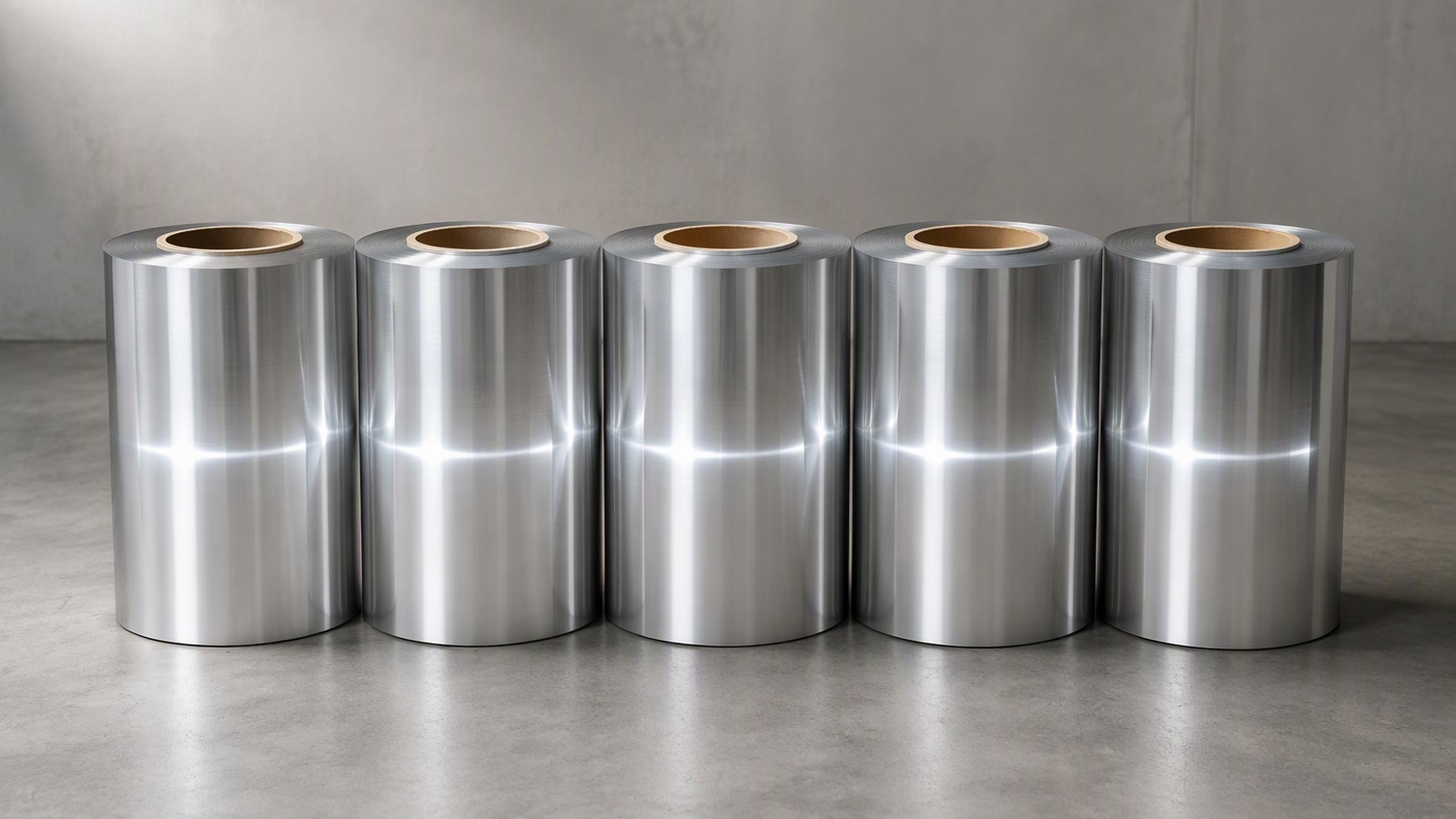
Edge quality decides whether the web tracks straight and whether it tears. A cleanly trimmed edge feeds steadily, while a rough or folded edge can catch, generate dust or break during high-speed unwinding.
Dive deeper
The edges of a slit roll do most of the work that nobody notices. During unwinding, the web is guided partly by its edges, so a straight, clean edge helps the strip track true through rollers, laminators and forming tools. A damaged edge, by contrast, can start a tear that travels across the web and stops the line. For thin material below about 0.20 mm, an edge that is merely acceptable is rarely good enough. Buyers usually notice the problem only once the line is running.
Edge condition also influences appearance and downstream processing. Folded, wavy or burred edges can mark the surface as the material is wound and unwound, and they can leave debris in equipment. Even where the finished product tolerates some surface variation, an unstable edge makes tension harder to control and causes the roll to wander on the shaft.
The practical acceptance level is not a number the supplier chooses alone; it is agreed with the supplier before the order so that both sides judge the same thing. Because edge behaviour depends on alloy, temper and thickness as well as on the slitting setup, discussing it alongside the wider context provided by European Aluminium helps buyers frame realistic expectations without treating any single figure as a guarantee.
Why is roll hardness important for consistent unwinding?
A roll that is too hard or too soft unwinds unevenly, and the problem shows up only when the material is running.
Roll hardness reflects how tightly and evenly the foil is wound. A consistent roll unwinds at steady tension, while hard or soft spots cause slack bands, wandering and occasional breaks.
Dive deeper
Roll hardness is the practical expression of winding quality. When a roll is built with even tension from core to surface, every layer supports the next and the reel behaves like a stable, uniform package. When tension varies, the roll develops hard and soft zones. Unwinding then becomes unpredictable: the web may run slack in one place and tight in another, the strip may wander sideways, and tension control may struggle to keep pace.
Temperature and storage also play a part. A roll that has travelled a long distance and sat in changing conditions can settle and shift, so the hardness the customer measures on arrival may differ from the hardness at the slitter. That is one reason packing matters: a moisture barrier wrap and a stable pallet help the roll keep the structure it was given.
Buyers should treat hardness as something to be agreed with the supplier rather than a fixed target pulled from a chart. The acceptance level is discussed before the order and matched to the customer's process, because a converting line and a hand-fed workshop need very different roll behaviour. The real goal is consistency within the roll and between deliveries, so the operator stops re-setting the machine for every reel.
How can the same jumbo roll serve several different customers?
One wide parent roll can satisfy several buyers at once, which is exactly why slitting exists as a separate step.
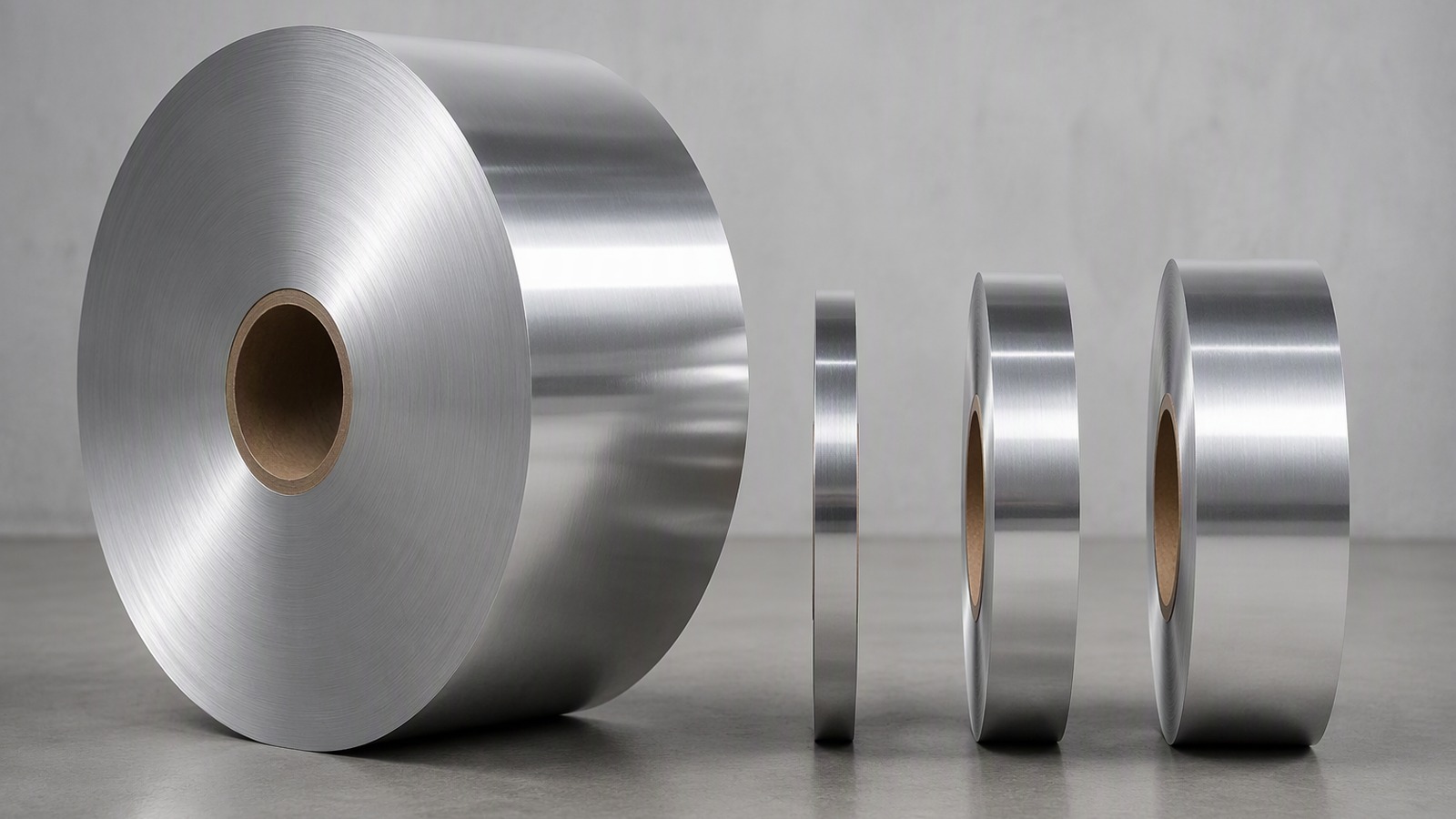
A single jumbo roll is divided among several orders, so different customers can receive different widths and cores from the same parent roll. This shared origin keeps ordering practical for all of them.
Dive deeper
Imagine a mill producing a wide jumbo roll for the aluminium foil market. Rather than dedicate that entire roll to one buyer, the slitter can divide it into several sets of narrow rolls, each matching a different customer's width and core. One importer might take a width for a laminating line, another a different width for a packaging converter, and a third a narrower strip for a specialised application.
This is only possible because the parent roll is wide and consistent. If the width were chosen only for the largest order, the leftovers would be trimmed away as waste. By planning a cut pattern that serves several orders at once, supplier and buyers together turn one roll into several usable products with very little trim. That is the quiet advantage of the jumbo-to-slit model.
Serving several customers also means the parent roll must be good enough for all of them. Whether the order ends up as a heavier packaging gauge or a thin lidding foil, the same standard of flatness and consistency has to hold, and industry bodies such as the Aluminum Association describe the broad market these products serve. Buyers who understand the shared origin can plan widths that fit together and reduce what would otherwise be trimmed away.
How do slitting decisions connect to yield and the tolerances you receive?
Every cut that fits neatly into the parent width is material you can sell; every misfit is trim you cannot.
Ordered widths that divide cleanly into the jumbo width raise yield, while awkward sizes create trim loss. Tolerances are quoted to the customer's process, so the cut plan and the acceptance level are set together.
Dive deeper
Yield is simply the share of the jumbo roll that becomes saleable slit roll rather than trim. Because the parent width is fixed, the way the customer's widths divide into it decides how much is usable. A set of widths that fills the roll neatly produces little waste; a single awkward width can leave a wide strip that has to be discarded.
Tolerance is a related but separate question. The delivered width, thickness and edge condition all vary to some degree, and how much variation is acceptable depends on what the customer does next. A laminating line may tolerate one range, while a printing or forming process needs another. This is why tolerances are quoted to the customer's process rather than announced as universal limits, and the acceptance level is agreed with the supplier before the order. Understanding the link between width, thickness and output, as in thickness tolerance and yield, helps buyers ask better questions.
The practical lesson is that yield and tolerance are decided at enquiry time, not after delivery. When the buyer explains the intended product and machine, the supplier can propose a cut pattern and a tolerance that suit both the jumbo roll and the finished application.
What must a buyer state in an enquiry so the slit rolls arrive usable?
A vague enquiry produces rolls that match on paper yet fail on the machine, and rework helps no one.
State the alloy, temper, thickness, slit width, core bore, roll weight or length, packing and destination port. Add the intended process so the supplier can match tolerances to it and confirm the acceptance level before the order.
Dive deeper
A complete enquiry is the cheapest quality tool a buyer has. It should name the alloy, choosing from grades such as 1050, 1060, 1100, 1235, 3003, 3004, 8011, 8021 or 8079, and the temper, such as O, H14, H16, H18, H22 or H24. It should give the thickness, anywhere from 0.005 mm to 0.20 mm, and the slit width, which must fit the supplier's jumbo width within the range of roughly 100 mm to 1500 mm.
Stating that the foil is for lidding, laminating, insulation or another use lets the supplier suggest a suitable grade, for example 8079 aluminium foil at 0.015 mm, and match tolerances to the process. The buyer should also mention order size, remembering that a minimum of 3 MT per size is typical, and the packing required, such as eye to sky or eye to wall on a wooden pallet with a moisture barrier wrap.
Finally, the enquiry should name the destination port, for example Qingdao, Tianjin or Shanghai, so logistics fit. Buyers who want wider context can review the foil roll and sheet range or general information from the European Aluminium Foil Association.
The jumbo roll is one decision; the slit roll is many. Specify width, core and tolerance together before the order, and the rolls arrive ready to run.