What does a first aluminium foil trial order involve?
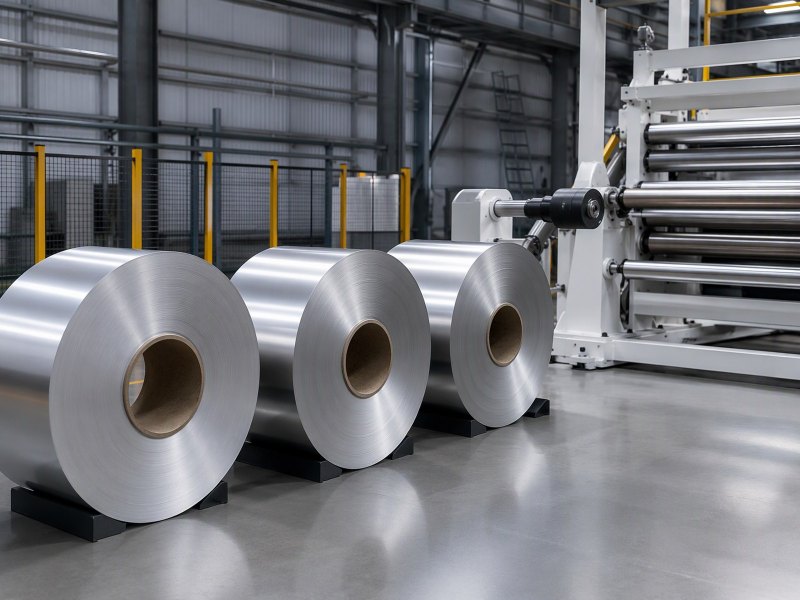
A first coil is a qualification step, not a purchase. Here is what to send before it is made, what it can prove, what to measure, and how the record becomes a specification.
What does a first aluminium foil trial order involve?
You have a quotation, a datasheet and a supplier you trust. Now a coil must run on your line, and the result decides whether the specification was real.
A first trial order is a qualification step: one coil of stated alloy, temper and gauge is run on your own equipment, judged against agreed criteria, and the record becomes the basis for repeat orders. Quantity and timing belong in your purchase order.
The eight questions below follow that loop in order, from the information you send before a coil exists to the document you can reorder against.
Why is a first aluminium foil trial order a qualification step rather than a purchase?
A purchase assumes the material already fits. A first order cannot assume that: your line has never seen this coil and the supplier has never seen your tool.
Because nothing is proven yet. The coil exists to generate evidence about web behaviour, forming and surface response. That evidence, not the invoice, is the deliverable, just as comparing quotations only tells you what was offered.
Dive deeper
Commercial language blurs the difference. A quotation describes a material, an order moves money, and a trial asks a question. When the first coil is handled as a purchase, the questions arrive later, in production, where a wrong answer costs a shift rather than a conversation.
A qualification loop runs the other way. You define what the coil must do on your equipment, agree how that will be judged, run the material under normal conditions, record what happened, and only then settle what the repeatable specification should say. The coil is an instrument, and its tonnage is incidental.
That changes how the order is written. Instead of asking for the best price on a size, you ask for material judged against a list. Instead of accepting what arrives, you state in advance which properties will be checked and which will be left alone.
It changes the internal conversation too. Production, quality and purchasing must agree on the purpose of the run before the coil is booked onto the line. If purchasing wants the shortest route and production wants a quiet shift, the trial is designed by accident.
The test is blunt: at the end of the run, could you write a specification from the record alone, without ringing anyone?
What should the buyer send before any coil is made?
The coil is only as good as the brief behind it. Most trial disappointments begin with information that was never sent.
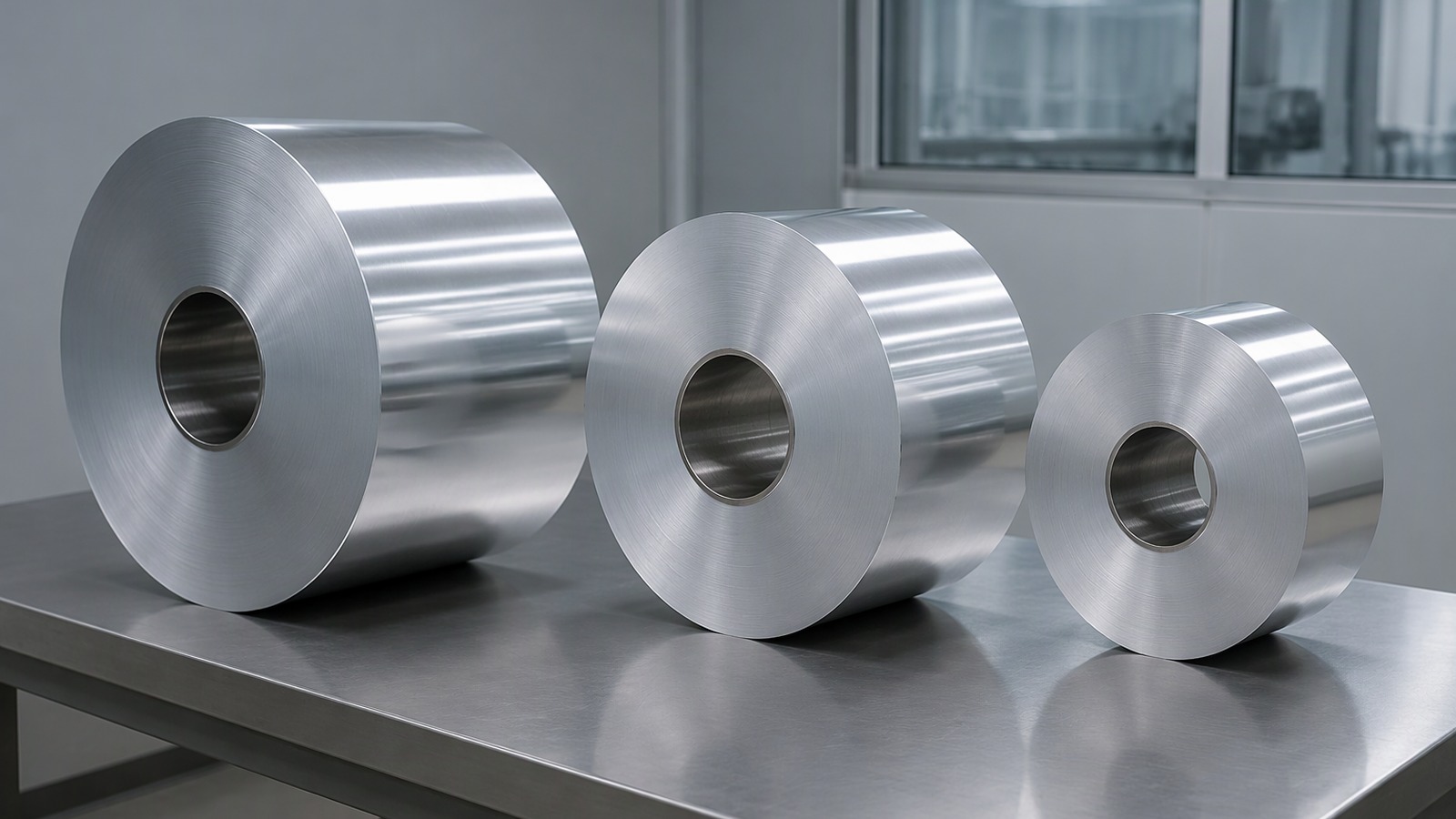
Five things: the structure the foil sits in, the line it will run on, the forming tool, the finish required, and the handling and packing the coil must survive.
Dive deeper
Start with structure. A single ply behaves differently from a foil laminated to film or paper, and a foil that will be lacquered behaves differently again. Say which layer the coil becomes, what sits above and below it, and whether the foil is the barrier or the carrier. Where a converter foil such as 1060 aluminium foil 0.08 mm is under discussion, that sentence decides the gauge.
Then describe the line. Unwind direction, core diameter of 76 mm or 152 mm, the web width the machine is set for between 100 mm and 1500 mm, and how tension is controlled. A supplier can only slit to a width and wind to a core the machine accepts.
The forming tool matters more than buyers expect. A shallow draw and a deep draw ask different things of the same gauge. Describe the tool, the draw depth, the radius at the die, and whether the part is trimmed after forming.
Finish comes next. Mill finish, bright or matte side out, lacquer, print, emboss: each is a separate process step. Say which face is presented and which is hidden.
Finally, say how the coil will be handled at your end: eye to sky or eye to wall, pallet type, and whether the coil will be stored before use.
What can a trial coil prove, and what can it never prove?
A trial is a sample of behaviour, not a guarantee. Knowing the limits of what it can show keeps the record honest.
It can prove how this coil runs on this line and this tool. It cannot prove coil-to-coil consistency, long storage behaviour, or what a full season of production will do.
Dive deeper
It can prove web handling. Whether the foil tracks straight, whether it wrinkles at a turning bar, whether tension holds through acceleration, whether the edge cracks when the web is pulled off centre.
It can prove forming. Whether the tool draws the part without splitting, whether ears appear, whether the foil thins where the wall is deepest, whether the formed part holds its shape after release.
It can prove surface response. Whether a lacquer wets out evenly, whether a print register holds on a moving web, whether a bright finish survives contact with rollers and guides.
It cannot prove consistency. One coil represents one winding, one rolling campaign, one set of conditions. Variation between coils is a separate property, and it is the one that decides whether your line runs quietly when the next coils arrive. That is why verifying a coil before shipment stays a separate step.
It cannot prove storage behaviour. What a coil does after long storage is a function of wrapping, humidity and handling, not of the run.
It cannot prove a specification. It can only suggest one, written from measurements afterwards and confirmed by the coils that follow. An honest statement of those limits leaves you with a decision you can defend.
How should the trial run be planned so it answers one question at a time?
A trial that changes three things teaches nothing. A trial that changes one thing teaches something you can keep.
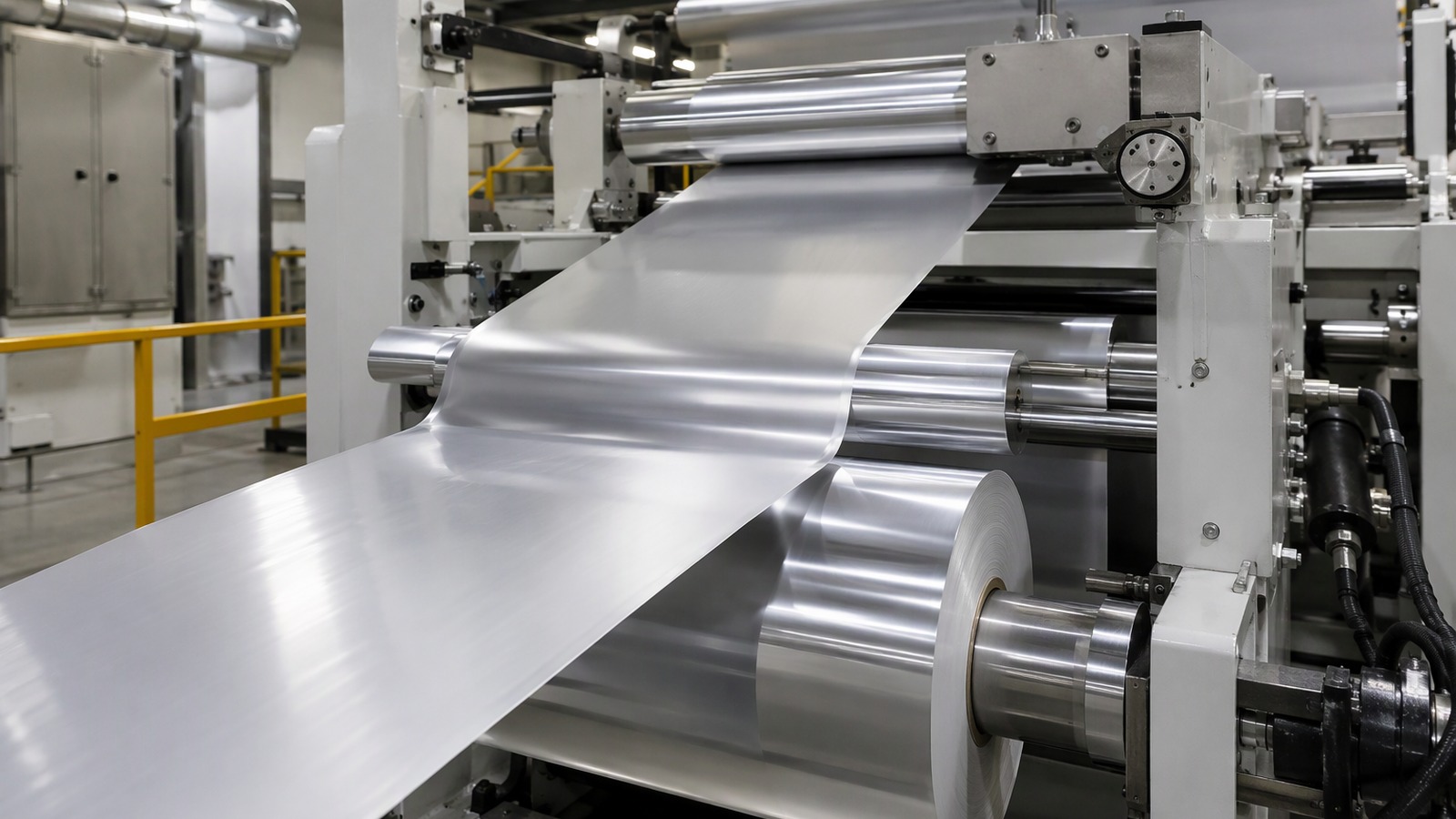
Set a baseline with known material, change one variable per run, keep the line settings written down, and agree in advance what result would stop the trial.
Dive deeper
Decide the question before the coil is booked onto the line. Is the run there to test forming, to test web handling, or to test a finish? One answer per run. A trial that tries to prove everything at once produces a report nobody can act on.
Set a baseline. Run material you already trust, at settings you already use, and record the result. Without a baseline, every later observation is an opinion.
Change one variable. Gauge, temper, alloy, finish, tension: pick one and hold the rest. If the coil is 3004 aluminium foil 0.12 mm in temper H18, that is the variable under test, and the line should otherwise be set exactly as it is for production.
Write the settings down before starting, not after. Unwind tension, nip pressure, line speed, oven or dryer settings, and the tool setup. A trial without recorded settings cannot be repeated, and an unrepeatable trial is a story.
Agree the stop rule. If the web breaks repeatedly, if the tool marks the surface, if the edge cracks: say now who calls the stop and what happens to the rest of the coil.
Book the people, not just the machine. An operator who knows the line, someone who can measure, and someone who can decide.
Why does the coil that arrives differ from the sample, and which differences matter?
The sample was probably made for you. The coil was made inside a normal production run, and production leaves its own marks.
Samples are cut and handled by hand. Coils are wound under tension at width, so gauge profile, camber, edge condition and winding tightness can all differ. Only the differences that touch your tool matter.
Dive deeper
A sample is usually a short length, cut square, checked by eye and sent flat. A coil is a long web wound under tension, slit to width and packed for travel. Same material, different object, which is why the metallurgy of aluminium foil explains the properties but not the handling.
Gauge varies across the width of any rolled foil. The sample came from one position; the coil carries the whole profile, and your tool may sit where the band is thicker or thinner. A coil can therefore form well on one side of the web and split on the other.
Camber is the curve of the web along its length. A short sample looks straight. A long web drifts, and the drift shows up as edge wrinkling or as a guide working hard to hold position.
Edge condition differs too. A sample has two cut ends; a coil has two slit edges running the full length. A burr that was invisible on a sample becomes a run of marks on a coil.
Which differences matter? The ones your process touches: gauge where the tool works, camber where the web is guided, edge where the foil is coated, and winding where the web accelerates.
What should be measured during the trial, and who records it?
Memory is the weakest instrument in any trial. If it is not written at the time, it will be reconstructed later and it will be wrong.
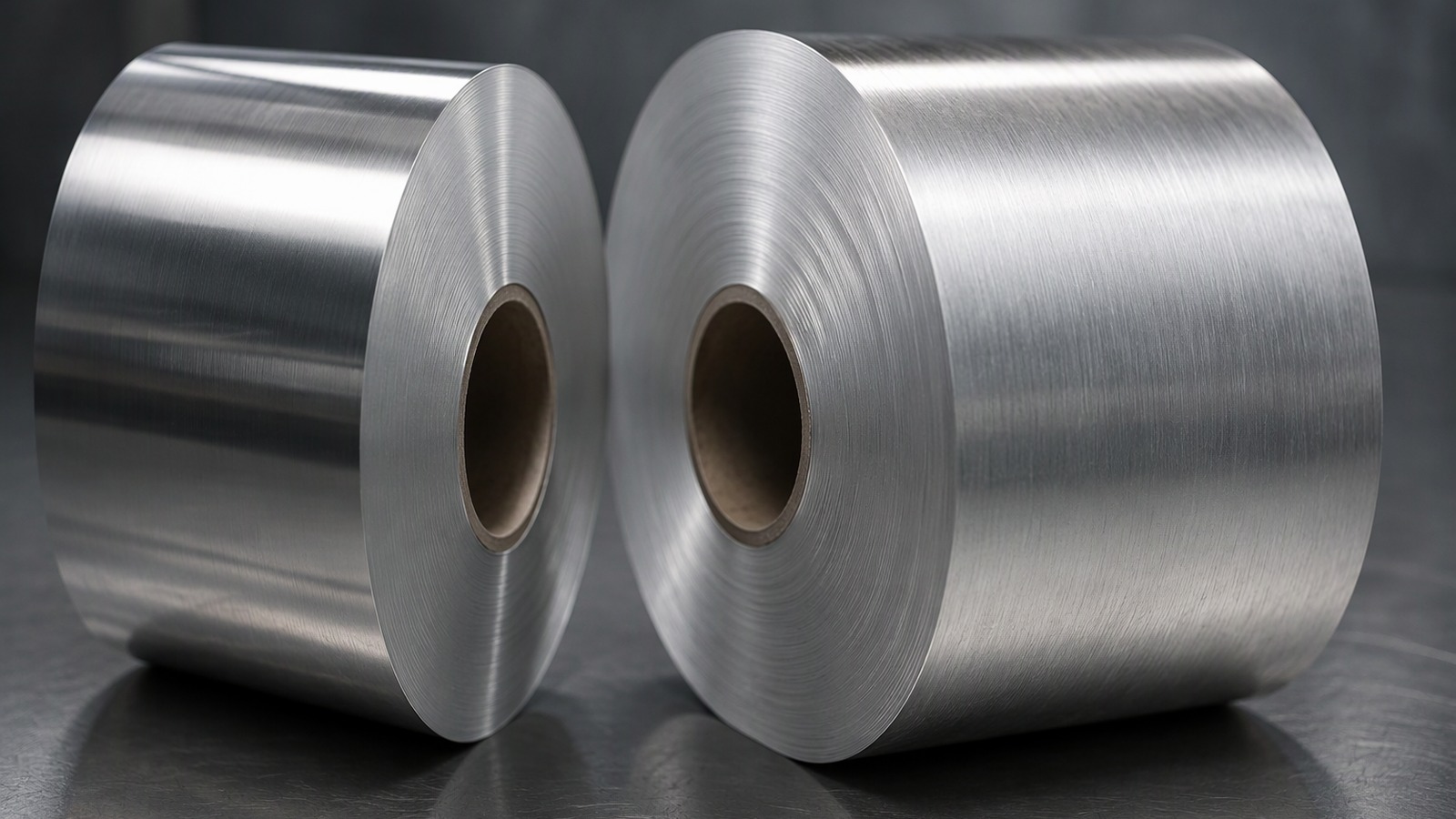
Measure gauge across the width, slit width, core diameter, coil mass, web tension, breaks, wrinkles and forming defects. The operator records events, quality records measurements, and both sign the same sheet.
Dive deeper
Measure the coil before it goes on the line. Gauge at several points across the width, slit width, core diameter of 76 mm or 152 mm, coil mass, and the condition of the wrap. These are the facts you will argue about later, and they are cheapest to collect at the doorway.
Measure the line while it runs. Web tension at unwind and at the tool, line speed, and every adjustment made during the run. An adjustment is data: it says where the material did not suit the machine.
Record events as they happen. A break, a wrinkle, a mark, a splice that passed, a guide correction, a stop for any reason. Time-stamp every entry. Events recorded at the end of a shift lose their order, and order is usually the answer.
Record the output. Parts formed, parts rejected, and why. Keep a sample from the start, the middle and the end of the coil, labelled with position, so a later argument can be settled by looking. The wider programme of aluminium industry statistics is context, never evidence about your line.
Give one person the sheet. The operator writes what happened, quality writes what was measured, and both sign the same page at the end of the shift.
How does a trial result become a specification?
A specification is not a description of the coil you liked. It is a set of clauses the next coil can be judged against.
Turn observations into clauses: alloy, temper, gauge with a tolerance band, width, core, finish, winding and packing. Each clause needs a method and an owner, or it will not be checked.
Dive deeper
Begin with what the trial proved. If the coil formed without splitting at a stated gauge and temper, that combination becomes a clause. If the web tracked badly because the camber was high, the clause is a limit on camber, not a note in a report.
Write each clause as a property, a value or band, and a way of checking it. A clause that cannot be checked is a wish. The method should be one both sides can perform, on the same sample, with the same result.
Decide which clauses are essential and which are desirable. Essential clauses are the ones your tool and your customer cannot tolerate breaking. Mixing the two produces a specification that is impossible to meet and easy to ignore.
State the tolerance band, not just the nominal. Foil is rolled, not ground, and every gauge arrives as a band. A clause that names only a nominal will be argued about rather than met.
Add the handling clauses: core type, winding direction, wrap, pallet, and how the coil is presented at unwind. Then date the document and record what changed, or nobody can tell which clause came after which failure.
The aluminium sector public library is useful for vocabulary, but your clauses must be written in your own process language.
What should an enquiry contain so the first coil is not wasted?
An enquiry that lists a size invites a price. An enquiry that describes a job invites a material that might work.
State the application, the structure, the alloy and temper you expect, the gauge and width, the core, the quantity on your purchase order, the packing, and what you will measure.
Dive deeper
Open with the job, not the size. What the foil becomes, what it must survive, and what failure looks like at your end. A supplier who understands the application can suggest an alloy or temper you had not considered.
Then give the parameters. Alloy from the range that includes 1050, 1060, 1100, 1235, 3003, 3004, 8011, 8021 and 8079, temper from O, H14, H16, H18, H22 and H24, gauge within 0.005 mm to 0.20 mm, width within 100 mm to 1500 mm, and core of 76 mm or 152 mm.
State the quantity you intend to order and the timing you need, in your purchase order rather than in a figure borrowed elsewhere. Say how the coil is packed and which port you prefer: eye to sky or eye to wall, moisture barrier wrap, and Qingdao, Tianjin or Shanghai.
Say what you will measure and how you will judge the coil, and invite the supplier to comment before the coil is made. Public foil converting information can help you name a process step correctly, but only your records tell you what your tool tolerates.
Then the coil arrives as a known object. Use the aluminium foil rolls and sheet range as a map of what is available before you ask.
A first coil is not a purchase. It is the experiment that lets you write a specification you can reorder against, in writing, without argument.