What is annealing, and how does it set foil temper?
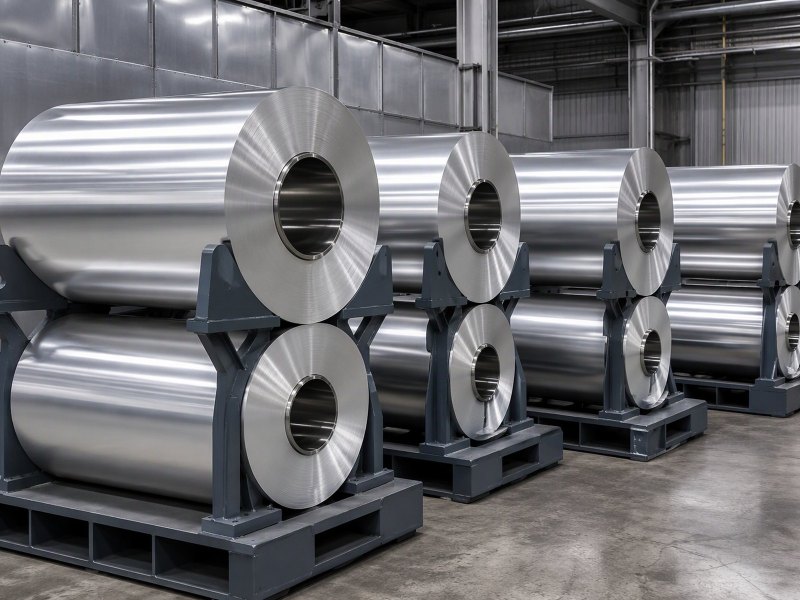
Annealing undoes rolling hardness in foil, and sets whether a coil ships soft or springy.
What is annealing, and how does it set foil temper?
A coil arrives dead soft when the tooling wanted spring, or springy when the line needed drape. The label names a temper; it never explains why.
Annealing is a controlled heat cycle that releases the strain rolling built into the metal. Rolling hardens foil; annealing removes that hardening, and how far the cycle is taken decides whether the coil leaves as O, H22 or H24.
The eight questions below follow the cycle from the roll gap to the packing line, and end with what an enquiry should carry.
What does annealing actually do to the metal?
Rolling does two things at once: it thins the foil and it tangles the crystal structure inside it. Annealing is aimed at the second.
It lets a cold-worked structure recover. Stored strain is released, fresh grains nucleate and replace the flattened ones, and the metal comes out softer, more even and easier to form than it went in.
Dive deeper
The change happens in stages, and each stage leaves the coil in a different condition. First, the strain that rolling stored is released. Dislocations that were jammed against each other manage to move and rearrange, and much of the internal stress that made the foil springy drains away. The grains still keep their flattened shape, so the metal becomes easier to bend without yet being a different material.
In the second stage fresh grains appear in the most heavily deformed regions and grow until they have consumed the old, elongated ones. This is where the character of the finished coil is settled, because the new grains are roughly equiaxed and their boundaries are far cleaner than the tangled ones they replace. Ductility rises sharply and the metal stops fighting the tool.
Past that point nothing improves. The grains merely coarsen, and a coarse structure is what makes a coil feel buttery in the hand while behaving unpredictably in a machine.
Cooling matters mainly for what it prevents. An even, unhurried drop keeps the structure that was built; a steep and uneven one can leave a gradient across the coil, so one wrap behaves differently from the next and the converter meets variation along the length instead of a consistent grade.
Why is foil annealed after rolling instead of during it?
Heat inside a rolling mill is a nuisance, not a tool. The pass that makes foil thin depends on the metal staying hard.
Rolling needs a work-strengthened web to pull down to thin gauge under tension. Softening it in the roll gap would let it stretch instead of reduce, so the softening is done afterwards, on the finished coil.
Dive deeper
The roll gap is a small, violent place. Two hardened rolls press a web of aluminium foil already thinner than a sheet of paper, and the reduction comes from compressive stress helped by the tension pulling the web forward. Gauge control depends on that web resisting: if it yields too easily it stretches between stands instead of thinning in the gap, and thickness drifts in a way no operator can correct in time.
Heat is generated in the gap, but it is a by-product to be carried away by the coolant, not a stage of the process. Roll coolant and oil remove it so the roll profile stays stable. Softening the metal there would fight the only thing the mill is trying to do.
Foil is also finished in long, fast passes, and a softening cycle needs the metal still while its structure rearranges. A moving web offers no such pause in the schedule.
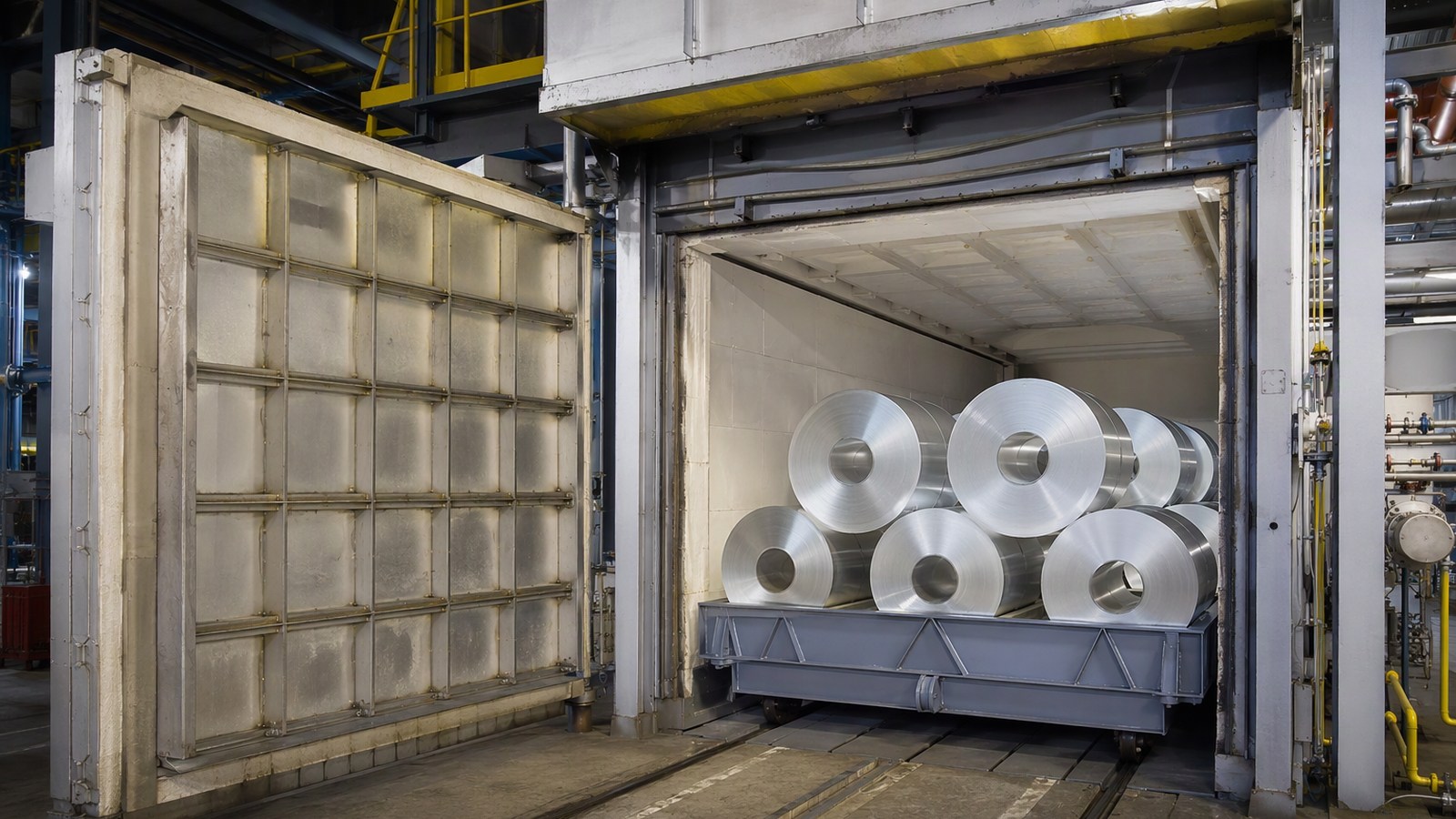
So softening is moved to the end, where the product can be handled as a batch. Coils are stacked, brought through the cycle together and cooled as a group, which is why one charge tends to behave as one lot. The flat, even way such a coil runs afterwards is partly the result of that quiet, unhurried treatment.
How does annealing decide which temper the coil ships in?
A temper describes the last operations performed, not an ingredient added. Annealing is the operation that moves a coil between those descriptions.
Take the cycle to full softening and the coil is O. Stop it part way, or soften and then roll again, and it ships as H22 or H24. Skip softening after the final pass and it stays H14, H16 or H18.
Dive deeper
Annealing is not a single switch but a lever with a range, and the designation records where on that range the coil was left, as the temper grades and their jobs show.
At the soft end sits O. The cycle is taken far enough that the strain of rolling is gone and the deformed grains have been replaced throughout. The coil is as formable as the alloy allows, and as weak as the alloy allows.
In the middle sit the tempers that are only partly softened. A coil can be rolled to an intermediate reduction, softened so that only part of the hardening is removed, and then given a final light pass. The result is H22 or H24: harder than O, gentler than the fully strain-hardened grades, and specified when a converter wants the web to hold a fold without splitting along it.
At the hard end sit H14, H16 and H18, which are records of reduction alone. Nothing follows the last pass, so the strength the mill produced is what is delivered, and any later softening has to be asked for.
This is why the label reads as a process description. Two coils can share an alloy, a thickness and a width and still be different products, because one schedule was interrupted and the other was not.
Why does the same alloy arrive in different tempers?
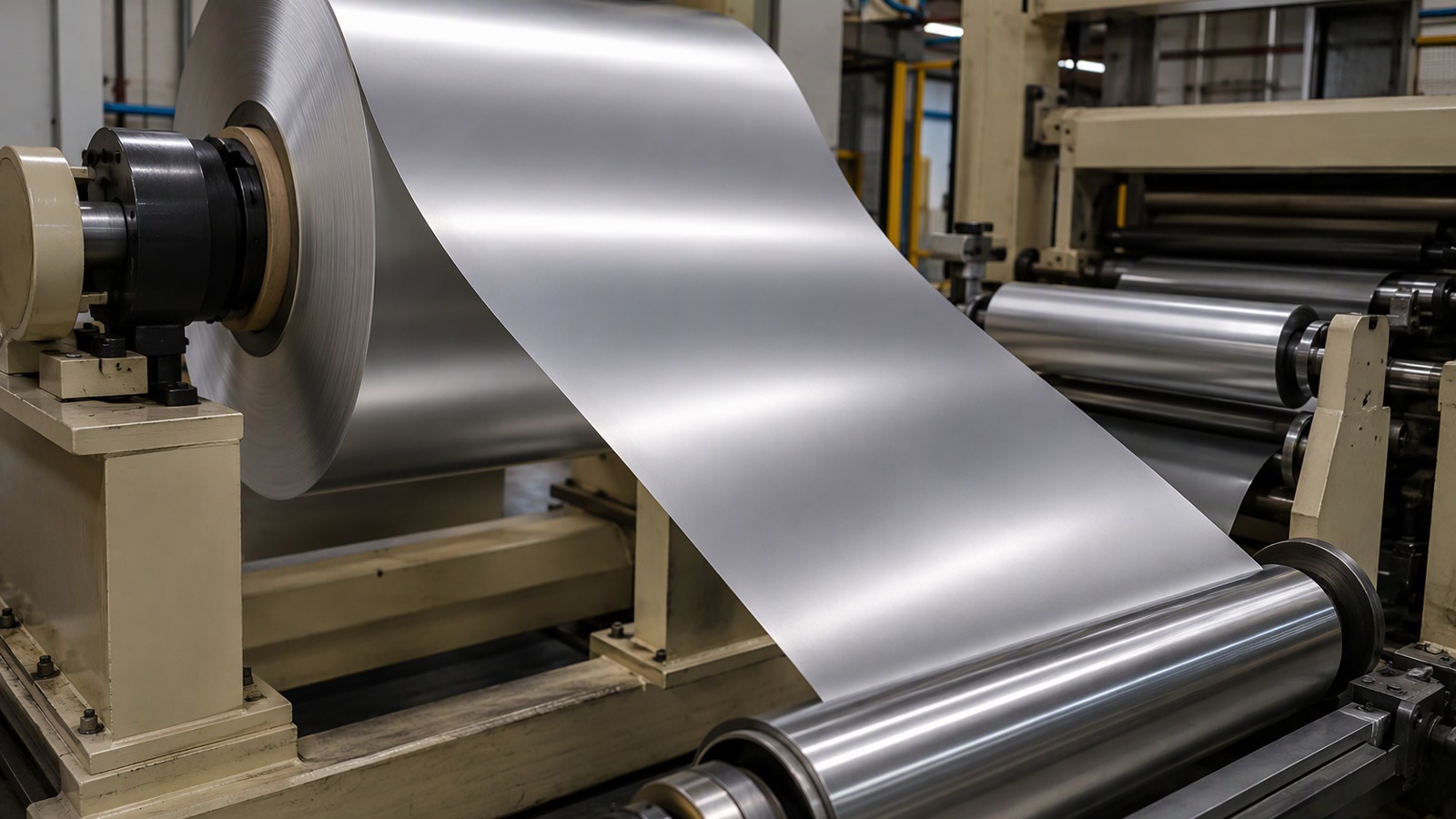
Two coils of 8011 can behave like different materials. The alloy fixes the chemistry; the schedule fixes everything an operator feels on the machine.
Chemistry sets what the metal can do; the rolling and softening schedule sets what it currently does. The same alloy supplied as O and as H24 differs by the path it took, not by its analysis.
Dive deeper
The alloy decides the ceiling. Chemistry determines which phases can form, how much strengthening the solid solution can offer, and how the metal behaves when it is finally softened. That is why soft temper 8079 foil and annealed 1100 aluminium foil are not interchangeable even before temper is mentioned, and why a stronger alloy is chosen when an application needs stiffness rather than softness.
The schedule decides where on that ceiling the coil currently sits. One alloy can be delivered fully soft, partly softened, or left work-hardened, and the three behave like different materials on the same line. A buyer who specifies only an alloy has specified a range of possibilities, not a product.
Suppliers differ as well. Two plants rolling the same alloy to the same designation may arrive at it by different routes, with different intermediate reductions and different points at which softening is applied. The designation should make the outcomes comparable, but a converter who has run both will still notice a difference in how the web handles.
The practical consequence is simple: describe the operation, not only the code. A tool that draws a shallow tray and a line that wraps a pallet place opposite demands on the same alloy, and only the schedule can satisfy one without spoiling the other.
What changes inside the metal when it is softened?
Softness is not a coating or a surface treatment. It is a change in how the grains sit against each other and how freely they slide.
Dislocations cancel or rearrange, grain boundaries become cleaner, the internal stress of rolling falls away and the crystallographic texture shifts towards a stable one. The metal yields at lower load and stretches further before it separates.
Dive deeper
At the scale of the crystal, softening is a clean-up. Rolling multiplies dislocations until they obstruct one another, and that obstruction is what hardness is. Annealing gives them enough mobility to cancel in pairs or to arrange into low-energy walls, and the obstruction disappears. Fewer obstacles mean the metal yields at a lower load and extends further before it breaks.
The boundaries change too. A rolled structure is a stack of flattened grains with ragged boundaries and a strong preferred orientation. After the cycle the grains are more equiaxed and the orientation is closer to a stable texture, which is why a soft coil draws and forms more evenly in every direction rather than favouring the rolling direction.
Precipitates are affected as well. Particles that were fine and widely dispersed can coarsen, and a coarser dispersion strengthens less. That is part of the drop in strength, and of the change in how the surface responds when the foil is bent, a point the European aluminium association covers.
Residual stress is the quiet one. A hard coil carries stress that shows up as coil set, as a tendency to curl and as movement after slitting. Softening relieves it, so cut lengths stay flat.
None of this is visible. The surface texture can look identical while the metal underneath has become a different material.
Why does an over-soft coil cause trouble on a packing line?
Dead soft sounds like the easiest thing to run. On a line that pulls a web under tension, it is often the hardest.
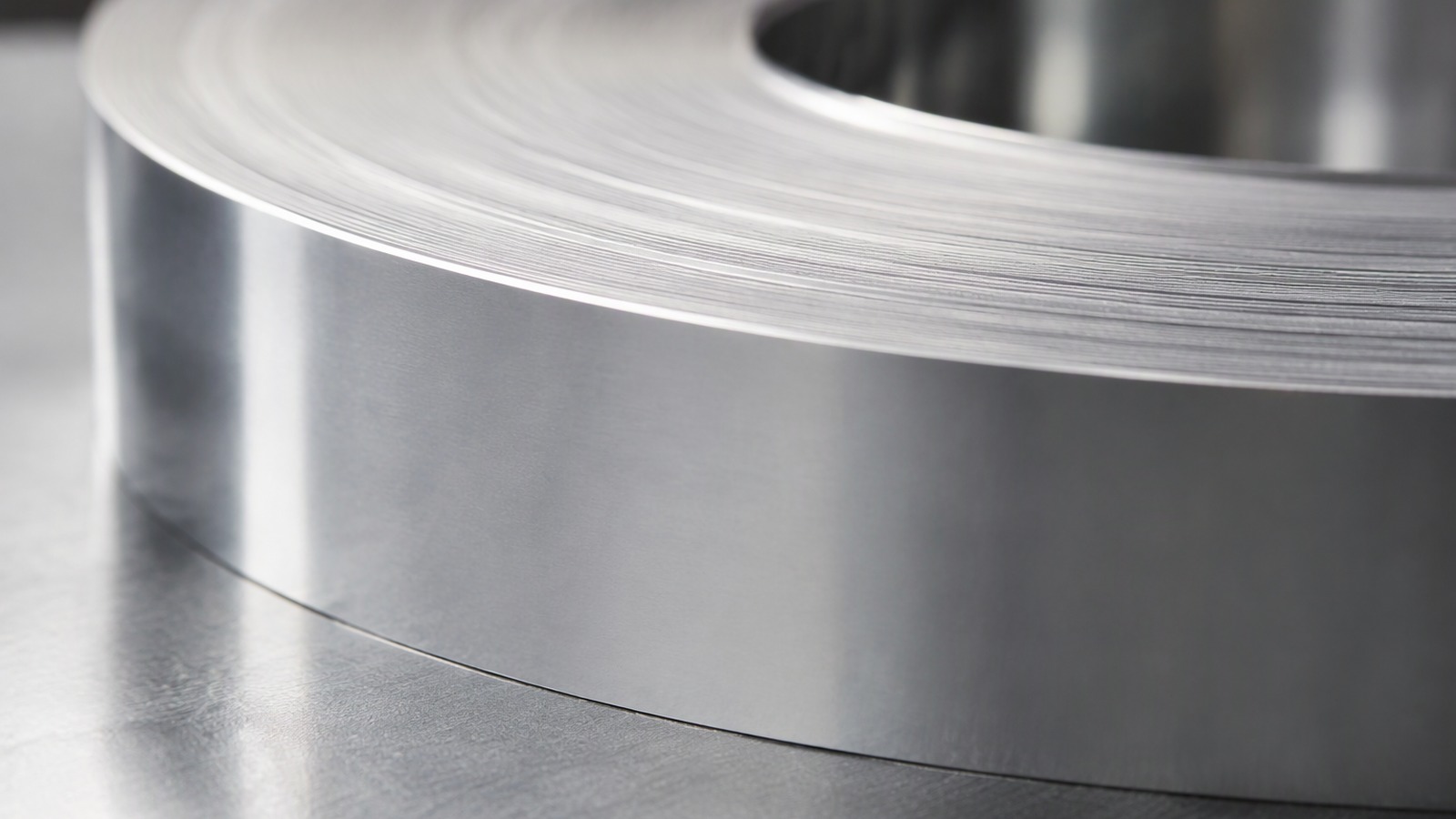
A soft web stretches instead of feeding, so tension control loses its reference. The foil bags between rollers, wrinkles, blocks on the roll and wanders off register, and the line stops for reasons that look mechanical.
Dive deeper
A hard web resists being pulled. A soft one complies, and compliance is precisely what a tension-controlled line cannot tolerate. The dancer or load cell is set to hold a target tension; if the web stretches under that pull, the real feed rate changes, the loop drifts and the control chases a value it can never hold.
Wrinkles follow. A soft web has little resistance to compression, so any slight mismatch in roller alignment or tension across the width buckles the foil into a fold that then passes through the next nip, and the foil roll and sheet range is graded with that in mind.
Blocking is the second problem, and the more expensive one. Soft foil pressed against itself under winding tension can adhere wrap to wrap, especially when the surface is clean and the coil wound tight. The unwind then stutters, tension spikes and registration jumps.
Slitting exposes the third. A soft web deforms rather than shears at the knives, so the cut edge can carry a burr or a rolled-over lip that interferes with feeding later on.
Forming tools also expect resistance. Foil that is too soft can collapse before the punch finishes the draw, and the scrap rate climbs for a reason the toolmaker cannot fix.
How is temper confirmed on a delivered coil?
The certificate names the temper. The coil proves it, and the proof is behavioural before it is numerical.
Draw a length and watch how it leaves the unwind; fold a strip and see whether it stays folded; bend it and release it. A trial run at line speed settles what the paperwork leaves open.
Dive deeper
Start with behaviour, because behaviour is what the line will experience. Pull a length off the coil and watch how it leaves the roll: a hard coil springs away and holds a curve, a soft one drapes and stays where it is put. Fold a strip back on itself and press the fold; dead-soft foil stays folded, while harder foil opens.
Then bend a strip and release it. The angle it keeps is a rough but honest comparison between two coils, and it needs no equipment.
Next, run a trial length at line speed. Tension stability, tracking, wrinkle formation and register are all evidence of temper, and they outrank a certificate figure because they include the machine.
Documentation supports the verdict. A supplier can state the alloy and the temper, and may report mechanical results from a sample; read those as a description of the lot, not of every metre, a caution the aluminium association shares. Sampling position matters, because behaviour varies slightly across a coil width and along its length.
Inspect the physical state as well. Coil set, camber, edge condition and surface texture all change how the web runs, and a coil that is correct on paper can still be rejected on the line. Keep the trial notes; in a dispute they are worth more than the label.
What must an enquiry for annealed foil contain?
Most temper disputes begin before the purchase order. An enquiry that names only an alloy and a thickness leaves the schedule to the supplier.
State the alloy, the temper or the behaviour you need, the thickness, the width, the core, the quantity in MT and the port. Add the process the coil will meet and the properties that must survive it.
Dive deeper
Be explicit about the metal. Name the alloy from the range available, including 1050, 1060, 1100, 1235, 3003, 3004, 8011, 8021 and 8079, and name the temper you expect, or describe the behaviour you need instead.
Thickness across 0.005 mm to 0.20 mm, width from 100 mm to 1500 mm, and the core diameter, commonly 76 mm or 152 mm, decide which line the coil can run on. State the quantity in metric tonnes, the port you want, Qingdao, Tianjin or Shanghai, and note that supply commonly starts at 3 MT per size.
Then describe the process. Whether the foil will be laminated, printed, slit, formed into a container or wrapped around a product decides more about the right schedule than the alloy does. Say whether the coil will be softened again after slitting, because a second cycle can undo the temper that was specified, and foil and sheet are specified differently.
Add what must survive: a fold, a draw, a heat cycle inside the customer's own process, a register tolerance. Ask how the coil was softened, batch or continuous, and ask for the packing: eye to sky or eye to wall, moisture barrier wrap, pallet type, points the foil packaging association raises.
Temper is a process record, and annealing writes most of it. Specify the behaviour you need, then let the schedule be chosen to get there.