Aluminium Foil Temper Grades Explained: O, H14, H16, H18, H22 and H24
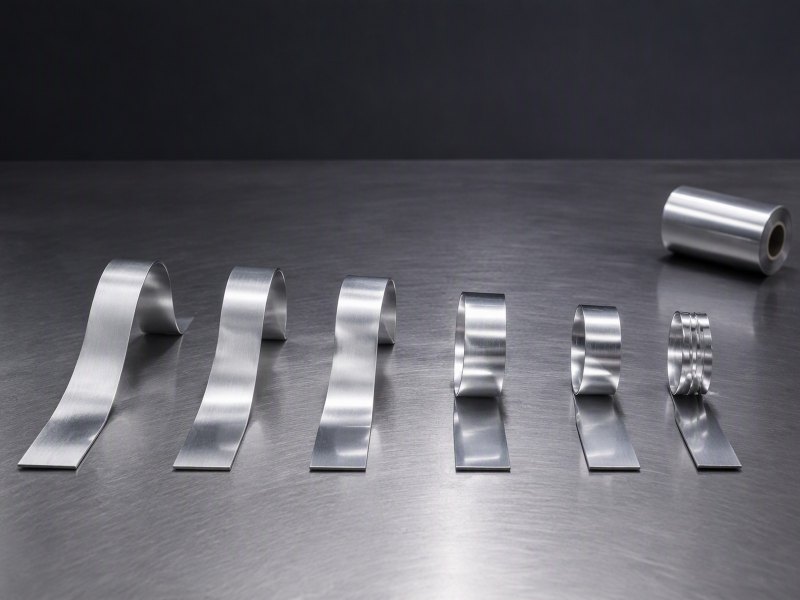
Temper decides whether your foil folds, wraps or springs back. Here is what each designation actually means on the rolling line, and how to pick the right one.
Aluminium Foil Temper Grades Explained: O, H14, H16, H18, H22 and H24
Temper decides whether your foil folds, wraps or springs back. Here is what each designation actually means on the rolling line, and how to pick the right one.
Temper is the one specification buyers most often get wrong. Two rolls can have identical alloy and thickness and still behave completely differently on your converting line, because temper describes how much the metal has been work hardened after annealing.
This guide walks through the letter and the digits, compares the soft O temper with the strain-hardened H tempers, and shows how the right choice follows your customer's next process step.
What does the temper designation mean?
Two parts, one instruction: the letter fixes the condition, the digits fix the degree.
The letter tells you the condition, the number tells you how hard it is. O is fully annealed, the softest and most ductile state. H means strain hardened, and the two digits that follow describe the amount of cold work and any partial anneal applied afterwards.
Dive deeper
On paper the designation looks like a small detail, but it compresses a whole production history into a few characters. Rolling, annealing and the order in which the two happen decide how the metal behaves, and the temper code is the label that records that route. The same alloy at the same thickness and width can leave the mill in several different tempers, and each one behaves differently on the line that unwinds it.
That is why a coil can pass an incoming check for alloy and gauge and still disappoint on the press. Buying by alloy and thickness alone leaves the most influential parameter unstated, and the mill is then free to deliver whichever temper its schedule produces. Writing the temper code on the enquiry removes that freedom and tells the mill how the coil must finish.
In practice a handful of tempers covers most converting work: O, H14, H16, H18, H22 and H24. They are not a ranking of quality, but points on a scale between two opposite behaviours, and the useful point is the one that survives your next operation. For general background on the material, an encyclopaedic overview of aluminium foil is a reasonable place to start, although nothing else on the sheet decides how the press behaves.
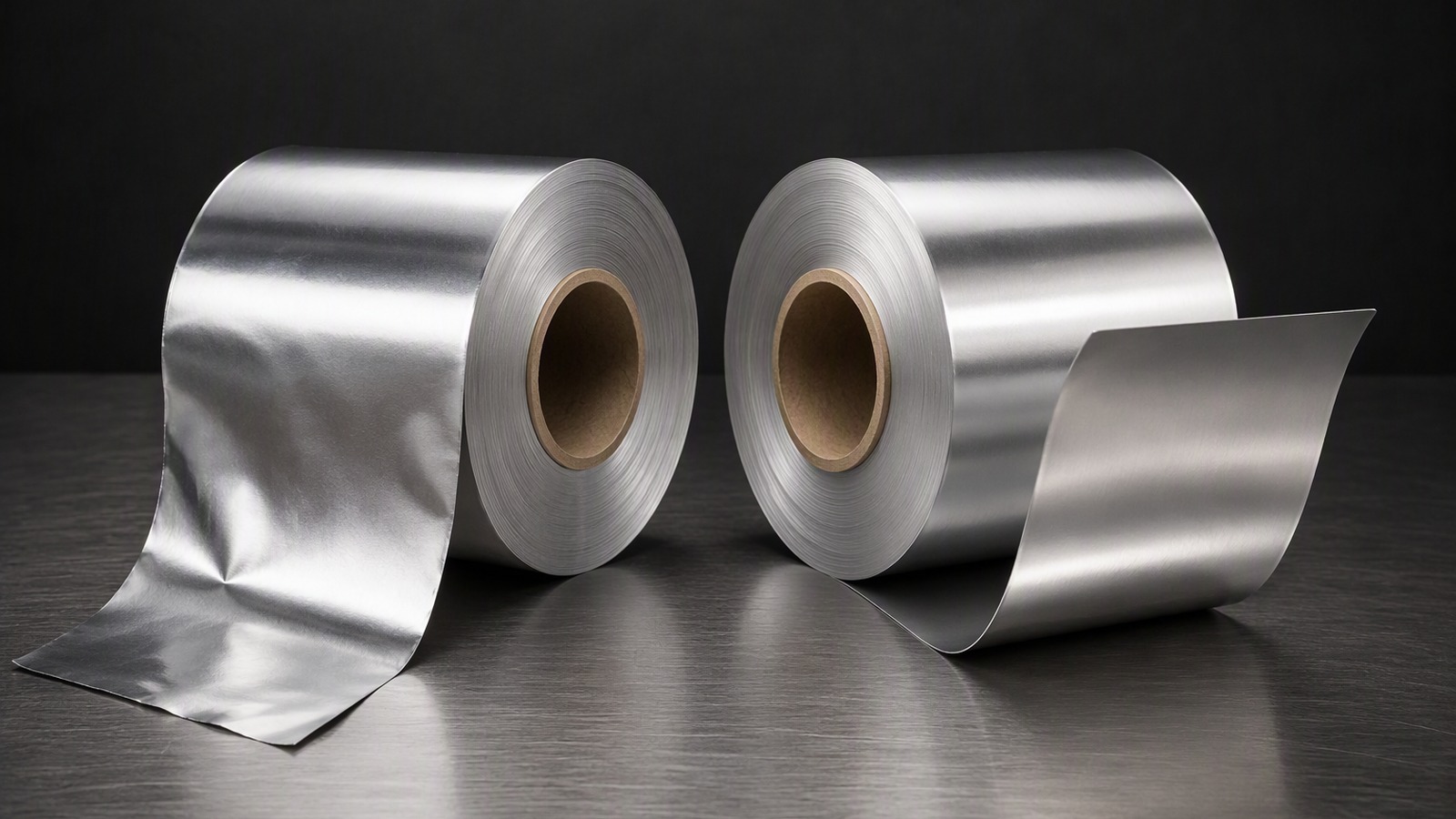
What does each position in the temper code mean?
Read the code position by position and most of the guesswork disappears before the order is placed.
In the H family the letter names the condition, the first digit separates coils that are only work hardened from those given a light partial anneal, and the final digit ranks how much cold work the metal has seen.
Dive deeper
The letter states that the coil gained its strength by being rolled thin rather than by alloying. The first digit then splits the family in two: one branch is strain hardened only, while the other receives a light partial anneal after the last rolling pass, handing back part of the ductility that the cold work removed.
The remaining digits rank the amount of cold reduction. A low figure means the coil stopped early in the sequence and still has room to bend; a higher figure means the metal has been worked further and behaves more like a spring. H14 is one of the gentler strain-hardened tempers, H16 sits firmer than H14 and softer than H18, and H18 is the deepest work-hardened option in that branch. H22 sits between the annealed state and the firmer partial-anneal grades, while H24 is a step firmer again yet stays workable enough for most forming.
The letter O is the exception. It carries no digits, because it describes a state rather than a degree of working, and it stands at the opposite end of the scale from the firmest H tempers. Industry association resources on aluminium set out how these families are organised if you want the wider picture.
How does soft O compare with the H tempers in handling and forming?
The difference between the softest and the firmest foil is felt long before the press.
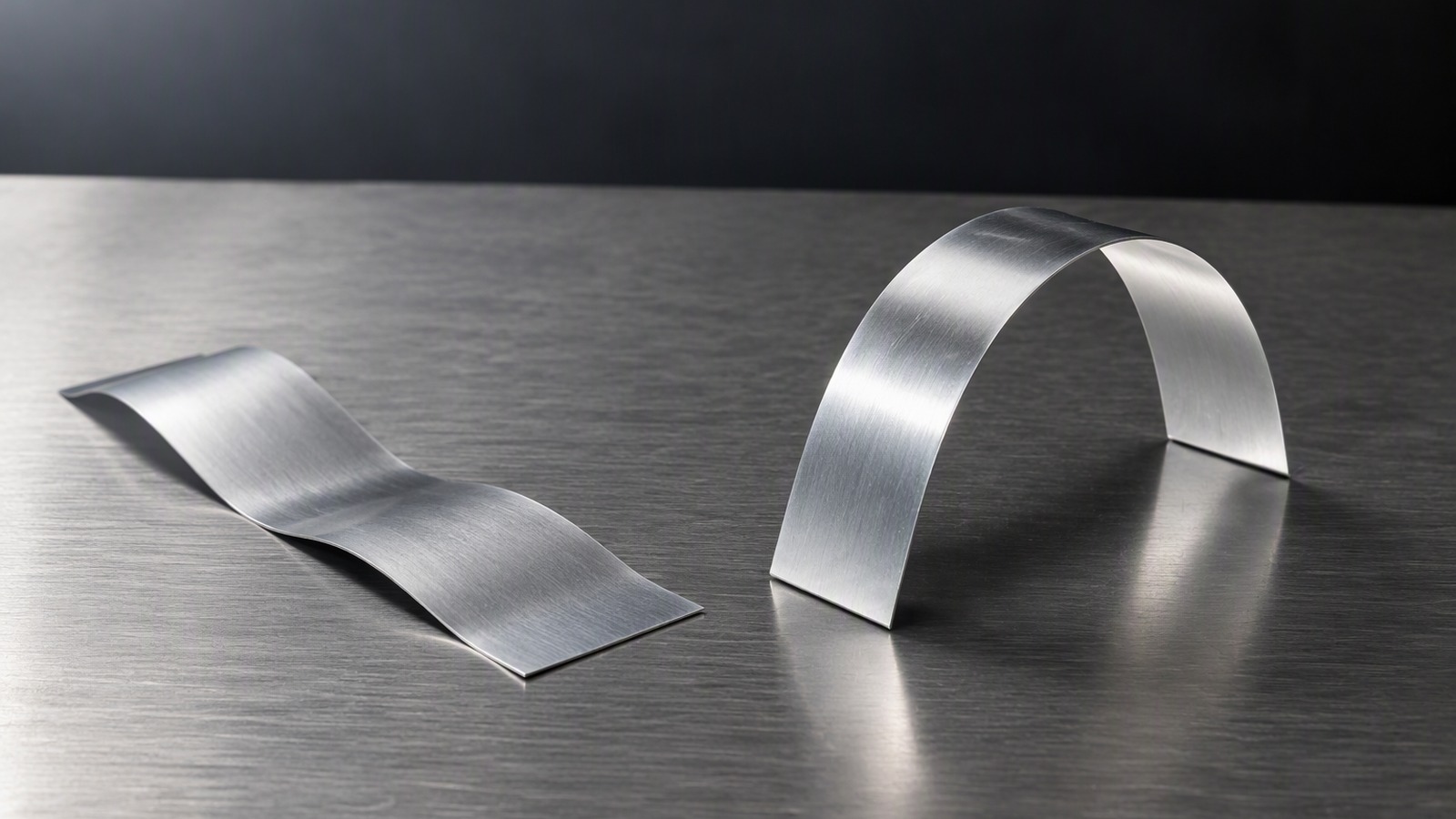
O is dead soft: it drapes, folds and slumps under its own weight, forming easily but wrinkling or tearing if it is left unsupported. The H tempers are firmer, keep their shape and take rougher handling, at the cost of formability at sharp bends.
Dive deeper
A soft roll announces itself the moment it is handled. Under its own weight it slumps and loses its round shape, the laps can slip, and a coil left standing can flatten on one side. Feeding it demands low and even tension, because a sudden pull stretches the web and leaves it baggy or wrinkled. The reward is a material that drapes around almost any shape, folds flat without cracking, and conforms to corners on a wrapping line.
The H tempers behave in the opposite way. A work-hardened roll keeps its shape on the pallet, tolerates rougher handling and unwinds cleanly at higher tension without stretching. In a folding or bending operation it holds the crease instead of relaxing out of it, which is what a fin, an insulation facing or a folded lid needs. The cost is brittleness at sharp radii: push a firm temper past what it can stretch and it cracks rather than yields.
Neither behaviour is better in the abstract. Soft foil suits work where conformity and coverage matter and the part is supported on both sides. Firm foil suits parts that must keep a shape, resist damage in handling, or run through a machine that pulls hard, and that trade-off is the whole decision.
Why is H24 often the better choice than H18?
When a part has to move metal, the firmest foil is not always the safest one.
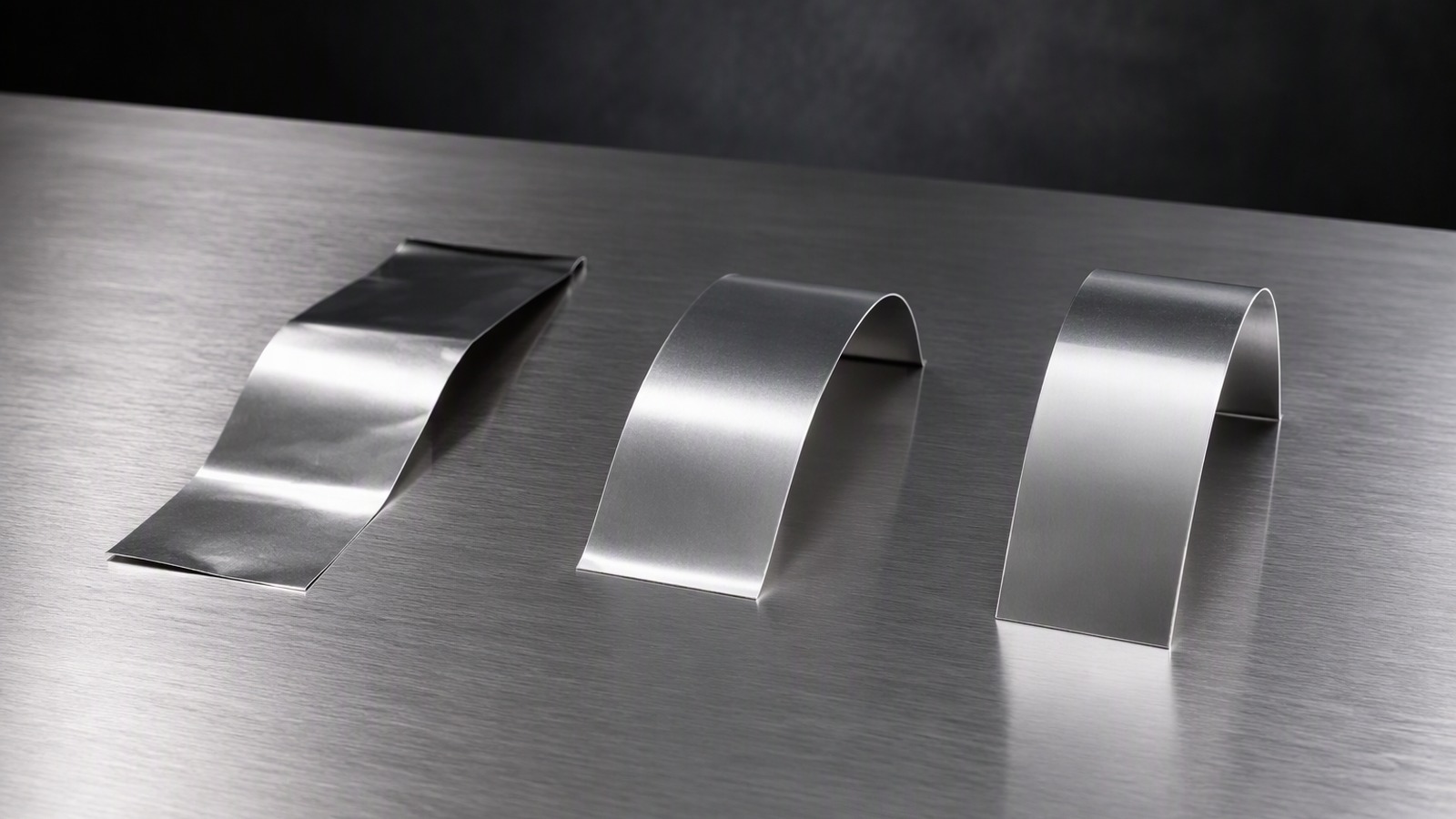
H24 pairs a comparable strength with enough elongation to be drawn or bent, so it often survives forming that makes H18 crack at the bend.
Dive deeper
If a specification calls for H18 but the part has to be drawn or bent, the foil may tear at the bend. H24 reaches a comparable strength while retaining enough elongation to survive forming. If your press is rejecting material, the temper is the first thing to review, before you blame thickness or alloy.
The reason is the partial anneal behind the number. H18 is produced by cold reduction alone, so its formability is whatever rolling left it. H24 takes a similar amount of cold work and then softens it slightly, restoring the ability to stretch where the tooling pulls hardest. On a shallow fold the two behave alike; on a tight radius the difference decides whether the part comes out or goes to scrap.
This is why an experienced buyer specifies a temper for the operation rather than for the catalogue. Where the foil is only wound, laminated or slit, the firmer grade is fine and often preferred. Where it is drawn into a cup, bent around a tight corner or folded repeatedly, the partially annealed grade does the work. It is also worth asking which temper the last good coil carried before changing the grade. That is why the partially annealed grade is often the one specified where the tooling is tight.
How does the temper you choose follow your customer's next process step?
The right temper is decided one station downstream, on the machine that receives the coil.
Match the temper to the very next operation the foil meets. A wrapping head, a laminating nip, a press and a folding line each need a different balance of stiffness and stretch.
Dive deeper
Start at the machine that receives the coil and work backwards. If the next step is a wrapping head that pulls the web around a product, the foil must stretch without tearing and lie flat afterwards, so a softer temper earns its place. If the next step is a laminating nip that bonds the foil to paper or film, the priorities shift to flatness, even unwind and resistance to wrinkles at speed. If the next step is a press that draws a cup or a folded panel, the temper must carry enough stretch for the deepest draw the tool will ask for.
Printing, coating or lacquering puts the web through tension and heat, where a very soft foil can pick up marks or stretch out of register, while an over-firm foil may fight the web path. Slitting and rewinding are gentler, but the wrong firmness still shows up as a baggy edge or a loose lap on the stand.
Where the finished part is stiff enough that thickness carries the load, temper becomes less critical and the difference between sheet and thin gauge stock is worth understanding before asking foil to do a structural job. For everything else, describe the next operation and let temper follow it.
What do we control on the line?
Everything that sets the temper happens before the coil is wound.
The rolling schedule and the annealing cycle set the temper, and measurement confirms what the metal received. The temper is agreed against your process, not chosen in isolation.
Dive deeper
Temper is set by the amount of cold reduction and the annealing cycle, and checked by tensile and elongation testing on samples from each batch. Test reports are issued with each shipment so your engineers can confirm the material matches the specification before it arrives at the press.
Two mills can both quote H24 and deliver coils that feel different, because the route that arrives at that label is not unique. That is why we ask what the foil has to do. Tell us the operation, the web width and the speed, and we can discuss which point on the scale suits it, then hold that point from coil to coil within the tolerance we agree.
Stability across a batch matters more than one clever value. A buyer who receives a consistent temper can set the line and leave it alone; a buyer who receives a drifting one spends the shift adjusting. We supply O, H14, H16, H18, H22 and H24 across our aluminium foil roll range, and fin stock tempers for heat exchanger fins. If you are unsure which temper suits your process, send us a sample of what you run today and we will match it on the rolling line.
Which temper suits packaging, fin stock and other end uses?
End uses cluster around a few practical temper choices.
Soft tempers suit household and packaging wrap, lidding and laminating, where the foil must conform. Lightly work-hardened tempers suit fin stock, insulation facing and folded or drawn parts that must keep a shape.
Dive deeper
Packaging is the largest home for soft tempers. Household wrap, lidding, sachets, laminates and the foil layer inside a carton all rely on a material that conforms and covers rather than resists. Where the wrap has to survive a machine that stretches it hard, a lightly work-hardened temper is often preferred instead.
Technical end uses lean firmer. Heat exchanger fins, insulation facing, cable wrap and folded or drawn components need a foil that keeps a shape or takes handling without deforming. Alloys such as 1050, 1060, 1100, 1235, 3003, 3004, 8011, 8021 and 8079 cover most of this work, from thin converter stock up to the firmer technical grades, and a grade such as 1100 aluminium foil in H18 is a common starting point for non-packaging work. Thickness runs from 0.005 mm to 0.20 mm, width from 100 mm to 1500 mm, with cores of 76 mm or 152 mm.
The physical envelope is broad but not unlimited, and the decisive question remains what the next operation does to the web. Industry association data on aluminium and further reading on foil markets can help you place your own application in context. A fin and a sweet wrapper look identical on the pallet and are not the same purchase.
How do you state temper in an enquiry?
A short, complete specification removes almost all of the back and forth.
Write the temper code beside the alloy, thickness, width and core, add the quantity and the delivery point, and say what the foil has to survive on your line.
Dive deeper
It names the alloy, the thickness in millimetres, the width, the core diameter and the temper, then adds the quantity and the delivery point. Anything you can say about the next operation helps: the machine, the speed, whether the foil is laminated, printed or drawn. With that in hand a mill can confirm the temper or suggest a different point on the scale before any metal is rolled.
First, volume: a minimum order quantity of 3 MT per size applies, so it is worth stating quantities per size and per temper rather than one lump sum. Second, shipping: we load from Qingdao, Tianjin and Shanghai, which matters when you compare routes and transit times. For the surrounding decisions, how thickness and yield interact is worth reading alongside this guide, because temper and gauge are chosen together rather than one after the other.
If you are not sure whether your process needs O, H14, H16, H18, H22 or H24, say what the foil has to survive and let the temper be agreed against your process.
Temper is the parameter that decides how foil behaves. Name it in the enquiry, match it to the next process step, and the coil will behave the way your line expects.