Why Is Aluminium Foil for Butter and Dairy Wrap a Laminate?
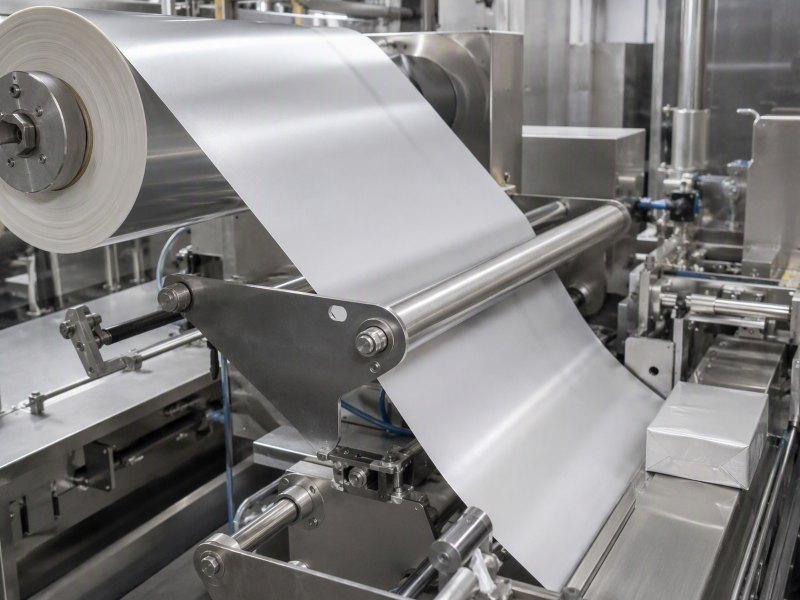
A dairy wrap is a paper fold and a metal barrier in one web. Here is why the laminate is built that way, how fat and salt attack it, and what to state in an enquiry.
A butter block that perspires, a cheese portion that tastes of paper, a fold that springs open on the pallet: each begins in the laminate, not the wrapping line.
Because the wrap is a laminate. A paper or parchment layer carries the print and remembers the fold; a thin aluminium layer does the barrier work. Neither layer alone survives butter, salt, chilling and a machine fold.
The rest of this page follows the structure in the order a packer meets it: the two layers, the product that attacks them, the fold, the two faces of the web, the converting line, the cold chain, and the questions an enquiry has to answer.
Why Is a Dairy Wrap a Laminate and Not a Foil Sheet?
A foil sheet wraps a block. It also creases, cracks along the crease and relaxes towards flat, and it offers no printable surface. A dairy pack asks for both.
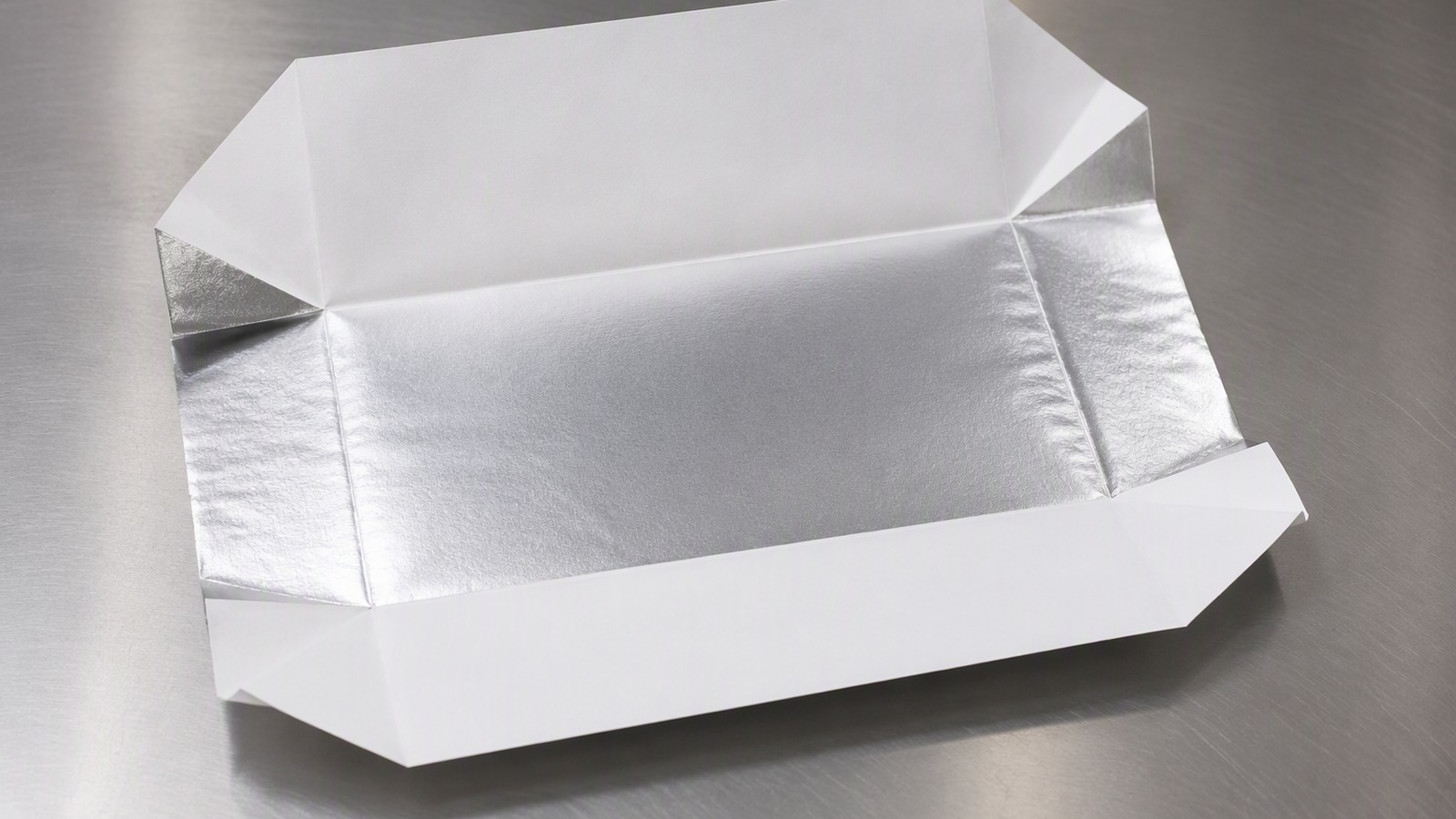
Because the two jobs are separated. The paper or parchment layer carries the print and holds the fold; the aluminium layer closes the path for grease, vapour and light. The adhesive between them keeps both moving as one web.
Dive deeper
A foil sheet of 0.025 mm is a good barrier and a poor package on its own. It has no ink-receptive face, so print becomes a coating that must survive every fold. It creases into work-hardened metal that cracks after enough handling, and it has almost no elastic recovery, which sounds useful until the sheet has to open again. On a block folded by machine and pressed flat in a carton, a bare sheet is asked to be stiff and yielding at once.
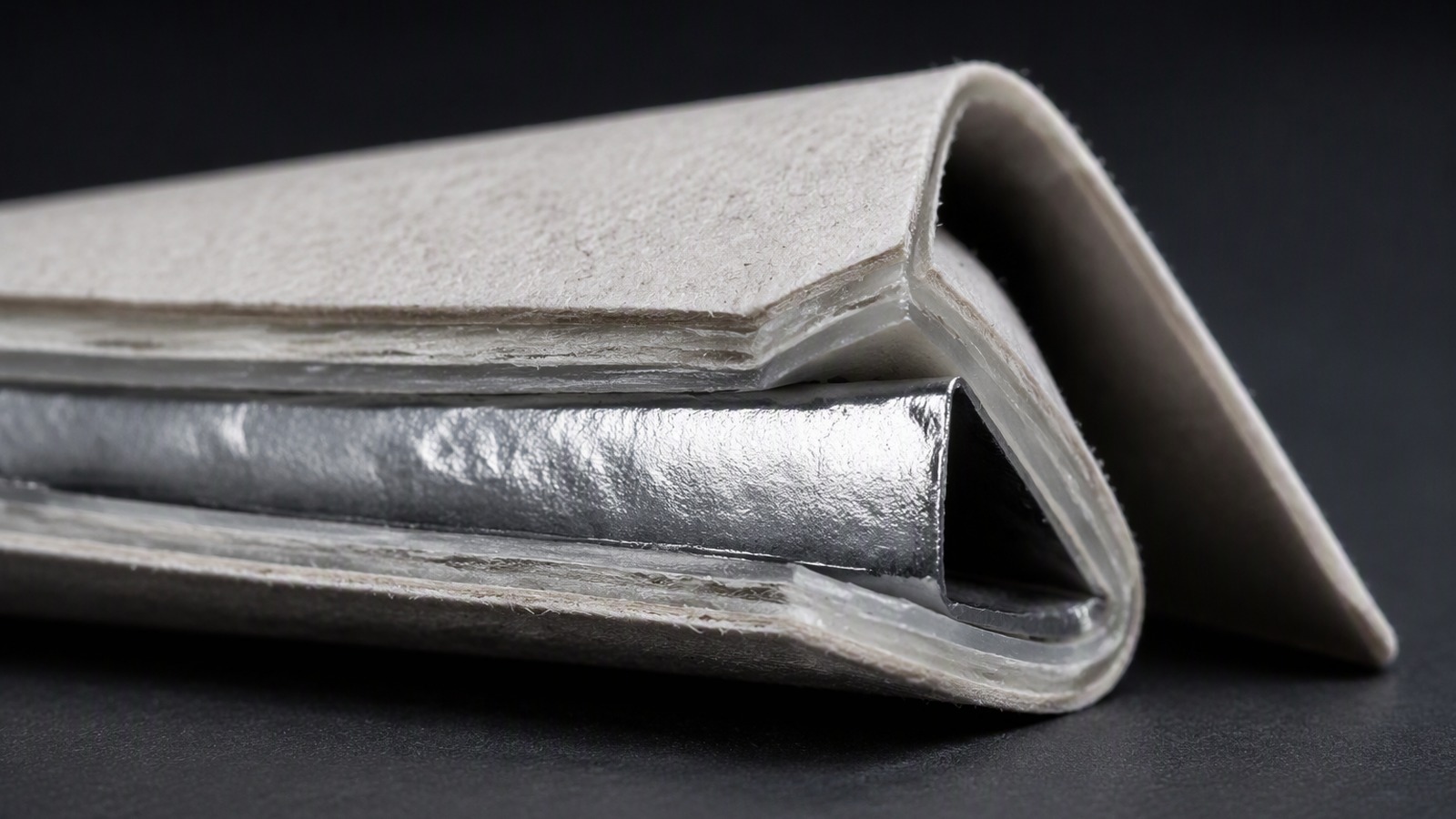
A laminate divides that work. The outer paper or parchment layer is chosen for ink take-up, hand feel and fold behaviour: it creases along a line and stays there, and its fibres give the fold a memory metal does not have. The aluminium layer underneath is chosen for continuity, since a continuous metal film leaves no diffusion path for vapour, aroma or light. The adhesive keeps the two bending together instead of sliding, which separates a wrap that folds cleanly from one that delaminates at the corner. A converter therefore quotes a structure rather than a material: the 8011 aluminium foil in 0.025 mm is the barrier layer in one dairy laminate and the wrong choice in another, because paper, adhesive and fold radius decide as much as the metal does. How aluminium foil is made covers the rolling side; the wrapping side is a laminating question.
Why Is Butter a Fat-and-Salt Problem Rather Than a Moisture Problem?
A butter block is an emulsion: fat outside, water dispersed inside it, salt dissolved in that water. The water is not the component that reaches the wrap first.
Because fat is what touches the paper, and salt is what reaches the metal. Fat wicks into a fibrous layer and marks it; salt travels in the water phase and works on the foil edge at a fold.
Dive deeper
In a butter block the continuous phase is fat, and the continuous phase is what lies against the wrap. Fat is also a solvent for the aromas and colours a brand wants to keep, so the paper does not simply get greasy: it takes up the very components that make the product smell and taste of itself. When the block is folded, the paper is pressed against that fat surface along the fold line, and liquid fat wicks into the fibres. The result is the translucent patch that appears on a stored pack, and the loss of print contrast that follows it.
Salt arrives by a different route. It sits in the dispersed water, and that water finds the cut edge of the foil at a fold, or the bare metal where the web was slit. There it meets the thin oxide that protects the metal, and the oxide is what salt works on over time. A protective coating or a barrier adhesive is usually the answer, chosen against the product rather than in the abstract, which is why industry background on foil surfaces keeps returning to coating selection. Moisture is the easier problem, because the metal closes that path almost completely. Fat and salt decide whether the food face survives, and both are settled against the customer's own formulation.
Why Must the Fold Hold Its Shape on a Block That Is Handled and Chilled?
A wrapped block is not left alone. It is folded, pressed, cased, palletised, chilled, restacked and then lifted by one corner.
Because a fold that springs open leaves a gap where air and light reach the product, and a fold that cracks leaves a path through the metal. Fold memory is a laminate property, not a foil property.
Dive deeper
A fold is a plastic deformation held by the balance of the layers. Paper creases along a line of crushed and drawn fibres and keeps the angle, because the fibres on the outside of the fold have been extended and cannot spring back. Foil creases because metal yields and stays yielded, which is why a twist wrap holds the shape a hand imposes. A fold in a laminate is both of those at once, and the balance between them is what has to be set.
If the paper is light, the fold relaxes and the block sits in a loose wrap. If the foil is stiff for the fold radius, the metal takes the strain at the crease and cracks along it. If the adhesive is soft, the layers slide and the crease wanders away from the printed line. Grain direction, slit width and the geometry of the folding shoulder all move the result, which is why food and household foil is supplied against a wrapping line rather than against a generic requirement.
Handling adds a second load that a flat sample never sees. A cased block is compressed, and a pallet is restacked more than once before it is chilled. A fold that survived the machine still has to survive being leaned on, and that is the load a packer usually discovers in the warehouse rather than at the wrapper.
Why Are the Print Side and the Food Side Two Different Surfaces?
One face meets ink, rollers, plates and a buyer's eye. The other meets butter, salt, water from a warm block, and a fold pressed against itself.
Because the two faces carry different requirements. The paper face must take ink and resist scuffing; the food face must resist fat and salt and must give nothing back to the product.
Dive deeper
The print face is a prepared paper surface. It is calendered, sometimes coated, and specified for how much ink it holds, how sharply a dot sits on it, and how well the dried film resists rubbing against another reel in a carton. Print is applied to the flat web before lamination, which is why registration is good and why the ink film sits under nothing but a varnish.
The food face is metal, or metal under a thin protective coating, and its enemies are chemical rather than mechanical. It has to stay bonded to the paper through a fold, stay inert against fat and salt, and never transfer a component of the ink or the adhesive into the product. That last point is structural rather than moral: an adhesive chosen for bond strength on a paper face may not be the right adhesive against a fat surface, and a print system that performs beautifully on the outside of the web has no business being anywhere near the inside.
The web therefore has an orientation on the machine, and reversing it is a classic and expensive mistake. A twist-wrapped sweet is the opposite case, described in the article on twist-wrapped confectionery, where the printed face is also the handling face and the foil is expected to be seen. A dairy block is folded so that the print ends up outside and the metal ends up against the fat, and the two requirements have to be met by two different surfaces of one web.
Why Can a Wrap That Looks Right on the Reel Still Fail at the Fold or the Seam?
A reel is inspected flat, at low tension, in good light. A wrapped block is judged after folding, chilling and a night in a carton.
Because flat inspection tests the web, not the geometry. Cracks, delamination, print offset and creeping seams appear only where the laminate is bent, heated or pressed against itself.
Dive deeper
Reel inspection catches the faults that live in the flat: camber, slack edges, pinholes, skips in a coating, registration drift, a splice in the wrong place. All of them matter, and none of them predicts the fold. A web can be clean along its whole length and still crack at a corner, because the fold is where three things happen at once: the metal is bent beyond its elastic limit, the paper is crushed on the inside of the bend, and the adhesive is asked to hold two layers that want to move by different amounts.
The seam is the second place where flat inspection stops helping. A lap seam depends on overlap width, heat, pressure and dwell, and on the surfaces being clean. Butter is an efficient contaminant: a trace of fat on the sealing area will hold the two faces apart and produce a seam that looks closed and opens in a chilled carton.
None of this can be settled on a sample sheet. It is settled by running the web on the line that will use it, at the speed and the fold geometry that line imposes, which is the position taken in foil converting notes on line-specific behaviour. A supplier who asks for a trial rather than a specification is usually a supplier who has seen a clean reel fail.
Why Does the Cold Chain Change What the Laminate Has to Do?
Chilling stiffens paper, stiffens adhesive and stiffens butter. A wrap that folded quietly at ambient may crack at the first fold taken cold.
Because the laminate is folded warm and then chilled under load. Adhesives that stay flexible in a warm room can turn brittle, and paper that creases cleanly can start to resist the fold.
Dive deeper
Temperature changes the mechanical balance of the structure rather than the barrier. Paper stiffens as it cools and loses the small amount of moisture that kept it supple, so a fold that formed easily at the wrapper becomes a fold that wants to open. Adhesive layers pass through their own transitions, and a grade chosen for flexibility at room temperature may behave quite differently once the pack has spent a night in a chiller. The layers also contract by different amounts, so the interface carries a shear load it did not carry when the block was wrapped.
The chain adds a second effect that has nothing to do with temperature as such: condensation. A pallet moved from a cold room into a warm dispatch area collects water on every surface, including the printed face. Ink that resisted dry rub may mark under a wet thumb, and a paper face that has taken up water loses stiffness exactly when the stack is being handled. This is why a dairy wrap is trialled through the real chain rather than in a conditioned lab, and why the pack formats discussed in frozen and chilled food pack structures are a different conversation from a folded block wrap, even though both live below ambient.
Why Do Butter, Margarine and Cheese Portions Need Different Wraps?
Three products, three shapes, three fat-and-water balances, three wrapping lines. One structure rarely serves all three without a compromise somewhere.
Because butter is firm and dense, margarine is softer and holds more water, and a cheese portion is cut before it is wrapped. Each loads the fold, the seam and the food face differently.
Dive deeper
A butter block is the easiest of the three on the fold and the hardest on the paper. It is firm enough to press back against the wrap, which helps the fold set, and it presents a continuous fat surface that wicks into fibres along every crease. A margarine block is softer, so the wrap does more of the work of holding the shape, and the food face sees more free water alongside the fat. A cheese portion is a different object again: it is cut, so it offers exposed edges that release moisture and fat into the wrap at exactly the point where the material is folded around a corner.
The geometry matters as much as the recipe. A block with sharp corners concentrates strain at four points, a portion with a rounded profile spreads it, and a thin slice needs a stiffer web to avoid curling at the edges. The wrapping line then decides how much of the fold is made by a shoulder and how much by hand, and those two produce different crease patterns on the same laminate.
This is why a converter asks what the wrap will hold before quoting a structure. The 0.02 mm 8011 aluminium foil that suits one thin portion may be too light for a block that is compressed in a carton, and the same alloy in a heavier gauge may be too stiff for a tight corner fold.
What Must a Dairy or a Converter State in an Enquiry?
An enquiry that names a thickness cannot be answered with a structure, and a structure is the only answer worth having.
Because the wrap is defined by the product, the block geometry, the wrapping line and the cold chain. State those four, with width, core and quantity, and a laminate can be proposed.
Dive deeper
Start with the product and the block: what it is, how firm it is, whether it is cut or moulded, its dimensions and its approximate mass. Say what the food face will actually meet, since a product with free water and salt at the surface asks more of the metal than a drier one. The answer is a structure agreed against that product, not a material chosen from a list.
Then describe the line. Is the block wrapped by hand, by a folding shoulder, or by a machine that also seals? What fold geometry does the shoulder impose, and at what speed? Is the seam a lap, a cold seal or a hot seal, and is the print one colour or six? Print side and food side have to be named explicitly here, because a reversed web is the fault that survives every inspection and appears only at the wrapper.
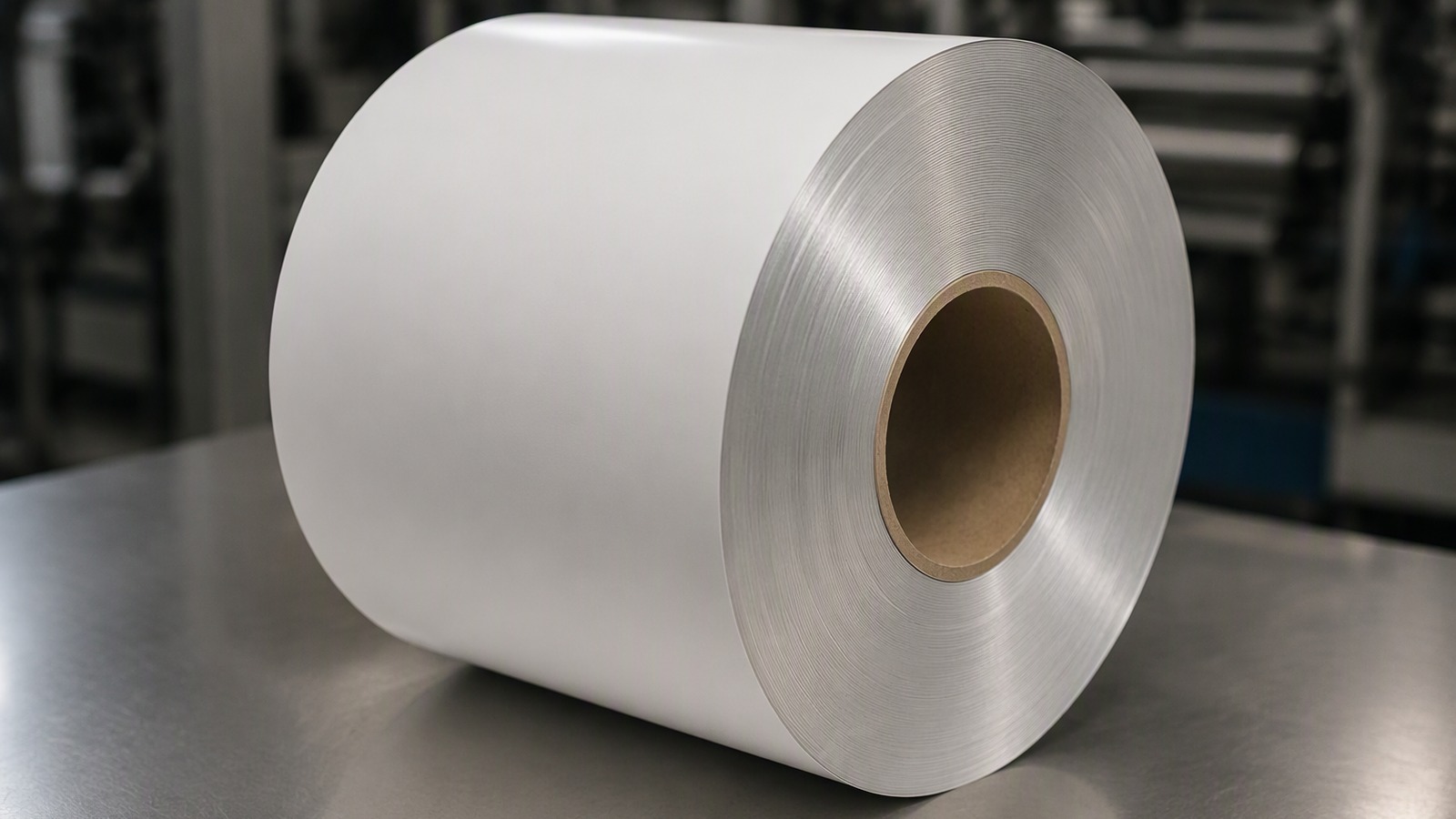
Finish with the commercial block: slit width inside the 100–1500 mm range, core at 76 mm or 152 mm, quantity per size from 3 MT, packing and port, with Qingdao, Tianjin and Shanghai as the usual options. Alloy and temper follow from the fold and the product, and alloy designation background is a reasonable place to check the family before the conversation starts. A supplier given all three blocks can answer with a laminate and its reasoning.
A dairy wrap is a paper fold and a metal barrier held together by an adhesive, agreed against one product on one line.