Aluminium Foil for Chocolate Wrapping: What Should You Specify?
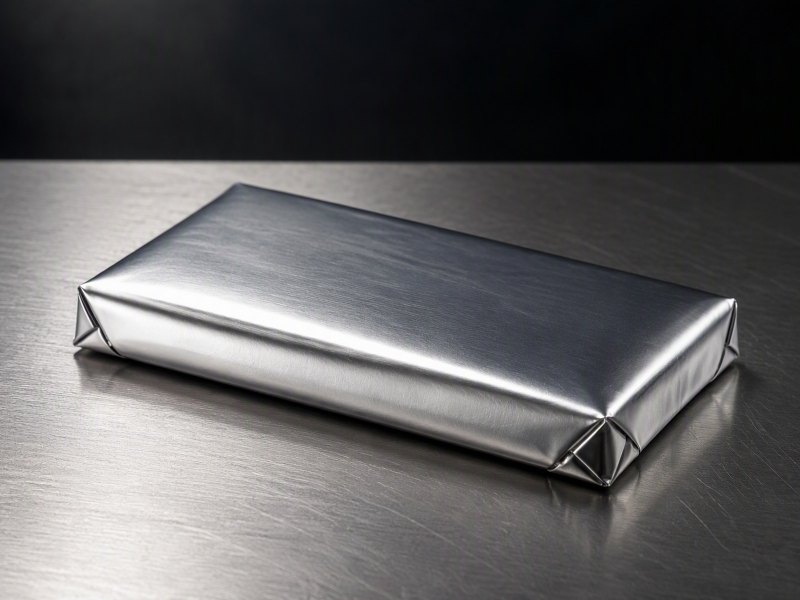
Why chocolate is wrapped in aluminium foil, how plain foil, twist wrap and hidden-foil laminates differ, and what a buyer should state in an enquiry before a wrapping specification is agreed.
Chocolate wrapping specifications go wrong long before the first pallet ships. A gauge that ran cleanly on one wrapping machine can tear, crease or twist badly on another.
Aluminium foil is used for chocolate wrapping because it is a barrier against moisture, odour and light, not because it changes taste. Whether a bar takes plain foil, a foil-laminated twist wrap or a hidden-foil laminate depends mainly on the wrapping machine and the product.
The sections below separate those three formats, explain why the machine sets the specification, and list what a buyer should state in an enquiry.
Why is aluminium foil used to wrap chocolate at all?
Chocolate is sensitive to moisture, to foreign odours and to light. Its packaging has to hold all three back while still opening cleanly in the consumer's hand.
Foil is used as a barrier, not a flavour. Aluminium foil resists moisture, blocks odours and keeps light away from the product, and it does so while forming tightly around small, irregular shapes.
Dive deeper
The case for aluminium foil rests on barrier plus formability. A metal layer is continuous, so it interrupts the paths by which moisture vapour and odour molecules would otherwise travel through a paper or film structure, and it is opaque, which matters for a product that light can affect. The thin gauges used in wrapping also fold closely around a bar, a praline or a truffle. General background is available in this overview of aluminium foil.
It is worth being precise about the claim. Foil is not added to make chocolate taste better; its role is protective. It slows the exchange of moisture, keeps stray odours out and excludes light, and in a twist wrap it also holds the shape the machine has just given it. Where a structure needs a particular balance of protection, that balance is agreed between buyer and converter.
What foil does not decide is the specification. A plain aluminium foil for packaging can suit one product and be awkward for another, because the line, the wrap style and the finish all change what the foil has to do. The useful question is therefore not whether foil is suitable, but which foil, in which structure, on which machine.
What is the difference between plain foil, a twist wrap and a hidden-foil laminate?
Chocolate reaches the shelf in three broad wrapping formats, and buyers sometimes compare them as though they were interchangeable.
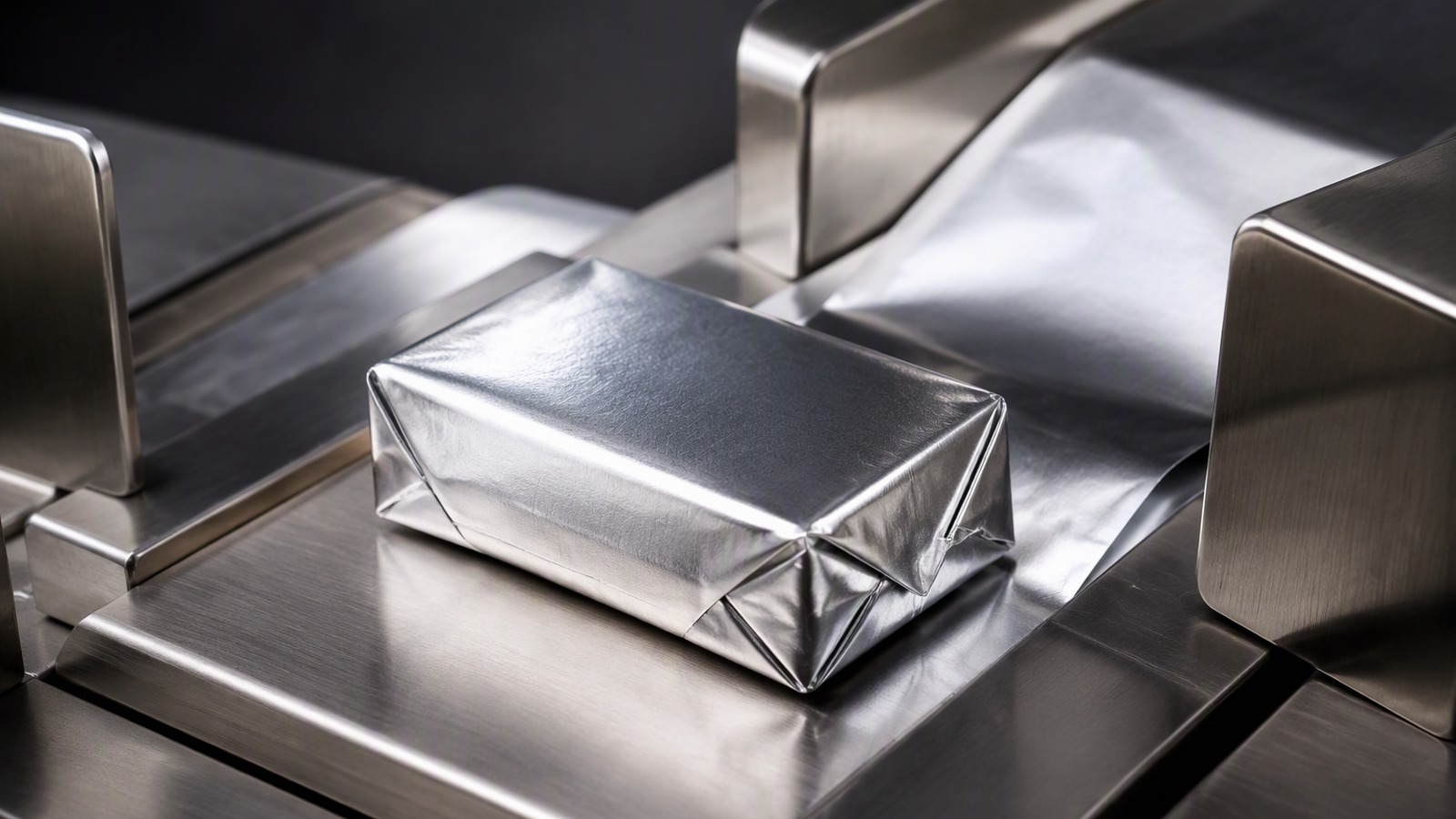
Plain foil is the foil itself around the product. A twist wrap is foil laminated to paper or film and twisted at both ends. In a hidden-foil laminate the metal layer sits inside a sandwich and is never seen.
Dive deeper
Plain foil is the simplest format: the product is wrapped in the metal itself, usually in a single layer, with no paper or film behind it. It is chosen where the wrap is a straightforward enclosure and where a simple fold is enough to close it. Here the foil does all of the work, so its behaviour on the machine matters more than any hidden layer would.
A twist wrap is different in kind. The foil is bonded to a paper or film carrier and the finished strip is twisted at the ends, so the wrap closes by folding rather than by sealing. The carrier gives the structure body and printability, while the foil supplies the barrier and the shine. The packaging and container foil category covers the light gauges these wraps tend to use.
In a hidden-foil laminate the metal is buried between two films, or between a film and a paper, so the consumer never touches or sees bare metal. The barrier still comes from the foil, but the outer surfaces are chosen for print, heat sealing or scuff resistance. For the buyer the practical difference is that the laminate supplier, not the foil supplier alone, controls the visible result.
How do alloy and temper relate to a chocolate wrapping foil?
Not every foil behaves the same way on a wrapping line, and the difference often starts with the alloy and the temper.
Softer tempers such as O and H22 to H24 fold and twist easily, while harder tempers such as H18 give more stiffness. Wrapping alloys commonly include 1050, 1060, 1100, 1235, 3003, 3004, 8011, 8021 and 8079.
Dive deeper
Wrapping foils are usually made from a small group of alloys, and the choice is driven by how much strength the gauge needs. Alloys such as 1050, 1060 and 1100 are relatively soft and ductile, which suits light gauges that have to fold and twist; 1235 is often chosen for similar reasons. Where more stiffness is wanted, 3003 or 3004 may be considered, and 8011, 8021 and 8079 are common in packaging because they combine formability with a clean surface.
Temper describes how hard the foil is after it has been rolled and, where relevant, annealed. Soft tempers such as O fold easily; H22, H24 and H16 sit between the extremes; H18 is harder and stiffer. A harder temper can help a wrap hold its shape, while a softer one may be easier on a delicate product and on a high-speed line. The temper is a working choice, agreed with the customer's wrapping machine, not a fixed property of the metal.
In practice alloy and temper are selected together, because they interact with thickness and width, with the wrap style and with the machine. One option the range covers is 8079 aluminium foil. Industry context is published by the aluminium foil industry association.
Why does the wrapping machine decide the specification?
Buyers often start from the product and work forward. On a wrapping line the logic usually runs the other way.
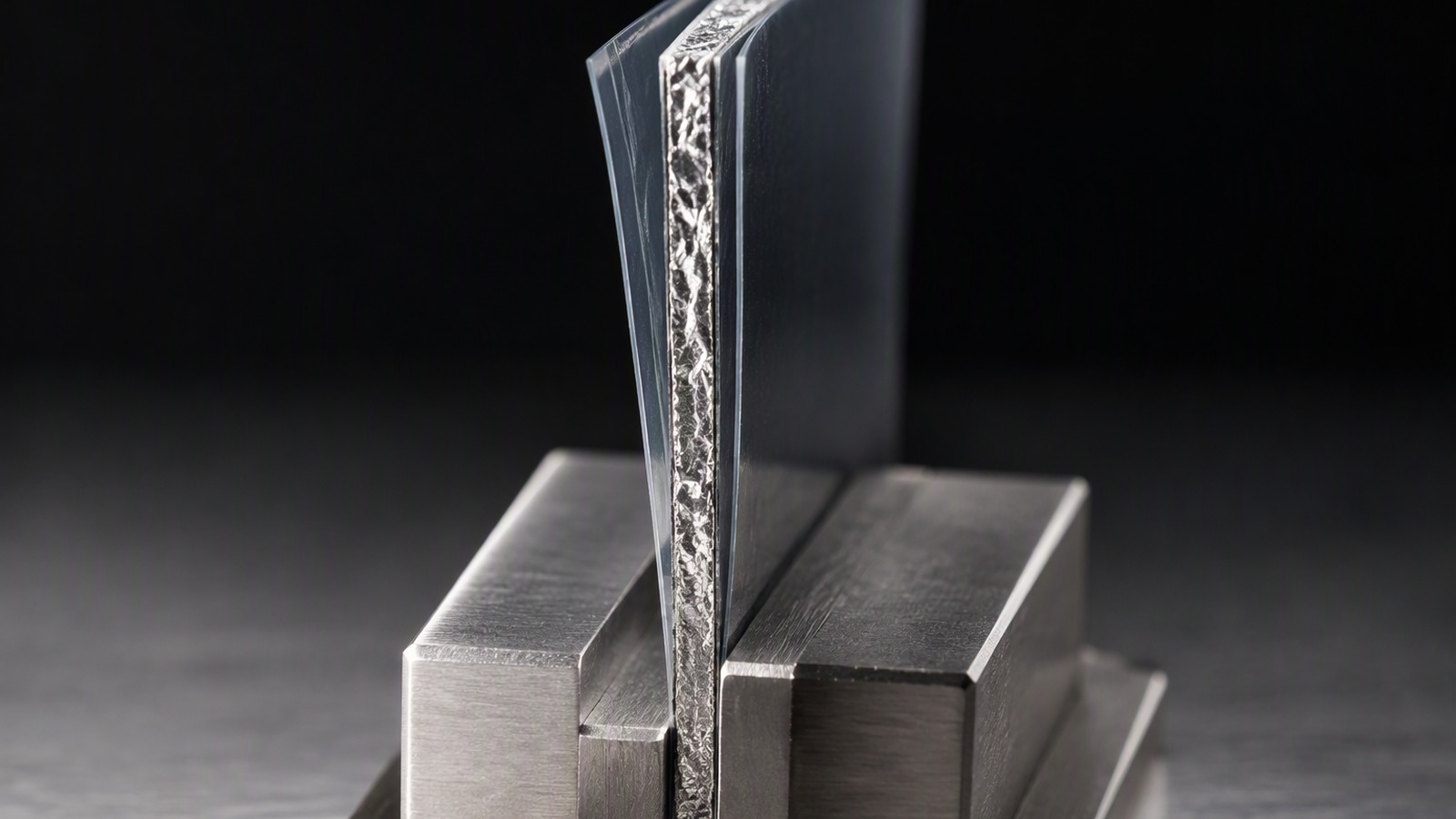
The wrapping machine sets the tension, the fold geometry and the speed at which the foil is handled, so the machine and the product together decide the workable specification.
Dive deeper
The wrapping machine sets the tension at which the foil is pulled, the geometry of the fold or twist and the speed at which the strip is handled. Those three factors decide what the foil has to withstand. A gauge that copes with a gentle fold can tear at a sharper one, and a strip that runs well at one tension can wrinkle or snap at another. The product sets the shape to be wrapped; the machine sets the conditions under which the foil will be asked to do it.
This is why a specification cannot be agreed from a product description alone. Two manufacturers can wrap a similar product on different machines and need different alloys, tempers or gauges. A trial on the actual line therefore carries more weight than any table of properties, and the specification is confirmed by running the foil on the machine rather than by comparing datasheets.
It also explains why converters ask so many questions before quoting. Machine type, wrap format, line speed and product shape all narrow the choice, and a foil that suits one line may be wrong for the next. Wider industry views on the metal itself are available from the U.S. aluminium industry association.
Why does dead-fold behaviour matter on a twist wrap?
A twist wrap only looks neat if the foil stays where the machine has just folded it.
Dead-fold means the foil holds a fold instead of springing back, so a twist stays closed and the wrap survives handling on the line and in the box.
Dive deeper
Dead-fold is the property that lets a foil retain a crease instead of springing back towards its original shape. It is the reason a twist wrap stays twisted: when the machine folds the ends, the foil holds the fold and the wrap keeps its shape after it leaves the line. If the material recovered its shape, the twist would loosen, the ends would unfurl and the finish would look untidy.
Dead-fold is not the same as softness, although the two are related. Soft tempers generally fold more readily, and the alloy contributes as well. What matters for a twist wrap is that the folded foil stays where it was put, through the rest of the line and through packing into a box, without creeping open again. A wrap that holds its shape also helps the machine run consistently, because the strip behaves predictably at each station.
Because the requirement depends on the fold the machine makes, it is agreed with the customer's line rather than stated as a single figure. A wrap that is twisted tightly and one that is merely folded over can be best served by different gauges and tempers. Wider material perspectives are published by the aluminium industry association in Europe.
Why is a lacquer or laminate used where foil must bond to paper or film?
Bare foil does not bond reliably to paper or film by itself, and a layered structure needs more than pressure to stay together.
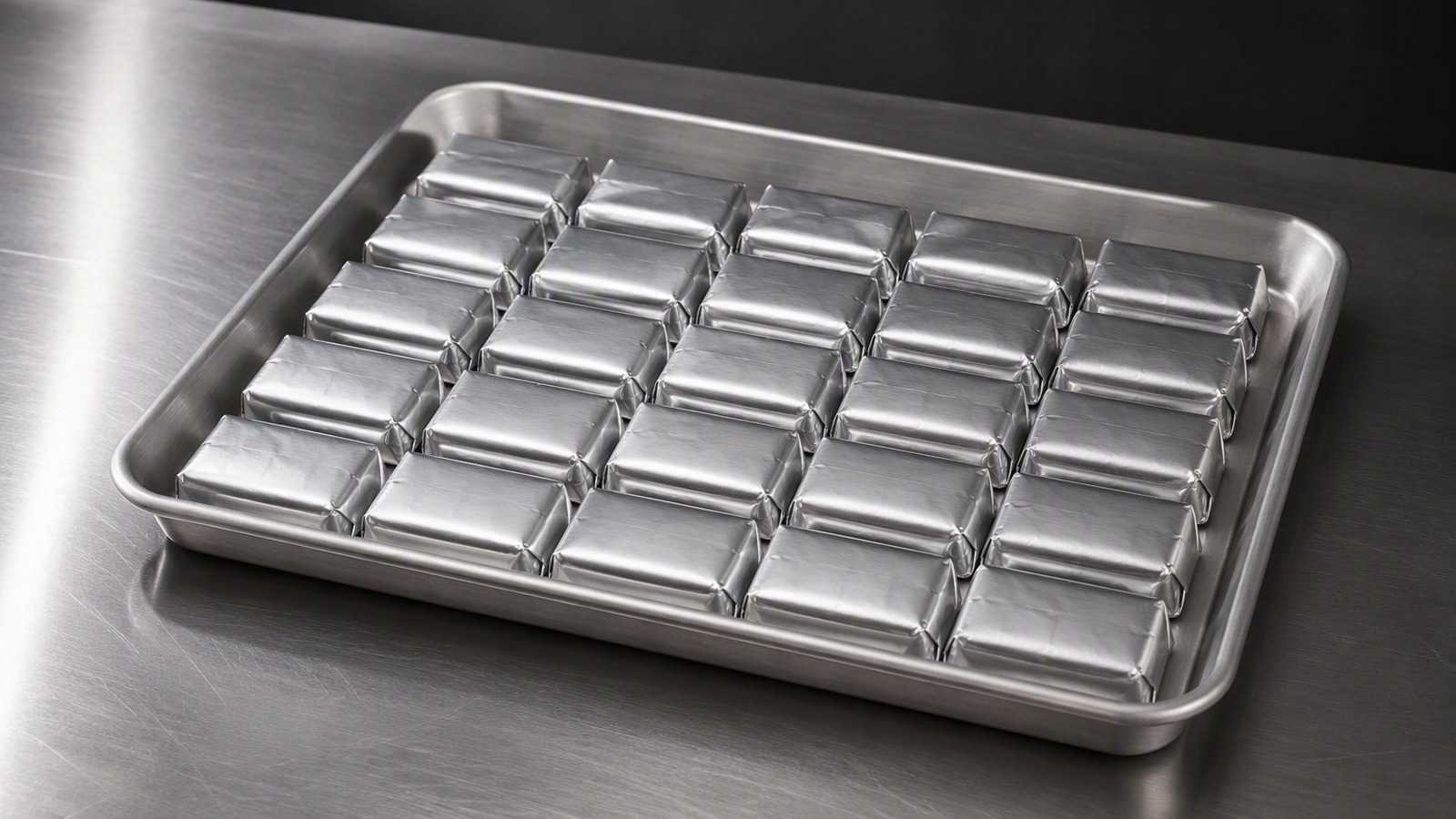
A lacquer or adhesive layer gives the foil a surface it can bond to, so a laminate holds together through folding, twisting and later handling. The coating is chosen for the structure, not simply for the foil.
Dive deeper
Foil on its own is a smooth metal surface. Paper and film do not bond to it reliably without help, so where foil has to be joined to another material, a lacquer or an adhesive layer is applied to give the metal a surface it can attach to. Without that layer the laminate could come apart at the fold, at the twist or later in handling.
The coating is chosen for the job rather than for the foil alone. A lacquer may be specified to promote adhesion, to protect the foil surface, or to provide a base for printing, and the same foil can carry different coatings for different structures. Because the coating sits between the metal and its neighbour, it is part of the specification from the outset, not an afterthought added at the last stage.
For a twist wrap, the bond has to survive repeated folding at the ends, so the coating and the carrier are considered together, and the finished laminate is agreed with the converter who builds it. The coating also has to tolerate whatever the line does to the strip, from unwinding to the final fold. More background is available in this explanation of aluminium foil lacquering.
How is a foil wrapping specification agreed and checked?
Once the wrap format is clear, the specification is narrowed by agreement rather than by assumption.
Buyer, converter and machine operator agree the specification together, then confirm it on the actual line and product before the order is placed.
Dive deeper
Agreeing a specification is a conversation between the buyer, the converter and the people who run the wrapping machine. The buyer describes the product and the wrap style; the converter translates that into a structure; the machine operator confirms that the foil will run. None of the three can set the specification alone, because each holds part of the information the others need to make it work.
The check that matters most is a trial on the real line with the real product. It shows whether the foil unwinds cleanly, folds or twists without tearing, and holds the shape the machine gives it. Where the wrap is printed or laminated, the trial also confirms that the combined structure behaves as expected, since the carrier and the coating change how the strip runs. A trial on a different machine, however similar, only gives an indication.
Only after that trial is the specification fixed, in writing, so that later orders can be repeated in the same way. The same approach is used for other formats and other structures, such as packaging that must run on a form-fill machine rather than a twist wrapper; the note on flexible pouch and sachet structures describes that side of the family.
What must a buyer state in an enquiry?
A short, complete enquiry saves a round of questions and a wasted trial on the line.
State the wrap format, the product, the machine, alloy and temper if known, thickness range, width, core, quantity and destination port, and whether the foil is plain or laminated.
Dive deeper
An enquiry should state the wrap format, the product and the wrapping machine, because those three decide most of the answer. If the alloy and temper are already known they should be listed; if not, the buyer can describe what the wrap has to do and let the converter propose them. Thickness is most useful as a range the buyer is willing to consider rather than as a single figure; the range available commonly spans 0.005 to 0.20 mm.
The commercial and logistical details matter too. Core diameter is usually quoted as 76 mm or 152 mm, and a minimum order quantity of 3 MT per size is a common starting point. Destination port is part of the enquiry as well; options include Qingdao, Tianjin and Shanghai.
Finally, the buyer should say whether the foil is wanted plain or as part of a laminate, and who is responsible for the coating and the carrier. If the foil is to be laminated elsewhere, that supplier should be named in the conversation so that the coating and the foil are matched.
Foil wraps chocolate because it blocks moisture, odour and light. The format, alloy and finish follow the wrapping machine and the product, so agree the specification together before ordering.