Aluminium foil for coffee packaging: why is coffee so demanding?
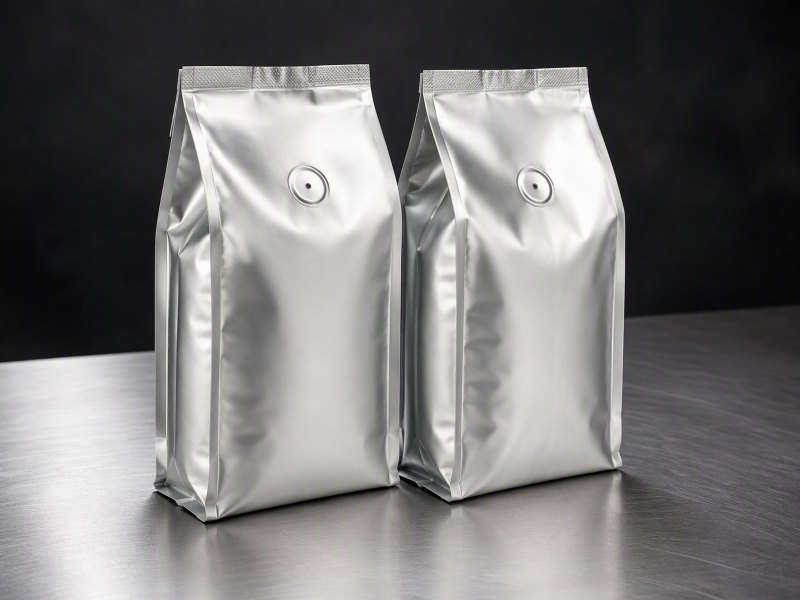
Roasted coffee releases gas, loses aroma and takes on moisture. That is why the foil layer, the degassing valve and the laminate structure have to be specified together.
Aluminium foil for coffee packaging: why is coffee so demanding?
Coffee leaves the roaster already changing: it releases gas, gives up aroma and takes on moisture. A pouch that ignores that chemistry fails quietly, weeks after it looked perfect.
Aluminium foil is the barrier layer inside a laminate, not a pouch on its own. It blocks light and slows vapour and gas movement, a valve lets roast gas out without letting air in, and the print film and sealant decide strength and seals.
The eight questions below follow one pouch from roast batch to packing line.
Why is coffee a harder packaging problem than most dry foods?
A dry food is mostly finished when it is packed. Roasted coffee keeps working inside the bag.
Roasted beans release carbon dioxide for days, lose volatile aroma continuously and pick up moisture and oxygen whenever the pack allows it. Three processes run at once, and each one pulls the laminate in a different direction.
Dive deeper
Start with the gas. During roasting, carbon dioxide forms inside the bean structure and is held under pressure. After the roast it migrates out slowly, at a rate set by roast level and storage temperature. A pack sealed straight after filling therefore holds a gas source, not a finished product. If that gas cannot leave by a controlled route, it stretches the laminate, loads the seals and distorts the pack on the shelf.
Aroma is the second problem, and it moves the other way. The compounds that make coffee smell like coffee are volatile, and they leave through any path open to them: the sealant, the valve, the film, or the headspace once the pack is opened. A barrier can slow that leak and never stop it, so the useful question is how long a pack holds the character of the roast.
The third problem is what comes in. Coffee is hygroscopic and its lipids oxidise. Moisture softens the bean structure, dulls the aromatics and encourages staling; oxygen attacks the oils and produces the flat, papery notes a drinker calls old. Light accelerates both. A foil laminate addresses all three because it is opaque, dense and continuous. Background on aluminium foil is a fair starting point.
What does the aluminium foil layer do inside a laminate?
Foil is rarely the whole pack. It does the work the others cannot.
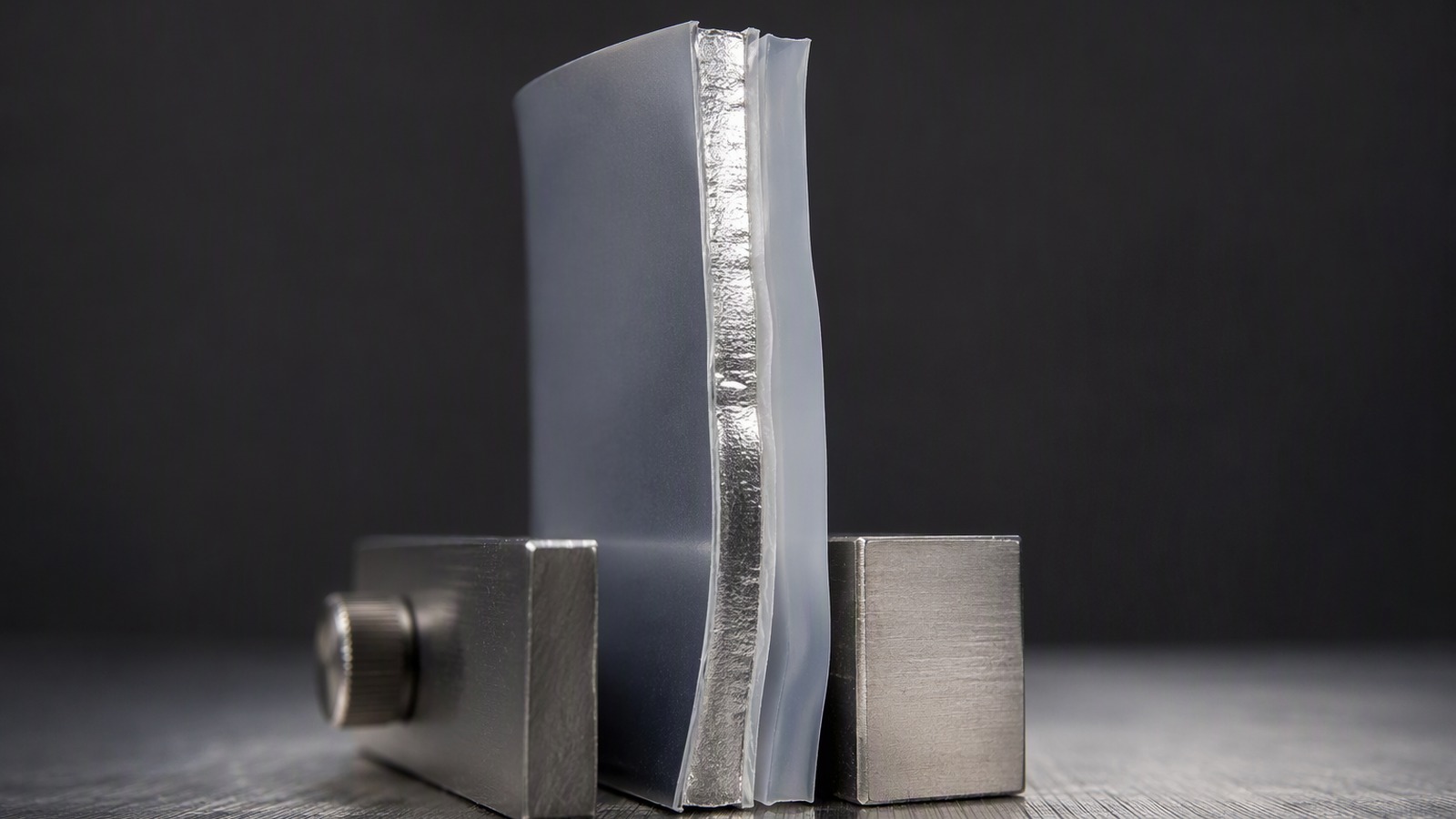
Bonded between films, the foil is a thin metal sheet that blocks light, resists grease and slows the movement of vapour and gas. The outer film carries print and mechanical strength, the inner sealant closes the pack, and the adhesives hold the three together.
Dive deeper
The value of foil is continuity. A metal sheet with no breaks is impervious to light and to grease, and it resists diffusion far better than a polymer of the same thickness, because nothing travels through a crystal lattice the way it travels through the amorphous regions of a film. That advantage disappears wherever the sheet is interrupted, so handling, winding and lamination matter as much as the metal.
Foil also behaves mechanically in a way polymers do not. It dead-folds: once creased it holds the shape, which is how a pouch keeps a squared base and how a bag stays closed on the shelf. That is why a crease in the wrong place is a defect rather than a cosmetic one: a hard fold in a thin sheet is where a break begins.
Thickness is chosen against the job. Coffee work commonly sits at the thin end of the range, where a foil of 0.006 mm to 0.012 mm can still be laminated without pinholes if rolling and handling are right. The alloy follows the requirement: 8079 and 8021 are common where thin gauge and strength must coexist. Associations such as European Aluminium describe the wider context, and the specification is always agreed against the customer's own structure.
Why does a foil pouch need a degassing valve, and what must it do?
A sealed pack of fresh roast keeps producing gas. Without a route out, the gas finds one of its own.
The valve lets carbon dioxide escape so the pouch does not inflate, split seams or balloon, while resisting air and moisture returning. It must open at low internal pressure, close cleanly and survive filling, transport and compression.
Dive deeper
The valve is a one-way element, usually a membrane or a silicone seat inside a small plastic housing, applied to the laminate before the pouch is formed or filled. Its opening behaviour is set by the pressure the roast actually generates, and its closing behaviour is what protects the coffee afterwards. A valve that opens easily but seals slowly leaves a path for room air.
Placement is part of the design. The valve belongs in the headspace, clear of the fill line and away from the seal area, so that coffee dust and oil mist do not reach the membrane during filling and settling. On a standing pouch it must sit where the pack will not be crushed in the case. These decisions belong in the pack drawing, not in a late conversation with the filler.
A valve does not replace barrier and it does not define shelf life. It manages pressure; the laminate manages everything else. Whether a pack needs one at all depends on the roast, the fill weight, the time between filling and dispatch and the way the pack is handled, and the answer is agreed against the customer's own structure. What a buyer should insist on is that valve, laminate and fill process are qualified together.
How is the laminate structure chosen from print film, foil and sealant?
The structure is a set of trade-offs, not a recipe copied from an earlier project.
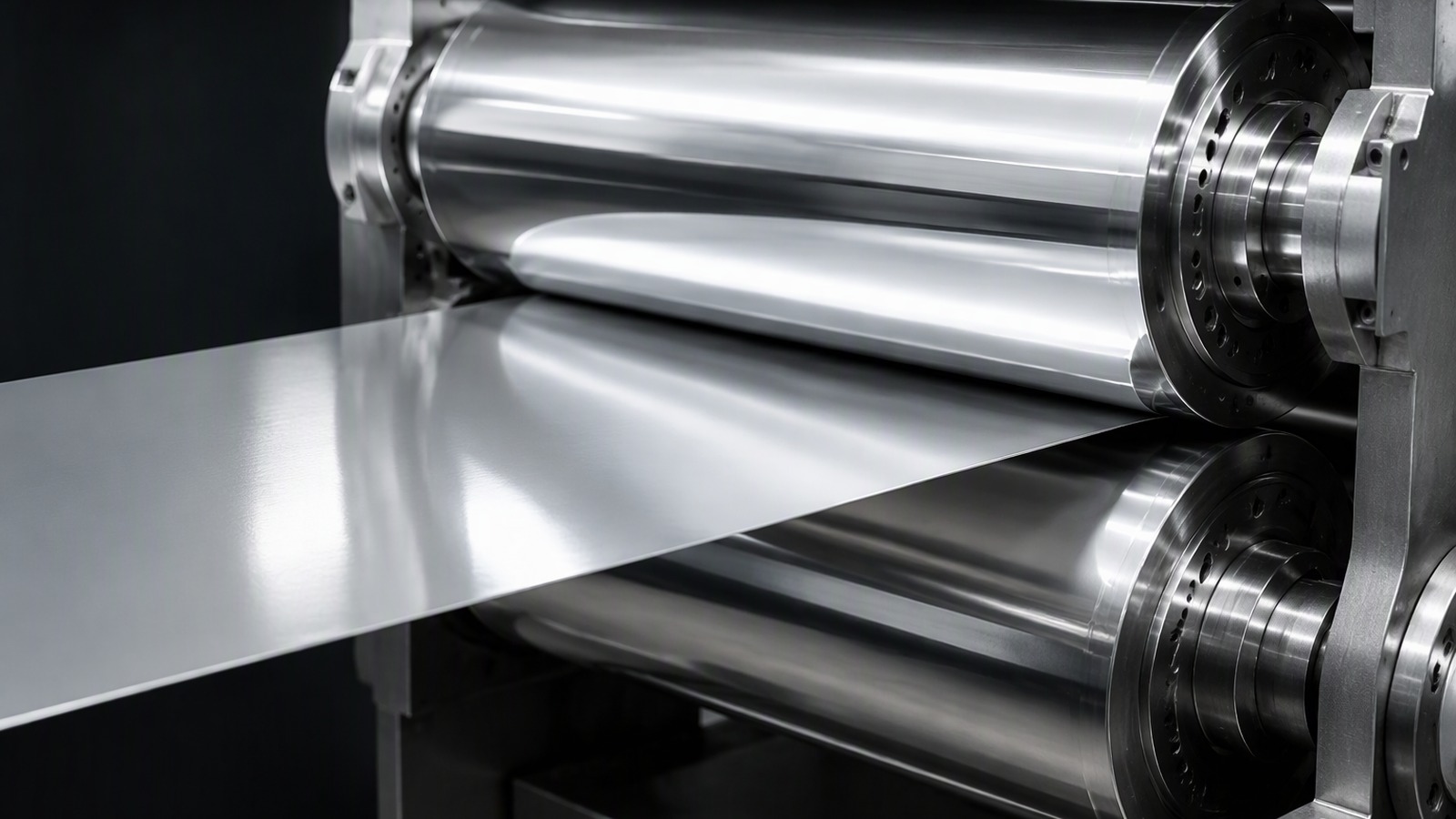
Print film gives the shelf face and mechanical protection, foil gives the barrier, and the sealant gives a leak-free seam that opens and recloses as the brand intends. Adhesive layers hold them together and decide how the pack runs on the filling machine.
Dive deeper
Start from the pack, not the material. A flat pouch, a side-gusseted block bottom and a standing pouch load the same laminate in different ways, so stiffness and dead-fold are chosen together with the filling method. A structure that stands well but seals poorly is worse than one that looks softer and closes on every cycle.
The print film is usually a polyester or an oriented polypropylene, chosen for gloss, scuff resistance and the way it takes ink. It also protects the foil from the outside, so its thickness is a durability decision. The sealant is a polyethylene or a cast polypropylene, chosen for seal strength, seal-through-dust behaviour and the easy-open or reclose feature the brand wants. Coffee dust in the seal area is normal, and a sealant that tolerates it is worth more than one with higher nominal strength.
The foil sits in the middle, and its position is fixed by function. Adhesives are selected with the lamination line and the fill goods in mind, since a two-component, a solvent-based and a solvent-free system each demand a different foil surface. Structures for pouches and sachets are discussed in aluminium foil for flexible pouch structures, and the final build-up is confirmed on the customer's filling line.
What does the converter need from the foil?
A converter buys foil to run on a specific machine, at a specific speed, with a specific adhesive.
Consistent gauge across and along the roll, clean surfaces, controlled wettability, flat winding, sound splices and edges, and a roll that arrives dry and undamaged. The foil must behave the same on the first metre and the last.
Dive deeper
The first requirement is that the roll unwinds without surprises. Gauge that wanders across the web changes the tension profile, and a web that was flat at the start can be slack at the edge by the end of the roll. On a laminator that means wrinkles, curl and uneven adhesive pick-up; on a printer, register drift. Neither shows up in a test report.
Surface condition comes next. The foil must be free of oil streaks, stains, roll marks and slivers, and its wettability has to suit the adhesive system in use. A surface that wets unevenly produces bonds that look sound and fail later, and a sliver becomes a pinhole once the sheet is laminated. Edge and splice quality belong together: a splice must let the line pass without stopping.
Logistics then decide whether any of this survives the journey. Rolls are ordered by width within 100 mm to 1500 mm, on cores of 76 mm or 152 mm, in quantities of at least 3 MT per size so the mill can plan a run. Sea freight from Qingdao, Tianjin or Shanghai is normal, and suspension packing and moisture protection keep a sound roll sound. The packaging and container foil range is the usual starting point.
Why do gauge consistency and pinholes matter more than the alloy?
Buyers often start with the alloy number. The packing line usually suffers from something else.
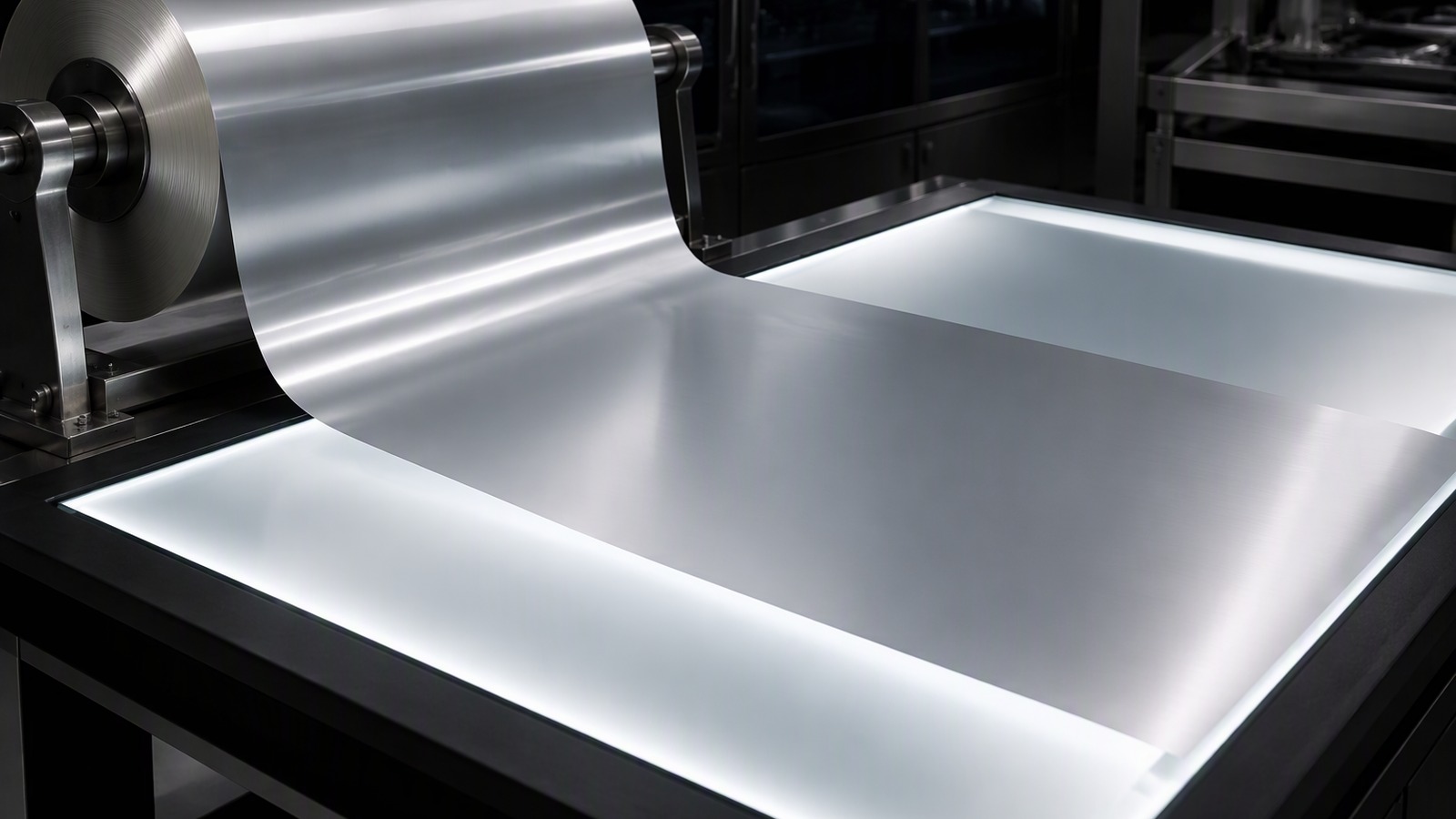
Alloys 1050, 1060, 1100, 1235, 3003, 3004, 8011, 8021 and 8079 all appear in packaging work. What decides performance in a coffee laminate is whether the gauge holds across the web and whether the metal is continuous, with no pinholes or thin lanes.
Dive deeper
A pinhole is a path. Once laminated, a single break in the metal gives vapour and gas a route through the barrier, and the pack behaves as if the foil were absent there. The cause is rarely dramatic: a rolled-in inclusion, a sliver from the edge, a hard crease or a thin lane from the mill. A converter therefore inspects against light rather than trusting a headline thickness.
Gauge variation works more quietly. A foil that is slightly thin in a lane is weaker there, bonds weakly there and creates a small step in the laminate that later becomes a crease. Across a print run it changes web tension and register; on the filling line it changes how the pack folds. None of these effects needs a large deviation, and none is fixed by a stronger alloy.
The alloy still has a job. It sets strength, elongation and corrosion behaviour, and decides what the mill can roll to at a given width. Tempers O, H14, H16, H18, H22 and H24 describe how hard the sheet is delivered, and the choice follows the forming it will see. What the buyer really buys is consistency: industry information on aluminium gives the wider picture, and 8079 at 0.012 mm is only useful if it is 0.012 mm everywhere.
What must a buyer state in a coffee packaging foil enquiry?
An enquiry that names only aluminium foil invites a quotation for the wrong roll.
State alloy and temper, thickness in mm with tolerance, width and core, roll mass, whether the foil is for lamination or lacquering, the intended laminate and sealant, the packing method, the destination port and the quantity per size. Say what the foil will run on.
Dive deeper
Begin with the material line. Alloy and temper, thickness in mm, width in mm and core diameter are the four values that set the price, and a range such as 0.005 mm to 0.20 mm is far too wide to quote against. If the application is a coffee pouch, say so: it tells the supplier which surface finish and pinhole requirement to aim at, even though acceptance is agreed against your own structure.
Then describe the process the foil enters. Lamination, lacquering, printing and rewinding each ask for a different surface. If a lacquer is required, say which side and why, and read what foil lacquering does before the enquiry goes out. Mention the laminate, the sealant and the filling machine, because these decide whether 0.006 mm or 0.012 mm is the sensible start.
Finish with the commercial frame. Quantity per size against a 3 MT minimum per size, roll mass, core type, packing for sea freight, destination port among Qingdao, Tianjin and Shanghai, and the documents you need. Ask for gauge tolerance and pinhole acceptance in writing, and ask how the mill records them. An enquiry that carries all this gets a quotation that can be compared. The aluminium foil for coffee packaging page is a reasonable place to check the starting parameters.
How do you qualify a new foil lot before it reaches the packing line?
The cheapest place to find a problem is the receiving bay, not the filling line.
Check the test report and the roll identity, then look at surface, edges, winding and splices, and laminate a sample on the production adhesive before release. Record what you saw and keep the sample with the lot.
Dive deeper
Identity first. The roll label, test report and purchase order should agree on alloy, temper, gauge, width, core and mass, and the roll should arrive dry and undamaged. A roll that took water in transit shows staining or a damp wrap and should be set aside. Photograph the roll as received.
Unwind a few metres and inspect against a light source for pinholes and thin lanes, check the edges for slivers and the winding for telescoping, and confirm that any splice is marked. Measure the gauge at several points across the width and along the length, and compare the pattern with what the supplier declared.
Release should be a trial, not a paperwork decision. Laminate a sample on the production adhesive, print a short run, form and seal a few pouches, apply the valve and fill them with the real product. Then keep samples and records together, so a complaint months later can be traced to a lot. A lot that fails on the machine costs far more than one that fails in the bay, because the run is already committed. Measurement references help when a gauge dispute needs a common language, and the specification remains the one agreed against the customer's own structure.
Coffee keeps changing inside the pack. Foil, valve and seal only have to make that change slow and invisible to the drinker.