How does aluminium foil seal a container under an induction field?
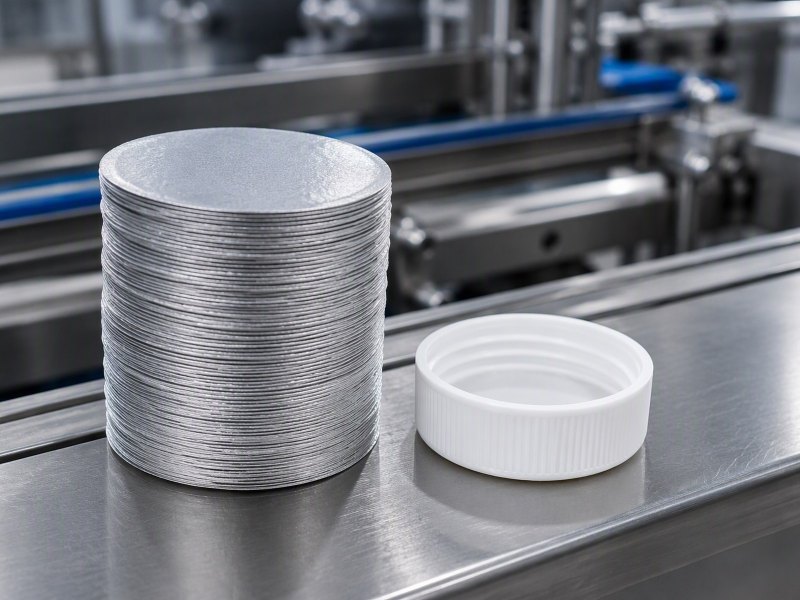
The disc inside a screw cap is a heater and a coated joint, not a sticker. This guide follows it from the field to the peel, and ends with what a buyer should state.
How does aluminium foil seal a container under an induction field?
A cap is screwed on, the container crosses a field, and the foil is welded to the rim. Nothing was glued, yet the seal holds, or it fails.
The foil is the heater, not the adhesive. The field drives current in the aluminium, the disc warms, and a polymer coating on the container side softens and bonds to the rim.
The eight questions below follow the disc from field to peel, and end with what a buyer should state.
Why does the foil get hot when the container crosses an induction field?
Nothing touches the disc, yet it warms. The field, not the machine, hands over the energy.
A changing field drives loops of current through the aluminium, and the metal resists them. That resistance becomes warmth inside the disc, so the foil turns the field into a bond.
Dive deeper
A field is not heat. It is a changing magnetic condition, and only a conductor placed in it turns that condition into current. Aluminium conducts readily, so the field drives loops of current through the disc, and the resistance of the metal turns those loops into warmth. The disc is the only part of the pack that answers: a board-backed cap stays cool. A disc square on the rim warms as a ring; a disc pushed aside warms one arc first.
A metallised film cannot do this job. A decorative layer carries almost no current, and the small warmth it accepts cannot soften a coating against a rim; the metal has to be metal through its thickness, unbroken. The reference entry on aluminium foil covers how the material is rolled and where it is used.
None of this decides the bond. The field supplies energy and the disc receives it; what the disc does with that energy belongs to the coating, the pressure of the cap and the fit between disc and rim. Seen as a heater with a fixed shape, the foil stops being mysterious, and the rest is chemistry and geometry. That is why one foil can seal a pack and fail on the next.
Why does the seal come from the coating rather than from the aluminium?
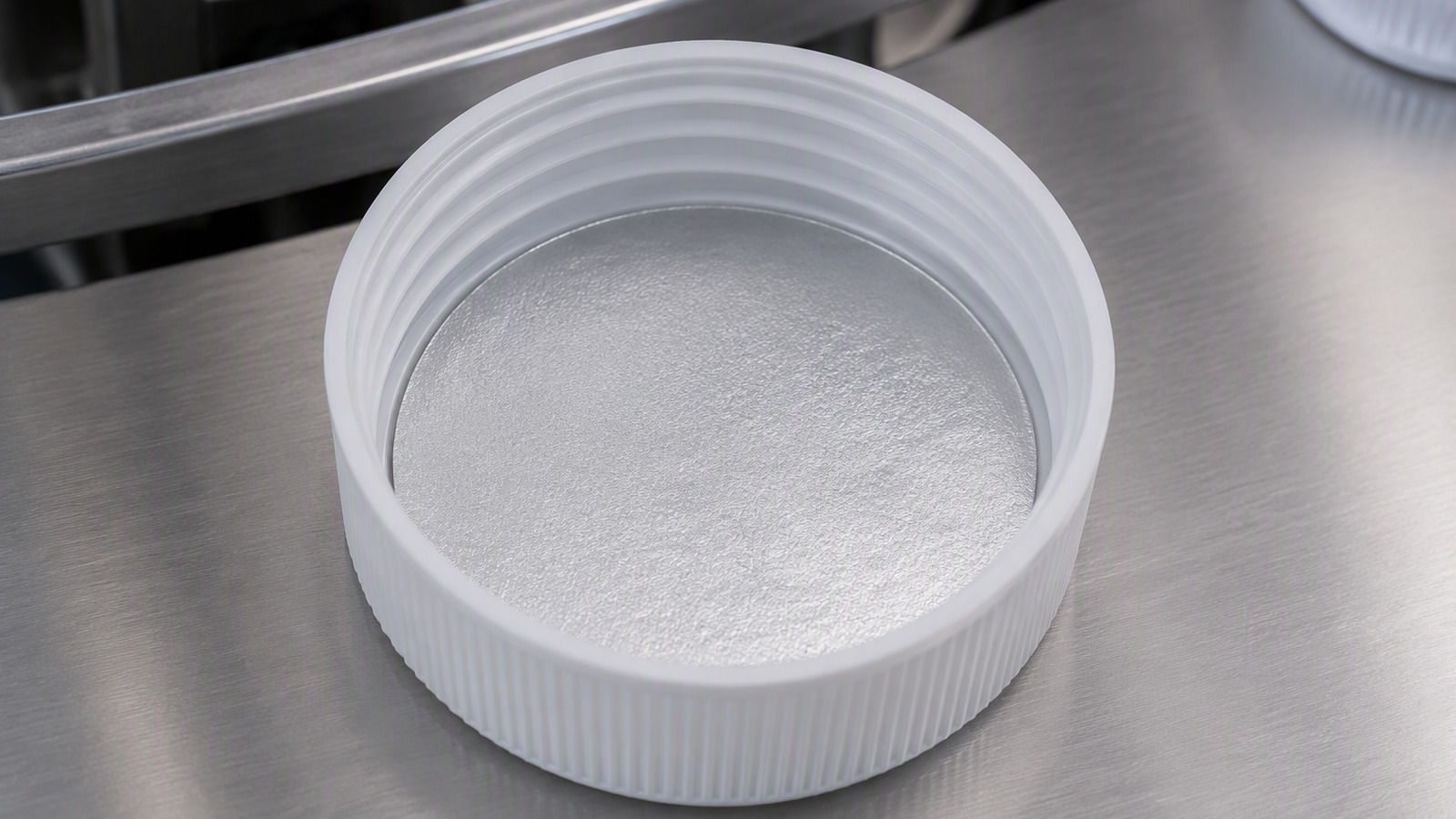
Aluminium does not weld itself to glass or to polymer. What the consumer peels apart is a joint the coating made.
The foil only reaches the condition for bonding. On the container side a polymer layer softens, wets the rim and sets against it, so the seal is a coating-to-rim joint carried by the foil.
Dive deeper
Bare aluminium pressed against a rim is a contact, not a seal. It may look closed and still pass a slow leak, because nothing has flowed into the small irregularities of the rim. The bond appears only when the coating on the container side passes through its softening window, wets the rim, and then sets while the cap still holds the disc down. The foil's whole contribution is warmth, delivered evenly, in the right place. Everything that makes the joint hold belongs to the polymer.
That is why two discs cut from the same roll behave differently on one filling line when their coatings differ. A coating that softens readily wets a rim well but may peel too easily later; a coating that resists softening needs more energy at the disc and then gives a tougher joint. The choice is never the foil alone, since the foil is identical.
It also explains why the bonded area must follow the rim rather than the disc. Where coating meets rim, a joint forms; where coating meets air above a low rim or overhangs a wide one, the same coating simply sets as a skin. Bodies such as the aluminium association describe the material side of this chain, while the joint is decided at the interface.
Why must the foil be matched in thickness to the cap and the field?
Thin foil costs less per square metre and cuts easily. It is still the wrong answer when the cap and the field ask for something else.
Gauge sets how much metal the field can warm and how stiff the disc stays in the cap. Too thin and the disc buckles; too thick and the cap cannot press it onto the rim.
Dive deeper
The disc has two jobs that pull against each other. It must absorb enough energy to bring the coating to its softening window across the whole rim, and stay flat enough to be pressed against that rim while the joint forms. A very thin gauge warms quickly, but it buckles under the cap, curls at the edge and loses contact in patches. A heavy gauge holds its shape and asks more of the field. Neither extreme is safe on a real rim.
The answer is a working range. Foil for these discs is usually supplied between 0.005 mm and 0.20 mm, in tempers from soft O through the work-hardened H14, H16, H18, H22 and H24 conditions, and the grade follows the closure: a small cap with a shallow skirt tolerates a lighter disc, while a wide lug cap with a deep recess wants more body so the disc does not dish.
Alloys such as 8011, 1235, 1050, 1100, 3003, 3004, 8021 and 8079 bring different balances of strength and formability, which is why 8011 foil at 0.04 mm suits a firm disc. The closure and the field are weighed together, never one alone, and the context of rolling is set out by the European aluminium industry association.
Which coating face decides the bond, and which decides where the liner stays?
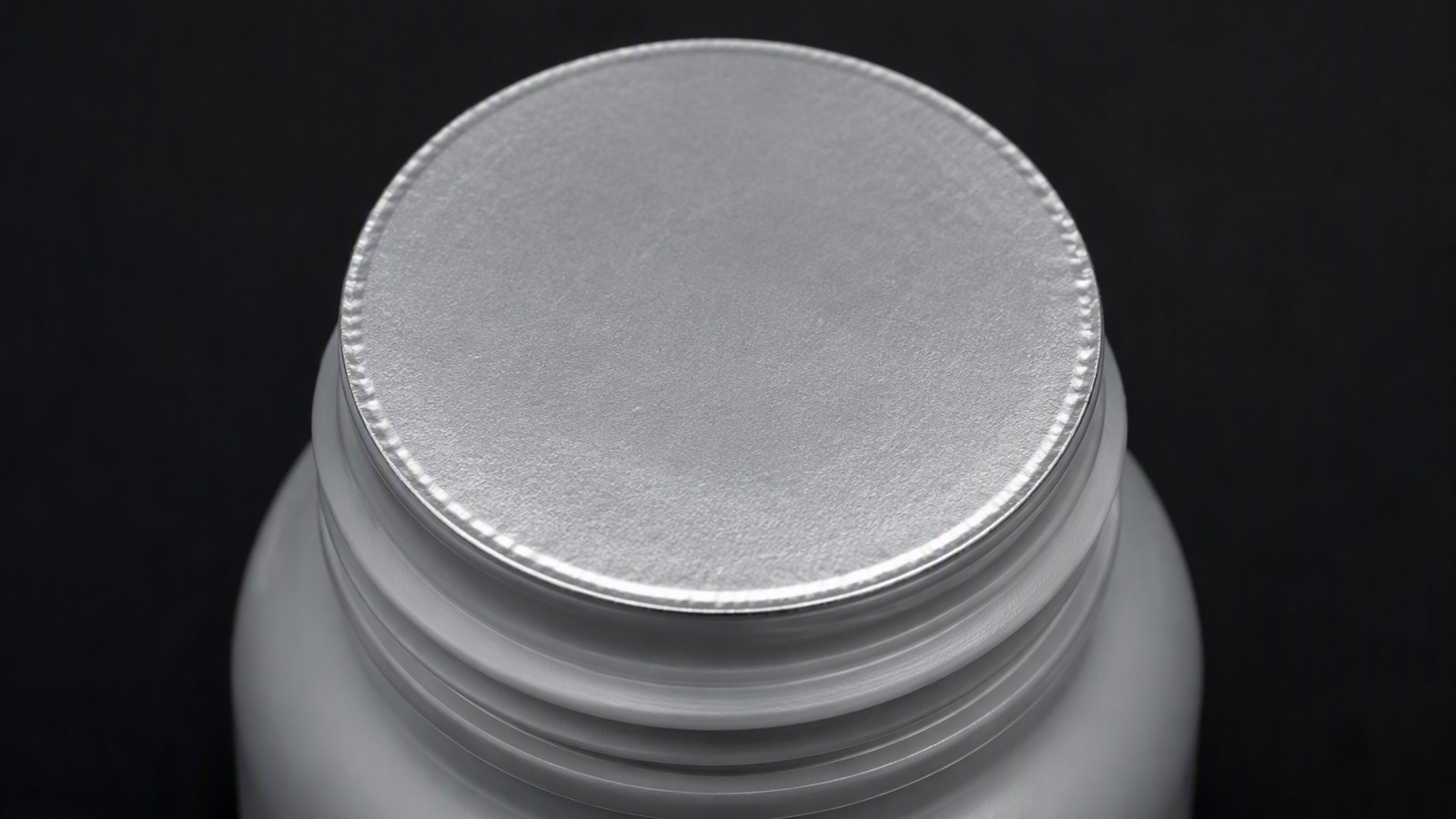
A lined disc carries two faces, and they are asked to do opposite things. One must stick, the other must let go.
The container-side coating decides the bond and the peel. The cap-side layer decides whether the disc stays in the cap or leaves with the seal.
Dive deeper
On the container side the joint must survive transport and then open cleanly in the hand. That is a narrow balance: a coating that wets the rim too readily can bond so thoroughly that the foil tears before the joint releases, while a coating that is too reluctant leaves a channel at the rim. The layer must also tolerate the pack contents, since oil softens a coating differently from water.
On the cap side the requirement is the opposite. If the disc is meant to remain in the cap after opening, the cap-side layer must hold to the cap more strongly than the container-side layer holds to the rim, so the joint breaks at the rim and the disc lifts away. If the disc is meant to stay on the container as a visible seal, the cap side must release and the joint at the rim must survive the twist. The opening experience is designed at these two interfaces, not in the metal.
Coating choice is closely related to what lacquering does to a foil surface, though a sealable layer and a protective finish are asked for different reasons. A converter who specifies both faces separately removes most of the confusion when a batch runs the other way round.
Why do board-backed and foil-only discs part differently when the cap comes off?
Two liners can seal alike and open unlike. The difference is what stays attached to the disc once the cap is turned.
A board-backed disc keeps its shape and tends to travel with the cap. A foil-only disc stays on the rim as a seal the consumer peels away.
Dive deeper
A board-backed disc is a sandwich: a stiff fibre layer for body, a foil layer to receive the field, and a sealable layer facing the container. Because the board holds the assembly flat, the disc is easy to place and forgiving of a slightly uneven rim, and cap pressure spreads through the board. When the cap is unscrewed, the board usually stays in the cap, and the foil layer either separates from it or travels with it.
A foil-only disc has no such support. Its stiffness comes from the metal, and it relies on the cap's recess to stay in place before filling. Once bonded, it becomes part of the container: the consumer sees a sealed membrane across the opening and peels it back from a tab or from the edge. That suits packs where the seal is visible evidence of closure, which is why a foil-only disc is specified with more attention to flatness than to handling stiffness.
The same distinction appears where metal is the outer element, as in foil for bottle capsules and closures, but the function there is protection on the neck rather than a bond inside the cap. A foil chosen for a capsule's dead fold is not automatically a foil chosen for a disc.
Why do flatness and the cut edge decide whether the seal is even?
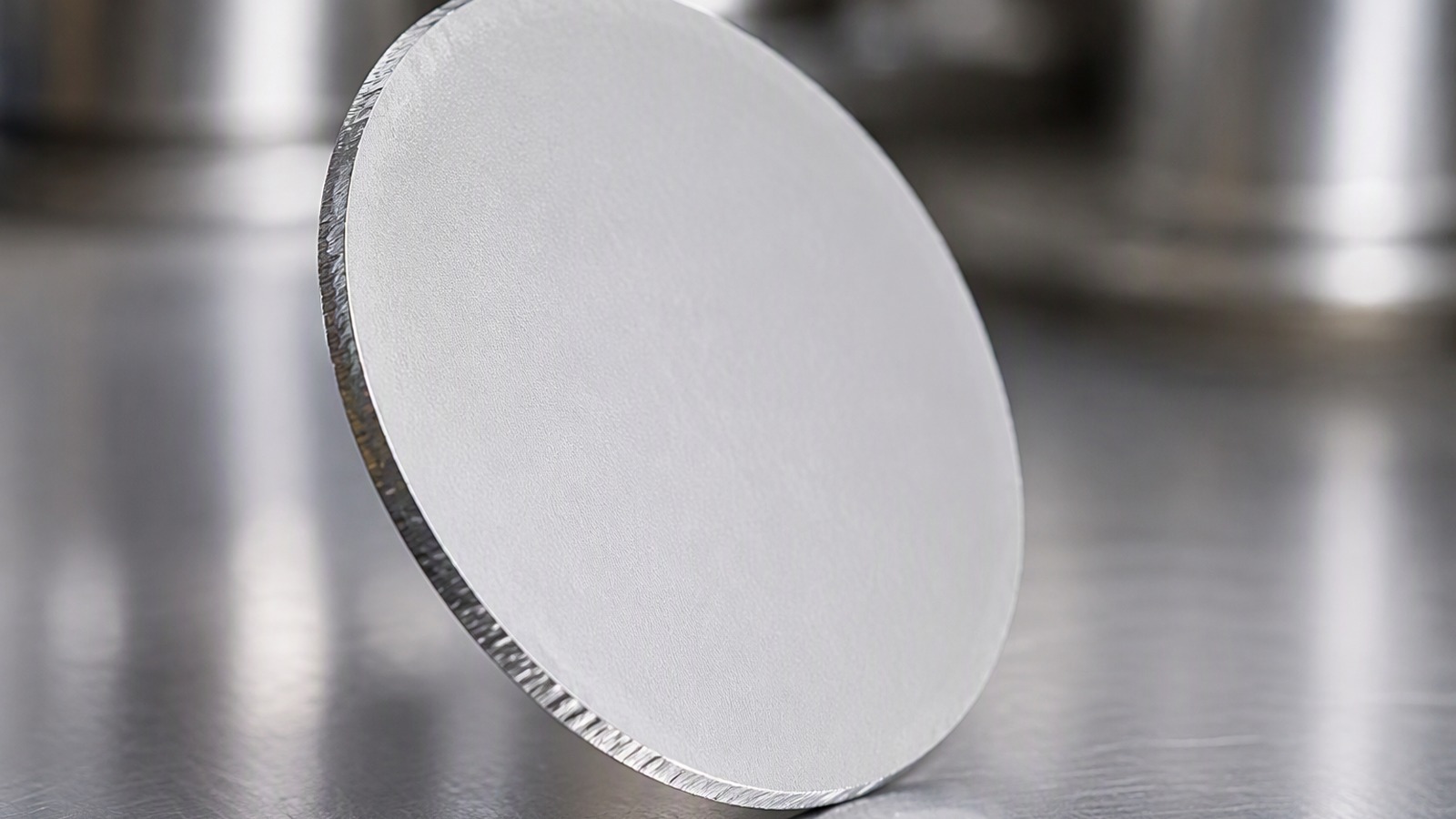
A disc seals where it touches. If it touches along a line instead of a ring, the rest of the rim is left open.
A domed or waved disc stands off the rim in places, and a rough cut edge can lift the coating from the joint. Flatness and a clean edge are part of the seal.
Dive deeper
Flatness is judged against the rim, not the bench, and a disc that looks flat can still fail in a cap. A slight dome, a wave from slitting, or a curl set at the unwind will make the disc sit on its highest point; the cap presses that point and leaves the rest of the circumference untouched. The result holds on part of the ring and lets go on the rest, which appears later as a leak.
The cut edge matters too. A disc is blanked or slit to a diameter that must follow the rim, and the edge carries a small burr, a slight taper and a zone where the coating has been stretched or cracked. If that zone falls inside the joint, the coating is not continuous where the bond needs it; if the burr stands proud, it lifts the disc off the rim by its thickness. Sharp tooling and a diameter that leaves the coating fully on the rim keep the edge from deciding the result, and controlled thickness tolerance helps, such as 1235 foil at 0.025 mm for lighter discs.
Handling matters: a disc picked with a vacuum cup can be dished and arrive already curved, so flatness belongs to the whole route from roll to cap.
Why are the rim, the cap and the liner one system, and why does a new foil not fix a rim fault?
Three parts meet at one ring, and the bond exists only where all three agree. Replacing one cannot correct the other two.
The rim must be level and continuous, the cap must press evenly, and the disc must lie flat between them. A different foil cannot close a gap the rim opened.
Dive deeper
A rim is rarely the perfect circle drawn on a specification. Moulded containers carry a parting line, a slight ovality from cooling, a step where neck meets shoulder, or a damaged top from a conveyor that gripped too hard. Glass brings its own variation, with a seam that stands proud on one side and a top that is not quite in one plane. When the cap presses the disc down, the highest point takes the load, the coating bonds there, and the low points stay separated by a film of air.
The cap contributes its own geometry. A deep skirt, a retention bead, a recess that is slightly conical, or an application head that tightens unevenly will shift the pressure from the centre of the disc to one side, and the disc then acts as a lever and lifts on the opposite side. A line that seals well with one cap style can fail with another while foil, container and product are unchanged.
Treat the three as one specification and diagnosis becomes orderly: rim first, then the way the cap is applied, then the disc. The category view of packaging and container foil is organised the same way, by the part rather than by the metal.
Why does the product decide the specification, and what should an enquiry state?
The closure is visible and easy to name, so enquiries often begin there. The packed product is what the seal lives with.
A dry powder, an oily sauce, an aqueous drink and a hot-filled product load the joint differently. State product, fill condition and closure together, and the foil follows.
Dive deeper
Dry products are the most forgiving, because the joint is not attacked from behind; the main requirement is a clean peel that leaves no fibre or coating fragments on the rim. Oily products work on the seal at once: oil migrates along the interface, softens some coatings and creeps under an edge that was not fully bonded, so the container-side layer is chosen for resistance.
Hot filling adds a mechanical story. The pack is closed warm and cools afterwards, and the small pressure change pulls the disc towards the product while the joint is still settling, so the seal must tolerate that movement. None of this can be read from the closure.
A useful enquiry states the alloy and temper, the thickness and width, the core size, the disc diameter, whether the disc is foil only or board backed, which face carries the sealable coating, the product family, the fill condition, the quantity in metric tonnes and the port. Supply commonly runs from 100 mm to 1500 mm wide on 76 mm or 152 mm cores, at a minimum of 3 MT per size, from Qingdao, Tianjin or Shanghai. The foil packaging association explains why thin foil is specified by application, not by price.
A liner is a heat path and a coating joint held flat on a sound rim. Change the foil only when the system asks for it.