What Does Aluminium Foil Do on a Roofing Membrane?
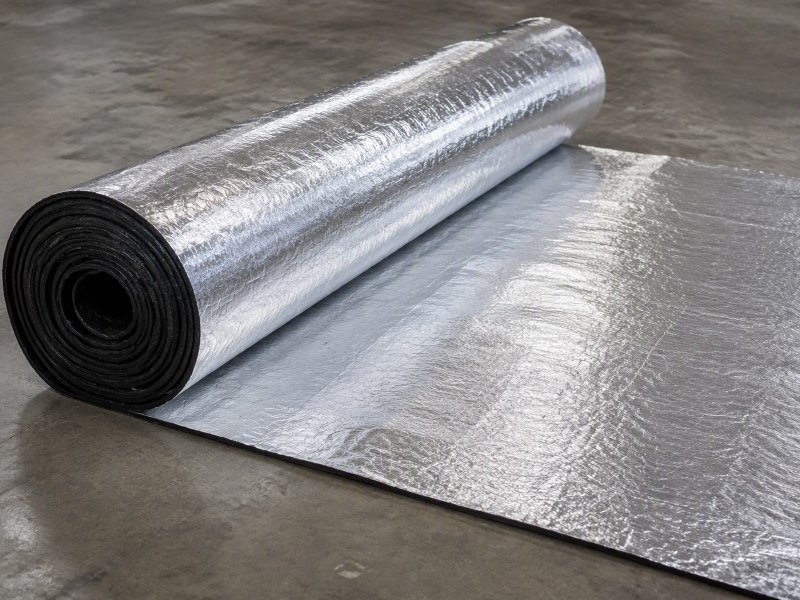
On a foil-faced membrane the aluminium is the exposed face, not a wrapping. Here is what it does, why the bond and the surface condition decide the outcome, and what to state in an enquiry.
A foil-faced capsheet that blisters at the edge, or shows a ripple line down the slope, was usually decided at the laminating nip, not on the roof.
On a roofing membrane the aluminium foil is the exposed outer face, bonded to a bitumen or self-adhesive carrier. It reflects, takes the weather and supplies the appearance. The bond and the surface condition matter more than gauge.
Below, the foil is followed from coil to finished roll, and then through an enquiry.
What is the aluminium foil actually doing on the exposed face of a roofing membrane?
It is not wrapping and not a decorative overlay. On a foil-faced membrane the metal is the surface the roof turns towards the sky.
The foil is laminated to the carrier and becomes the outer face of the finished membrane. It reflects incident radiation, shields the bitumen from direct exposure, and gives the roll its visible finish.
Dive deeper
A roofing membrane is a two-part system, and the foil is the part that meets the sky. The carrier does the waterproofing: bitumen or a self-adhesive compound, reinforced or not, in the build the roof design calls for. The foil adds a continuous metallic skin on top, so the first surface sunlight meets is aluminium rather than bitumen.
Reflection is the first job. Bare bitumen absorbs most of the solar energy landing on it and warms quickly, while a bright metallic face sends a large share back, so the surface stays cooler and the bitumen beneath works through a narrower temperature swing. The effect is never absolute: dust and biological growth settle on the face in service and dull it. The metal itself is a thin, bright, ductile sheet, and how it performs on a roof depends on how it is attached and kept clean.
The second job is exposure. Rain, wind-driven grit, hail and foot traffic arrive at the face first, and the foil absorbs that abrasion instead of the bitumen. It also gives the roof its appearance, because a faced membrane reads as a uniform sheet from the ground. A face that looks uneven at a distance was usually uneven when it left the plant.
Why is the bond between the foil and the bitumen carrier the real engineering problem?
Two materials with almost nothing in common have to stay joined for the life of the roof, through heat, cold and movement.
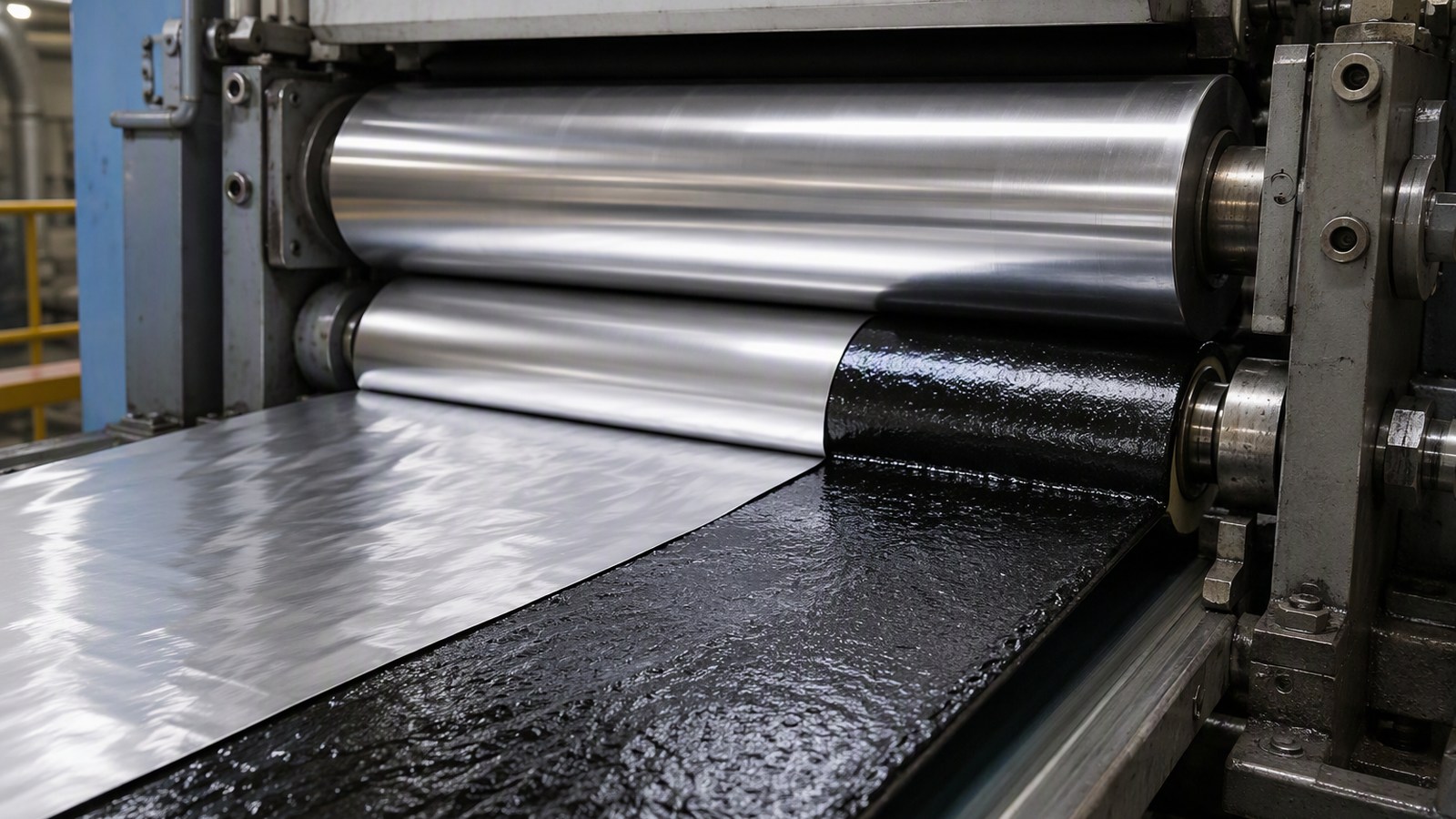
Aluminium is inorganic and always carries an oxide skin; bitumen is organic and wets it reluctantly. The joint relies on a thin warm bitumen film keying to the metal under pressure, and that is where it fails.
Dive deeper
Adhesion between aluminium and bitumen is not a chemical friendship. The oxide that forms within seconds of exposure to air is polar and inorganic; bitumen is a non-polar hydrocarbon mixture. The two do not bond the way a primer bonds to metal, so what holds a faced membrane together is wetting, mechanical keying into the surface texture of the foil, and the cohesive strength of the bitumen film trapped between them. All three are process variables, not properties of either material alone.
The failure modes reflect that. A blister is a pocket where the bitumen never wet the metal, or where something between them expanded later. An edge lift is a bond starved of bitumen at the trim. Delayed delamination is usually the interface working in shear, because aluminium and bitumen expand and contract by very different amounts, and the foil is the stiffest, thinnest member of the sandwich.
This is why a faced membrane is qualified as a system. A 1100 aluminium foil at 0.1 mm can bond cleanly on one coating line and lift on another running a different bitumen grade, nip and cooling profile. The material does not carry a bond with it; the line makes the bond, lot after lot.
What actually decides whether that bond holds?
Not one variable. The joint is made in a second or two at the nip, and everything that arrives there takes part.
Bitumen temperature and film thickness, nip pressure and dwell, cooling rate, web tension and the state of the foil surface decide the result together. Change one and the others have to follow.
Dive deeper
Start with the bitumen. It has to be hot enough to wet the metal and fluid enough to flow into surface texture, yet viscous enough to stay where it is put. Too cool and it sits on the foil like grease on a cold pan; too hot and it oxidises and loses the tack that makes the joint. The film must be thick enough to fill the texture of both surfaces and thin enough for the nip to press them into real contact. The window is narrow, and a producer's own coating weight per unit area defines where the line can run.
Then the machine. Nip pressure and dwell decide how much bitumen is displaced and how intimately the foil is pressed into it. Roll crown and hardness decide whether that pressure is even across a wide web or concentrated at the centre. Cooling decides how much stress is frozen into the laminate before it is wound, and web tension decides whether the foil enters the nip flat.
Industry bodies such as the European aluminium industry associations describe the upstream chain, but the joint is made on the customer's line with the customer's settings. The useful output of a trial is a record: bitumen temperature, film weight, nip setting, line speed, cooling, tension and the foil lot that ran. Without it, a good result cannot be repeated.
Why does surface condition matter more than gauge?
A heavy foil with rolling oil on it will lift where a thin clean one holds, and the difference shows up months later on a roof.
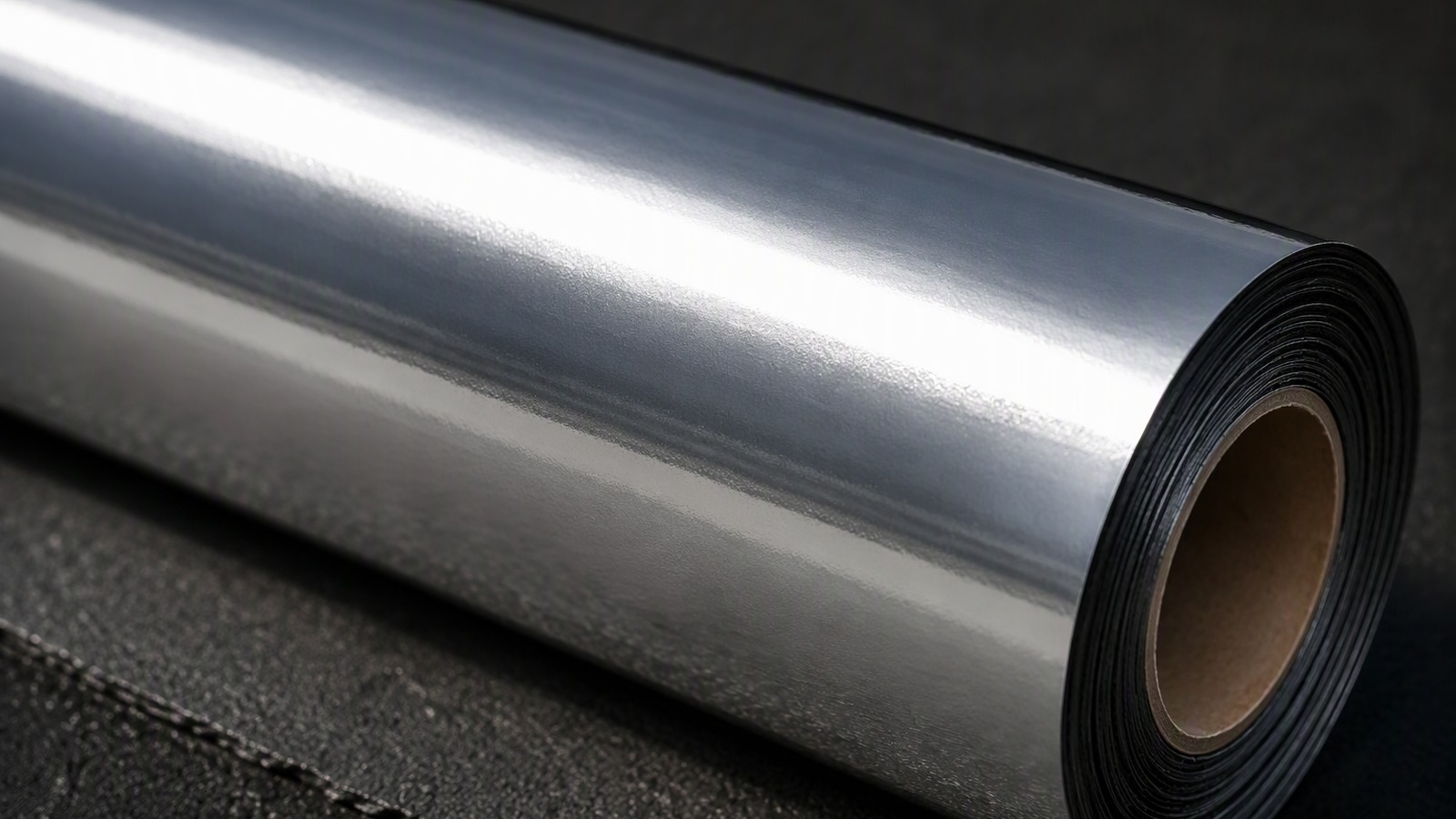
Rolling oil, loose oxide, moisture and dust all sit between the metal and the bitumen. The bond forms on the surface, so the surface is the specification; gauge only sets how the sheet handles.
Dive deeper
Three contaminants do most of the damage. Residual rolling oil is the most common: it is invisible on a bright coil, it survives the nip, and later it migrates and vaporises, leaving a pocket where the bitumen should have been attached. Loose oxide is the second: a powdery layer fails cohesively, so the foil peels with a grey film on the bitumen, and no amount of pressure fixes it. Moisture and dust are the third, usually a packing and storage problem.
Gauge has a different job. It sets handling strength, how the sheet bridges a rough substrate, how it winds, and how much abuse it survives on site. But thickness does not buy adhesion: doubling the gauge doubles the metal that has to be held, and on a contaminated interface it simply gives a thicker foil to peel off. A clean thin face can outperform a contaminated heavy one on a peel test, and that result still surprises buyers who equate thickness with security.
Surface condition is therefore a line in the enquiry, not an assumption. Degreasing, oxide control, interleaving and packing all belong in the conversation, and the industrial and technical foil range is usually where the discussion starts, because the mills that roll converter foil also roll the heavier gauges used on membranes.
Where do wrinkles and ripples come from on an exposed foil face?
Almost never from the roof. They are built in upstream, and the roof only makes them visible under a low sun.
Wrinkles come from tension differences across the web, gauge bands, camber, uneven cooling contraction and the surface of the carrier itself. On an exposed face they are permanent and public.
Dive deeper
The commonest cause is a tension profile. A coil is not perfectly flat, and a web with slight camber or a thicker band on one side runs tighter on that edge. The slack edge has to go somewhere, so it ripples, and the nip presses that ripple permanently into the laminate. The same happens when the carrier itself is not flat.
Cooling adds a second mechanism. Foil and bitumen contract by different amounts as the laminate leaves the nip, and if the sheet is wound while it is still moving, the differential strain is stored in the roll. It comes out later as cross ripples or a wave along one edge, often after days in storage, which is why a roll that looked acceptable at the winder can be rejected at the customer's door.
Handling adds a third. A crushed roll, or one stored where humidity swings, transfers its damage to the face. Wind-up tension that is too high prints the underlying layers through a thin foil and leaves a quilted pattern no roofer can remove. On a roof a ripple holds water and dirt, becomes a visible line within a season, and creates a high point where traffic concentrates. That is why the aluminium industry treats flatness as a rolled-product property.
How does the foil behave when the membrane is unrolled cold, folded at a lap, and walked on?
A cold morning is the hardest hour in the life of a foil face, and it happens before anything is fixed down.
Cold foil loses ductility, so it resists bending instead of following the carrier. At a lap it must fold without cracking, and underfoot it must stretch locally without tearing.
Dive deeper
Temper decides this. An O temper foil is soft and compliant: it follows the carrier around a lap, takes a fold without cracking and is forgiving under a boot. An H18 foil is stiff and flat and winds well, but on a cold morning it behaves like a spring: it resists the fold, springs back off the lap, and the crease is sharp.
The lap is the critical detail. Two layers of membrane, a little adhesive or hot bitumen, and a thin metal skin folded through the joint. The foil is the thinnest member and carries the highest strain, and if the fold is made cold the crack runs across it and becomes a path for water into the lap. Inspection before covering will not reliably catch that.
Walking is the third test. Point loads from a boot, trapped grit and the edge of a tool concentrate strain in a small area, and the bitumen beneath creeps while the foil cannot. A ductile foil deforms with the bitumen; one that is too hard, or embrittled by a contaminated surface, cracks along the traffic line. That is why temper is agreed with the application: a converter choosing an aluminium foil roll is balancing flatness on the machine against forgiveness on the roof.
Why can the same foil behave differently on a sloped roof and on a flat roof?
Same roll, same alloy, different verdict. The geometry of the roof changes what the face is asked to do.
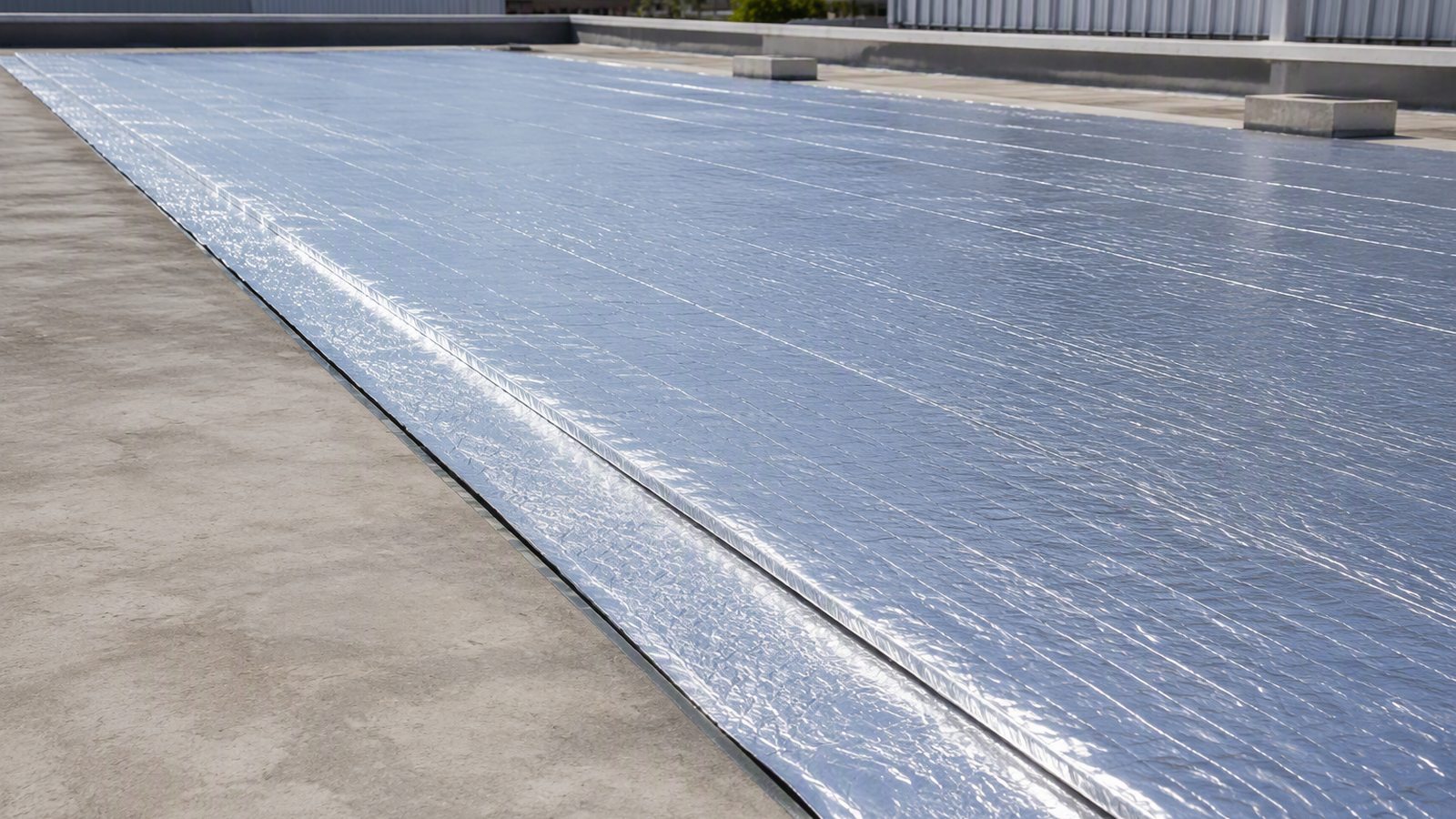
A slope sheds water quickly and shows the face at a grazing angle; a flat roof holds water, carries traffic and is laid in longer sheets. The foil is judged by different failures.
Dive deeper
On a pitched roof the water leaves. Rain runs off before it can stand, so the face spends less time wet and dirt is washed away in streaks rather than deposited in pools. The loads differ too: wind uplift, mechanical fixing through the sheet, thermal movement along the slope. And the face is seen at a grazing angle from the ground, which is unforgiving. A ripple invisible from above shows as a shadow line from below.
On a flat roof the water stays. Ponding keeps the face wet for long periods and whatever settles stays, so a dull film builds up and the reflective job weakens first where drainage is poorest. Sheets are longer and seams fewer, so strain has more length to accumulate over. The face also takes far more traffic: plant rooms, service walks, tools and deliveries, each a point load on the same thin skin.
The foil does not change between the two cases, but the carrier, thickness, temper and installation do. That is why the foil industry talks about fitness for purpose rather than a single best grade, and why a membrane qualified on a flat build-up cannot be assumed to perform on a pitch. The structure is agreed against the customer's own membrane design.
What should a membrane producer state in an enquiry?
An enquiry that names only a thickness will be answered with a guess. The useful ones describe the membrane, the line and the roof.
State the carrier, your coating weight, line speed and nip arrangement, the exposed-face requirement, plus alloy, temper, thickness, width and core. Then ask for a trial against your own membrane design.
Dive deeper
Start with the membrane. Which carrier: oxidised bitumen, polymer-modified bitumen, or a self-adhesive compound. Whether it is reinforced, and with what. Your coating weight per unit area, because that figure sets the bitumen available at the interface. Which face the foil goes on, weather face or underside, since the two are not the same requirement.
Then the line. Line speed, nip type and pressure range, cooling arrangement, and the tension the foil will run at. These decide whether a flat, hard foil or a softer one is the better fit.
Then the foil, in a mill's terms: alloy from 1050, 1060, 1100, 1235, 3003, 3004, 8011, 8021 or 8079; temper from O, H14, H16, H18, H22 or H24; thickness from 0.005 to 0.20 mm; width from 100 to 1500 mm; core 76 or 152 mm; at least 3 MT per size. Add the surface requirement explicitly: degreased, controlled oxide, no residual rolling oil, interleaved, packed for humid storage. Name the port, Qingdao, Tianjin or Shanghai, and the trial you want to run.
Finally, distinguish this from the neighbours: foil for specifying foil for industrial insulation jacketing answers different demands, and so do the foil facings used on building insulation. A membrane face is bonded, exposed and walked on.
Foil on a roofing membrane is an exposed face, not a wrapping. Agree the surface condition and the bond first, then the gauge.