Why Does One Side of a Lacquered Foil Web Carry a Different Coating?
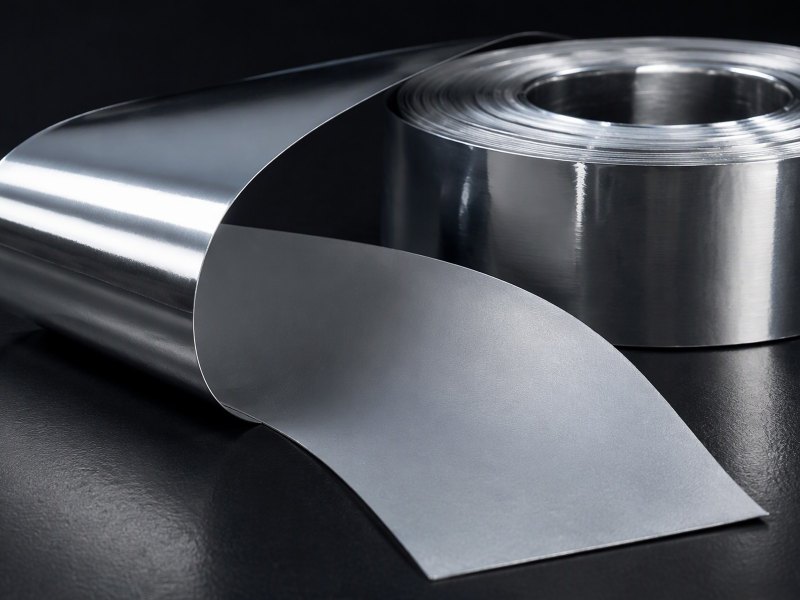
Why one face of a coated foil carries a seal coating and the other a primer or slip.
Why Does One Side of a Lacquered Foil Web Carry a Different Coating?
Both faces of a coated foil coil can look the same under workshop light. One of them is not the face your seal needs.
A two-sided build gives each face a different coating for a different duty: a seal or print coating on the face that must bond, and a slip or protective coating on the reverse.
That asymmetry is deliberate, and it must survive the journey from coating line to filling machine. The sections below follow the two faces and show where orientation is lost.
What Is a Two-Sided Lacquer Build?
A two-sided build is a coated foil whose faces were specified as two different jobs, not as a mirrored finish.
It is one foil web carrying a coating on the face that will meet the seal or the ink, and a different coating on the reverse, each chosen for its own duty.
Dive deeper
A two-sided build begins with a decision made before any coating runs: which face of the web will meet the container, the product or the ink, and which face will look at the outside world. Once that is fixed, the two faces stop being interchangeable. The face to be sealed receives a coating that softens, wets out and bonds to a named material under heat and pressure. The reverse receives a coating that lets a wound coil unwind without blocking or that accepts print.
Converters describe the pair in working language. The face side is the one named in the sealing or printing specification; the reverse is whatever remains. Between them sits the full thickness of the metal, and the only dependable record of which is which is the one written on the pack or the core.
What a two-sided build is not
It is not a foil coated on both faces with the same product for symmetry, and it is not a laminate in which a film carries the sealing duty. The metal stays the barrier, and two surface treatments do two different jobs. The carrier is chosen for formability and gauge consistency first, as in 8011 aluminium foil in 0.1 mm, and the coatings afterwards. The Wikipedia entry on aluminium foil describes how the metal is rolled and where it is used.
Why Do the Two Faces Have Different Jobs?
The two faces live in different environments, so a coating that suits one will usually fail on the other.
The seal face must bond to a container and resist the product. The reverse must survive tooling, scuffing, moisture or print, and those demands rarely point to the same coating.
Dive deeper
One face of a lidding or sachet web is asked to form a joint. It has to soften when the sealer closes, wet the flange or the opposing film, hold through cooling, and then survive whatever sits behind that joint: oil, acid, alcohol, moisture or a retort cycle. The same face must also refuse to stick to the sealing bar, which is a separate demand.
The reverse face is asked to travel. It runs over forming shoulders, guide rollers and fill tubes, and it may be printed, coded or left bright. A coating that releases cleanly from a hot bar will usually slide well; a coating that bonds aggressively will usually scuff and pick up marks. The two duties pull in opposite directions, which is why buyers end up with an asymmetric build.
Where the pair is decided
The pair is normally settled where the pack format is fixed, not at the coating line. A converter asks what the web will be sealed to, what will be inside the pack, how the pack will be filled, and what the outside must survive in transit. Those answers usually name one face at a time. The aluminium foil roll and sheet range shows how many carrier options exist before a coating is chosen, while European Aluminium, the industry association, publishes general material on packaging uses.
Why Does the Order of Coating Matter?
Because the second pass runs over a web that is already coated, the sequence decides which layer ends up on top.
Order fixes the stack. A primer that must sit under ink cannot be applied after the ink, and a seal lacquer that must face the container cannot be buried under a slip layer.
Dive deeper
A coating line applies one face at a time, so a two-sided build is at least two passes with a drying or curing step between them. The sequence matters for three reasons. First, the layer applied last sits on the outside of the stack and meets the world first. Second, the second pass has to handle a web whose other face is no longer bare metal, which changes how that web can be supported. Third, some combinations cannot be reversed: a print primer exists to receive ink, so ink cannot go underneath it.
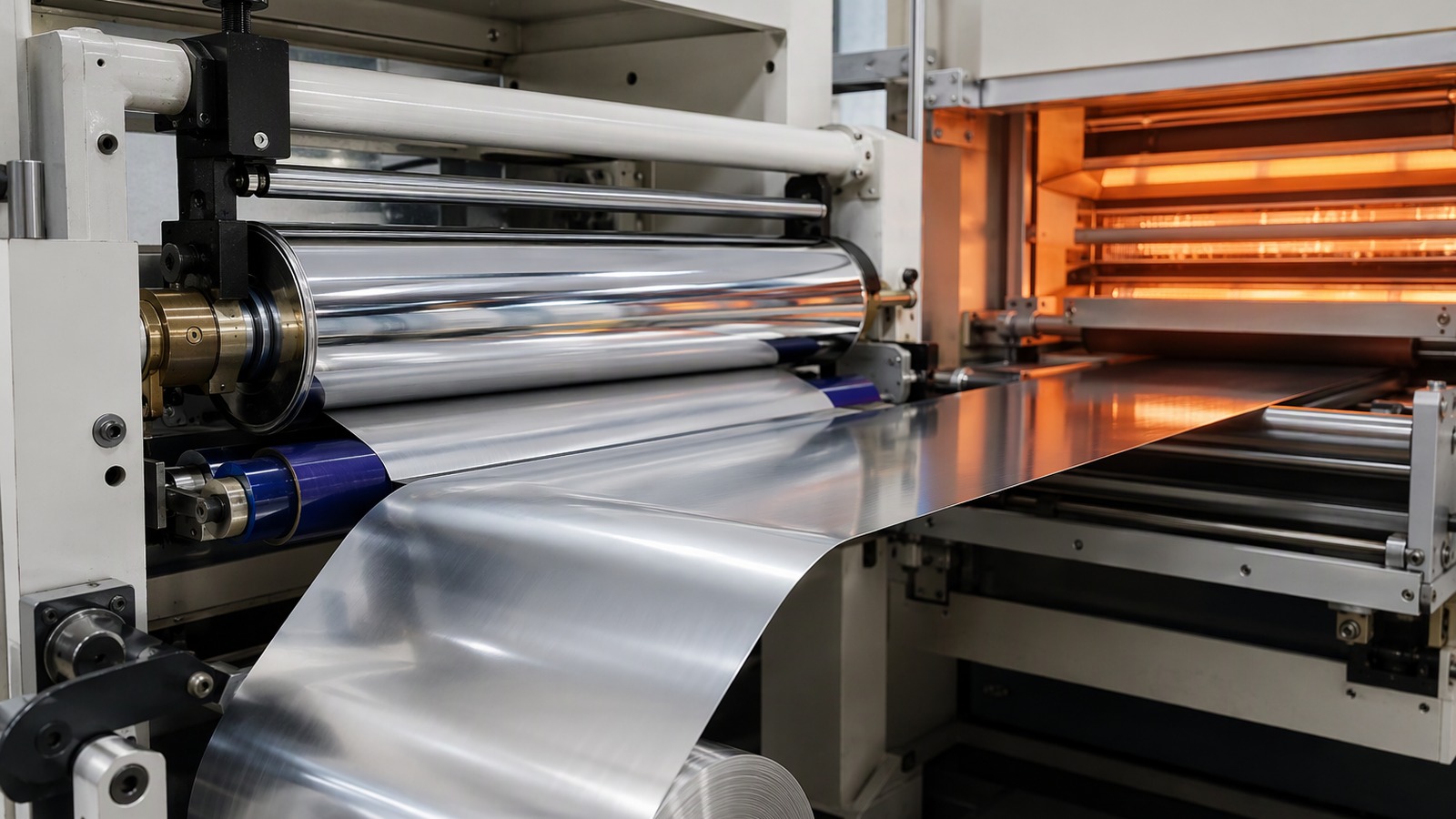
Practical sequences usually coat the face with the harder duty first, cure it fully, then run the reverse. That way the delicate face is finished and protected when the web is handled again. The opposite order sends the finished surface through an extra pass of rollers, tension and heat, each one a chance to mark it. For why a face is coated at all, see why a foil face is lacquered.
Wet on dry, not wet on wet
Two wet layers meeting at a nip will mix at the interface, and the boundary between them becomes unpredictable. Converters therefore keep the passes separate and let each layer set before the next is applied. Sequencing also decides where a print station can sit without landing on a soft surface.
How Is the Reverse Side Protected While the Face Side Is Coated?
Once one face is coated, every roller that touches it can mark or dull it, so the path is rebuilt around the finished side.
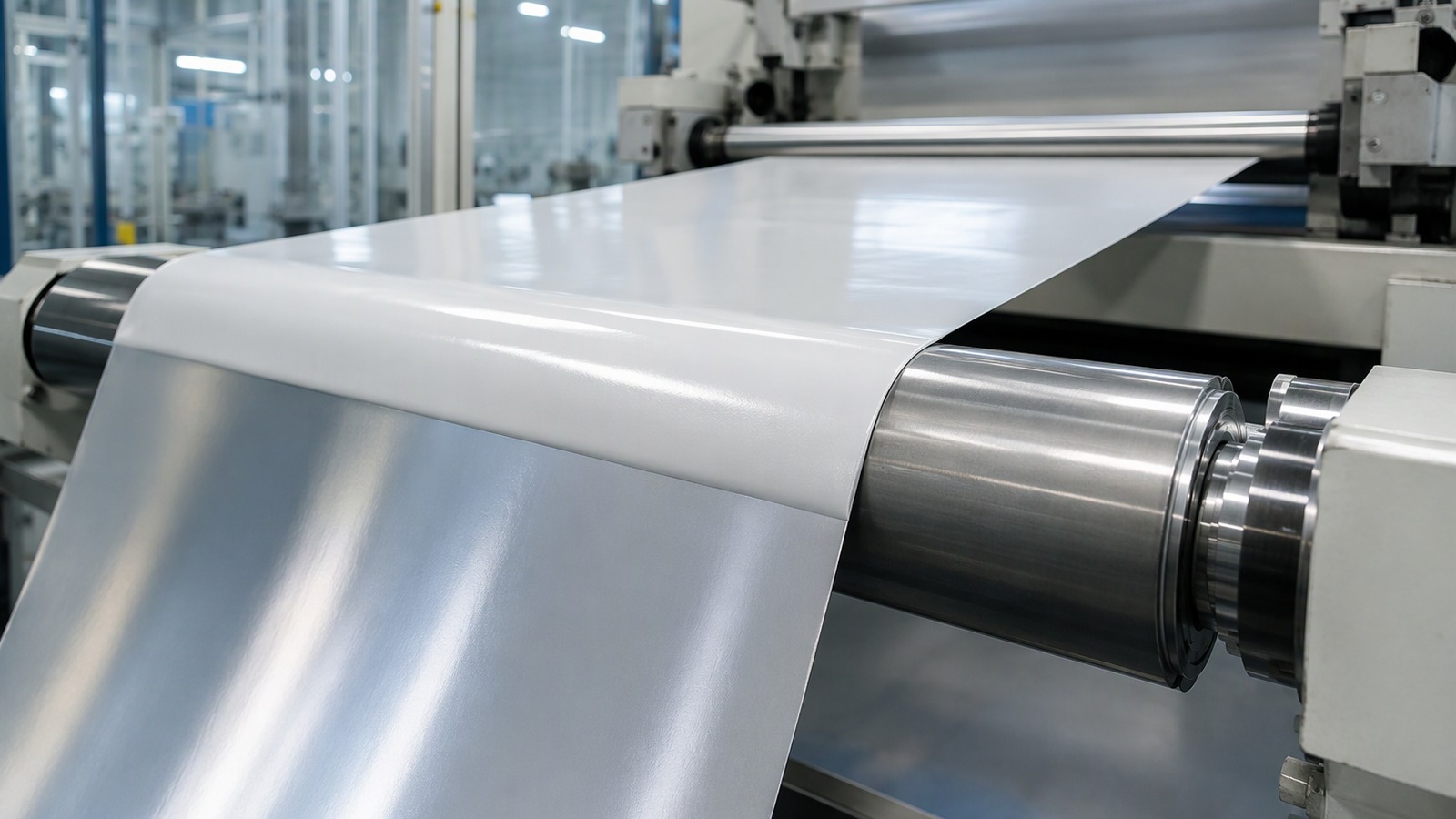
The reverse is protected by routing the web so that rollers touch only the uncoated face where possible, by drying before contact, and by keeping tension and wrap angles steady.
Dive deeper
The usual answer is a web path that carries the coated face free and lets the machine handle the other side. Idler rollers run against the bare reverse, wrap angles are kept modest, and the coated face passes over gaps rather than over surfaces. Where the web must be supported on the coated side, converters use edge contact, a narrow band outside the finished width, or an air cushion instead of a solid roll.
Drying comes before contact. A layer that is still soft will offset onto the first roller it meets, and that transfer then prints itself back onto the following metres of web as a repeating mark. Tension matters for the same reason: a sudden pull can drag a coated face across a guide and leave a scuff that only appears after conversion.
Where protection usually fails
Protection tends to fail at the joints rather than in the middle of a run: at a splice, at a restart, at a threading-up thread, or where an operator lifts the web by hand to clear a wrinkle. Those are the places where the coated face touches something never designed to touch it. Heavier gauges change the picture, as with the heavier 3004 gauge, because a stiffer web takes a different wrap and the path is usually checked again.
How Does a Converter Identify the Two Sides at the Machine?
Both faces are bright metal, and a thin coating often changes the sheen by less than the workshop light varies across the web.
Converters identify the faces by recorded orientation and machine cues: which face is out on the coil, how the tail is marked, and which side the specification names.
Dive deeper
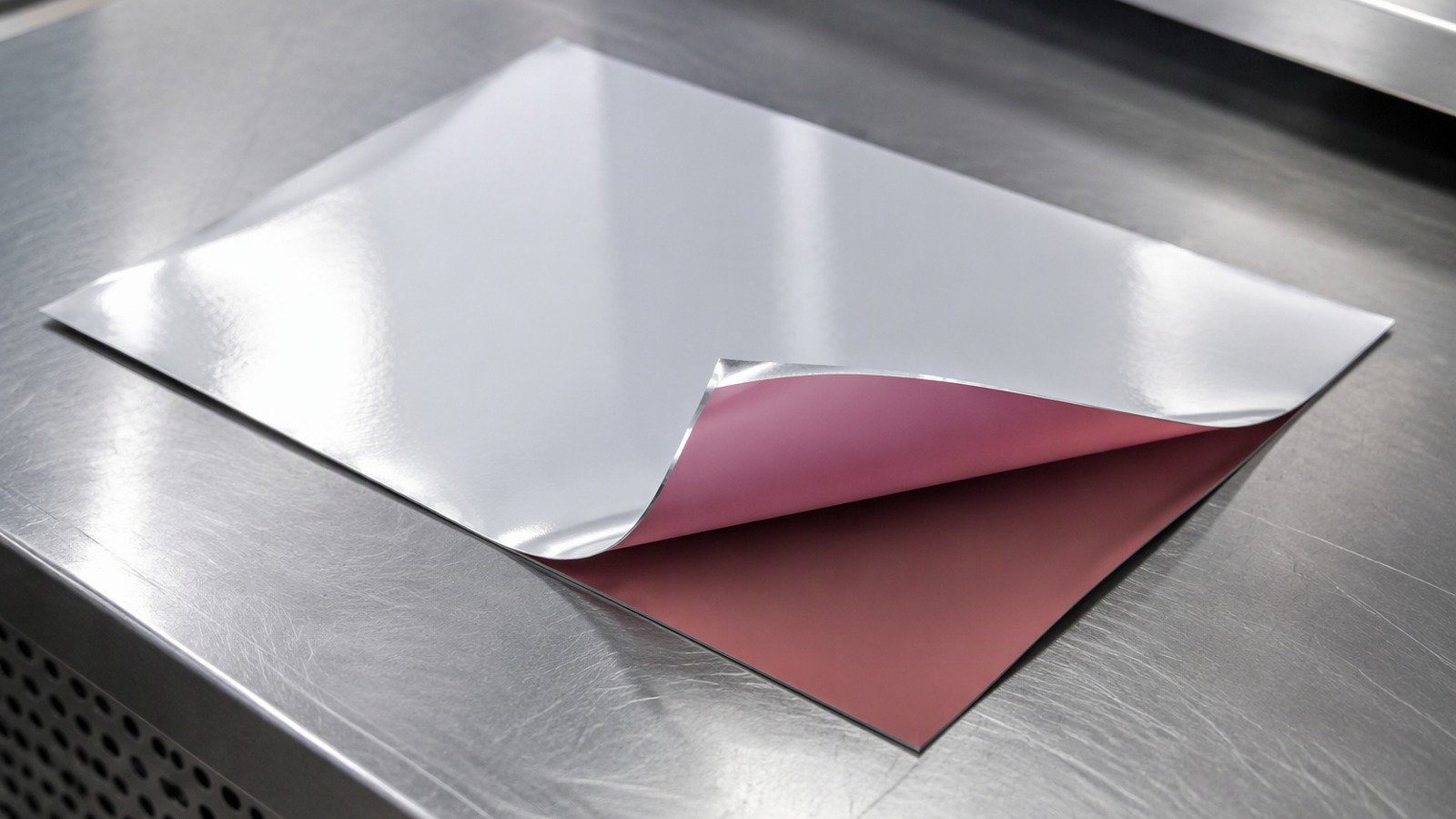
The visual difference between a coated and an uncoated face is real but small. A seal lacquer and a slip coating can both look like a faint sheen, and the same face looks different depending on the angle of the light and the direction of the last polish. An operator who judges by appearance alone is guessing, and a guess at threading speed starts a rejected coil.
What works instead is a chain of physical cues. The coil is wound with a known face out, and that is written on the pack. The tail is marked, or a flag of tape sits on the face that must run towards the sealer. The slitting record names the face, and at the machine the specification sheet names it again in the same words, so the operator can match pack to job.
Why the eye comes last
A bench test is still worth doing, but as confirmation rather than discovery. A drop of water behaves differently on a slip coating and on a primer, a strip of tape pulls differently from a print primer, and a short seal trial against the real container tells the truth faster than appearance. Background on how foil surfaces behave is collected by the European Aluminium Foil Association, because the surface, not the shine, is what the machine responds to.
What Goes Wrong When the Web Is Threaded the Wrong Way?
A reversed web usually runs perfectly, seals badly, and fails at the filler rather than at the converter.
The seal coating ends up against the platen instead of the container, so the joint never forms, or the slip face seals weakly and leaks later in the line.
Dive deeper
When the seal face is threaded outward, the sealer presses its hot bar against the wrong surface. The coating that was meant to bond to the container now bonds to the tooling, and the container receives the reverse coating, which was designed to release. The result is a weak joint that peels in the same direction every time, or a web that sticks to the bar and drags. None of these look like a threading error at the sealer; they look like a bad lacquer.
The other direction is quieter. With a slip coating on the seal face, the joint may form well enough to pass a pull test on the line and still creep open days later under load, which is the worst kind of failure because it leaves the plant. A print primer on the outside of a pack behaves differently again: it accepts ink, then scuffs in the case before the pallet is even opened.
The failure shows up late
Because the evidence appears downstream, the whole coil becomes suspect, and so does every pack made from it. Sorting a filled line costs far more than re-threading a machine, which is why orientation is written down twice and checked once more. Public material on how foil products behave under heat is published by the Aluminium Association.
How Does the Coating Choice Follow the Seal or the Print It Must Take?
The coating is the last decision, not the first: it follows from what the joint must hold and what the print must survive.
Start from the joint and the ink. The material being sealed to, the product behind the joint and the printing route decide which coating goes on which face.
Dive deeper
A seal coating is chosen against a specific partner. Foil sealed to a polypropylene tray, to a polyethylene film, to another foil face or to a coated board each asks for a different softening behaviour, and the product behind the joint decides how much resistance the coating needs. A fat or an acid attacks some coatings faster than water does, and a hot fill changes the requirement again.
Print follows the same logic in reverse. If the outside of the pack is printed after coating, the coating has to accept the ink and hold it through handling and abrasion. If the print is buried under a laminate, that face needs a primer that bonds to the ink and to the adhesive above it. The route through printing aluminium foil before lamination explains why that primer is specified separately.
Describe the duty, not the chemistry
Buyers get better results by describing what each face must do than by naming a product family. A sentence such as the face that meets the tray must seal to polypropylene through a hot fill and resist oil carries more information than any trade name, and it lets the mill and the converter agree on a trial rather than an assumption. The reverse is the same: whether it must slip, accept print or resist moisture is a duty.
How Do You Specify a Two-Sided Build, and How Do You Check a Delivery by Hand?
A two-sided requirement fails when the two faces are described in words that could apply to either of them.
Name each face by a physical reference, state its duty, and mark a reference sample. Then check the delivery by hand before the coil reaches the machine.
Dive deeper
Write the requirement so that it cannot be read as symmetrical. Name one face physically, such as the face outward on the coil as delivered, and give it its duty; then name the other face and give it its duty. State the sequence if the order of application matters, and attach a reference sample with both faces marked. A requirement that says only that both sides are coated leaves the pair to whoever threads the machine.
The hand check is quick and needs no laboratory. Unwind a length, hold it at a shallow angle under a raking light and compare the two faces, then mark the sample before you turn it. A water drop, a strip of tape and a short seal trial against the real container separate a primer from a slip coating faster than appearance.
The check that matters most
The most useful test is made against the actual partner: seal a piece to the container or film that will be used, then try to peel it while it is still warm. A joint that opens cleanly from the metal, or leaves coating on the tooling, tells you the faces are reversed. Keep the marked sample with the delivery record, because in a later dispute it is the only object that still shows which face was which.
A two-sided build is an agreement about which face does which job. Write it down, mark the coil, and check the faces by hand before threading.