What Is Dead Fold in Aluminium Foil and What Decides It?
Why foil stays folded, what temper and gauge do to it, and where dead fold helps or hurts.
A wrap springs open, a lid lifts at the corner, a web will not track. Three complaints, one root: the fold did not hold.
Dead fold is the property that keeps aluminium foil where it is bent instead of springing back. It comes from the metal itself, and temper and gauge decide how much of it a coil delivers.
What follows treats dead fold as a property rather than a defect: what it is, what sets it, where it earns its place, where it fights the machine, and how to judge it.
What does dead fold mean in aluminium foil, and why does foil have it when a film does not?
The phrase is used loosely, often as a synonym for soft. It is not softness or stiffness. It is what happens after the hand stops.
Dead fold is the ability of a sheet to keep the shape a bend has given it, with very little springback. Foil has it because the metal yields at low stress; a plastic film stores the bend elastically and gives it back.
Dive deeper
Where the springback comes from
Bend any sheet and the outside of the fold stretches while the inside compresses. Part of that strain is elastic and part is plastic. Only the elastic part returns when the force is released, and the amount that returns is what the trade calls springback. In thin metal almost the whole section is strained past the point where the metal flows, so the elastic core that would drive the sheet open is small.
Why a web of film recovers
Polymer chains straighten under load and recoil towards their earlier arrangement when the load is removed. Recovery is not instant; it continues for minutes or hours, which is why a folded film creeps open after the machine has moved on. Films also recover a larger share of the strain, so a fold looks set on the line and is visibly open by the time the pack reaches the pallet.
Why the metal keeps the shape
Foil has no such memory of shape, because the shape was never stored elastically. Its elastic modulus is modest for a metal, so the elastic share of the strain stays small. Reference material on aluminium foil describes the same behaviour. A crease is a band of metal that has yielded through most of its thickness, thinned slightly and hardened locally, which is why a second fold along the same line behaves differently and why a foil that folds well once can crack later.
How does temper decide dead fold, annealed against work-hardened?
Temper is the first thing a buyer changes and the last thing properly understood. Two coils of the same alloy and gauge can feel like different materials.
Annealed O temper folds under light pressure and stays folded, because its yield stress is low. Work-hardened H14, H16 and H18 resist the fold and open slightly when released. Partially annealed H22 and H24 sit between.
Dive deeper
The ratio that matters
What a converter feels as dead fold is a ratio: how easily the metal yields against how much it wants to spring back. Annealing lowers the stress at which the metal starts to flow, so a fold made by a light finger already exceeds yield through the section. Cold work raises that stress, so the same pressure produces a shallower plastic zone and a larger elastic one.
Soft is not automatically better
The softest temper is not always best. On a wrapping line that is often true; on a forming line it is often false. A fully annealed foil takes a crease so readily that it takes creases nobody asked for, at a guide roller, at the shoulder of a forming collar, at the edge of an unwind, and those creases travel into the pack.
This is where the way annealing sets foil temper matters commercially. The furnace decides the starting condition, and the temper grade designations are only labels on it.
Choosing between them
The practical question is how much force the process applies and how much springback the next step tolerates. H18 for a fold made by a soft finger gives a wrap that opens; O for a web that must run flat gives creases. A hard tool closing against a spring can suit the harder end; a light finger that must stay closed usually suits the annealed end.
What does gauge do to dead fold?
Gauge changes dead fold twice: through the force needed to make the fold, and through the quality of the fold that results.
Thin foil folds under almost no force and holds with almost no memory. Heavier foil needs real pressure and stores more elastic energy, so it opens a little. The crease changes character between the two.
Dive deeper
Thin gauges
At the thin end of the 0.005 mm to 0.20 mm range, the sheet is barely more than a membrane. It folds under its own weight, drapes over an edge, and holds a twist, which is exactly what a twist wrap needs. The price is a crease that carries almost all of the strain in a narrow band, so the metal there is thinned and worked hard. Fold the same line again and it can crack; fold it over a sharp corner and it can pinhole.
Heavy gauges
As gauge rises the section resists bending more steeply than the thickness rises, because stiffness grows faster than thickness. A heavy foil needs a deliberate fold and stores enough elastic energy to push back. What it gives is a fold with body: a container flange that stays turned, a lid skirt that stays crimped, a cable wrap that stays closed.
The middle, where disputes live
Most disputes sit in the middle of the range, where the foil is thin enough to crease by accident and heavy enough to spring back after a deliberate fold. The answer there is rarely a gauge change alone. It is a temper that suits the fold, a tension that keeps the web flat into the folder, and a fold geometry the machine can repeat.
Where is dead fold essential?
Some packs do not close without it. The fold is the closure, not a step on the way to one.
Dead fold is essential wherever a pack is closed by folding the material onto itself and left without adhesive, clip or seal: twist wraps, folded lidding, crimped closures and cable wrap.
Dive deeper
Wrapping
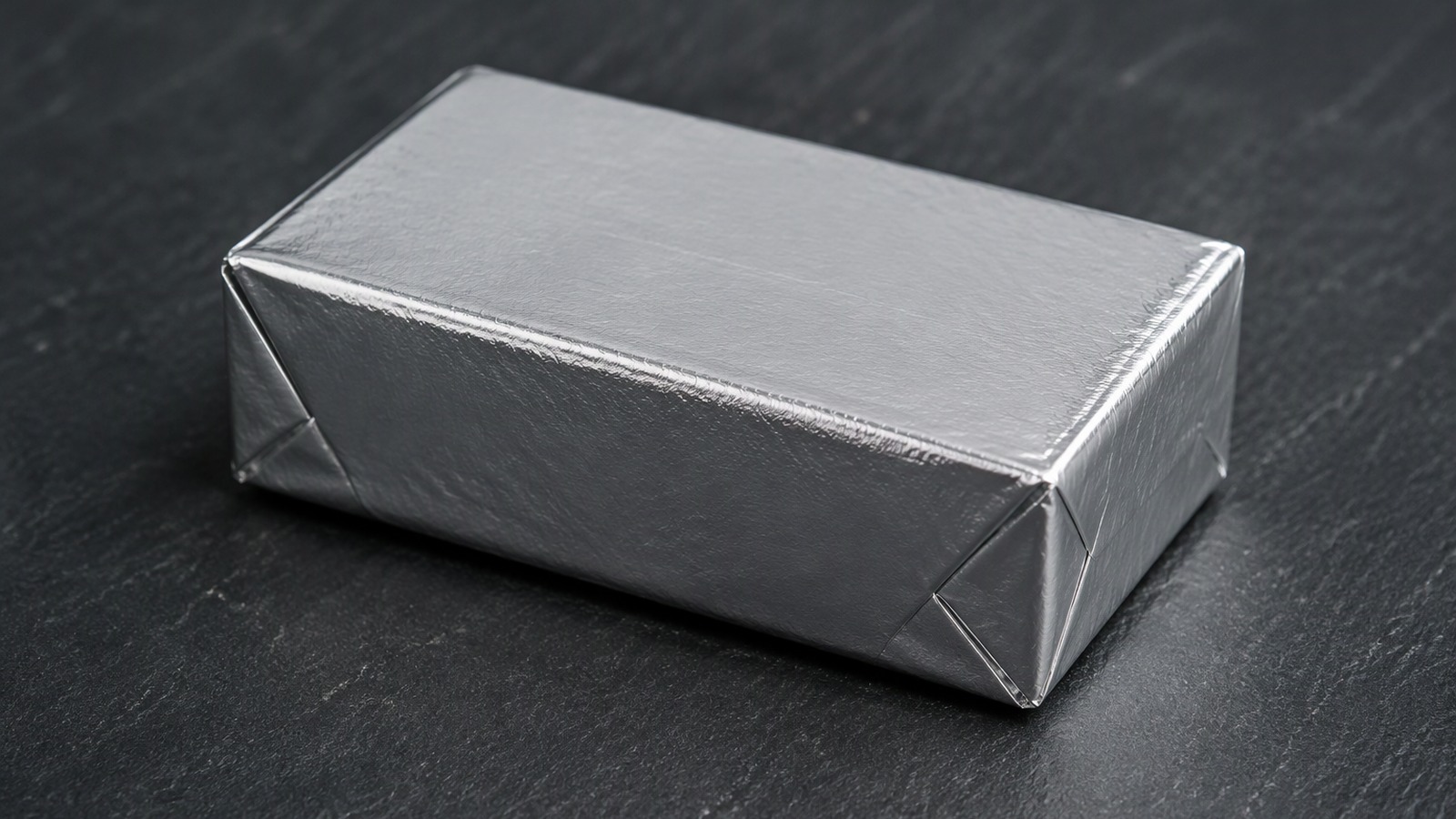
A twist wrap is the purest test. The foil is gathered around the product, twisted, and released. Nothing holds it but the crease. If the metal springs back, the twist loosens and the ends open; if it holds, the pack keeps its shape through the carton and the shelf. A fold-over wrap on a bar works the same way, the ends folded flat against the body and expected to stay flat.
Lidding and closure
A lidding foil folded over a container rim, or a skirt rolled and crimped, relies on the same property. So do a closure liner, a capsule shell and a tube crimp: the metal is deformed once, at the point of use, and must not relax afterwards. The forces are small but permanent, and a slow opening is as much a failure as an immediate one.
Cable wrap and technical folding
In cable wrap the foil tape is folded back on itself, wrapped around a core and left. There is no adhesive on the fold line, and the wrap must stay closed through winding, sheathing and installation. Technical folding follows the same rule: a foil folded into a shield, a heat path or a barrier has to hold its shape while the next operation happens around it. The fold is doing the holding, and nothing else is.
Where does dead fold turn into a nuisance?
The property that closes a twist wrap can also stop a line. A fold that will not come out is a defect with a long reach.
Dead fold is a nuisance wherever the foil must stay flat or slide: at the unwind, through a former, in a deep draw, and in any wrapping head that expects a predictable springback.
Dive deeper
Feeding and tracking
A crease that sets in the roll does not flatten at the unwind. It arrives at the first roller as a ridge, and a ridge changes the path length across the web. The web then steers, the register drifts, and the operator blames the tension control. Because the crease has already yielded the metal, re-tensioning cannot remove it; the only cure is to cut it out. Handling damage, a dropped roll and a tight band all leave folds that the foil keeps.
Forming
In a draw or a fold-and-form operation the blank must slide over a die. A foil that creases instead of flowing builds wrinkles that cannot be ironed out, and those wrinkles become folds in the part. The harder the temper, the more it resists the die; the softer the temper, the more it creases ahead of the punch. Neither extreme is comfortable, which is why forming grades are chosen for a narrow band of behaviour.
Automatic wrapping
A twist head is set up around an expected springback. The fingers release, the material recovers, and the twist tightens as it does. Change the temper and the head behaves differently: too little recovery and the wrap hangs loose, too much and it opens after the fingers withdraw. European Aluminium describes the general behaviour of foil, but the window is found on the machine.

How does a converter judge dead fold by hand?
There is no instrument on the line for this. The judgement is comparative, made with a thumb, an eye and a reference strip.
Fold a strip back on itself, press the crease firmly, release and watch. Foil with good dead fold stays closed and the legs hang together; foil with poor dead fold opens by a visible amount.
Dive deeper
A repeatable routine
Cut strips from the same position across the width and from different points along the length, because a coil is not uniform. Fold each one the same way, with the same thumb pressure, and release at the same moment. Judge how far the legs have opened a few seconds later, not at the instant of release, because recovery continues. Then read the crease: a bright line with no whitening suggests the metal flowed, a pale or cracked line suggests it was pushed too far.
Reading the crease
Fold the same strip back the other way once, along the same line, and feel the difference. A crease that stiffens sharply is hardening at the line and will crack if the process folds it repeatedly. A crease that stays soft is more forgiving, but may also mean the fold will not hold under load.
Comparing coils
Keep a strip from a coil that behaved well and compare every new delivery against it. Two operators will judge differently, but both will agree on which of two strips opens more. Record the comparison, the temper, the gauge and the coil reference together, so a complaint has something to point at. Hand judgement is not a measurement and should never be presented as one; it is a screen that catches change early.
How do lacquer and lamination change dead fold?
Bare foil is rarely what reaches the folding head. A coating or a second web is already on it, and both change the answer.
A lacquer adds a skin that can craze outside a fold and bridge it inside; a laminated film brings its own recovery, so the structure can spring back when the foil alone would not.
Dive deeper
Coatings
A thin lacquer does not change the yield behaviour of the metal, but it changes what happens at the crease. Outside the fold the coating is stretched and may craze; inside it is compressed and may lift. Neither is a failure in the metal, yet both read as one. A coating can also act as a hinge, adding a small restoring force that makes a marginal fold open.
Laminates
Laminate foil to a polymer film and the recovery of the film dominates. The composite bends, the metal yields, and the film pulls the structure back towards flat. The result folds cleanly and drifts open afterwards, which is why a lidding laminate is often held by a seal rather than the fold. Laminate to paper and the opposite happens: the paper takes the crease and holds it.
What this means for specification
Specify the finished structure, not the foil alone. State which face is coated and which layer is expected to hold the fold. If the fold is the closure, say so, and expect a combination of temper, gauge and structure rather than any one of them. Guidance from the foil industry body Alufoil and from the Aluminium Association is useful for terminology; the behaviour still has to be checked on the structure you will run.
What should an enquiry say about dead fold?
Most enquiries describe the alloy and the gauge and stop. The fold the material has to survive is left out, and it decides whether the coil works.
Describe the fold rather than the property: what is folded, how tightly, by hand or by tool, whether it must stay closed, and what happens today when it does not.
Dive deeper
Describe the duty
Say whether the fold is made once and left, or worked repeatedly along the same line. Say whether it is a closure with no adhesive, or a fold the user will open. Say whether it runs across the web or along it, because foil is not the same in both directions. A supplier who knows the duty can suggest a temper.
Give the numbers you already have
Alloy, temper if it is fixed, thickness against the 0.005 mm to 0.20 mm range, width within 100 mm to 1500 mm, and the core the line accepts from 76 mm or 152 mm. Add whether the foil is supplied bare, lacquered or laminated, the packing, the port you prefer from Qingdao, Tianjin or Shanghai, and the quantity against a 3 MT per size minimum. A 8011 aluminium foil in 0.06 mm and a 1060 aluminium foil in 0.18 mm are supplied in tempers that suit a fold, but are not interchangeable.
Ask for the comparison
The most useful thing to request is a strip folded the way your process folds it, so the comparison happens in your hand. Ask for the offered temper to be stated on the document, and for packing that protects the edges. The packaging and container foil range shows the combinations routinely supplied.
Dead fold is a property of metal, shaped by temper, gauge and coating. Describe the fold you need, and a coil can be supplied to suit it.