What does a thermal spreader do that a fin stack cannot?
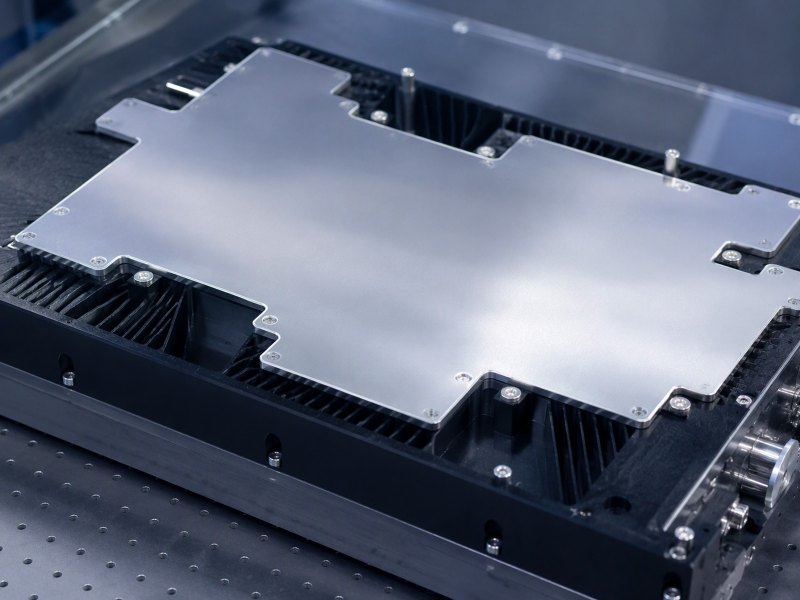
A thermal spreader carries heat sideways through a flat aluminium plate, so a small hot footprint becomes an area the rest of the assembly can use. Gauge, flatness, grade and fixing decide whether it works.
Your package has no room for fins, yet heat must still leave the die area and cross the base to a surface smaller than you would like.
A thermal spreader is a flat aluminium plate that carries heat sideways across its own plane, so a small hot footprint becomes an area the rest of the assembly can use.
The sections below follow the decision in the order a thermal engineer meets it: function, gauge, flatness, grade, fixing, and finally the enquiry.
What does a thermal spreader do that a fin stack cannot?
A fin stack works only where air or coolant can move across it. Where that space does not exist, the heat has nowhere useful to go.
A spreader moves heat within the plane of the plate, turning a small intense source into a broad, gentle one. Fins then meet more area than the device presents.
Dive deeper
A fin stack is an area multiplier at its surface. It takes whatever area its base presents and adds more of it, so the fluid picks heat up from a larger wetted surface. It stops working when the base is small and the fin field above it is wide, because the fins near the outer edge are fed by metal that must carry heat a long way sideways before those fins can do anything with it. The plate under the fins performs that carrying, and designers often treat it as a passive detail when it actually sets the ceiling on the whole assembly.
A spreader reverses the move: instead of adding surface at the top of the stack, it adds area at the bottom, in the plane of the plate. Heat enters through a footprint the size of the device and leaves through the full face of the plate, so the fin stack, the chassis wall or the cold plate meets an area it can work with. In practice the two functions often share one piece of metal, a plate heavy enough to carry heat sideways with the metallurgy of aluminium foil doing the work under the fins. The distinction matters because the two jobs are specified separately and fail differently.
Why is spreading heat sideways a different problem from removing it?
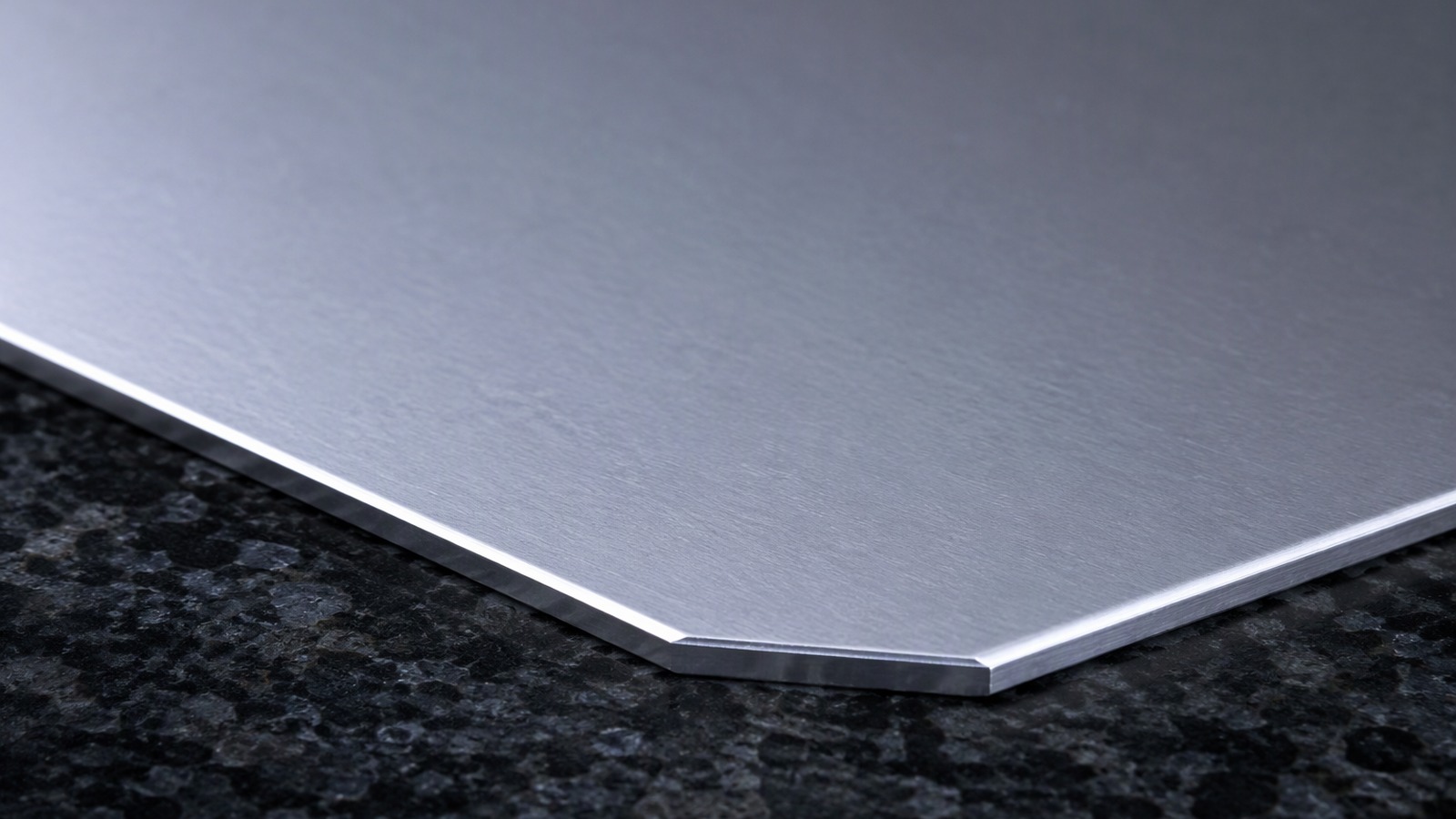
Removing heat is a surface problem: it needs area in contact with a fluid. Spreading is a conduction problem inside the metal, and it answers to different rules.
One asks how much area meets the fluid. The other asks how easily heat travels through the plate to reach it. A design can be generous in one and starved in the other.
Dive deeper
Removing heat is a surface problem. It says: give the fluid enough wetted area, keep the fluid moving, and the heat will leave. Spreading is a conduction problem inside the metal. It says: move heat laterally through a cross-section that is thin compared with the distance it must travel, and accept that the plate carries less of it as that distance grows. More fins address the first and do nothing for the second. A thicker plate addresses the second and, if carried too far, adds mass and forming difficulty without adding wetted surface.
They meet at the base face. Whatever the plate delivers to that face is what the fin field can remove, so the weaker of the two sets the result. A common failure is a generous fin field sitting on a base thinner than the distance the heat must cross; the outer fins are then decorative, present in the drawing and idle in service. The reverse failure is just as real: a thick, well spread plate handing its heat to a fin field too small or too poorly ventilated to take it. Neither is visible in the part, which is why how foil differs from sheet matters less here than how the two paths are modelled.
Why is a spreader bought as foil stock rather than as a finished part?
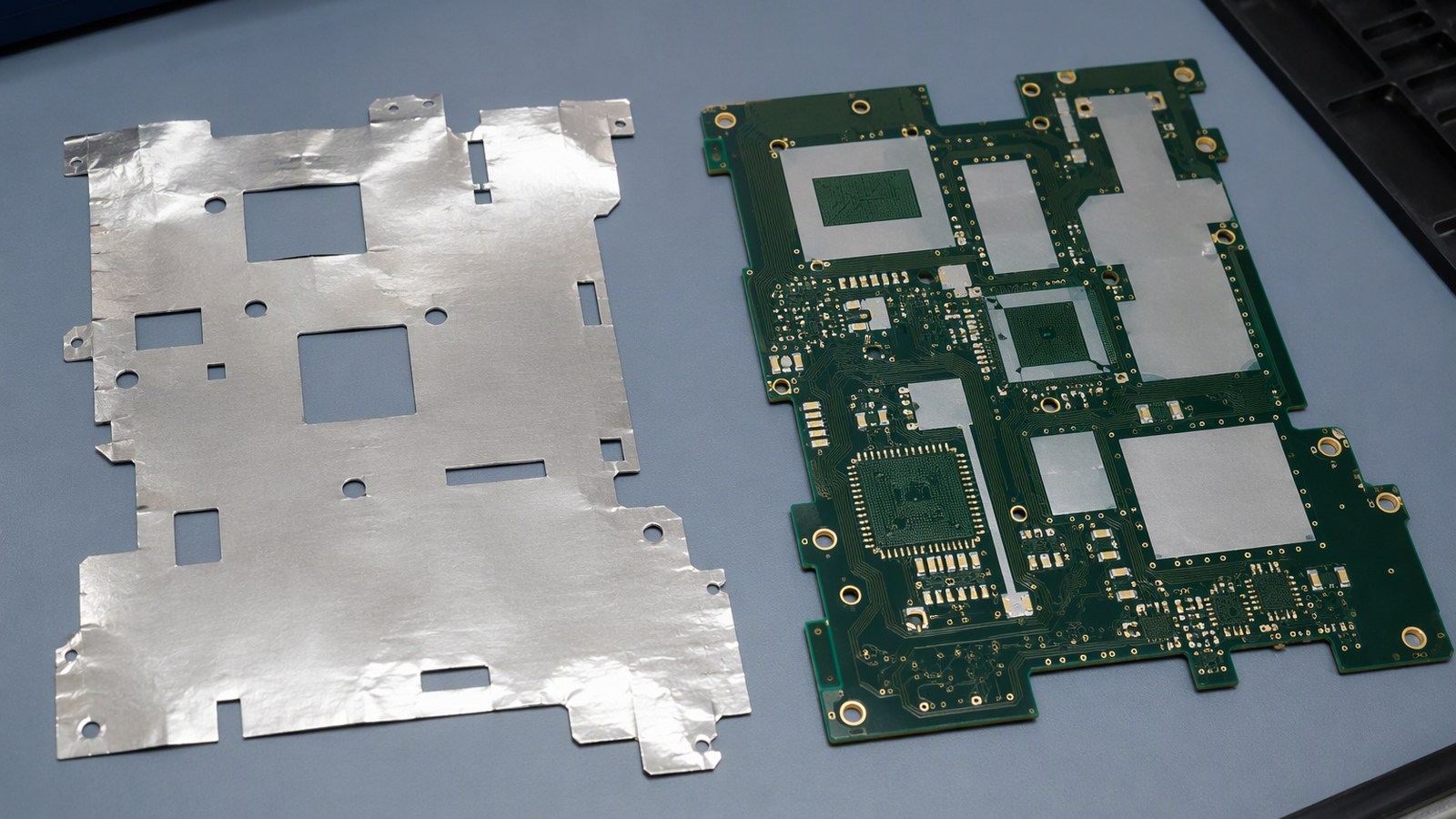
A finished plate arrives with someone else's dimensions, holes and finish. A coil arrives with yours, and the forming step stays under your control.
Because the plate is cut, punched and formed inside the build that defines the housing. Buying stock keeps geometry, the flatness condition and revision history with the team that owns the assembly.
Dive deeper
A finished plate is somebody else's decision frozen in metal. It arrives with a thickness someone chose, holes in positions someone fixed, an edge condition and a surface that may or may not suit the interface you plan. If the housing changes, the plate changes, and the change waits. A coil arrives with none of that. The alloy, temper, thickness, width and core are yours to state, and the cutting, punching, forming and finishing stay inside the build that owns the assembly.
There is an economic argument too. A spreader is usually a blank nested out of strip, and nesting decides how much of the coil becomes part and how much becomes scrap. Buy the coil and the blank layout, the slitting width and the run direction are all still open, which is the same reasoning behind the range of aluminium foil heat plates supplied in coil form. Stock also serves a product family better: one width covers several plate sizes, whereas finished parts multiply the line items. Ordering follows the usual shape, with a minimum of 3 MT per size, cores of 76 or 152 mm, and shipment from Qingdao, Tianjin or Shanghai, as set out in aluminium industry association publications on mill supply.
Which gauge belongs in a spreader, and what does extra thickness buy?
Thicker plate spreads better and weighs more, and the penalty lands on the side you were trying to help. Gauge is a compromise, not a maximum.
Most spreaders sit at the heavy end of foil stock, from about 0.10 mm to 0.20 mm, with 0.15 mm common. Extra thickness buys lateral carry and stiffness; past a point it buys weight.
Dive deeper
Spread improves with thickness because a thicker plate offers a larger cross-section for heat travelling sideways, and because it resists the bowing that pulls a plate away from its neighbour. Stiffness rises faster than thickness, which is why a small step up in gauge can change how a plate behaves on the line as much as in the simulation. What thickness does not do is create contact. A heavy plate that touches its neighbour at three high points is worse than a lighter one that sits down properly, and that is the point at which aluminium foil for thermal spreaders starts to be specified by the assembly rather than by the catalogue.
The practical band runs from roughly 0.10 mm to 0.20 mm, with 0.15 mm a frequent starting point for plates that must also be handled and fixed. Below that, the material follows the surface rather than bridging to it. Above it, you are buying stiffness and mass, and paying in forming force and weight. Temper belongs in the same conversation: O tempers form easily and sit down well, while H14, H16, H18, H22 and H24 hold shape and resist handling damage. How much of each you need is a question for the thermal simulation and the tooling, not for a data sheet.
Why does flatness against a mating face matter more than alloy choice?
A plate that touches its neighbour at a few high points has thrown away most of the area you paid for. Contact is where heat actually crosses.
Flatness sets how much of the face is really in contact. Alloy choice shifts the metal's behaviour, but a bowed plate wastes area no alloy can recover.
Dive deeper
Heat crosses an interface through actual contact. A plate that is bowed, twisted or locally high touches its neighbour over a fraction of the nominal face, and the rest of the area is separated by a gap that the surrounding air fills. The plate is still the right size on the drawing. It simply is not the right shape in the assembly, and no change of alloy recovers area that is not touching. Two plates of the same grade can therefore behave quite differently in the same build, which is why the foil producers association treats flatness as a purchased property rather than a finishing operation.
Flatness is set by how the strip was rolled, how it was slit, how it was levelled, how blanks were cut, and how they were stacked and packed. A coil that was flat when wound can arrive with edge wave that a blank inherits. That is why an enquiry is better off describing the condition the plate must meet in the assembly, such as sitting on a face without rock before the fixings are tightened, than naming a grade and hoping. The mating face has its own condition as well, and a plate specified against a face that is itself dished will still disappoint.
Why do a plain grade and an alloyed grade both appear in this application?
Two buyers ask for the same part and name different alloys, and both are usually right. The difference is what the plate must survive after it is cut.
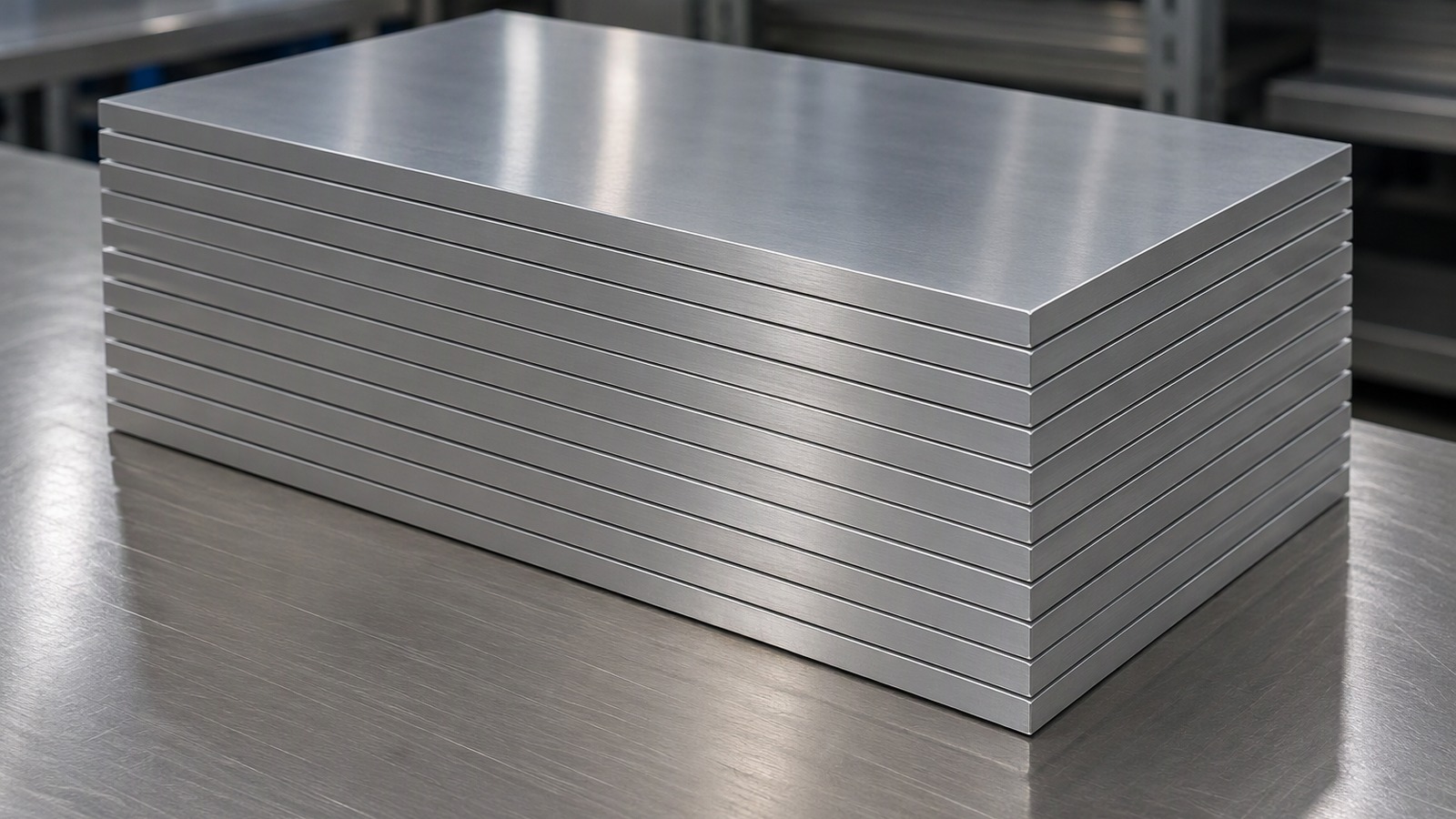
Plain grades such as 1050 and 1100 form easily and sit down well. Alloyed grades such as 3003 and 3004 add strength and hold shape through bending; 8011 appears where a finer surface texture is wanted.
Dive deeper
The plain grades are the default for conduction. 1050, 1060 and 1100 are close to commercially pure aluminium, form readily, sit down against a face and are straightforward to blank. Where a plate only has to carry heat a short distance and be held flat by its fixings, one of these usually does the job with the least argument. They are softer, so they mark and bend more easily in handling.
The alloyed grades earn their place when the plate is also structural. 3003 and 3004 carry more strength, hold a bend and resist the local deformation that a screw boss or a clip imposes, which is why a thermal spreader foil in 1050 and a 3003 plate can sit side by side in one product family. 8011, 8021 and 8079 appear where a particular temper, a finer surface texture or a thinner gauge at the same strength is wanted. Temper runs alongside alloy: O for formability, H14, H16, H18, H22 and H24 for varying degrees of work hardening and shape retention. Both families appear in the same plant because one family contains plates that are merely conductive and the other contains plates that are also load paths. Specifying the stronger grade everywhere is a common and costly habit.
How is a spreader fixed, and why does the fixing change the design?
Screws, clips, adhesive and spring pressure all pull the plate in different ways. Each one moves the material budget somewhere else.
Fixings decide where the plate is held flat and where it is free to bow. Screw bosses need local thickness and clearance; adhesive needs a clean, flat face; clips need edge stiffness.
Dive deeper
A fixing does two things at once: it clamps the plate to its neighbour, and it tells the plate where it is allowed to move. Screws pull locally, so the plate needs enough thickness at the boss to spread the clamp load and enough clearance to avoid cracking, and the pattern of screws decides which part of the face is genuinely held. Clips grip an edge, which means the edge needs stiffness and a shape the clip can keep hold of. Adhesive wants a clean, flat face and a bond line that stays put while it cures. Spring pressure distributes load but depends on the plate being able to flex without taking a set.
A screw pattern near the centre holds the middle down and lets the corners lift; screws at the corners do the reverse. Over-constraining a plate that expands differently from its neighbour loads the fixings instead of the interface, a point covered in published industry guidance on aluminium. The useful rule is to decide early which area must stay in contact and then choose a fixing that holds that area, rather than adding fixings until the part stops rattling. The pattern is also an assembly instruction and belongs on the drawing.
What must an enquiry for spreader foil state?
A one-line request for aluminium foil gets a one-line answer. Specificity is what turns a quotation into something a designer can release.
State alloy and temper, thickness and tolerance, width, core diameter, quantity per size, the flatness condition at the mating face, how the part is cut, and what it is fixed to.
Dive deeper
A workable enquiry names the alloy and temper, the thickness with the tolerance that matters, the width, the core diameter, and the quantity per size, so that the quotation can be compared line by line. It states whether the material is wanted as coil or as cut blanks, and which face is the mating face. It describes the flatness condition as the plate must meet it in the assembly. Without those lines the supplier is guessing, and a guessed specification is usually the one that gets renegotiated after the first build.
The details that decide yield and repeatability are: the surface texture wanted on the mating face, the edge condition, the run direction if the part is bent, how coils will be handled at the receiving end, and whether packing should be eye to sky or eye to wall on a wooden pallet. A phrase such as as thin as possible is not a specification; it moves the decision to the mill and guarantees a discussion later. State the thickness band you can accept and let the thermal simulation defend it. Quantities follow the usual minimum of 3 MT per size, and shipment is arranged from Qingdao, Tianjin or Shanghai, the same route described for foil used against a static field in thin gauges.
A spreader is a conduction part first, a surface part second. Get the plate, its flatness and its fixings right, and the fin stack has something to work with.