How Is Aluminium Foil Used in Cable Wrap and Shielding Applications?
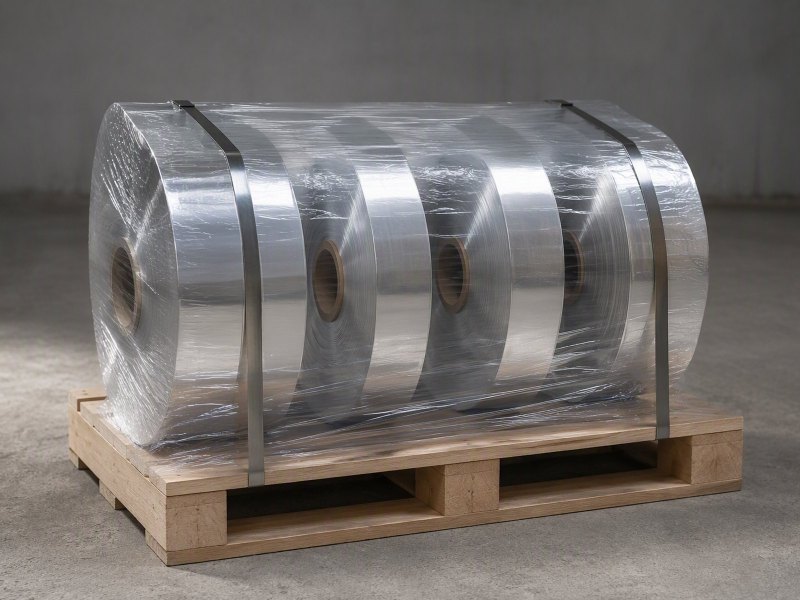
Aluminium foil arrives at a cable line as a laminated, slit tape rather than a bare sheet. This guide covers the alloy, temper, gauge, width, core, surface and packing a buyer must fix, and the checks due on arrival.
How Is Aluminium Foil Used in Cable Wrap and Shielding Applications?
A cable line needs a thin metallic wrap, but the reel rarely arrives as bare sheet, and one wrong order line means scrap.
Aluminium foil for cable wrap is normally laminated to a carrier film, then slit to width and wound on 76 mm or 152 mm cores. The buyer fixes alloy, temper, thickness, width, core, surface and packing before ordering.
This guide moves from the purpose of the thin metallic layer, through the parameters a purchase order carries, to the checks due on the receiving dock.
Why is a thin metallic layer used in a cable wrap at all?
The metallic layer is not decoration; it performs three quiet jobs between the insulated core and the outer jacket.
A thin aluminium layer gives the cable a continuous barrier, a reflective surface and a sacrificial wrap that takes handling damage before the insulation does.
Dive deeper
The wrap sits between the insulated core and the jacket and earns its place through simple physical properties, not a rating. As a continuous sheet it interrupts the path moisture vapour would otherwise take along the cable, without the weight or stiffness a solid metal tube would add. Because its surface is reflective, heat radiated from outside is turned back before it arrives at the core, which matters when cables share a tray with warmer services.
The layer is also mechanical insurance. During coiling, pulling and bending it absorbs abrasion that would otherwise strike the insulation. The wrap often doubles as a bonding surface, so the jacket has a defined layer to adhere to and the construction does not separate when the cable is dragged through a duct.
Why aluminium rather than another metal
Aluminium is ductile enough to be rolled to very thin gauges, so a wrap can be formed, folded and creased around a core without cracking. It is light, and it is offered in tempers from soft annealed to half hard, so a converter can match the wrap to the forming operation. Where the need is a barrier surface at low weight, aluminium is usually the practical choice; the underlying metallurgy is described in this aluminium foil overview.
Why is aluminium foil laminated to a carrier film instead of being applied bare?
Bare foil at these gauges cannot survive a cable line, because the first tension spike tears it.
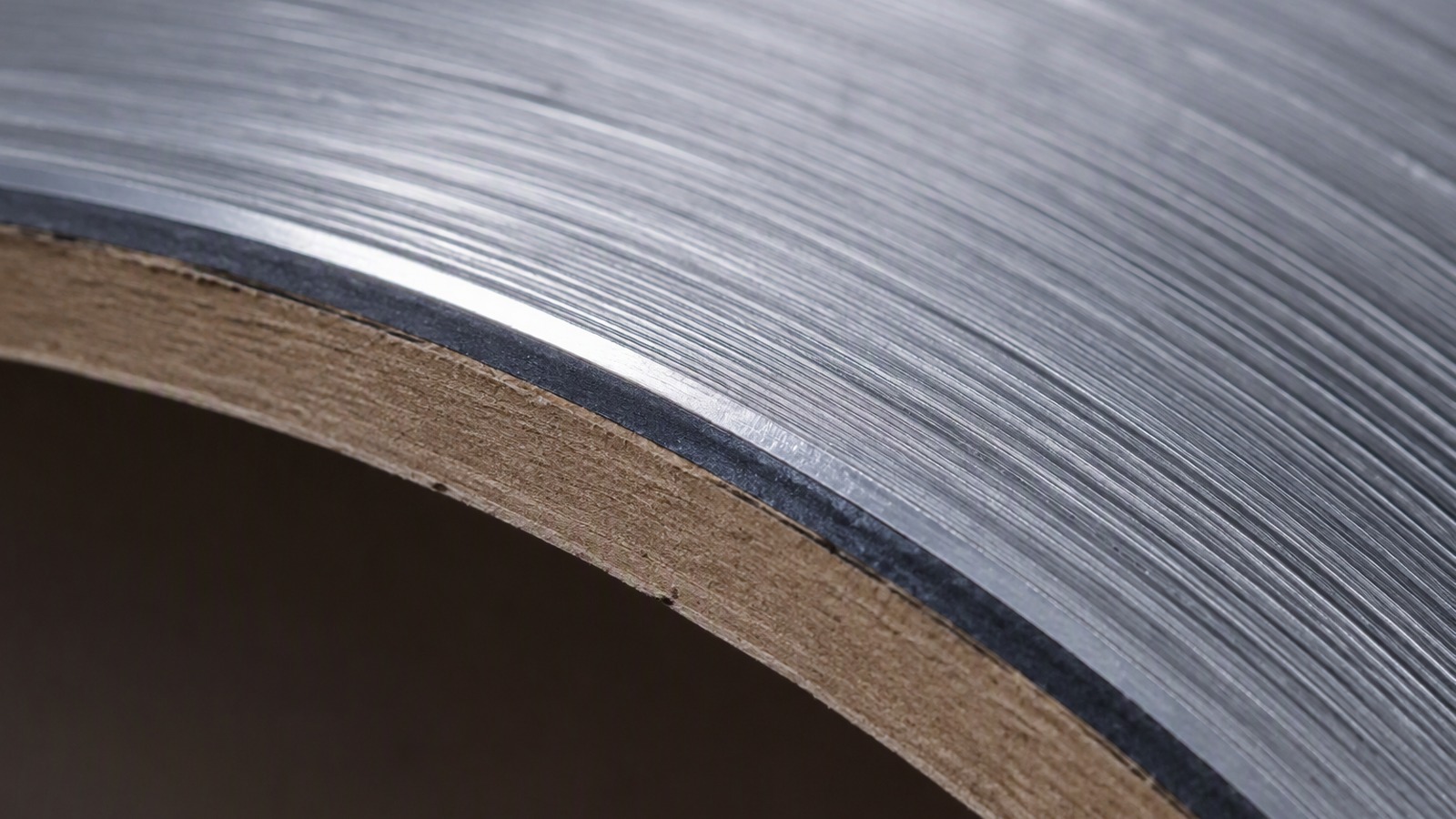
Foil is bonded to polyester, PET or another carrier film, so the composite carries the handling tension, resists tearing and stays flat while the cable travels through the line.
Dive deeper
A thin metallic sheet alone has almost no tear strength. Every roller, splice and start and stop applies tension, and a bare web would stretch, wrinkle or split at the edge. Laminating the foil to a carrier moves the mechanical duty to the film: the polyester or PET layer carries the tension and keeps the metallic layer continuous. The aluminium layer can therefore stay very thin, which is the whole point of using foil rather than a solid metal strip.
The carrier also fixes the handling problem. A supported web winds uniformly, unwinds without telescoping and can be slit without the edges curling. It feeds through a taping head at line speed without fluttering, which keeps the wrap centred on the core. The carrier also gives the wrap a defined inner and outer face, so an adhesive can be placed where the process needs it.
What an adhesive system has to do
The bond between foil and carrier must survive slitting, winding tension and the heat of the finished cable. Converters therefore settle the adhesive system, the coating weight and the bond strength with the foil supplier, because a weak bond appears as delamination on the cable line rather than at the laminator. Surface condition on the aluminium side belongs to that same conversation.
How is the foil wrap applied on a cable line?
On the line the wrap becomes tape, and how it is placed decides whether the barrier stays closed.
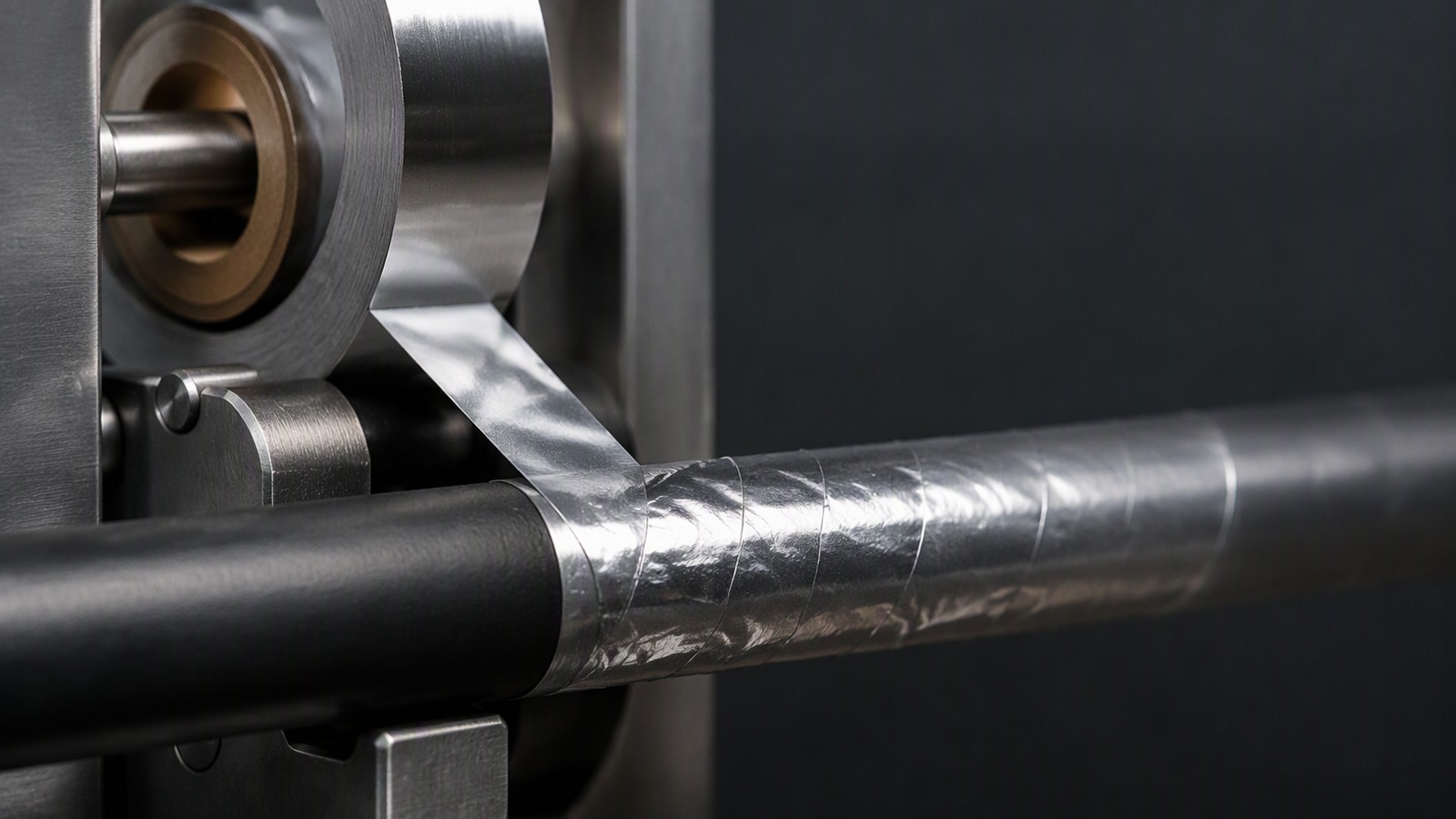
Laminated foil is slit to a tape width, applied longitudinally or helically over the core with a defined overlap, and often bonded to the jacket as the cable is finished.
Dive deeper
Two placement methods dominate. In a longitudinal wrap the tape runs parallel to the axis and is folded around the core, which suits smaller diameters and high line speeds. In a helical wrap the tape is applied at an angle with a controlled lay and overlap, which needs more tension control but tolerates diameter changes. In both cases the overlap is the critical dimension: a gap in the wrap leaves the barrier open, and too much overlap wastes width and adds stiffness.
Tension is the second variable. Too little and the tape flutters and wrinkles; too much and the wrap necks down or curls the laminate. Taping heads are set so the web runs with light, even tension across the width. Many constructions then bond the wrap to the jacket with a hot melt or a pressure sensitive layer, and a narrow aluminium foil tape is commonly used to close a joint, repair a break or secure the start of a reel during set-up.
Where the wrap sits in the construction
The wrap is normally placed over the insulated core and under the jacket, so the jacket protects it and the wrap protects the core. Order of layers, folding direction and overlap are drawing decisions agreed before the first reel is ordered.
What thickness and temper should a cable-wrap buyer specify?
Two numbers do most of the work in a cable wrap order: the gauge of the aluminium and its temper.
Cable wrap usually sits at the thin end of the 0.005 mm to 0.20 mm supply range, and temper is chosen between soft annealed and half hard so the wrap forms without cracking.
Dive deeper
Gauge drives everything downstream. A consistent gauge keeps the laminate flat, keeps tension predictable in the taping head and keeps the finished cable diameter stable. It is measured with a micrometer across the width, because variation across the web shows up as wrinkles and as an off-centre wrap. A practical cable wrap gauge such as the 0.03 mm 1060 aluminium foil is a common starting point when the wrap needs to stay thin and still be handleable on a laminator.
Temper decides how the metal behaves during forming. Soft tempers in the O and H22 to H24 range fold and crease easily, which suits heavy forming and lamination. The intermediate H14, H16 and H18 tempers give more stiffness and spring, which suits wraps that must hold a shape. Alloys follow the same logic: 1050, 1060 and 1100 are the workhorses for thin lamination, 1235 is common at the thinnest gauges, 3003 and 3004 add strength, and 8011, 8021 and 8079 are widely used where a laminated tape is required. Test methods for the strip are described by ASTM Committee B07 on Light Metals and Alloys, and the practical effect of each code is set out in this guide to temper grades explained.
What width, core and reel format should a cable-wrap buyer fix?
Width and reel format are line decisions rather than paperwork, and they are difficult and costly to change later.
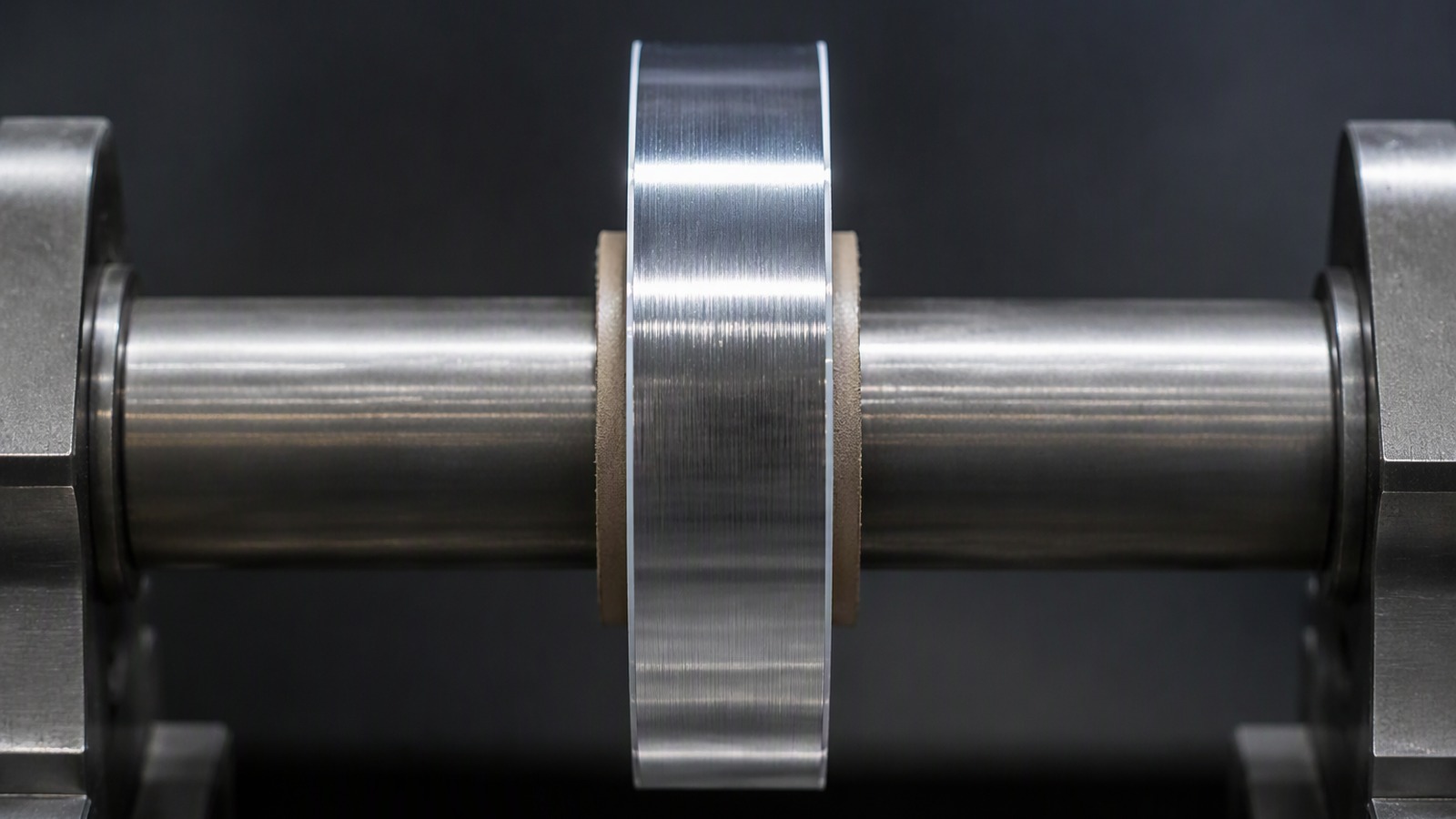
Foil is supplied from 100 mm to 1500 mm wide on 76 mm or 152 mm cores, and the reel format, winding direction and eye orientation have to match the taping head.
Dive deeper
Width is usually set by the tape width the taping head runs and by the cable diameter, with a little material allowed for the overlap. A wide parent reel is slit down to the working widths, so the buyer states both the master width and the slit width, together with the tolerance that the line can accept. The core diameter then follows the payoff mandrel: 76 mm cores suit many compact taping heads, while 152 mm cores carry longer runs of wider web and are common on laminating and rewinding equipment.
Reel format covers the details that stop a good coil from becoming a stoppage: reel outside diameter and weight limits on the payoff, winding direction, eye to sky or eye to wall orientation, the number of joins and the run length per reel. A converter who laminates and re-slits may prefer large parent reels, while a cable plant may prefer short, spliced reels that are easy to lift. The industrial and technical foil range is usually quoted per width and per core, with a minimum order quantity of 3 MT per size, packing on wooden pallet with moisture barrier wrap, and shipment through the ports of Qingdao, Tianjin or Shanghai.
How do slitting and reel choices affect a cable line?
A perfectly rolled coil can still stop a line when the slit edge or the reel does not match the payoff.
Slit edge quality, camber, winding tension and reel geometry decide whether the web tracks straight through the taping head or wanders and wrinkles.
Dive deeper
Slitting is where a good coil can be spoiled. A burr or a notch on the slit edge becomes a tear initiation point as soon as the tape is under tension, and loose metal dust from a poor cut finds its way into the taping head. Camber, the gentle curve of a web that should be straight, makes the tape wander along the core and forces the operator to correct overlap by hand. Slit width tolerance therefore deserves to be stated on the order rather than assumed, because edge damage cannot be repaired further down the line.
Reel geometry matters just as much. A reel that is wound with uneven tension blocks, telescopes or unwinds in surges, all of which appear as wrinkles on the cable. Telescoping in particular is common when a narrow web is wound too loosely, and it is expensive because the outer layers have to be scrapped. Consistent winding tension, a firm but not crushed build and a reel diameter that the payoff can accept are the practical requirements, and they belong in the purchase order rather than on the findings list. The wider context of foil supply and converting, including slitting practice, is discussed by the European Aluminium industry association.
What surface condition matters for downstream lamination?
The aluminium surface is where an adhesive has to hold, and it is the easiest property to spoil in storage.
The surface must be clean, free of heavy rolling oil, water stain and loose particles, with an even finish, so that adhesive wets and bonds consistently.
Dive deeper
Foil leaves the mill with a thin residual film of rolling oil and a natural oxide layer, and both influence adhesion. A light, uniform oil film is normal and is managed by the laminator; patches of heavy oil, streaks or water stain are not. Water stain comes from condensation and leaves a discoloured area where adhesion drops and where the wrapped cable can show a blotch under the jacket. Dust and loose particles are equally unwelcome, because they lift the adhesive and create small unbonded pockets.
Storage conditions decide how much of that surface quality survives. Reels should stay in a dry area, in the moisture barrier wrap supplied, off a damp floor and away from condensation cycles; opened reels are best used on a first in, first out basis and handled with clean gloves. Where adhesion is critical, the laminator may discuss a light surface treatment with the foil supplier, but the first defence is a clean, dry, undamaged surface as supplied, and storage discipline belongs in the specification rather than in an afterthought. Buyers who need to build a specification from scratch can borrow the structure used in this guide on how to specify aluminium foil for duct insulation and adapt the same headings to cable wrap.
What should be checked when the foil arrives at the plant?
Receiving is the last inexpensive checkpoint before a suspect reel arrives at the taping head.
Check the packing, pallet and moisture barrier wrap first, then confirm alloy, temper, gauge, width and core against the order before the reel enters production.
Dive deeper
The incoming check starts before the reel is unwrapped. The pallet should be sound, the moisture barrier wrap intact and the reels free of water stain, edge dents and crushed cores. Labels are then compared with the purchase order for alloy, temper, gauge, width, core, reel weight and run length, and an unidentifiable reel should be quarantined rather than guessed at. A supplier inspection record for the heat and coil is worth collecting now, while the wrap is undamaged.
A short dimensional check follows. Thickness is measured at several points across the width, width is checked with a gauge, and core and reel diameters are confirmed against the taping head. For laminated foil, a small sample can be peeled by hand to confirm the bond behaves as expected. Measurement practice is a discipline of its own, and reference material from the U.S. National Institute of Standards and Technology is a useful reminder of how much depends on calibration and technique. Finally, store the reels as they arrived: in the wrap, on the pallet, in a dry place, so the surface checked today is still sound when the line runs.
Foil for cable wrap is a specification item: fix alloy, temper, gauge, width, core, surface and packing, then verify the pallet on arrival.