How Do You Choose the Core Diameter for a Foil Roll?
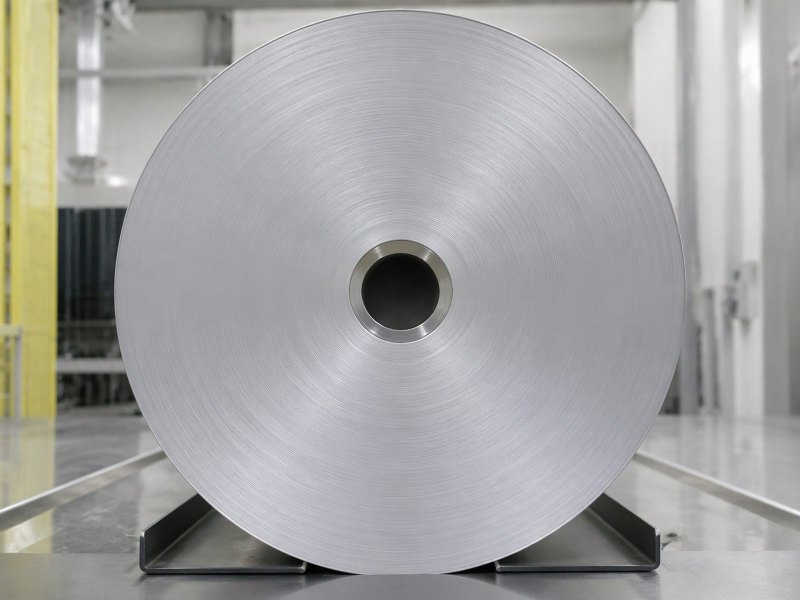
Bore choice decides whether a roll runs or fights the line: how to pick 76 mm or 152 mm.
A roll arrives with the right gauge, the right width and the wrong bore, and the line stops before the first metre runs.
The bore has to match the shaft or chuck the roll will sit on. 76 mm suits lighter coils on slower, simpler unwinds; 152 mm suits heavier coils and faster lines. Confirm the choice against coil weight, gauge and storage.
Core choice is usually treated as one line on a specification sheet. In practice it is a decision about the whole route the roll takes, from the winder that built it to the mandrel that unwinds it.
What Does the Core Actually Do in a Foil Roll?
The core looks like packaging. It is the only part of the roll that touches the machine.
The core carries the wound web, takes the drive from the shaft, and holds the inner laps at a fixed shape. Every behaviour the roll shows on a machine starts at that interface.
Dive deeper
A wound coil behaves like a spring under tension: every lap presses on the one beneath, and the pressure builds inward until the innermost turns clamp on whatever sits inside. The core is what they clamp on, and it has to take that squeeze without going oval.
Three jobs follow from that. It locates the roll: the bore is the reference that puts the web in line with the machine, so an error repeats once per revolution as a flutter in tension. It transmits drive, because on an unwind the braking force enters through the shaft, crosses the core and reaches the web only after travelling out through the wound laps. It protects the inner turns, because a core that keeps its shape stops the first laps collapsing into a crease.
This is why the bore is not a detail to leave to the packing bench. Two rolls of identical alloy, temper and gauge, drawn from the same foil roll and sheet range, run differently when one bore is gripped cleanly and the other is not. The difference rarely shows up as an obvious fault. It shows up as drift: tension that keeps needing correction, edges that wander, a roll that has to be re-seated between runs.
None of it shows in the coil's appearance, or in aluminium foil on a data sheet. It shows when the roll is loaded.
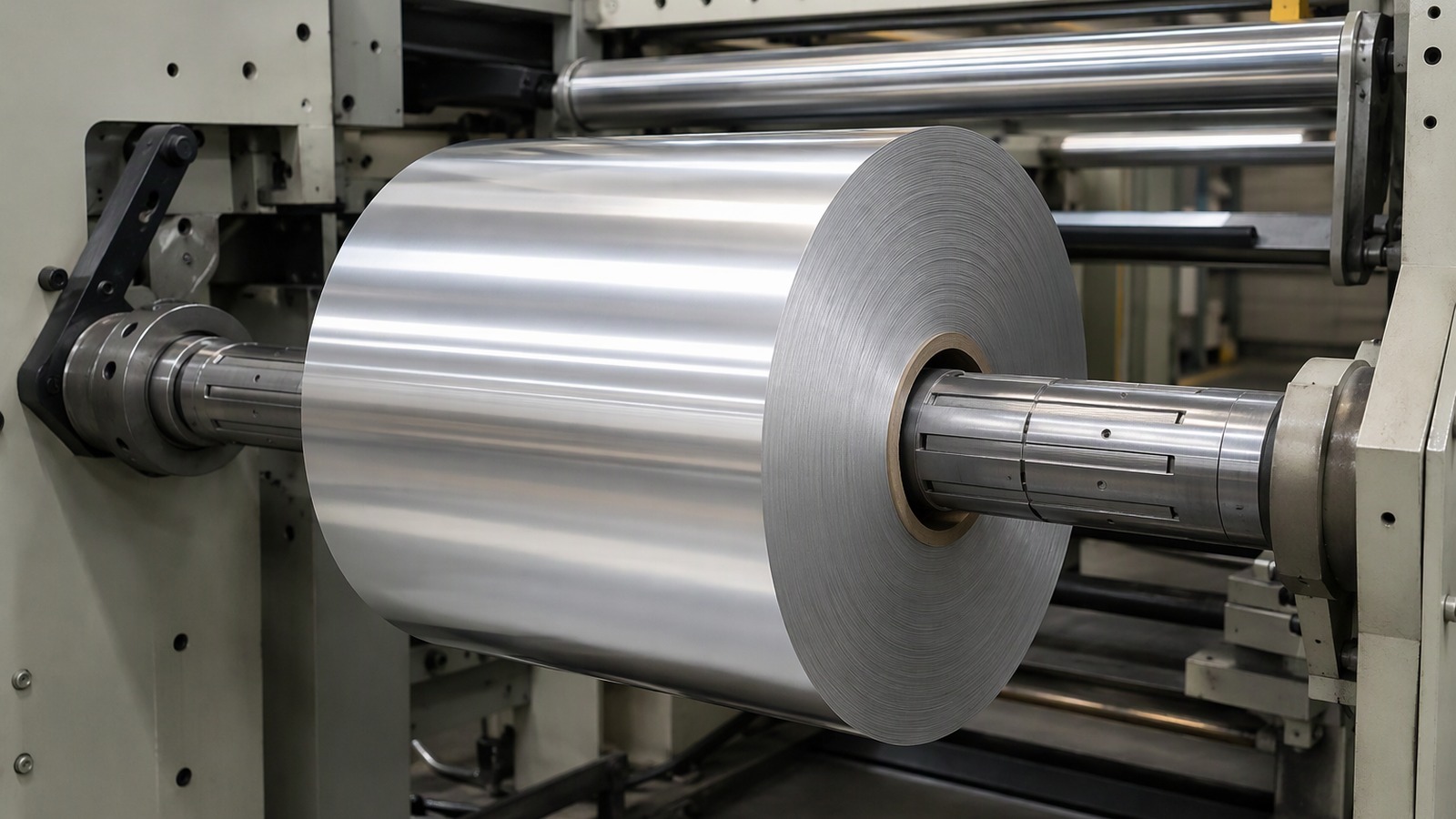
Which Two Core Sizes Are Offered, and What Does Each Suit?
Two bores are offered, 76 mm and 152 mm, and neither is better in the abstract.
76 mm suits lighter coils, simpler unwinds and hand or small-lifter loading. 152 mm suits heavier coils, faster lines and shaft-through handling. The coil, not the catalogue, decides.
Dive deeper
76 mm matches the shafts common on slower, simpler unwinds, on lines where a roll is loaded by hand or with a small lifter, and on narrow widths where the coil never grows heavy enough to need a wider grip. Household and packaging converters at moderate speed often stay on 76 mm across the range, because one shaft then serves every roll in the building.
152 mm gives the shaft or chuck a wider grip circle. That spreads the drive over more of the core's inner surface and steadies the roll against the pull of a line that accelerates and brakes quickly. It suits wider widths up to 1500 mm and heavier gauges where the coil resists being deformed. Lines that keep a shaft permanently through the roll tend to prefer it, because the roll is carried on the shaft.
The choice follows the coil. A buyer ordering 3004 at 0.15 mm for container stock is usually feeding a line built around heavier coils, and that line is usually set up for the larger bore. A buyer ordering thin household gauge for a small converter is usually on 76 mm.
3004 aluminium foil 0.15 mm is commonly wound to suit the larger bore; material for a light converting line is not. The wider aluminium industry draws the same split between heavy and light converting routes, which is why both bores stay in production.
How Does the Unwind Equipment Decide the Answer?
The unwind decides, and it decides before anyone reads a specification sheet.
Check three things on the machine: the shaft in its expanded state, the chuck's gripping range, and how the roll is lifted onto it. The bore that passes all three is the answer.
Dive deeper
Start with the shaft. An expanding shaft has a collapsed and an expanded state, and only the expanded state matters. If the shaft, when actuated, fills the bore with its lugs bearing evenly around the circumference, the bore is right. If the lugs touch at only a few points, or the shaft has to be forced in, the fit is wrong however close the nominal figures look.
Then the chuck. Some chucks grip the outside of the core, others enter the bore with jaws that expand. A jaw-type chuck covers a range, and the bore has to sit inside that range with the jaws in full contact. A 152 mm core on a chuck built around a smaller bore will not be gripped squarely, and the roll will run out of true from the first turn.
Then the loading route. If the roll is picked up on a shaft and carried to the machine, the bore has to accept that shaft with the coil's mass behind it, and the operator has to start it without hammering. If a clamp lifts the coil, the bore only has to suit the unwind.
Eye to sky and eye to wall packing put a different face towards the machine and change how the roll is supported while it waits, which is why packing and unwind are best discussed together.
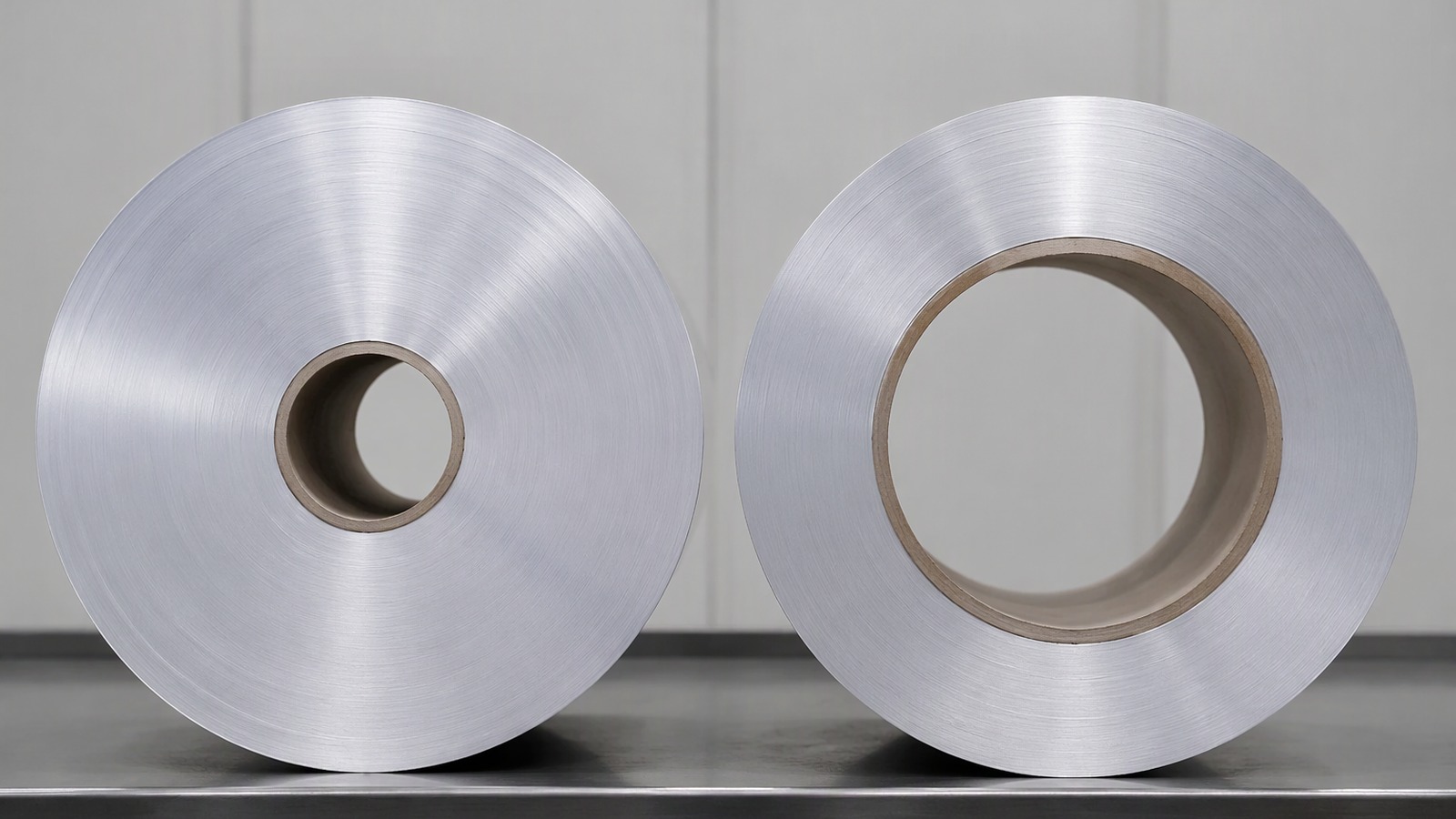
Why Does Core Choice Interact With Coil Weight and Gauge?
Weight and gauge pull in opposite directions, and the bore sits between them.
Weight loads the core-to-shaft interface, so heavier coils want more grip. Thin gauge compresses and tightens onto the core; heavy gauge pushes back. The difficult case is a heavy coil of thin foil.
Dive deeper
Weight is the straightforward half. A heavier coil places more mass on the interface between core and shaft, and the grip has to accelerate that mass without slipping. A larger bore spreads the same drive over more inner surface, which is why heavy coils and 152 mm travel together.
Gauge is the half that surprises people. Thin foil, from 0.005 mm upward, compresses under winding tension, so the inner laps tighten onto the core as the coil is built and keep creeping afterwards. The core ends up carrying a squeeze nobody planned for, and a bore that fits comfortably when the roll is fresh can feel tight after a week in storage and loose again after an hour on a warm line.
Heavy gauge behaves the other way. At 0.15 mm or 0.20 mm the web resists compression, so the coil stores more bending strain and pushes back against the shaft at the inner laps.
The awkward combination is a heavy coil of thin foil: high mass and a web that compresses. That is where a bore chosen only from coil weight disappoints, because the two effects add rather than cancel. 8011 aluminium foil 0.06 mm sits where this interaction is easiest to see. Buyers watching downstream foil markets see the same effect when pack sizes move.
What Happens at the Machine When the Core Is Wrong?
Most core faults at the machine do not look like core faults.
Too small a bore will not go on, or goes on with force that burrs the core and tears the inner laps. Too large a bore slips, and the line loses tension without an obvious cause.
Dive deeper
A bore that is too small announces itself. The roll will not go on, or goes on only after force that damages the core end and lifts a burr. The burr then scores the shaft and tears the inner laps, and the tear reaches the coating head metres later as a web break nobody can trace back to the loading bay.
A bore that is too large is quieter and worse. The roll turns on the shaft instead of with it. Drive arrives late and unevenly, tension oscillates, the web wanders, and the coil can telescope sideways. Operators answer with more tension, which tightens the outer laps and makes the slip worse, so the fault escalates for a shift before anyone questions the fit.
A core the chuck cannot grip squarely shows as run-out. The roll orbits slightly, the web flaps once per revolution, and registration drifts in a pattern that repeats with the roll rather than with the job.
In every case the fix sits at the interface, not at the tension controller. Before a line is re-tuned, the bore and the grip are worth an hour. The bore's dimensions sit alongside slit width in slitting width tolerance and core diameter, but a running fault is decided by fit, not by the drawing.
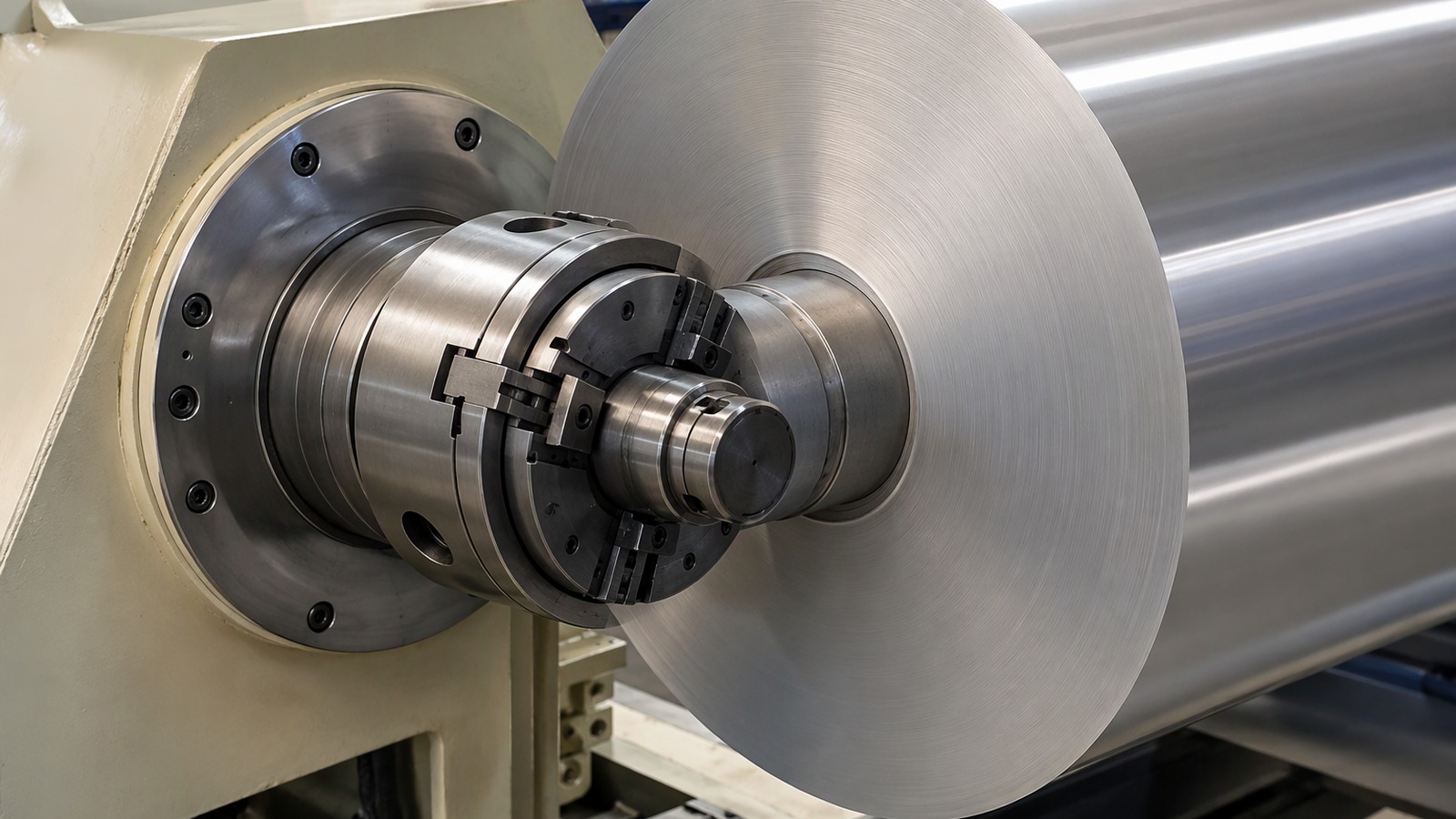
How Does Core Size Affect Handling, Storage and Stacking?
Handling is where the two bores look most different.
A small bore suits rolls moved by hand or on a light mandrel. A large bore suits rolls carried on a shaft, chocked in a cradle or stored on racking pins, and it aligns more easily when loaded high.
Dive deeper
A 76 mm bore suits a roll that is rolled on its edge, moved by hand, or lifted on a small mandrel. The limit is the grip circle: a shaft through a smaller bore has less surface to hold, so once the roll is on the machine it needs more care, and a knock that is harmless on a larger bore can shift it.
A 152 mm bore changes the handling route rather than just the loading step. The roll can be carried on a shaft that stays in place, chocked in a cradle, or held on racking with pins that enter the bore. The wider opening is easier to align by eye, which matters when a roll is loaded above shoulder height and the operator cannot see shaft end and bore at once.
Storage follows the same logic. A roll stored eye to sky rests on its outer laps and the core helps it stay concentric. A roll stored eye to wall needs support so the bore is not asked to carry the mass sideways. Stacking several rolls eye to sky puts the alignment duty on the bore, and a wider bore locates more positively on a pallet peg or a rack pin. None of this is a verdict on the warehouse; it is a question of which bore the handling equipment was built around.
What Should You Write in the Order?
An order that says only "core as standard" leaves the decision to whoever packs the roll.
Write the bore in millimetres for every size, add the alloy, temper, gauge, width, packing orientation, MOQ of 3 MT per size and the loading port. Then ask for the fit to be confirmed.
Dive deeper
Put the bore on the order as a number with its unit: 76 mm or 152 mm, applying to every size on that order. If two lines in one plant need different bores, split the order by bore rather than by coil, and expect each bore to carry its own minimum of 3 MT per size, because a mixed order is packed as two lots.
Write gauge and width next to it, since a bore cannot be judged without them. State the packing orientation, eye to sky or eye to wall, because it changes how the roll meets the machine and how it should be supported in transit.
Name the loading port from the ones in use, Qingdao, Tianjin or Shanghai, so that packing and pallet type are settled at the same time rather than after the coils are wound. Packing and port are decided together in practice, and splitting them across two emails is how mismatch starts.
Then add the one sentence that prevents most of the trouble: the bore must suit the buyer's shaft or chuck, and the fit should be confirmed before the coil is wound. A supplier who knows the shaft type can flag a mismatch while it is still a question. Background from the European Aluminium Foil Association is useful, but the bore itself is always settled at the machine.
When Is It Worth Changing Core Size Mid-Supply?
Changing bore is a project, not a line edit, so it needs a reason bigger than preference.
Change when the machine changes, when the coil gets heavier, or when the same fault keeps returning at the core. Change both sides of the interface together, and qualify one coil before the range moves.
Dive deeper
The clearest reason is a new or replacement unwind. A line built around a larger shaft will not run a small bore without an adapter, and an adapter adds a joint where drive has to pass cleanly. When the machine changes, the bore follows the machine,.
The second reason is coil weight. If the coils a plant receives have been getting heavier, the honest reading is that the core is now doing a job it was not chosen for.
The third is a fault that keeps returning. If slip, run-out or inner-lap damage recurs on the same line, and the shaft and chuck have been checked, the fit is the remaining variable and a bore change is a fair experiment.
What makes a change expensive is everything around the roll: racking pins, chocks, lifters, training for a different loading step, and the second bore held for the other line. Where one plant runs both, keeping both bores available is cheaper than converting everything, and a single qualifying coil tells you more than a specification review. Changing mid-supply is worth it when the equipment has already changed, and rarely before.
Pick the bore the machine can grip, then check it against coil weight, gauge and storage. Change it when the equipment changes, not when preference does.