What Is Springback in Aluminium Foil Forming?
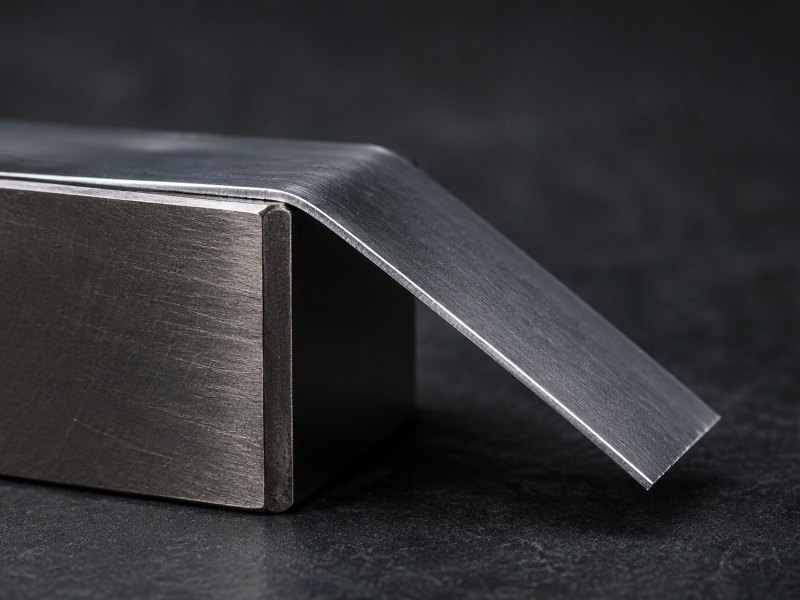
Why a formed foil part opens after release, and what temper and gauge decide about it.
A bracket comes back from the press with its flange standing open, and the drawing says it should be closed.
Springback is the elastic recovery of a bend once the forming load is removed. The metal is bent further than it stays, because part of the deformation is elastic and returns. Foil is not exempt; it is thin enough that handling often hides the recovery.
This article treats springback as a design variable rather than a defect: where it comes from, how temper and gauge shift it, and what a designer, a setter and a buyer can each do.
What Is Springback in Aluminium Foil Forming?
Every bend is two deformations at once. One is permanent, one is not, and only the permanent part survives the tool.
Springback is the difference between the shape the tool imposes under load and the shape the part holds after release. The bend opens and the flange relaxes as stored elastic energy returns.
Dive deeper
Bending is not a single event. As the tool closes, the outer surface stretches and the inner surface compresses, with a layer between them that barely changes length. Part of that deformation is plastic and stays; part is elastic, held only by the tool.
The elastic share is the springback. While the punch is down the material is forced into a tighter shape than it wants; when the load comes off, that stored energy is released, the bend opens, and a radius that looked right in the tool looks generous on the bench.
Two measurements describe it: the radius after release is larger than the one imposed, and the angle between the legs is wider. Both are the same recovery seen from two directions.
Separate springback from dead fold early, because the two are constantly mixed up. Dead fold is the ability to keep a fold: the material stays where it was put. Springback is the recovery of the material after the load is removed. A soft annealed foil folds and stays; a harder temper folds and then partly unfolds. They are two ends of one behaviour.
Foil is thin, so the amounts are small, but not small against the tolerance a formed part must hold. The aluminium foil entry on Wikipedia covers the material itself.
Why Does Every Metal Recover After the Load Is Removed?
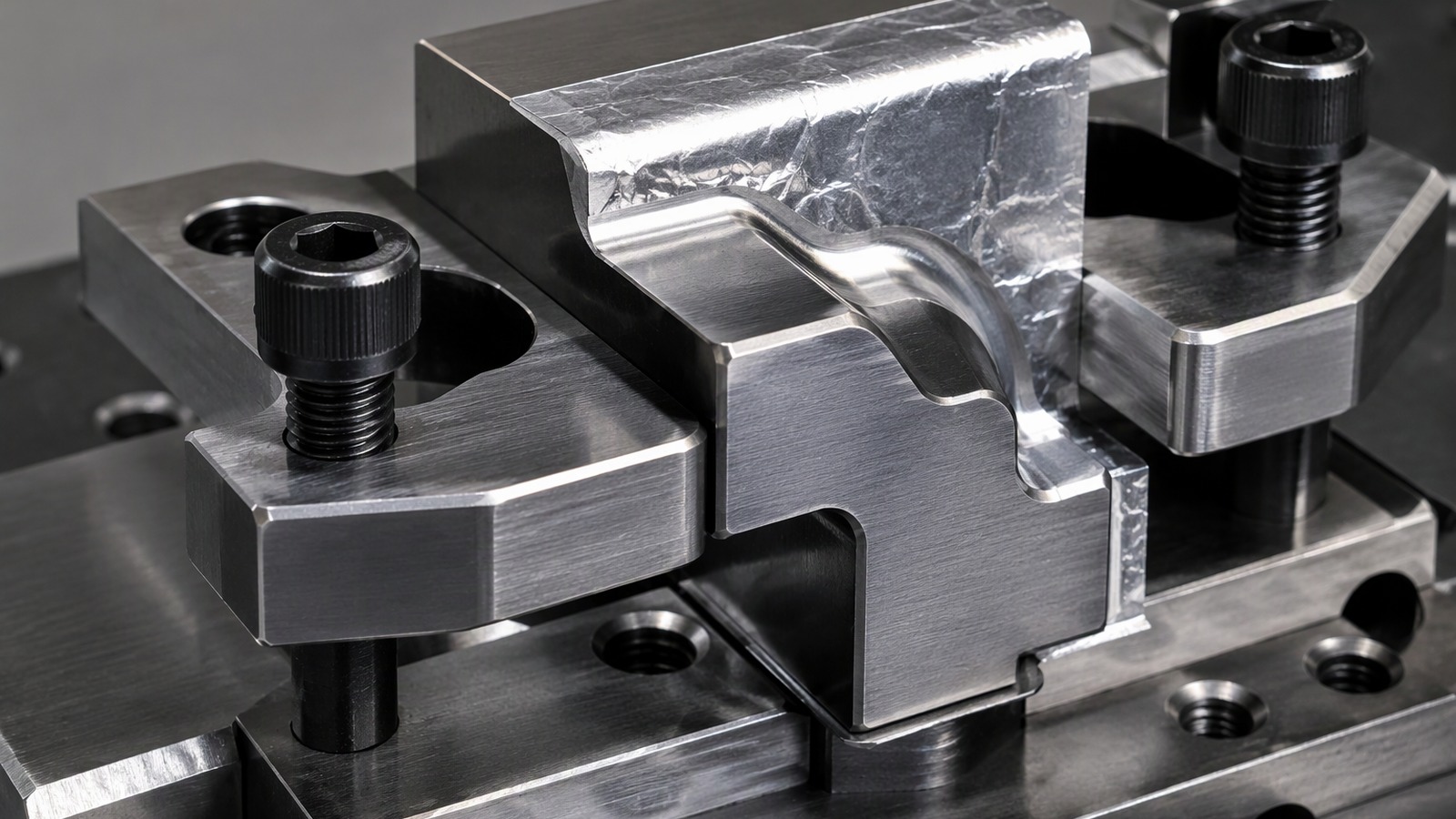
Aluminium is not unusually springy. Every metal stores energy while it is bent, and every metal gives some of it back when the tool lets go.
Because elastic strain always exists alongside plastic strain. A bend that stays permanently still contains elastic strain while it is loaded, and that share relaxes on release. Only the plastic share remains.
Dive deeper
Take a strip, bend it over an edge, and let go. Some of the bend remains and some of it leaves. What leaves was never a permanent change; it was elastic strain.
Elastic strain is proportional to stress and is recovered completely when the stress goes. Plastic strain is not. In a bend both exist at once: the outer fibres carry the most tensile strain, the inner fibres the most compressive, and the middle stays close to unchanged. When the tool opens, the elastic component in every fibre relaxes together and the section rotates back towards flat.
Nothing about aluminium is unusual here. Steel, copper and titanium do the same. What varies between metals is how much of the bend is already plastic at a given load, which is where temper and alloy enter.
The relaxation happens through the section, not only at the surface. Fibres that were stretched pull back, fibres that were compressed push back, and since they sit on opposite sides of the neutral layer both act to open the bend rather than cancelling.
Foil is not exempt. It is only thin enough that gravity, web tension and handling dominate the shape before recovery shows as an angle. Put the same alloy and temper into a heavier section and it stops hiding.
How Does Temper Decide How Much of the Bend Comes Back?
Temper is the largest lever a buyer controls. It sets how much of the bend has already become permanent before the tool even closes.
An annealed O temper yields early, so most of the bend is plastic and little energy is stored. A work-hardened temper such as H18 resists, stores more elastic strain, and recovers further.
Dive deeper
Temper describes how much cold work the metal carries into the press, and cold work fills the elastic reservoir.
In an annealed O temper the structure is soft and dislocations move easily, so the material yields early and a bend drives most of the section into permanent deformation. Little elastic strain is left to return, so the part holds close to the tool. This is the dead-fold end: foil folds and stays folded.
In a work-hardened temper the dislocations are already tangled and pinned. The metal resists, yields later and stores more elastic strain for the same curvature, so more comes back. H18 sits at the hard end and recovers furthest, H16 and H14 progressively less; the partially annealed H22 and H24 sit back towards the soft end.
That ordering is the practical core. If a folded part must stay folded, the answer is usually a softer temper rather than a cleverer tool. If a formed part must hold an angle, a harder temper supplies stiffness but asks the tool to compensate.
The trap is treating temper as one step. Two coils can both be labelled H16 and still carry different amounts of work, because temper is delivered as a range. Design around the range, and read the temper designations for aluminium foil for what the codes mean.
How Does Gauge Change the Springback You Have to Design Around?
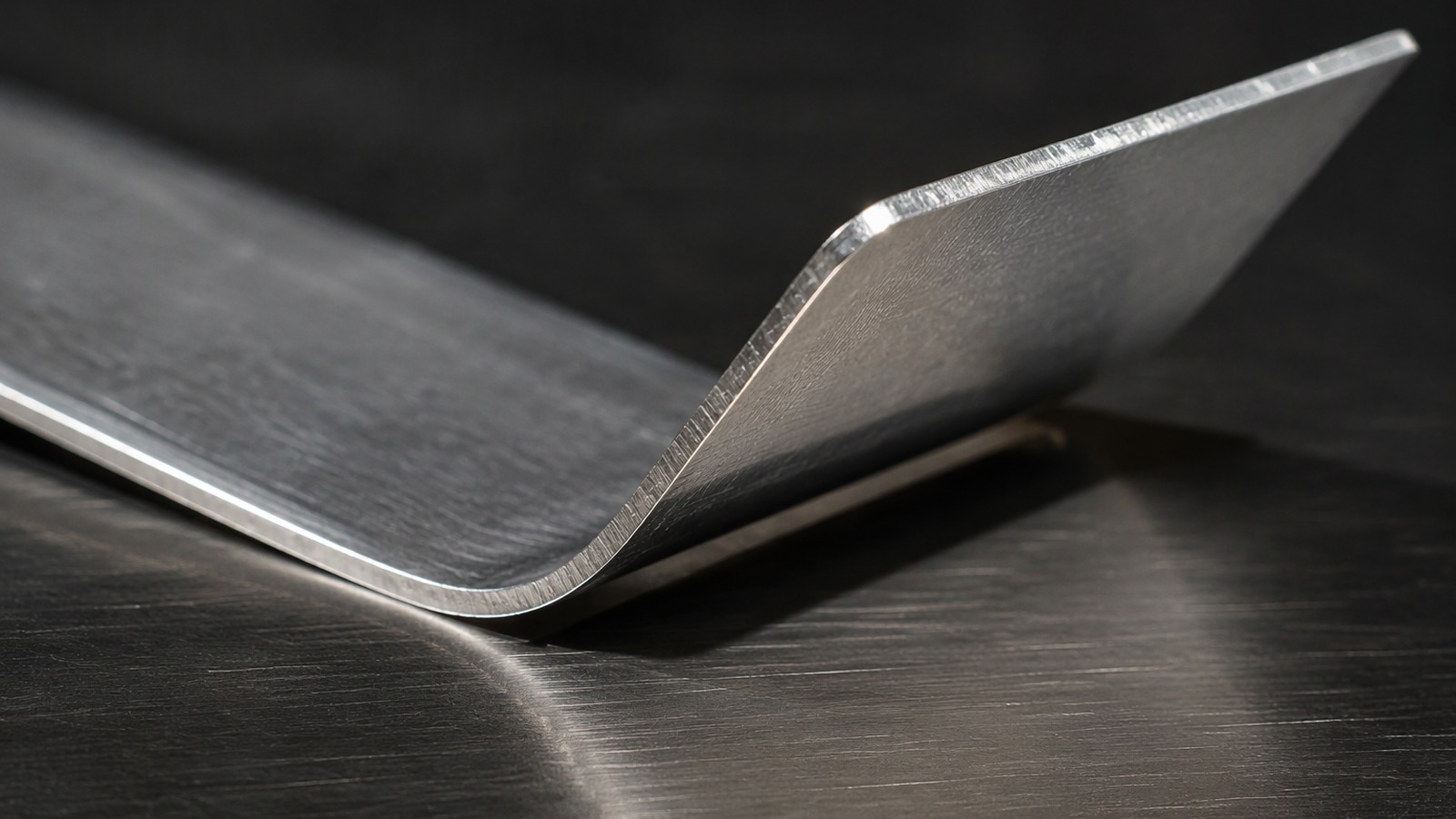
Thin foil and heavy foil do not fail in the same way. Below a certain section the part is shaped by handling rather than by the die.
As gauge rises, the elastic core of the bend carries more load and the recovery grows. Thin foil recovers as well, but the web buckles before the recovery can show as an angle.
Dive deeper
Gauge changes springback in two directions at once.
The first is stiffness. A strip resists bending far more steeply as it thickens, much faster than in proportion, so a heavier section pushes back harder and stores more energy for the same curvature. Near the heavy end of the range, around 0.20 mm, the recovery is large enough to move a flange out of tolerance on its own.
The second is what the recovery does to the part. In very thin foil, from 0.005 mm to roughly 0.02 mm, the section has almost no bending stiffness. The web buckles, wrinkles and drapes, and any recovery is swamped by handling and tension. Springback is still present; it has no structure to express itself through.
Between those ends the behaviour changes character. A light gauge part can look correct because it is floppy enough to press into place. A heavier part holds whatever shape it is given, so the recovery stays visible and has to be designed out. That is why the effect gets harder to ignore as the section gets heavier: more energy comes back, and the part is stiff enough to show it.
The rule is that gauge and temper are chosen together. Tooling for the heavier end has its own constraints, covered in why heavy gauge foil needs different tooling.
Why Do Two Alloys at the Same Gauge and Temper Still Differ?
Same gauge, same temper code, different alloy: the part still leaves the tool differently, and the drawing offers no explanation.
Alloying changes where the metal yields and how fast it hardens afterwards, while elastic stiffness stays close to that of pure aluminium. Different yielding means a different elastic share.
Dive deeper
Elastic stiffness is a property of the aluminium lattice, and alloying barely moves it. What alloying moves is the point at which the metal stops behaving elastically.
The near-pure grades, 1050, 1060, 1100 and 1235, are soft when annealed and harden predictably. Their recovery is dominated by temper, so a 1060 strip and a 1235 strip at the same gauge and temper behave alike.
The manganese-bearing grades differ. 3003 and 3004 carry manganese in solid solution, which raises the point at which they yield. At the same gauge and temper code a 3004 strip resists the bend more and recovers differently. 3004 aluminium foil at 0.2 mm is that combination plainly: a heavy section in an alloy already resistant, stiff enough to hold whatever angle it ends with, while 1060 aluminium foil at 0.2 mm recovers for another reason, its hardness coming from cold work rather than the alloy.
The 8011, 8021 and 8079 grades add iron and silicon, which refine the structure and change how strain spreads through a bend. They answer a given tool differently rather than ranking as softer or harder. The European Aluminium association site shows how these families are described.
Alloy belongs in the forming specification, not only the supply one. Two coils at the same gauge and temper code are not interchangeable on a tuned tool.
What Can a Tool Designer Do About Springback?
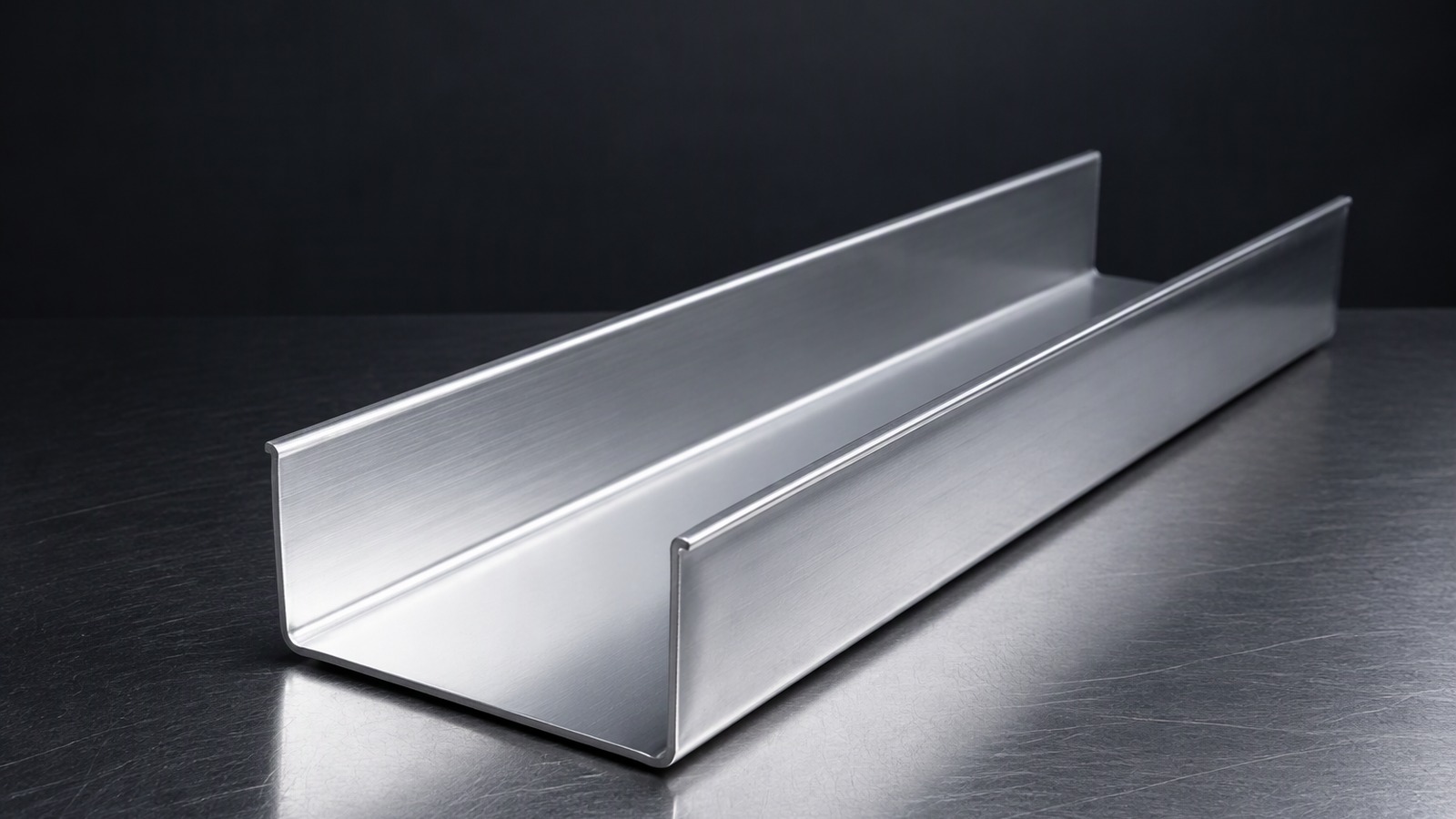
The designer cannot remove recovery. The work is to make the tool produce the drawing once the part has recovered, not before.
Three levers do most of it: bend past the target so the part relaxes onto it, choose a radius the material can hold, and compensate the tool geometry itself.
Dive deeper
The designer's job is to make the tool deliver the drawing after recovery, not before.
The first lever is over-bending. The tool is built to bend past the target so the part relaxes onto it. The amount is found on trial and built in as a correction rather than left to the setter.
The second is radius choice. A tighter radius drives more of the section past yield and leaves less elastic share to return. The limit is the material: a hard temper bent over too tight a radius will crack on the outside, or open a coarse surface texture. A radius generous relative to the gauge is safer but returns more, so the choice trades recovery against damage.
The third is compensation: punch and die built to a shape that is not the part shape, so the finished part is. That can mean a curved punch face for a part that must finish flat, or side walls set slightly off vertical.
A designer can also change the character of the operation. Bottoming or coining forces the material against the tool and cuts the elastic share. Stretch forming holds it in tension while it bends, shifting the neutral layer. A stake or bead near the bend locks a fold mechanically, which is how a dead fold is made deliberately rather than hoped for. The Aluminum Association site covers these forming families.
What Can a Press Setter Fix, and What Lies Beyond the Press?
Some of the gap between drawing and part belongs to the press. Some of it belongs to the coil, and no adjustment reaches that far.
A setter can change overbend, dwell, blank hold and the point of release. A setter cannot change temper, alloy or gauge once the coil is on the unwind.
Dive deeper
The setter works with what the tool and the coil give them; the useful skill is knowing which is responsible.
What the setter can change: the depth the punch travels; the dwell at the bottom of the stroke, which lets the material relax under load; the blank holder force, which decides how much material is drawn in rather than bent; and the way the part is supported as it leaves the tool.
What the setter cannot change: the temper of the coil, the alloy, or the gauge. If the strip on the unwind sits at the hard end of an H16 range and the tool was tuned on the soft end, no adjustment of ram depth brings the part back without over-forming it elsewhere. The setter can hide the problem for one strip; they cannot take it out of the coil.
Pushing the punch deeper to close an open flange raises the strain on the outside of the bend. On a hard temper near its limit, that is how a part measured correctly in the tool arrives at inspection with a fine crack along the bend.
So the setter owns the setting, the tool owns the geometry, and the coil owns the material behaviour. When a part drifts, ask which of the three has moved. The alufoil association site shows how converters describe their processes.
Why Does a Part Pass the First Article and Fail the Thousandth?
The first article is measured on a fresh tool and a selected strip. The thousandth meets a worn tool and a different part of the coil.
Because springback depends on how much of the bend is elastic, and that shifts along a coil, between coils and as the tool wears. The first article proves a setting, not a process.
Dive deeper
The first article is a snapshot: a new tool, strip from one place on one coil, a part measured before it has settled.
The thousandth part meets different conditions. The tool has run and warmed, and the die radius has polished. The coil has moved on, so the strip being fed came from another position across the width.
Springback is sensitive to those changes: it depends on where the material yields, which depends on how much cold work the strip carries. A shift invisible in the coil record can move a flange far enough to fail a check gauge.
Then there is measurement. A part read straight off the tool and the same part read after cooling can differ, so both checks must use one method.
The defence is a sampling plan built around the sources of variation: parts from the start, middle and end of a coil, from both edges and the centre.
An enquiry should name alloy and temper, remembering that a temper is a range; gauge; the dimension that must hold after release; whether the part is folded and must stay folded, which is dead fold, or formed and must hold an angle, which is springback; and how it will be measured. A supplier who knows which bend is critical can recommend a temper from the industrial and technical foil range.
Springback is not a fault to argue away. Specify alloy, temper and gauge, say which bend must hold, and build the tool for the shape after release.