What Does Aluminium Foil Do in a Cold-Form Blister Pack?
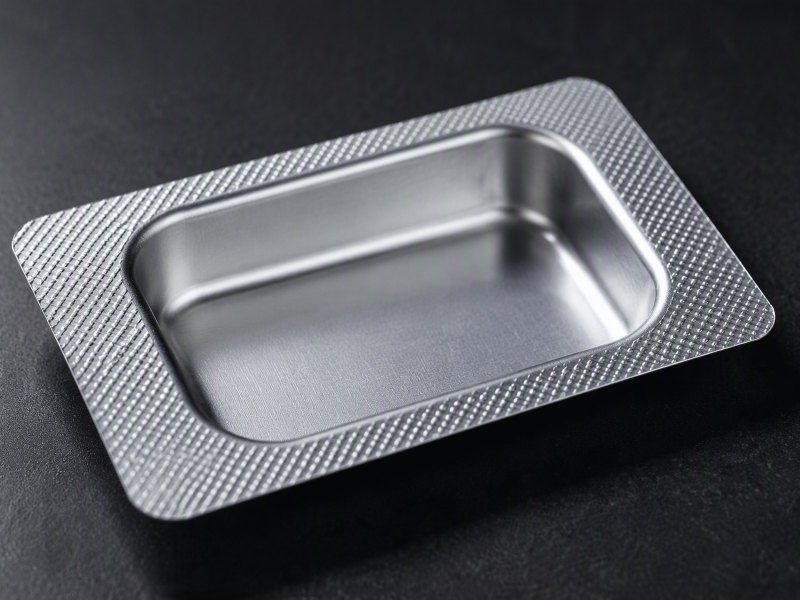
The formed half of an alu-alu blister is a drawn part, not a flat barrier. Here is how the laminate behaves in the press, why pocket geometry decides so much, and what to put in an enquiry.
A pocket that splits at the corner, or a pinhole found months later, usually traces back to one decision: the laminate was specified before the pack design was understood.
Cold form means drawing the pocket from a laminate at room temperature, not heating it into shape. The aluminium carries the barrier and must stretch without cracking, while the outer film and inner layer hold it together through forming.
That makes the formed half a mechanical part as much as a barrier. The sections below follow the material from coil to filled pocket.
What does "cold form" mean, and why is the pocket pressed rather than heated?
A thermoformed blister is softened with heat before the pocket is pulled. A cold-form pack is not, and that changes what the material has to survive.
In cold forming, a laminate is pressed between a punch and a die at room temperature. The aluminium stretches plastically into the pocket instead of being softened first, so the metal itself absorbs the deformation.
Dive deeper
There is no softening step to hide behind. A thermoformed pocket is moulded from heated polymer; a cold-form pocket is pushed into shape while the laminate is still solid, so every layer absorbs the movement at the temperature of the machine hall.
The outer film slides over the punch face, the aluminium is drawn into the wall, and the inner layer follows it to become the product-contact surface. Nothing is softened, so the operation is a controlled plastic deformation rather than a moulding step. The aluminium foil entry gives general background on the metal, although drawing a blister cavity is a different proposition.
That is why material and tooling are qualified together. Punch radii, die clearance and the pace of the stroke decide whether the metal stretches evenly or concentrates strain in a narrow band, and a laminate that forms cleanly on one tool can fail on another that looks similar. The forming stroke, not the data sheet, is where the material is finally judged.
Cold forming also leaves the pocket dimensionally stable. There is no cooling shrinkage to correct and no memory of a heated shape, so the cavity arriving at the filling station is close to the cavity that was designed, and the flange stays flat for sealing.
Why is the formed half a laminate rather than aluminium foil alone?
Foil alone forms a pocket and then fails at the wall. Something has to carry the metal through the draw and close the pack afterwards.
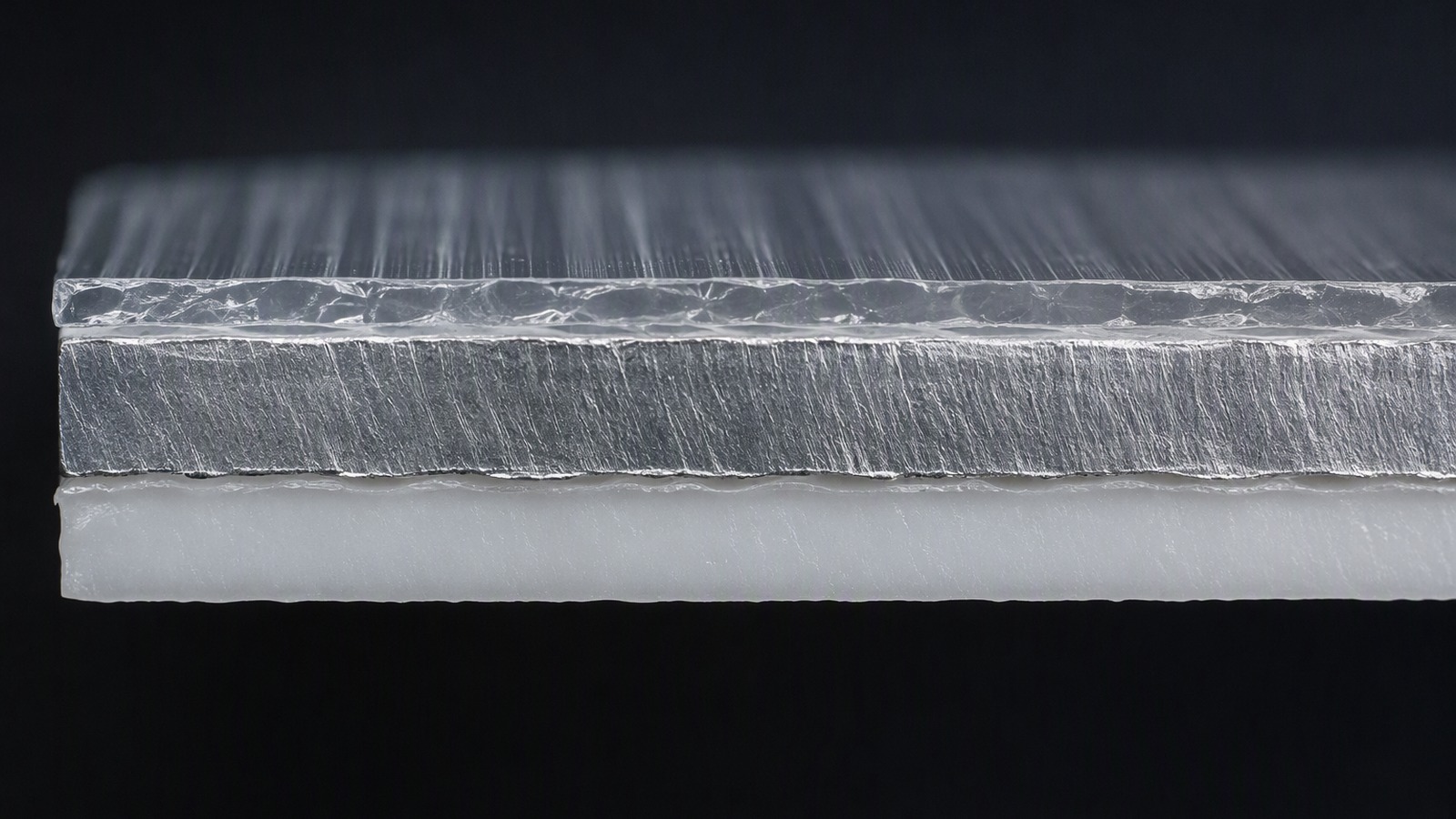
A single aluminium sheet cannot redistribute strain during drawing and has no sealable face afterwards. The laminate combines an outer film for support, the aluminium for barrier, and a formable inner layer that seals to the closure.
Dive deeper
Each layer answers a different question. The outer film gives the laminate its handleability and carries much of the tensile load across the punch face, so the metal is not asked to do the whole job alone. The aluminium provides the barrier. The inner layer is formable enough to follow the metal into the wall, and it becomes the surface that faces the product and later seals to the closure.
The bond between the layers is part of the structure. If an interface lets go during the draw, the layers move independently, the metal takes the strain alone, and the pocket shows it: a crease, a whitened band, a crack at the radius. Delamination can also appear after sealing, which is why adhesion is examined on formed pockets rather than on flat samples. An interface that holds in the mill but not in the press is a familiar failure mode.
A single sheet has no sealable face and no second layer to redistribute load, so it either tears at the wall or has to be made heavy enough to survive, and even then it gives the converter nothing to close the pack with. Converters comparing structures often start from the range of pharmaceutical aluminium foil and work backwards from the pocket.
What does the aluminium layer actually contribute to the formed pocket?
Barrier is the obvious answer, and it is the right one. But inside a drawn pocket the metal is also a structural layer under load.
The aluminium is the barrier and the layer that must stretch without breaking when the pocket is drawn. It keeps moisture, oxygen and light away from the product, and it carries forming strain.
Dive deeper
Inside the finished pack the aluminium is the only continuous barrier. Polymer films are useful, but they are not the layer that keeps moisture and oxygen out; the metal does that, and only where the metal is continuous and free of holes. The same layer stops light.
Forming asks something else of that metal. The pocket is drawn rather than folded, so the aluminium has to stretch plastically and then stay where it was put. Dead-fold behaviour helps: the metal holds the shape instead of springing back, which keeps the cavity open through filling. Temper and grain influence how evenly the stretch is shared across the wall. Bodies such as European Aluminium publish general material background.
Two demands meet in one layer. Barrier wants a sound, continuous sheet with no thin spots; forming wants ductility and even strain distribution. The two are not in conflict, but they are not independent either, and the balance is agreed against the customer's own pack design rather than picked from a table.
This is also why thickness alone is a poor way to compare offers. Within the workable range, a different combination of layers can change forming behaviour more than a small change in metal thickness, and only a trial on the intended tool settles it.
Why do forming depth, corner radius and pocket shape decide so much?
Two packs can use the same laminate and behave completely differently. Depth and geometry, not the material alone, set the strain.
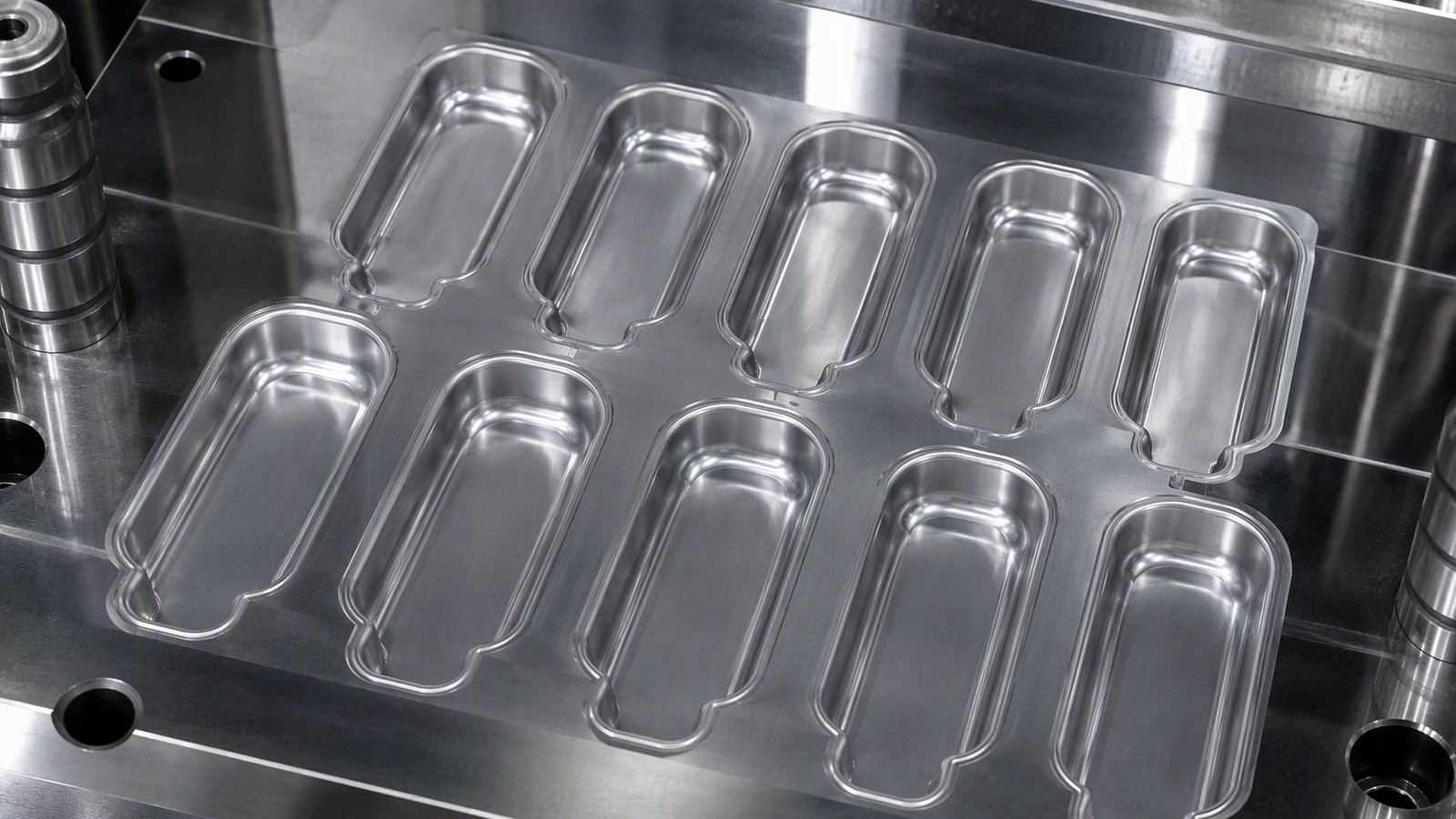
Deeper pockets and tighter corners concentrate strain in the wall and the base radius. A generous radius and a shape that lets material flow spread the deformation, so one laminate can form reliably in one geometry and fail in another.
Dive deeper
Strain is not spread evenly over a drawn pocket. The base corners and the transition from wall to base carry more than the flat areas, and a tight radius concentrates it further. Depth matters because it sets how much material has to travel from the flange into the wall. Wall thinning at the corner, not the nominal depth on the drawing, is what usually limits a design.
Geometry can help or hurt. A generous corner radius, a wall with a little taper and a layout that leaves enough bridge between pockets give the material somewhere to flow. A sharp internal corner, an abrupt step or a very narrow bridge gives it nowhere to go, and the failure appears as a hairline crack where the drawing is hardest. A tool that runs well at a modest depth can produce marginal pockets when the cavity is deepened for a new pack.
That is why the pack design conversation belongs at the start. Once the drawing is fixed the laminate has to fit the geometry, and changing the laminate afterwards rarely rescues a pocket that is difficult by design. Reviewing the drawing with the way a blister foil specification is built in mind keeps geometry and material in one conversation; notes on metal under deformation from NIST are reasonable background.
Why do pinholes and surface condition matter more than the alloy number?
Buyers often open with an alloy number. The defects that actually reject a lot rarely come from the alloy.
A pinhole is a path straight through the barrier, and forming can open it into a leak in the finished pocket. Surface cleanliness, roll condition and handling decide pinhole levels.
Dive deeper
A pinhole is a hole through the only barrier in the structure, and forming tends to make an existing weakness worse. A scratch, a rolled-in inclusion, a slitting burr or a handling crease that would be harmless in a flat sheet can open into a leak path once the metal is stretched into a wall.
Alloy choice matters, but between two workable alloys the difference in field behaviour is usually smaller than the difference made by surface condition, roll quality and how the coil travels from mill to tool. Dust, edge damage, a loose wind and careless unwinding all leave marks that forming turns into defects.
Surface evenness matters for a second reason: the layers have to bond across the full width, and a surface that is uneven, contaminated or scratched bonds less reliably. That is a process statement rather than a line on a data sheet, so buyers who ask about pinholes are really asking how the strip was rolled, slit, packed and handled. The guide to pinhole causes follows that chain in more detail.
The practical consequence is a shift in emphasis: it is more useful to ask how a candidate structure behaves after forming, and to judge it on formed pockets rather than on the coil surface.
How does a cold-form body differ from a lidding foil in what it is asked to do?
Both are aluminium in a blister pack, and buyers sometimes treat them as one item. They are asked to do opposite things.
The lidding foil stays flat and is asked to seal and then peel or hold; the cold-form body is drawn into a pocket and asked to hold its shape without leaking.
Dive deeper
The lidding foil is a flat closure. It arrives at the machine flat, is sealed onto a flange, and is asked to peel or to stay put. Its job is essentially two-dimensional: a sound surface, a consistent seal and enough strength to survive opening.
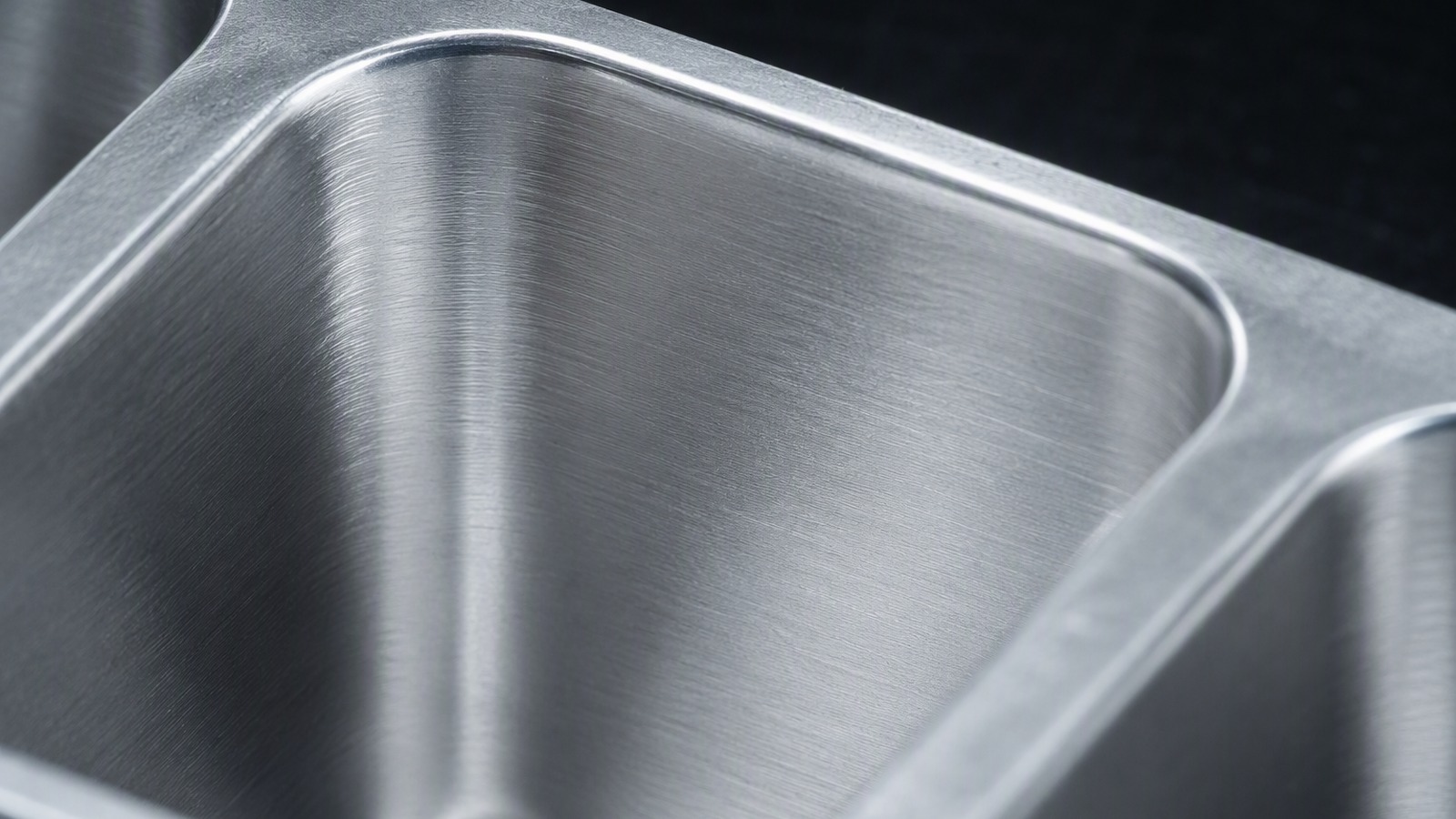
The cold-form body is a container. It is asked to become three-dimensional without losing the barrier, to hold a cavity open through filling, to keep its shape through sealing and cartoning, and to stay sound where the wall is thinnest. The two parts meet at the flange, and neither compensates for the other. Overviews such as those from The Aluminum Association describe the flat product, not the drawn pocket.
Buyers sometimes compare the two on thickness alone, which is misleading. A heavier lidding foil does not make a better pocket, and a well-formed body does not rescue a weak seal. They are specified separately against different requirements, and the formed half is the one qualified on the tool.
The questions differ too. For lidding the conversation is about surface, seal and opening behaviour; for the formed body it is about draw, geometry, pinholes and the integrity of the closed pack. The two are bought together but qualified apart.
What should a converter or pharma buyer state in an enquiry?
An enquiry that lists only an alloy and a thickness leaves the supplier guessing, and the quote that follows is a guess as well.
State the pack design: pocket depth and geometry, cavity layout, the lidding material to be sealed, the product, the forming route and the coil format.
Dive deeper
An enquiry needs the pack, not just the material. The starting point is the cavity drawing: pocket depth, corner radii, wall taper, the number and arrangement of cavities, and the bridge between them. A supplier who cannot see the shape cannot say whether the draw is comfortable or marginal. Two drawings that look alike can differ in exactly the features that decide whether forming is easy, and a dimensioned drawing is worth more than a photograph.
Next comes the closure: which lidding material will be sealed to the flange, and what the filled pack must survive. Then the product, because the inner layer touches it. Then the commercial frame: strip thickness combination, width, coil core and quantity, since orders are normally quoted from a minimum per size. A supplier drawing on pharmaceutical foil stock needs those numbers before an offer means anything.
It helps to say what has already been tried. A pocket that cracked at a corner, a lot that failed on pinholes, a tool that was changed: that history shapes the recommendation more than a specification sheet does. Where the enquiry is silent the answer can only be hedged, and both sides spend the trial budget finding out what should have been said at the start.
How is the formed body qualified against the customer's own pack design?
A laminate that passes a flat test says little about a drawn pocket. Qualification has to happen in the geometry it will live in.
The structure is agreed against the customer's own pack design: trial coils formed on the intended tool, pockets examined where the drawing is hardest, closed packs checked, results recorded.
Dive deeper
Qualification is a sequence, not a test. It starts with trial coils formed on the tool that will run the job, because a pocket formed on a laboratory press proves little about a production tool. The formed pockets are examined where the drawing is hardest: the base corners, the wall, the flange transition.
The closed pack is then checked as a pack. A pocket that looks sound but does not seal, or seals but leaks after handling, is not qualified. Evidence is gathered on the customer's own pack design, against the requirements that design has to meet. Where structures are compared, one built on 8021 aluminium foil at 0.025 mm is a common reference, though the choice follows the trial.
The outcome is a written structure: which layers, which thicknesses, which temper, which surface condition, which coil format. It should be specific enough that a second lot can be compared with the first, and it should name the pack design it was qualified against, because the approval belongs to that geometry and not to the material in general.
A written structure also survives staff changes.
Cold-form foil is a formed part, not a flat barrier. Fix the pack design first, then specify the laminate that can survive it.