What Does Aluminium Foil Do Inside a Solar Backsheet?
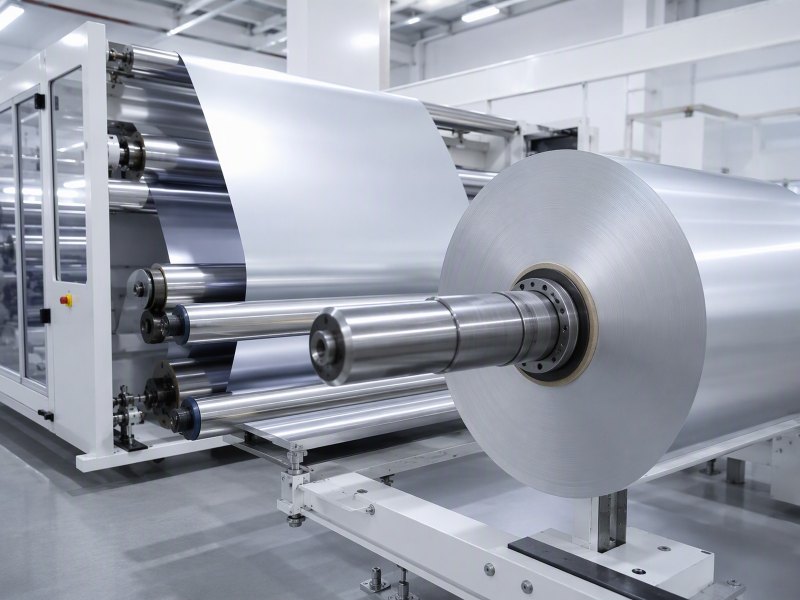
A practical guide for backsheet converters and module makers: what the aluminium foil ply does inside a photovoltaic backsheet laminate, why the bond and the flatness decide its life outdoors, and what to state in an enquiry.
A backsheet is bought, laminated, tested and installed as one sheet. Ask what the foil ply inside it is for, and the answers stop agreeing.
The foil is a passive barrier ply. It blocks moisture vapour and stabilises the films bonded to either side, while those films take the weather. What it can do depends on bond strength, flatness through the laminator, and a ply thickness agreed with the module design.
That sounds manageable until a laminate blisters in the field, or a crease in the foil reappears as a ridge after lamination. The eight questions below are the ones converters and module makers argue about.
Why Is a Backsheet a Laminate at All?
One film cannot be weather surface, electrical insulator, vapour barrier and mechanical back at the same time.
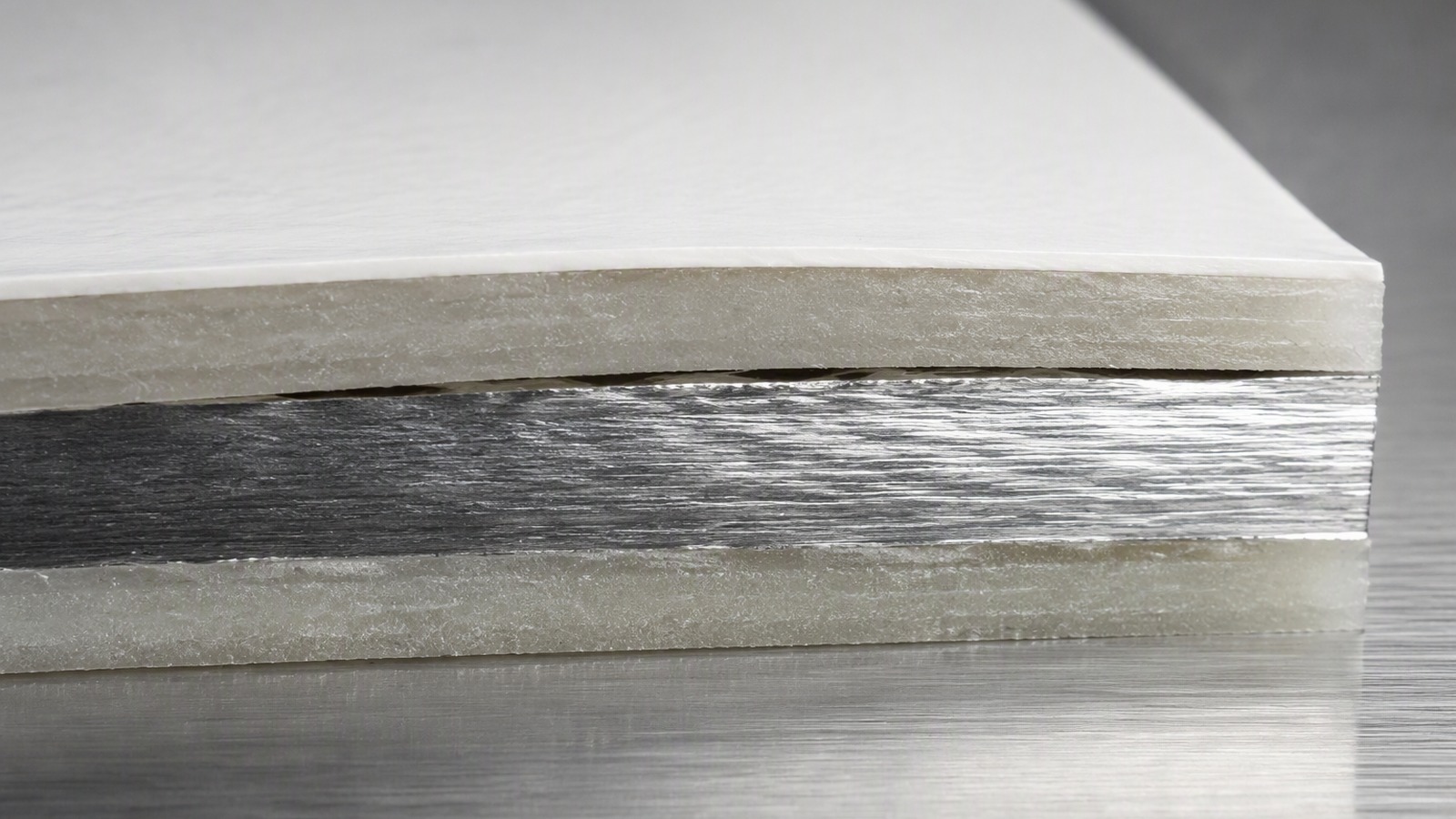
A laminate splits those jobs: an outer film faces the weather, an inner film bonds to the encapsulant, and the foil between them carries the barrier and stabilises both films.
Dive deeper
A module back is a hostile place for a single material. The outward face sees sunlight, rain, dust, thermal cycling and cleaning. The inward face sees the encapsulant, the heat the cells generate and whatever the junction box does at the edge. One film thick enough to survive outside would be heavy, costly and awkward to bond; one thin enough to be practical would weather through long before the module's life was over.
So the laminate lets each ply do the job it is good at. The outer film is the weathering surface, chosen for ultraviolet stability, abrasion resistance and adhesion to what sits behind it. The inner film is chosen for its bond to the encapsulant, because that interface must hold through repeated thermal cycling. The foil sits between them, protected on both faces, asked only to be continuous, flat and well bonded.
Note what the laminate does not do: it does not make the foil cheaper, and it does not make the films thicker. It changes the failure mode. A single film fails by weathering through, gradually and visibly; a laminate fails at an interface, often invisibly, from an edge or a crease inward. That is why the questions below are mostly about interfaces.
What Does the Foil Ply Actually Do Inside the Laminate?
Inside the laminate the foil has two jobs, and both are passive: stop moisture vapour, and hold the films either side in shape.
It is a continuous metal barrier, so vapour has no path through it except at pinholes, creases and cut edges. Mechanically it gives the sheet dimensional stability and spreads point loads.
Dive deeper
Aluminium in solid section does not absorb and pass water vapour the way a polymer does; the transport paths are defects. Vapour crosses a foil ply at a pinhole, at a crease that has thinned the metal, at a cut edge, and along an interface where the bond has already failed. The barrier behaviour of a backsheet is therefore about defect density and edge quality, not a grade of metal. The general handling of the material is summarised in the public literature on aluminium foil.
The mechanical job is less discussed and just as important. The films either side are thin, and thin films creep: warm them, tension them and hold them for months, and they slowly extend. The foil does not, or does so far less, so it acts as the dimensional reference for the whole sheet. It carries the laminate through the module press without uneven stretching and spreads the load of a clamp or a rail.
What the ply is not: it is not a conductor in the circuit, not a weather surface, and not a structural member on its own. It is a ply in a bonded stack, and every one of its contributions depends on the two bonds that hold it there.
Why Is the Foil Never Asked to Be the Weather Surface?
Aluminium resists weather as a thick section with room to build an oxide. A thin ply has neither the thickness nor the electrical isolation.
Weathering is given to the outer film by design: it is formulated for ultraviolet exposure and isolates the metal. An exposed foil ply would pit, corrode from its edges and break the electrical separation.
Dive deeper
Aluminium weathers well, but the reason is subtle. The metal passivates: a thin oxide forms instantly and reforms if damaged. That works when there is enough metal behind the oxide to lose a little of it, true of a thick section and much less of a light gauge. A pit that would be cosmetic in a thick section is a serious fraction of the remaining thickness, and pits concentrate at edges.
The second reason is electrical. The backsheet is part of the insulation between the live parts of the module and the outside, and the outside includes people and frames. A metal ply reaching the weather surface would need isolating some other way, and the laminate would lose the arrangement in which polymer on both faces keeps the metal buried.
So the design rule is blunt: the foil stays inside. The outer film is the sacrificial layer, allowed to chalk and abrade, because that is what a weathering surface is for. The foil's own surface preparation exists to bond to that film, not to face the sky. Where foil is used as the outward facing, as on insulation facings, different rules apply: foil as a building facing is asked to reflect and resist handling, not to keep a laminate sealed for decades.
Why Does Bond Strength Decide Whether the Laminate Survives Outdoors?
Every outdoor failure of a laminated backsheet starts somewhere. Most start at a bond line, not in the middle of a ply.
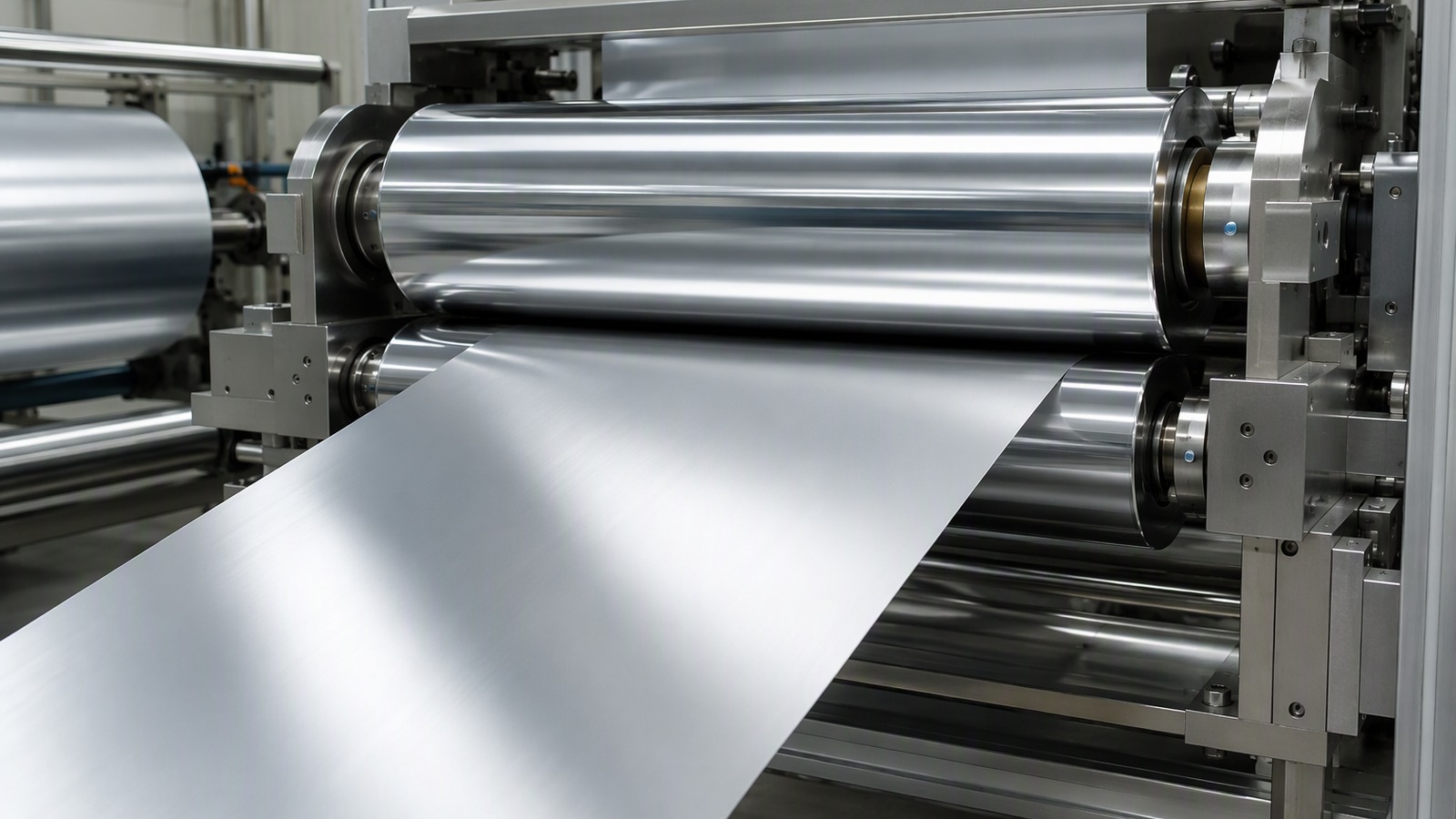
The foil-to-film bond is made in the laminator, from surface energy, adhesive, heat, pressure and time. The foil can be perfect and the laminate still delaminate if the bond was never formed.
Dive deeper
Delamination punishes a backsheet because it is progressive. A bond that is weak at an edge lets moisture in along the interface; the moisture lowers the bond further ahead of itself; the unbonded length grows, and the laminate becomes two films and a foil with a gap between them. None of that is visible from outside until it is well advanced.
The bond is formed from several things at once, and only one is the foil. The surface must be clean and wettable, free of rolling oil residue and loose oxide, with a chemistry the adhesive or primer can grip. The adhesive must be applied at the right coat weight and cured properly. The nip must deliver pressure at temperature at the line speed being run. The web must arrive flat, because a wrinkle traps air.
That is why bond strength is a lamination question, not a foil question, and why a converter can keep the same alloy and gauge and still see peel behaviour move. What changed was the surface state, the adhesive lot, the nip, the line speed or the humidity in the shop. Bodies that track how foil is rolled, such as the aluminium association in the United States, describe that process side well.
Why Is a Pinhole in a Backsheet Different From a Pinhole in a Food Pack?
A pinhole in a food pack loses one pack. A pinhole in a backsheet has years to work with, and the module cannot be rewrapped.
A pack is inspected and rejected at the line. A module is laminated once, installed outdoors and expected to hold for decades, so the same defect has a completely different consequence.
Dive deeper
In packaging, a pinhole is a quality escape with a short life. It is found by a leak test or by the customer, the pack is discarded or the batch quarantined, and the cost is bounded. The whole downstream process, from filling nozzle to retail shelf, is designed to catch it early. The material is thin, cheap and replaced constantly.
In a module the arithmetic inverts. The sheet is laminated into a sealed stack, the stack is installed on a roof or in a field, and the defect is now a permanent, localised transport path sitting against the encapsulant. There is no drying step, no rewrap, and no rejection at the end of the line that undoes an installation. Moisture reaching the interface through a pinhole does not pass through and leave; it sits there and the bond around it degrades. Repair, where it exists at all, is a patch applied before lamination.
That is why backsheet foil is specified and inspected as a barrier ply rather than as a commodity wrapper, and why the defect population matters more than the average. For the metallurgical side of the argument, our note on what causes pinholes in thin aluminium foil covers how inclusions, roll marks and tension produce them.
Why Must the Foil Stay Flat and Untensioned Through the Laminator?
A crease is not a cosmetic defect. It is a thinned section of metal with an unbonded void on either side of it.
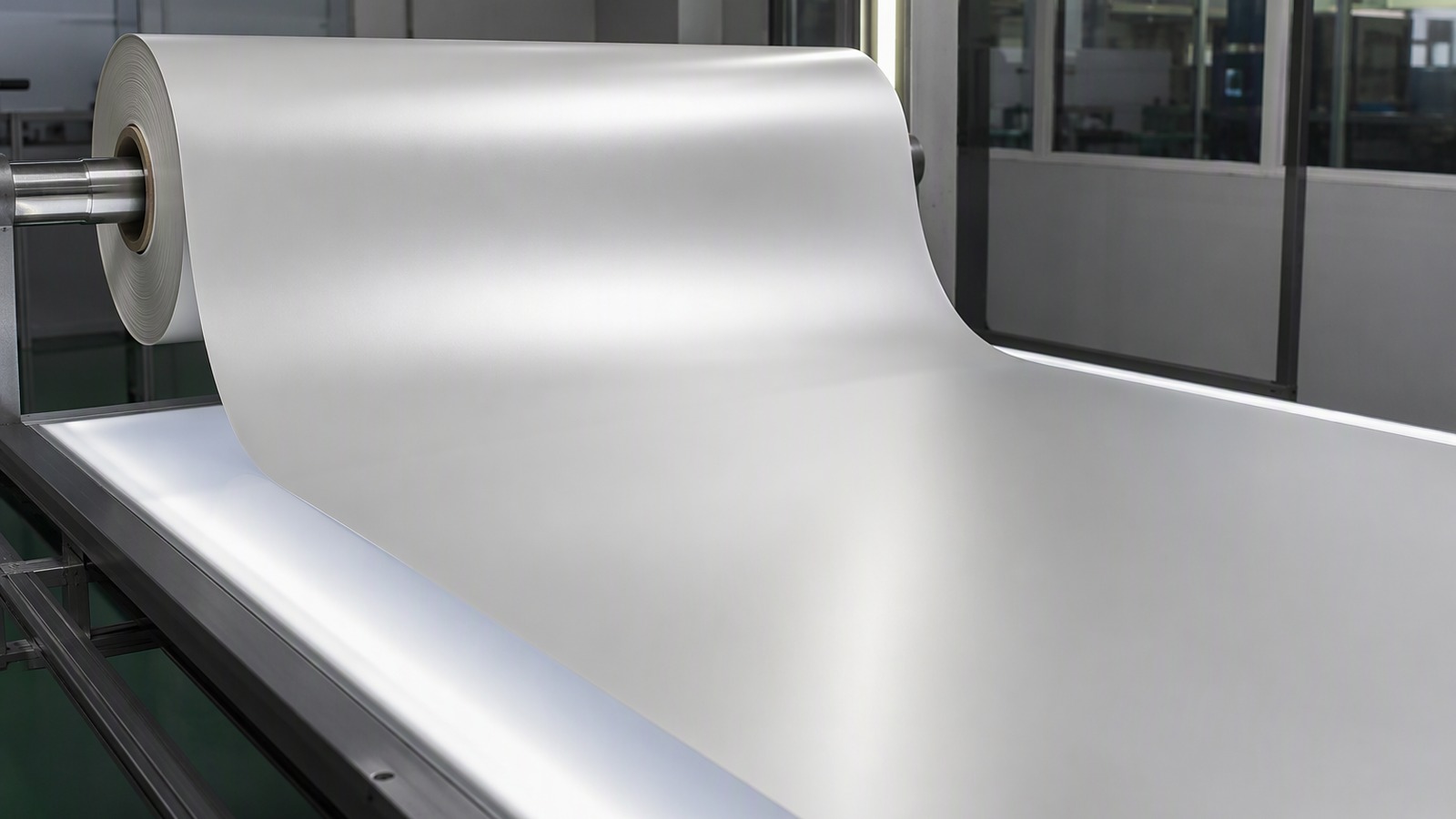
The foil must arrive flat, under uniform low tension, so it bonds without wrinkles. Tension stretches the web, a wrinkle traps air, and both survive lamination as a permanent weak line.
Dive deeper
Picture what a crease actually is. A fold in a light gauge compresses the metal at the fold line and stretches it on the outside of the bend. Locally the ply is thinner than the rest of the sheet, and it has been work-hardened in a narrow band. When that folded line enters a nip it does not flatten out; it stays folded or opens into a ridge, and in both cases the adhesive cannot reach the surfaces inside the fold.
Nothing in the lamination process repairs it. Heat and pressure flatten the appearance of a crease, which is worse than leaving it visible, because the defect then survives inspection and fails later. Under thermal cycling the unbonded line works as a hinge, and moisture has an interface to travel along from the nearest edge.
Tension is the other half. A web run under more tension than it needs is stretched elastically and stays stretched while the adhesive cures. Release the tension and the strain has to go somewhere: curl, a wave across the width, or residual stress that pulls on the bond line for years. Flatness is a process input, and foil producers describe the rolling side of it through bodies such as the foil converting industry organisation.
How Do UV and Hydrolysis Attack the Polymer Layers, and What Do They Mean for the Foil Surface?
The metal does not care about sunlight. The polymers either side of it do, and their breakdown products end up on the foil surface.
Ultraviolet exposure consumes the stabilisers in the outer film; hydrolysis in the inner film releases acidic species. Both change what sits against the foil, so surface preparation is a durability question.
Dive deeper
Ultraviolet attack is a slow consumption that begins at the surface. The outer film contains stabilisers that intercept the damaging wavelengths, and they are used up over years of exposure. As they deplete, the polymer begins to break down: chains scission, the surface chalks, and the film loses toughness and adhesion to the ply beneath.
Hydrolysis is the inward-facing equivalent. The inner film and the encapsulant see moisture and heat, and the combination breaks polymer chains. In some polymer systems the breakdown releases acidic species, which then sit in a thin layer of moisture at the interface, directly against the aluminium. An acid attacks the oxide, and the oxide is what the bond relies on. The failure is not a hole through the foil; it is a weak boundary layer that grows until the bond lets go.
That has consequences for how the foil is supplied. The surface should be clean, with a controlled oxide and no residue from rolling lubricants. It should be wettable enough for the primer to grip, and stored so that it reaches the laminator without a loose oxide or condensation. How foil surfaces are prepared, as described by the European aluminium industry association, is a reminder that surface state drifts between lots.
Why Should the Module Maker and the Backsheet Converter Agree the Ply Thickness Together?
Thickness is a compromise between pinhole risk, handling stiffness, weight and cost, and neither party can set it alone.
The converter knows what the laminator runs without creasing; the module maker knows the module design, the mounting and the service conditions. The workable gauge is the one both can live with.
Dive deeper
A light gauge is easier to bond and cheaper per square metre, and more likely to carry a pinhole or a thin patch through to the finished sheet. A heavier gauge tolerates handling better, and adds weight and cost. The trade depends on the module: its size, whether it is framed, how it is mounted, and the laminator.
The number belongs to a conversation, not a catalogue. Thickness and temper settle together, because a harder temper at the same gauge behaves differently in a nip. The grades commonly used are 1050, 1060, 1100, 1235, 3003, 3004, 8011, 8021 and 8079, in tempers O, H14, H16, H18, H22 and H24, chosen against the laminate structure and the customer's own module design and laminator. Two of them are on our pages for 1050 aluminium foil at 0.012 mm and 1235 aluminium foil at the same gauge.
For an enquiry, state the application, the laminate structure and where the ply sits, the alloy and temper, the thickness, width and quantity. Our span is 0.005 mm to 0.20 mm and 100 mm to 1500 mm wide, on 76 mm or 152 mm cores, 3 MT minimum per size, from Qingdao, Tianjin or Shanghai. The wider family sits in our industrial and technical foil range.
The foil ply is only as good as the laminate around it. Agree structure, thickness and bond with the converter, then buy to that agreement.